May 21, 2026
7 best Italian pizza styles
There are pizzas that satisfy hunger, and there are pizzas that change the conversation at the table. When we talk about the best styles of Italian pizza, we are not just talking about toppings or whether it has more cheese. We are talking about technique, fermentation, texture, territory, and craft. That is the difference between a generic pizza and one that truly feels Italian.
Italy does not have a single model of pizza. It has several, and each responds to a different history of bakery, street, neighborhood, and custom. That is why comparing a Neapolitan with a Roman al taglio, or a focaccia with a pizza al padellino, should not be reduced to seeing which "is better" in the abstract. The real question is another: which style offers the experience you want to have.
Best styles of Italian pizza according to their texture
If something defines the best styles of Italian pizza, it is the texture. Before the topping, before the sauce, even before the format, there is the bite. That first contact between tooth and dough says almost everything.
The Neapolitan pizza remains the best-known reference. It was born to be eaten fresh out of the oven, with a soft center, a high and airy edge, and an elasticity that for many is synonymous with pure tradition. It has an indisputable beauty, but it also demands context. It is best enjoyed hot, instantly, and does not always retain its charm if it spends time in a box or if a crispy base is expected.
The Roman pizza, on the other hand, opens up another universe. Here comes the obsession with structure, lightness, and crunch. The dough usually involves high hydration and long fermentations, resulting in a drier exterior and a very light interior. It does not seek to look like the Neapolitan. It seeks something else. And when it is well made, that other thing is addictive.
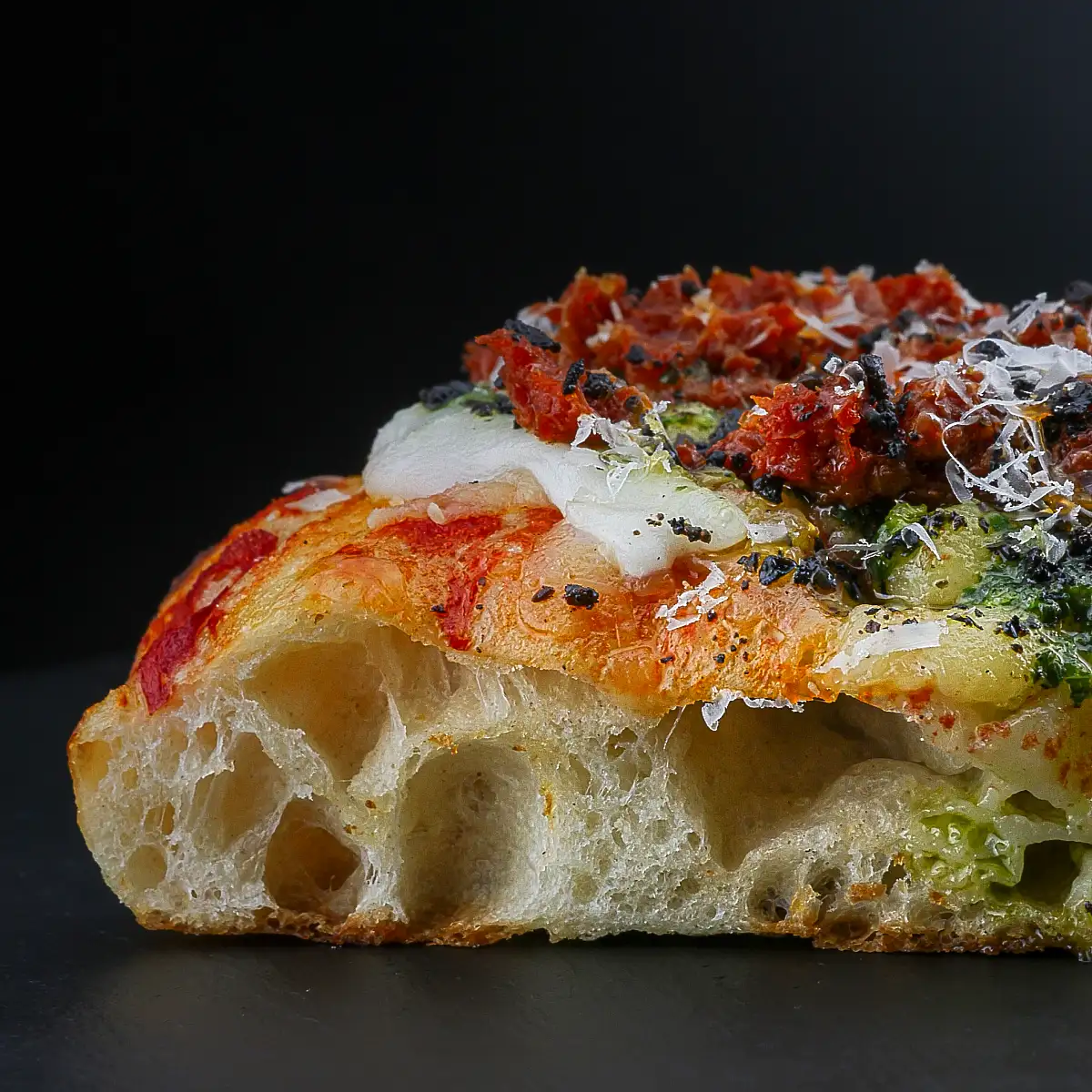
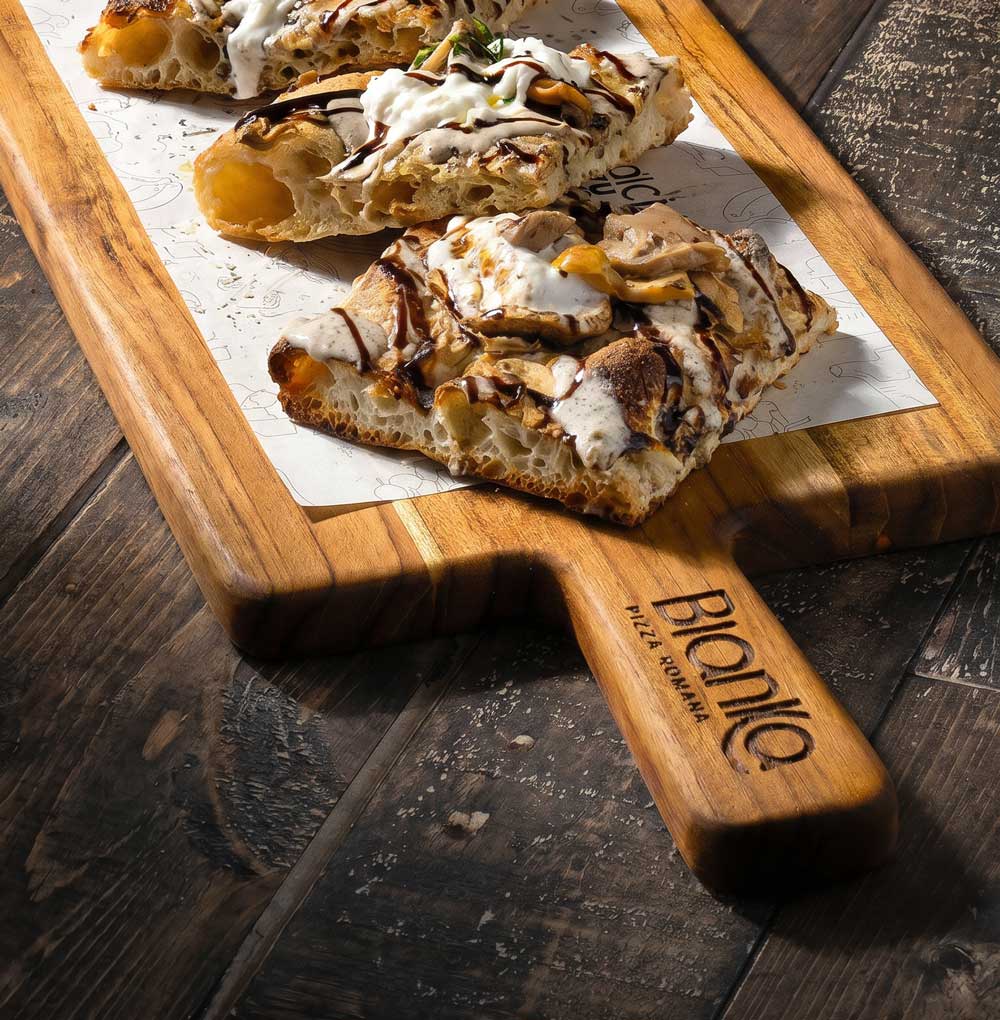
There is also the pizza al taglio or in teglia, probably one of the most underrated formats outside of Italy and one of the most exciting for anyone who appreciates fine bakery. It is baked in a tray, usually in a rectangular or square format, and sold by the slice or by weight. Its greatest virtue lies in the contrast: a firm base, an open-cell interior, a crispy surface, and a real ability to hold ingredients without collapsing. It is a style designed for serious cravings.
The 7 styles that are actually worth knowing
1. Neapolitan pizza
It is the most famous, and with good reason. Dough with careful fermentation, inflated rim, thin center, and very fast baking at a high temperature. Its charm lies in how soft, moist, and immediate it is.
Now, it is not the pizza for everyone. If you are one of those who love a crunch in every bite, you might find it too tender. If you are looking for a classic experience, ritualistic and deeply connected to Naples, it remains a strong bet.
2. Roman tonda pizza
The round Roman pizza is thinner and crispier than the Neapolitan. It is stretched more, has less prominence on the edge, and focuses on a firm base. Here the dough does not compete with the topping: it organizes it.
It is ideal for anyone who wants a light, less moist pizza with a more precise profile. It has that dry, crispy elegance that does not need to exaggerate to stand out.
3. Pizza in teglia
This style represents one of the most intelligent expressions of contemporary Italian pizza. It is baked in a tray, cut into rectangular slices, and allows for a very attractive interplay between long fermentation, a crispy crust, and an airy interior.
It is not a lesser pizza or a "quick" version of something else. On the contrary. When crafted with technique, in teglia can offer a dough complexity that many round pizzas do not achieve. In Costa Rica, it is still a valuable rarity, and that makes it even more memorable for anyone looking to step outside the usual menu.
4. Pizza al taglio
Very close to in teglia, but with a more street-style and dynamic identity. It is the counter pizza, the display-case pizza, the precise slice, the mix of flavors and spontaneity. In Rome, ordering a slice al taglio is part of daily life.
What is interesting is that it combines convenience with craftsmanship. It can be eaten quickly, yes, but a good al taglio does not sacrifice fermentation or texture. It has that rare virtue of being casual and sophisticated at the same time.
5. Ligurian-style Focaccia
It does not always enter the pizza conversation, but it should touch upon it more often. Focaccia shares baking DNA with many Italian styles and, in its best version, is a celebration of olive oil, salt, fermentation, and a light crumb.
The Ligurian version is usually thinner and has a glossy surface. It works on its own, as an accompaniment, or as a base for fillings. For anyone who truly appreciates dough, it is a noble, honest, and dangerously addictive format.
6. Florentine and Tuscan Schiacciata
The schiacciata lives in that delicious spot between flatbread and a gourmet experience. It has a firm structure, a marked crust, and a very Tuscan personality: simple in appearance, intense in execution.
When well-filled, it offers a different experience from traditional pizza. More texture, more architecture, more prominence of the dough. It is perfect for those who want something Italian, artisanal, and less predictable. Che buono, indeed.
7. Pizza al padellino
Originating in Turin, this pizza is cooked in a small pan or skillet. The result is usually a crispy base, a spongy interior, and a very practical individual shape. It does not have the fame of the Neapolitan or the global expansion of the Roman, but it deserves attention.
It is a very interesting style for those looking for personal portions with great dough development. It has a more baker-like profile and a very neat presence at the table.
What makes a style truly good
Not everything depends on the city of origin. A style can come with an Italian pedigree and still be poorly executed. Therefore, when talking about the best styles of Italian pizza, one must look beyond the name.
Fermentation matters tremendously. Dough crafted over time develops flavor, digestibility, and a more refined texture. Baking also defines the result: a very hot oven for elasticity and leopard spots, a tray for structural crispiness, a pan for a firmer base. None of this is accidental.
Then comes balance. There are styles that allow for heavier toppings and others that call for a light hand. Loading ingredients onto a pizza that relies on its delicate center can ruin it. On the other hand, a well-formulated in teglia holds up to more generous combinations without losing its shape or texture. There lies one of the major trade-offs: not every pizza satisfies all cravings in the same way.
How to choose among the best styles of Italian pizza
If you want a more classic and romantic dinner, with that air of universal tradition, the Neapolitan makes a lot of sense. If you place more value on crispiness and a more precise experience in the mouth, the Roman will probably win you over quickly.
If you are going out with friends, want to try multiple options, and get excited about sharing slices with personality, pizza al taglio or in teglia is a brilliant move. It allows for real variety, is visually enjoyable, and has that conversational aspect that turns food into an experience. For curious palates, this format usually offers more to play with.
If dough is the star of the show for you, focaccia and schiacciata deserve serious attention. They are less obvious choices, but precisely because of that, they feel more special. In a gastronomic scene where so many concepts look alike, choosing something with a strong bakery identity says a lot about the level of experience you want to have.
At Bianka® Pizza Romana, this vision becomes tangible with a concept focused on Roman pizza in teglia, stuffed focaccia, and schiacciata, made with a 72-hour fermentation and a crunchy texture that sets it apart from the average pizzeria. It is not just Italian pizza. It is a more specialized, more artisanal interpretation, and much more exciting for anyone who truly wants to try something different.
The Italian style that surprises the most in Costa Rica
In the local market, Neapolitan pizza already has recognition. But Roman, rectangular, and bakery-style pizzas still retain something very valuable: the discovery factor. For an audience that has already tried many versions of "artisanal pizza," encountering a good square pizza that is light and crispy can be a turning point.
This carries weight because nowadays eating out is not just about grabbing a meal. It is about choosing an experience with criteria. Something that feels well made, has a story, prompts a photo, a recommendation, and the desire to return. The less mainstream styles of Italy, when well-executed, achieve exactly that.
The next time you think of pizza, do not settle for just the category. Think of the style, the dough, and the texture you want to remember after the very last bite. That is where the true difference begins.