Apr 2, 2026
Artisanal Italian pizza in Costa Rica
If someone still believes that all Italian pizza tastes alike, they need to try one made with bakery-level standards, long fermentation, and a real obsession with texture. Talking about Costa Rican Italian artisanal pizza should no longer be limited to the classic round pizza with toppings on top. Today there is an audience asking for more - more technique, more authenticity, and more character in every bite.
That search is changing the way pizza is eaten in the country. It is no longer enough for it to be "artisanal" just because. The real difference appears when the dough has structure, when the crust is not just air with no flavor, when the crunch makes a sound, and when each ingredient was chosen to complement, not to hide flaws. So good.
What makes an Italian artisanal pizza different in Costa Rica
The expression is used a lot, but it does not always mean the same thing. A truly artisanal Italian pizza is born from concrete decisions: flours worked with technique, slow fermentation, well-managed hydration, precise baking, and ingredients that respect the style one wants to achieve.
In Costa Rica, that matters more than it seems. For years the market has been full of decent, fast, mass-produced offerings, but rarely specialized. That is why, when a pizza with a clear identity appears, you notice it from the first glance. The crumb has a different life, the base has different resistance, and the flavor of the dough stops being a detail and becomes part of the dish.
It is not just about culinary romanticism. It is about results. A dough fermented with patience develops better flavor, a lighter texture, and a gentler digestibility for many people. It is not magic. It is craft.
Technique changes everything
There are pizzerias that sell toppings. Others build pizza from the dough. That is the big difference.
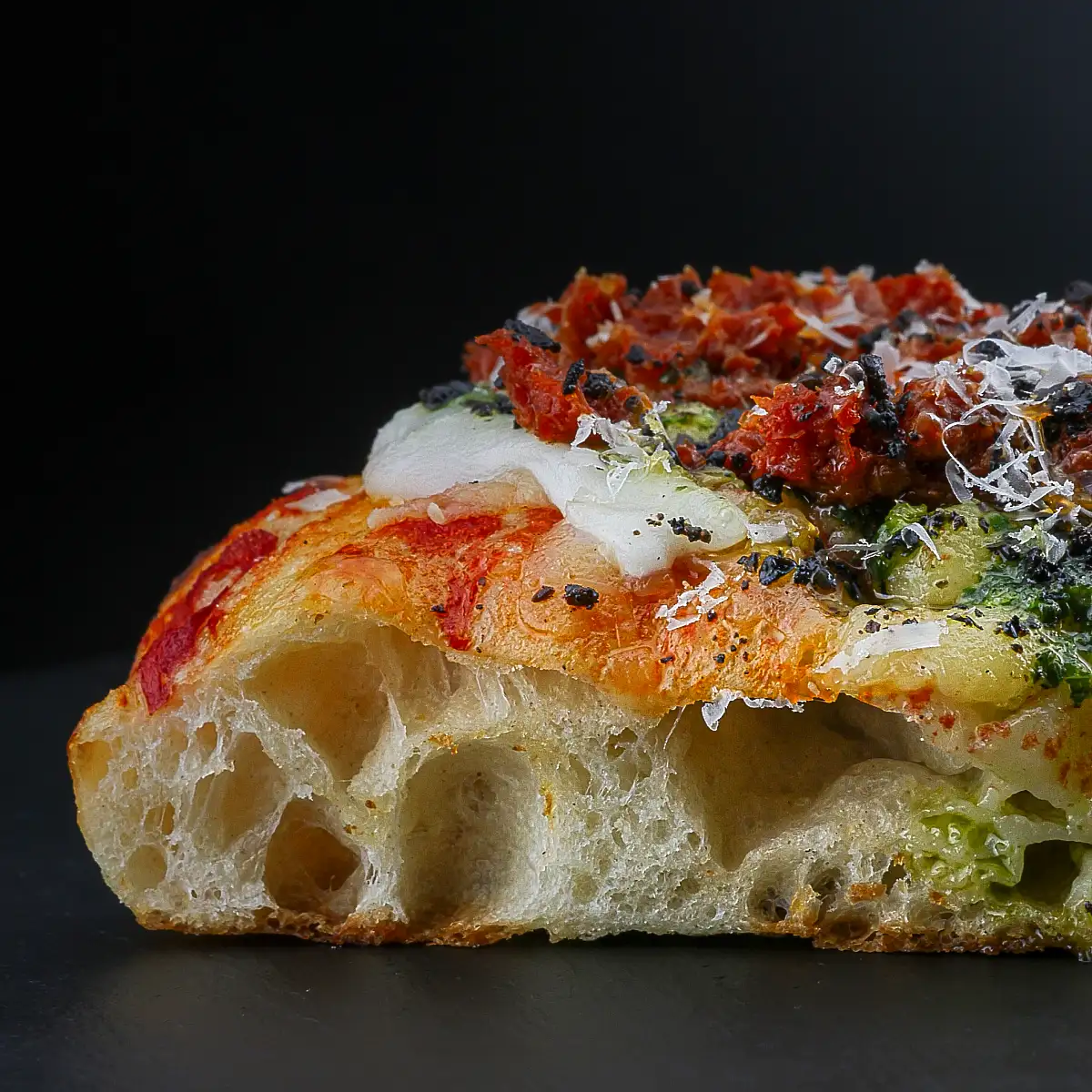
When a pizza goes through long fermentations, such as 72 hours, the final product gains complexity. The crust becomes crispier, the internal structure stays airy without losing support, and the bite has that very Italian balance between lightness and depth. That texture does not happen by accident or get improvised in the kitchen. It requires time, control, and a vision much more demanding than that of a standard pizza.
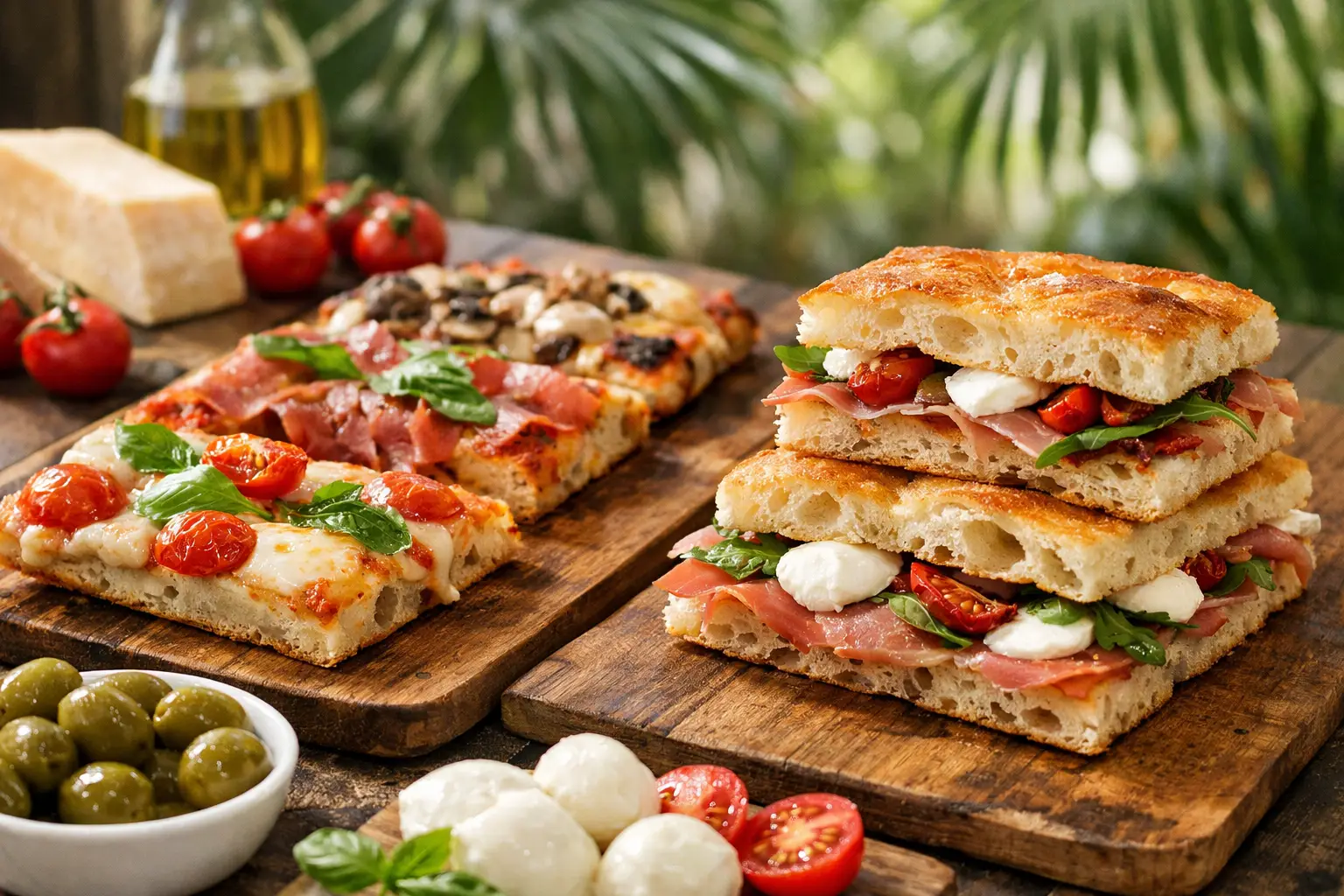
Style also matters. Not every Italian pizza follows the same code. Rome, for example, has a fascinating bakery tradition that gives life to less common formats in Costa Rica, such as the pizza in teglia, square-shaped, with a crispy base and a strong focus on texture. It is a pizza that feels contemporary, photogenic, and serious at the same time. Perfect for sharing, but memorable enough to want one for yourself.
Not every round pizza belongs in the same conversation
There is room for many styles, and that is fine. Neapolitan pizza has its place. Casual pizza does too. But if the topic is specialty, the standard rises.
Artisanal Italian pizza in Costa Rica is maturing precisely because consumers can already tell the difference. They know when a dough was thoughtfully designed and when it merely serves as a vehicle. They know when the cheese dominates everything without balance and when each component breathes. That shift in palate is pushing brands to define themselves better.
Why the Roman format is gaining attention
Italian cuisine is not just one thing, and that makes it even more interesting. Within that universe, the Roman tradition offers a different experience from the one many people know. More bakery-like. More crispy