May 7, 2026
A real artisanal Roman pizza guide
If you've ever ordered an “artisanal” pizza and got something decent, but forgettable, this guide to artisanal Roman pizza is for you. Because not every Italian pizza plays in the same league, and when you try a well-made Roman one - crisp on the outside, airy on the inside and crafted with real technique - the difference isn't explained: you feel it from the very first bite.
Artisanal Roman pizza isn't trying to resemble the classic round pizza that dominates most menus. It has a different logic, a different texture, and a different ambition. It comes from a more precise, crispier baking tradition and, when it's executed well, it's much more memorable. For an audience that no longer settles for the generic, that changes everything.
What makes artisanal Roman pizza different
The key is the dough, but not only the dough. Time, hydration, fermentation, baking, and the judgment used to choose each ingredient also matter. Roman pizza in teglia style, one of the most interesting expressions of this tradition, is made on a tray, with a light, airy structure that creates a firm base and a delicate interior.
That balance doesn't happen by accident. It takes skill. A long fermentation, for example 72 hours, allows flavor to develop, improves digestibility, and builds a much more refined texture. It's not a technical detail meant to impress. It's the reason a pizza can feel light and complex at the same time.
Then comes the baking. Artisanal Roman pizza should have real crispness. Not dryness. Not rigidity. Not a hard base that makes you chew too much. The right point is a crispy crust, with just enough resistance, that holds the toppings well without losing that airy feeling that makes it addictive.
Guide to artisanal Roman pizza: what to look for
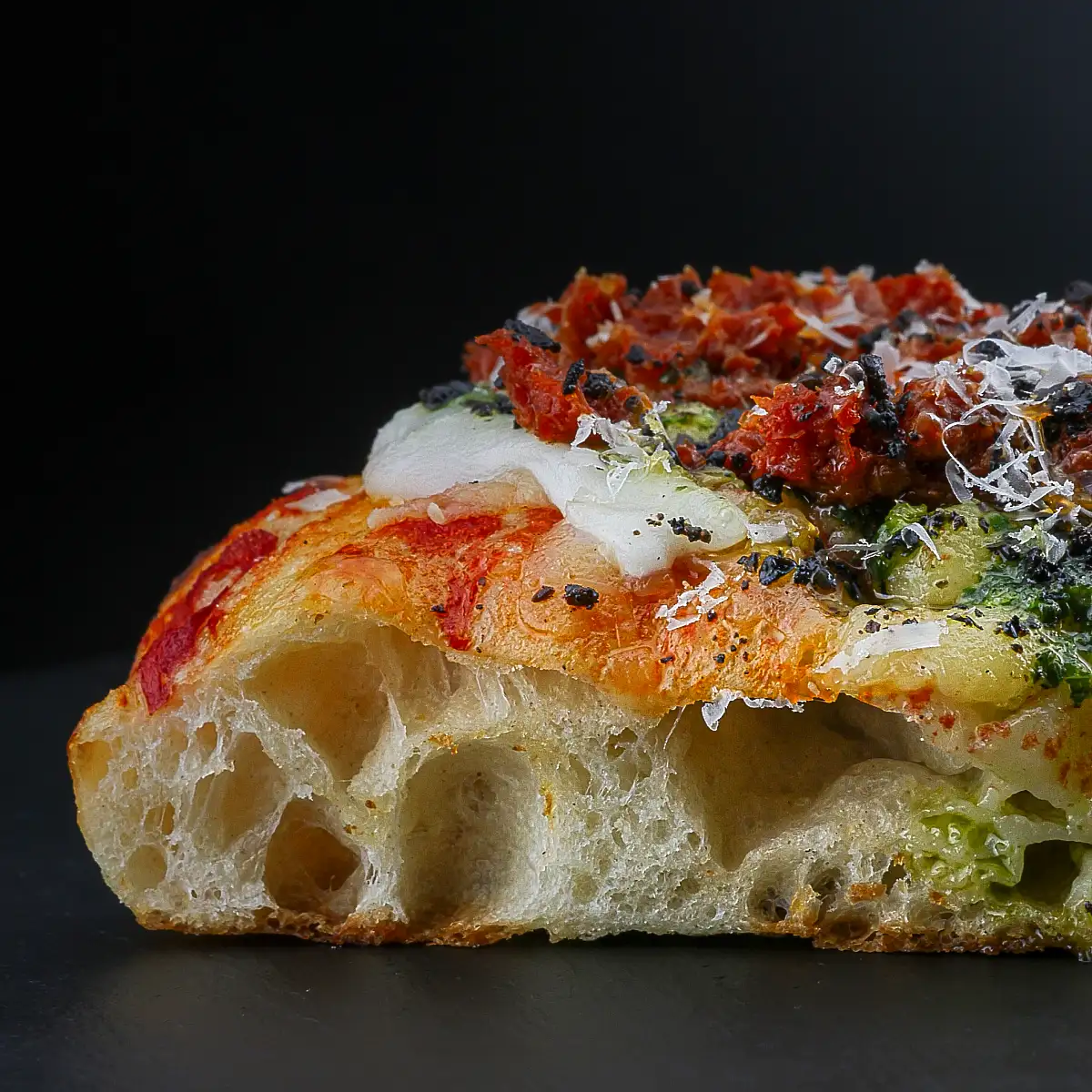
If you want to recognize a good artisanal Roman pizza as soon as it arrives at the table or at your home, there are clear signs. The first is visual. A well-fermented dough shows volume, irregular bubbles, and a lively structure. It doesn't look flat or compact. You can tell it was worked.
The second sign is in the sound and the bite. Yes, the sound. When the base is well made, that crispness can be heard slightly when you break or bite into it. No need to overdo the scene. It simply feels fresh, dry on the surface, and well baked.
The third is balance. In a serious artisanal Roman pizza, the toppings support, they don't flatten. If the sauce takes over, the cheese overwhelms, or the oil covers everything, the dough loses its prominence. And in this style the dough isn't the vehicle: it's the star.
It's also worth looking at the bottom. It should be golden, even, and firm, not pale or burnt. A base that's too dark can bring bitterness. A base without color often reveals a lack of development. Like almost everything in real Italian cooking, the secret is in the exact point.
Texture changes everything
There are pizza styles that win you over with abundance. Artisanal Roman pizza seduces with texture. That difference matters more than it seems.
When a dough has long fermentation and good hydration, air gets trapped in a well-formed gluten network. The result is a light crumb, with air pockets, and a crisp crust that doesn't feel heavy. That allows each ingredient to stand out better. The tomato tastes cleaner. The mortadella feels more delicate. The burrata contrasts better. The olive oil finishes rounding things out, not covering them up.
That's why this type of pizza connects so strongly with those looking for a more refined dining experience. It's not just about eating something delicious. It's about noticing that there was judgment behind it. That the product was designed to be enjoyed attentively, even if the moment still feels casual.
Good ingredients don't save a bad base
Here's a simple truth: you can have Italian cured meats, premium cheeses, and fresh vegetables, but if the dough fails, the pizza fails. Artisanal Roman pizza depends on a technically solid base. Without that, everything else is expensive decoration.
That said, a great dough isn't enough if the ingredients aren't chosen with intention. Roman and Florentine cooking teach something valuable: fewer elements, better selected. A well-resolved combination has contrast, saltiness, acidity, and richness in proportion. Nothing is extra. Nothing competes too much.
That shows especially in formats like square pizza or stuffed schiacciata. Both require precision. If you load them too much, you lose structure. If you hold back too much, you lose character. The fine point is part of the artisanal value.
Artisanal Roman pizza is not the same as “gourmet” pizza
Many places use the word gourmet to justify eye-catching combinations or expensive ingredients. But artisanal Roman pizza and gourmet pizza are not synonyms.
Artisanal Roman pizza is first and foremost about technique and tradition. Premium comes later, as the natural result of doing things right. By contrast, a pizza can look sophisticated and still be clumsy in execution. Lots of toppings, little identity. Lots of aesthetics, little skill.
If you really want a superior experience, a flawless dough with three well-thought-out ingredients is worth more than an overloaded pizza that bends, gets soggy, and loses all its crispness within five minutes.
The format also matters
Part of this school’s charm is in its formats. Round pizza has its place, of course. But Roman in teglia offers a different experience: more defined portions, more consistent edges, and a surface that favors even baking.
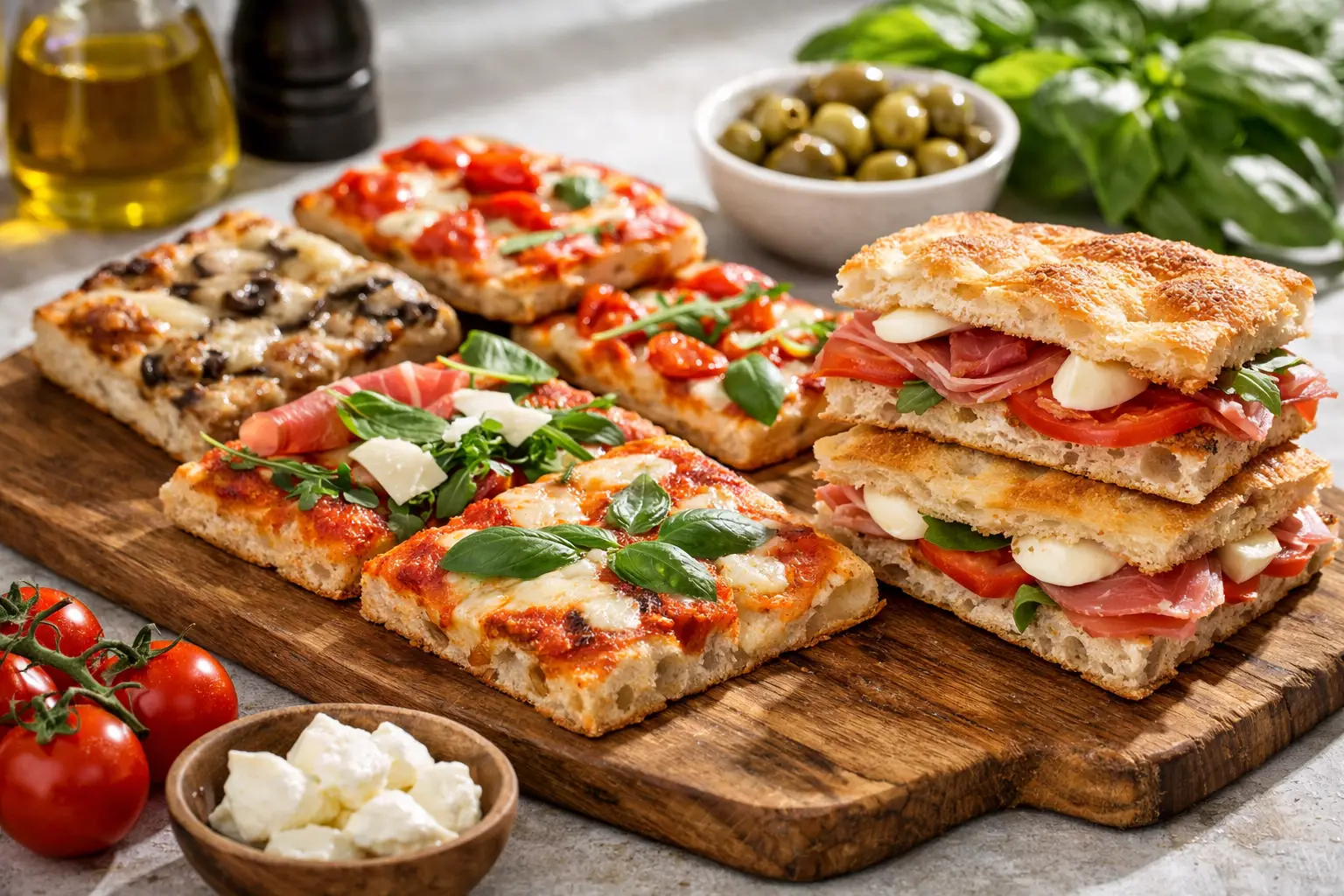
Square pizza, moreover, has a practical and sensory advantage. Each piece preserves a very pleasant relationship between base, edge, and topping. There are bites with more crispness, others with more interior softness. That makes it ideal for sharing, trying multiple flavors, or turning a casual meal into something much more conversational.
And if we're talking about Italian baking applied with judgment, stuffed focaccia and schiacciata take the offering even further. These are formats that demand real technique and speak to a less obvious, more specialized food culture. That's precisely where their appeal lies.
How to choose a good option in Costa Rica
In a market where many pizzas look alike, finding a genuinely Roman offering requires a good eye. First, check whether the business explains its technique clearly. If it talks about fermentation, texture, style, and a specific tradition, there is probably a more serious intention behind it. If everything revolves around toppings, promotions, and sizes, the approach usually goes another way.
It also helps to see whether the brand defends a specific style or tries to be everything to everyone. Truly memorable proposals tend to specialize. When a pizzeria deeply understands a format, it shows in the final product, in consistency, and in the menu’s personality.
In Costa Rica, where the category is still not saturated with authentic Roman pizza options, choosing well makes an even bigger difference. A pioneering, well-executed offering doesn't just give you a delicious meal. It opens the door to another way of understanding Italian pizza. More technique, more crispness, more memorable. So good.
When it's worth ordering artisanal Roman pizza
You don't have to wait for a formal occasion. In fact, part of its charm is elevating everyday moments. A night out with friends, a date you want to feel special, a Friday meal without falling into the usual, even a family gathering when you're in the mood to try something different.
That said, there's an important detail: this style shines most when it arrives fresh and well baked. If you're ordering, it's best to do it from a place that knows how to pack it to protect texture and temperature. If you go to the restaurant, even better. The full experience stands out more when the pizza comes out of the oven and reaches the table at its best.
In San Pablo de Heredia, Bianka® Pizza Romana has pushed that conversation precisely: showing that Italian pizza can be much more than what's familiar, with a proposal focused on long fermentation, the in teglia format, and an identity that doesn't resemble a generic pizzeria.
The real test is the second bite
The first bite surprises. The second confirms it. That's when you know whether you're facing a well-made artisanal Roman pizza or a version that only uses the name. If the texture still feels alive, if the flavor becomes more interesting, if you feel lightness instead of heaviness, you've found something serious.
And when that happens, you're no longer just looking for pizza. You're looking for judgment, technique, and that crispness that turns a meal into an experience. Next time you crave something special, choose with more intention. Your table will notice.