Apr 6, 2026
Best crispy pizza in Heredia: what makes it
There are pizzas that feel right. And there are others that, from the first bite, make it clear they belong in another category. If you're looking for the best crispy pizza in Heredia, the difference isn't just that it “sounds” when you break it apart. It's in the technique, in the fermentation, in the baking, and in a much more precise idea of what a well-made pizza means.
Real crispiness is no accident. Nor is it achieved by overloading the dough to make it hard or drying it out too much in the oven. A well-crafted croccante pizza has contrast. The crust snaps with character, but the interior retains air, lightness, and structure. That balance is what separates a memorable experience from an ordinary pizza.
What defines the best crispy pizza in Heredia
In Heredia there is increasing interest in gastronomic proposals with identity. That has sharpened people's taste. A “big pizza” or lots of toppings is no longer enough. Someone who truly appreciates a crispy pizza looks for something else: flavor in the dough, a stable base, well-baked edges, and a texture that keeps its personality until the last slice.
The best crispy pizza in Heredia shouldn't depend on tricks. It should start long before the oven. The right flour, proper hydration, resting time, and slow fermentation build the foundation of the result. When dough goes through that process, it doesn't just improve in texture. It also develops flavor, digestibility, and a more elegant structure when you bite into it.
That point matters more than it seems. Some pizzas come out hot and feel crispy for two minutes, but soon after they turn soft, heavy, or gummy. That's where you notice whether there was technique or just improvisation. A good croccante pizza keeps its level. It doesn't collapse when you hold it. It doesn't fold over helplessly. It doesn't leave you feeling like you're eating wet bread with cheese on top.
The dough: where it all begins
When people talk about crispy pizza, many first think of the oven or the cheese. But the real story begins with the dough. If the base isn't well formulated, no topping can save it.
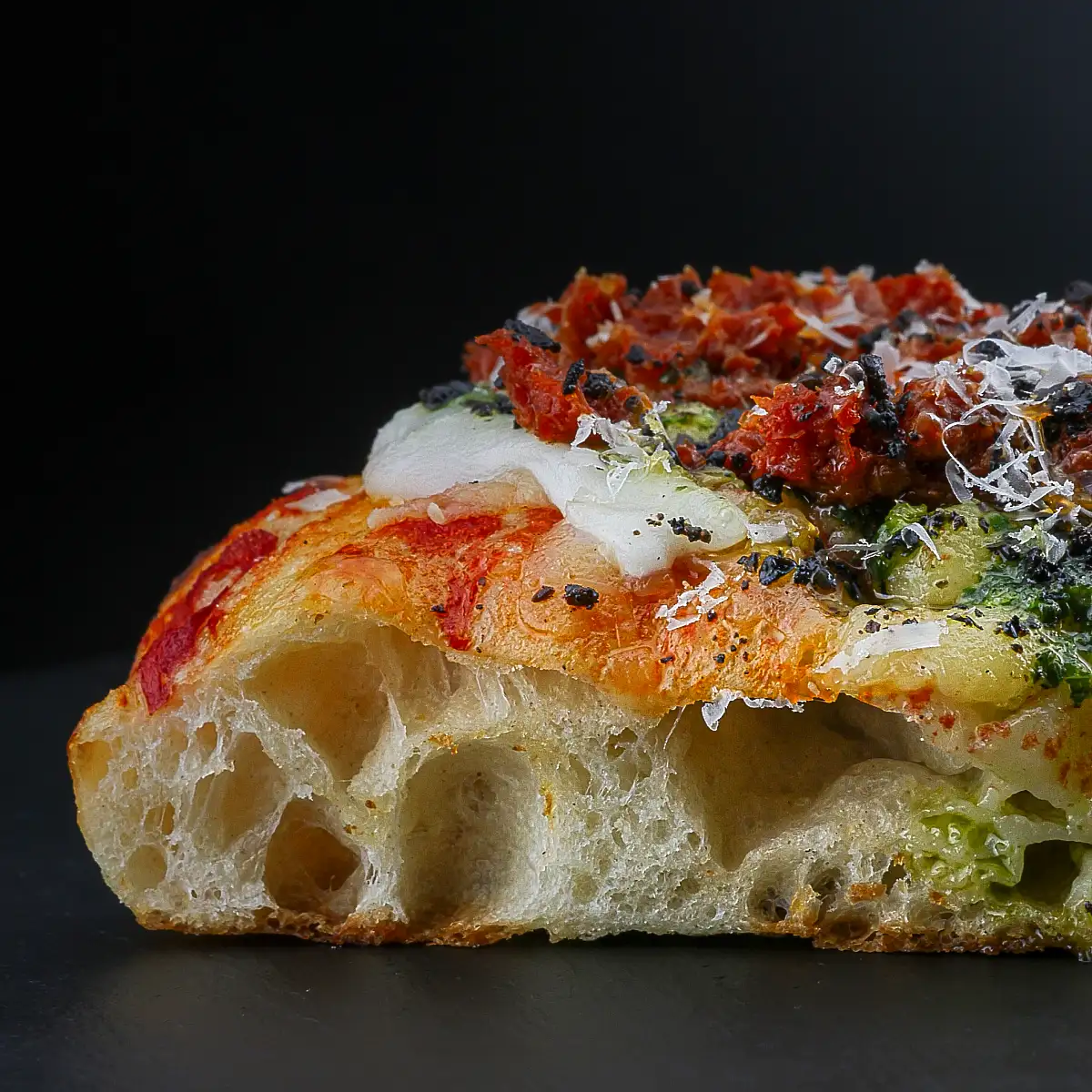
Long fermentation changes the game. A dough worked over time develops internal bubbles, depth of flavor, and a lighter texture. In more specialized Italian styles, like the Roman pizza in teglia, that detail is not secondary. It is the heart of the product. The idea is not just to serve pizza. It is to build a base with its own identity.
That's why a premium crispy pizza feels different from the first look. It has a more orderly structure, a golden surface, a firm base, and a more artisanal profile. It doesn't compete on excess. It competes on precision.
And yes, there is also an element of expectations. Someone used to traditional round pizza may be surprised when trying a Roman-inspired square pizza. But that surprise works in its favor when the texture responds with a clean crunch, an airy crumb, and toppings placed with intention, not just piled on.
Not every croccante pizza is the same
Here it is worth saying something honestly: “crispy” can mean different things depending on the style. A thin pizza can be dry and brittle. Another can have a firm base, a light interior, and a much more sophisticated bite. Both could be described as crispy, but they don't offer the same experience.
The best version is usually the one that balances crunch and pleasure. If the pizza breaks like a cracker, it loses its charm. If it is too soft, it does too. The ideal point is in that Italian contrast that makes every bite have texture, lightness, and flavor.
That's where the bread-making styles of Rome and Florence contribute a great deal. They are proposals that understand dough as the star. Not as a mere support. That's why formats like pizza in teglia or schiacciata connect so well with those who want to eat something different, more refined, and with real culinary intention.
The oven, the assembly, and the exact moment
A great dough can be ruined in seconds if the baking goes wrong. To achieve a high-level croccante pizza, the oven has to do more than cook. It has to set the structure, brown without drying, and respect the natural moisture of each ingredient.
Assembly also matters. When a pizza is overloaded with sauce, cheese, or greasy toppings, the base suffers. It loses definition. It gets soggy. It becomes heavy. That happens a lot with offerings that try to impress by quantity, not execution.
A truly well-thought-out pizza understands that less can be much more. A good pomodoro, mozzarella in the right proportion, quality vegetables or cured meats, and dough made with technique do the work. The result feels premium because each element has room to stand out.
That criterion makes the difference between a photo-worthy pizza and a pizza that, beyond looking good, delivers in the mouth. And today the consumer in Heredia does notice that difference. They look for a product with a story, craft, and real texture. Not just a quick dinner.
Best crispy pizza Heredia: why the Roman style stands out
If we talk about best crispy pizza Heredia, the Roman style has very serious arguments to take the lead. Its identity revolves around the dough, the crunch, and an experience less common in the local market. It's not the usual pizza. And that's exactly why it draws so much attention.
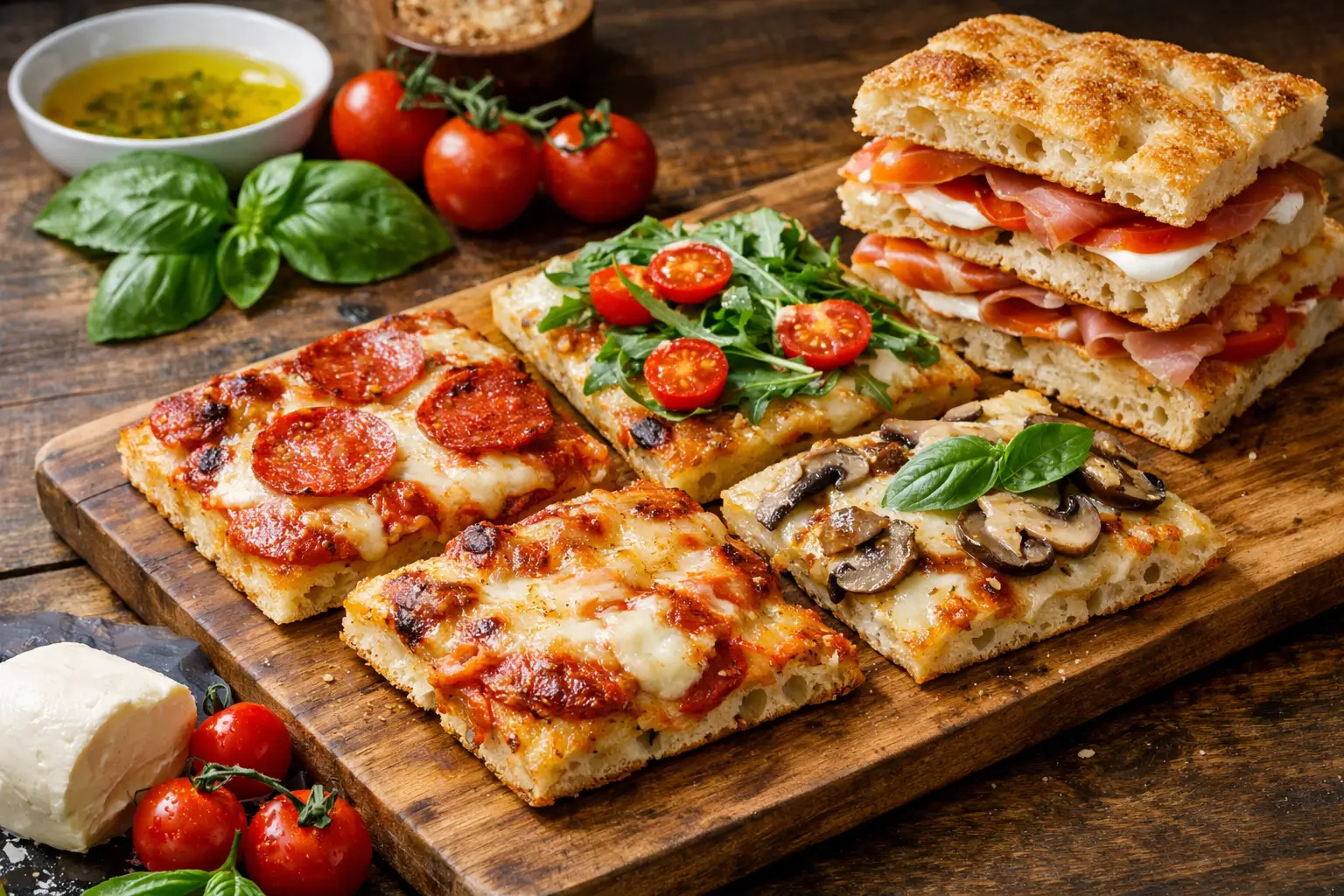
Roman pizza in teglia works with a base that is airy and crispy at the same time, with a bake that favors defined edges and a bite with character. It is a pizza enjoyed as much for texture as for flavor. It has a clean aesthetic, a modern personality, and a culinary weight that goes beyond the casual.
For a public like Heredia's, which increasingly values authentic, well-executed offerings, that makes a lot of sense. Going out to eat is no longer just about satisfying a craving. It's about trying something that is worth the outing, the photo, the conversation, and the recommendation to the group.
In that space, a specialized proposal like Bianka® Pizza Romana stands out clearly. Its focus on 72-hour fermentation, croccante texture, and less conventional Italian formats responds exactly to what someone looking to elevate the pizza experience in San Pablo de Heredia wants. So good, yes, but with substance.
How to recognize a truly crispy pizza
There are simple signs that help identify whether you're facing a serious pizza. The first is the sound and the resistance when you bite into it, but it's not the only one. The base should hold up well when lifted. The crumb should look light, airy. The flavor of the dough has to feel developed, not neutral.
It's also worth paying attention to what happens after a few minutes. If the pizza holds its structure and keeps its crunch, there's technique behind it. If it gets soggy almost immediately, the balance probably wasn't done right.
Another key detail is digestion. Although it sounds unglamorous, it matters. A well-fermented dough usually feels lighter. It lets you enjoy the food without that unnecessary heaviness that many people accept as “normal” after eating pizza. It shouldn't be.
Is it worth paying more for a pizza like this
It depends on what you're looking for. If you just want to solve a quick meal, probably not. But if you value ingredients, process, texture, and authenticity, then yes, it makes all the difference.
Well-made artisanal pizza doesn't compete in the same arena as generic pizza. It competes in experience. In flavor. In memory. And when the product is truly well executed, you can tell that the price reflects craftsmanship, not pretense.
That applies especially in a food scene where more and more people prefer to eat out less often, but do it better. A premium, crispy, well-fermented pizza fits perfectly into that logic. It becomes a plan, a craving, and a recommendation.
What you're really looking for when you search for crunch
In the end, when someone types “best crispy pizza in Heredia” into Google, they're rarely looking for just a texture. They're looking for an experience that feels different. Something with more character, more technique, and more intention.
They're looking for a pizza that doesn't look like all the others. One that truly has Italian identity. One that arrives at the table with presence, with a croccante base, with live dough, and with that immediate effect of “this really is on another level”.
And that search makes sense. Because when you find a well-made crispy pizza, you don't want to go back. You want to repeat, you want to bring someone along, and you want to order it again. Simple as that.