May 11, 2026
Best toppings for artisanal Roman pizza
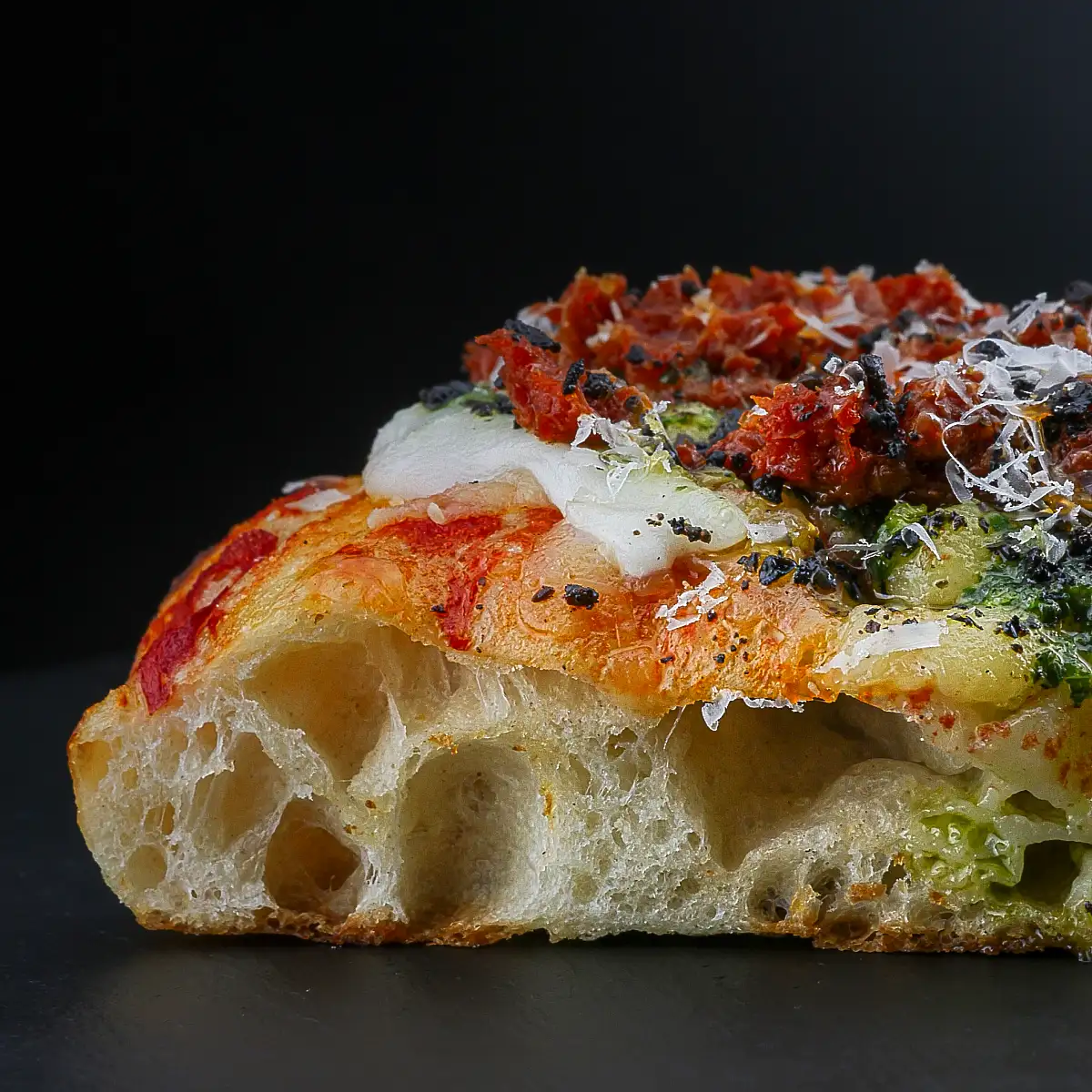
A handcrafted Roman pizza doesn't fall apart from lack of effort. It falls apart from too many toppings. When the base has a long fermentation, an airy structure, and that crunch you can hear in the first bite, not everything goes with it and not everything can be piled on top. That's the real difference when talking about the best toppings for handcrafted Roman pizza: it's not about adding more, but choosing better.
The pizza romana in teglia has its own rules. Its dough is light, crisp, and deeply bready. That completely changes the logic of the ingredients. What works on a round pizza, moister or stretchier, doesn't always shine here. On the artisanal Roman one, the ideal topping complements the texture, it doesn't cover it. It elevates it. It lets it speak.
What makes the best toppings for artisanal Roman pizza different
The first criterion is moisture. A crisp, well-baked base loses impact when it gets ingredients with too much water, heavy sauces or combinations that end up steaming. Roman pizza needs toppings that respect the bake and maintain contrast.
The second criterion is weight. The in teglia dough can hold quite a lot, yes, but the premium experience is in the balance. If every bite tastes only of melted cheese and fat, the technical work underneath gets lost. And if the dough gets lost, half the pizza gets lost.
The third is intensity. The best toppings don't all compete at the same volume. A good Roman pizza usually has one clear star, one or two supporting players, and an aromatic finish. When everything wants to stand out at once, nothing ends up standing out.
The base leads: crisp first, topping later
Before thinking about eye-catching combinations, you have to understand the base. In artisanal Roman pizza, the dough is not a neutral vehicle. It has flavor, airiness, structure and personality. That's why the toppings should talk to that bready profile.
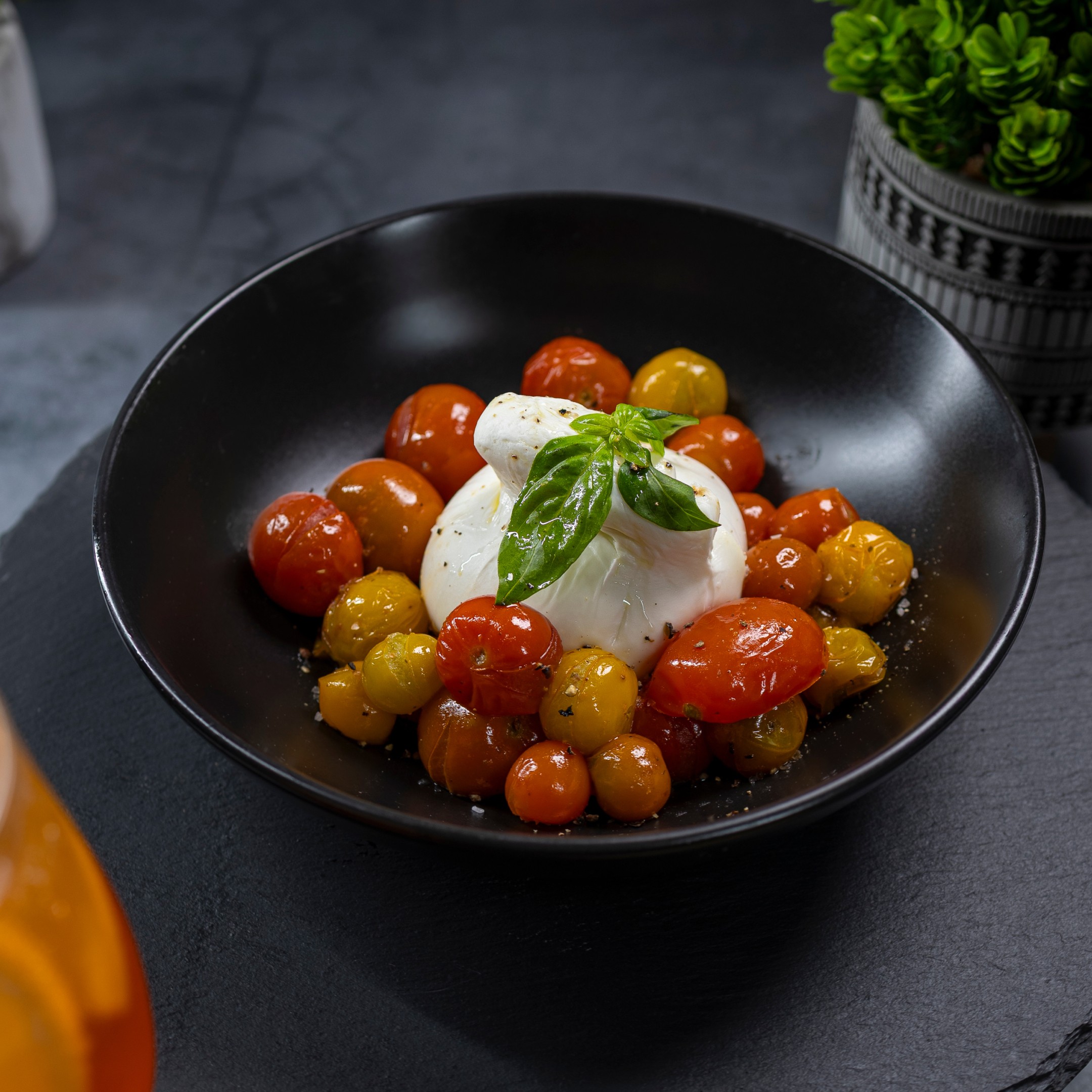
Ingredients like mortadella, burrata, stracciatella, prosciutto, zucchini, potatoes, mushrooms or caramelized onion work very well because they add layers of flavor without erasing the texture. By contrast, mixes with too much sauce, very juicy pineapple, too much cheese or very fatty meats can make the surface heavy and less defined.
It's not an absolute rule. There are more intense combinations that also work. But only when they're measured with judgment. In artisanal cooking, the details rule.
The toppings that best suit an artisanal Roman pizza
Well-made tomato sauce remains one of the main stars. It doesn't need disguising. On Roman pizza, a balanced red base, slightly sweet and with good acidity, allows you to build cleaner flavors. If you add fiordilatte, fresh basil and a drizzle of olive oil, you get a classic combination that never feels basic.
Mortadella deserves its own mention. Over a crisp base, its silky texture creates a spectacular contrast. If paired with pistachio or a smooth cream, the result feels elegant, modern and very Roman. Che buono. That said, mortadella works best added at the end or with controlled heat, so it doesn't lose its character.
Mushrooms are also among the best toppings, especially when they're handled well and not used as an uncontrolled, wet filling. Sautéed mushrooms, cooked properly, add depth and umami. With mozzarella, pecorino or a touch of truffle, the pizza becomes more complex without losing its lightness.
Potato is another topping that's very underestimated outside Italy. On Roman pizza it makes perfect sense. Thinly sliced potatoes, olive oil, rosemary and salt make a simple and spectacular combination. If there's also mild cheese or some pancetta, the result can be memorable. Here the key is thin slicing and proper cooking. Thick or undercooked potato kills the experience.
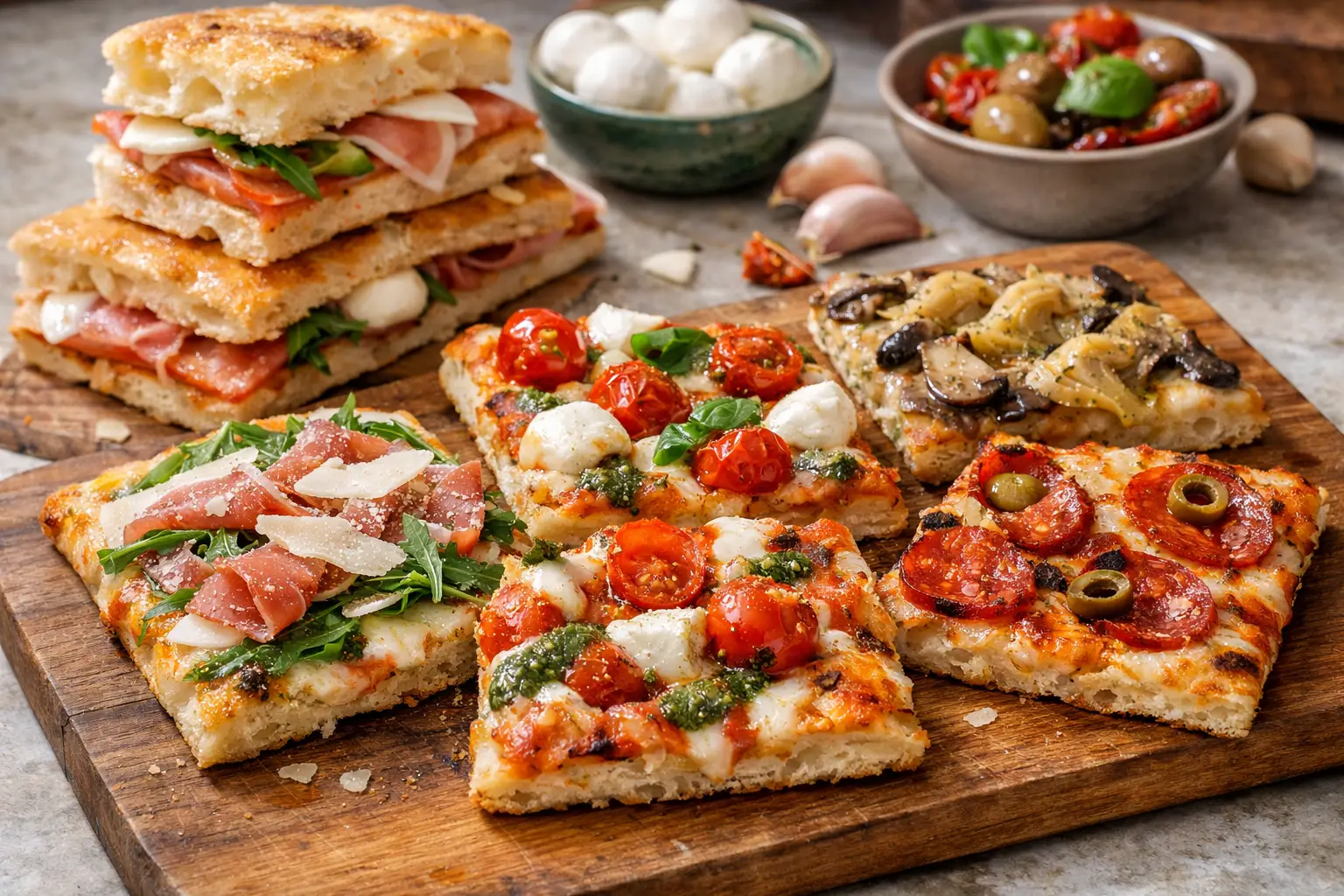
Cured meats, such as prosciutto crudo or spicy salami, work very well when used sparingly. Prosciutto brings elegant saltiness and goes incredibly well with arugula, burrata or Parmesan. Spicy salami works better with tomato, cheeses that melt well and maybe a touch of hot honey if you're going for a more current profile. In both cases, less is usually more.
Vegetables handled well elevate an artisanal Roman pizza a lot. Zucchini, eggplant, onion, zucchini blossoms, artichoke or sweet peppers can deliver brilliant results. The difference lies in technique. Roasted, candied or sautéed, they concentrate flavor and control moisture. Raw or poorly drained, they complicate the texture.
Combinations that do make sense
One of the best formulas for artisanal Roman pizza is to mix a creamy base with a cured ingredient and a fresh element at the end. For example, fiordilatte, prosciutto and arugula. Or stracciatella, mortadella and pistachio. That structure creates layers, contrast and a more refined sensation.
Another winning combination is tomato, cheese and a vegetable worked with technique. Tomato with roasted eggplant. Tomato with artichoke. Tomato with caramelized onion. They are flavor profiles that feel Italian, well put together and very enjoyable for those who want something more interesting than the generic pizza of always.
White pizzas also work great. Not all of them need red sauce. A white base with potato, rosemary and cheese has a brutal elegance. One with mushrooms and pecorino feels intense, yet clean. One with burrata and zucchini can be delicate and very photogenic, without falling into the obvious.
Common mistakes when choosing toppings
The most frequent mistake is believing that artisanal means overloaded. No. Artisanal means executed with intention. If you put five meats, triple cheese, two sauces and wet vegetables on a crisp dough, the result will probably be heavy, confusing and less memorable.
Another mistake is copying viral combinations without thinking about the pizza style. There are toppings that look incredible on social media, but they don't respect the logic of a pizza romana in teglia. Too much cream, poorly cut ingredients or finishes that are too sweet can throw everything off balance.
You also have to be careful with premium ingredients used without judgment. Burrata, truffle, prosciutto, pistachio or hot honey don't make a pizza good on their own. If there isn't harmony between base, bake and topping, they feel like luxury stuck on by force.
How to choose based on what you want to eat
If you want a classic, safe experience, tomato, mozzarella, basil and some fine cured meat are usually a great introduction to the Roman world. They are recognizable flavors, but with a different texture and a different execution.
If you prefer something more sophisticated, look for white combinations or pizzas with contrast between creaminess and crunch. Mortadella with pistachio, potato with rosemary, mushrooms with pecorino or burrata with roasted vegetables are choices that feel special without being pretentious.
If you like something more intense, you can go for spicy salami, cheeses with more character, caramelized onion or combinations with a well-measured sweet touch. It's just that here balance matters even more. Intensity shouldn't mean saturation.
For sharing, it's best to think in terms of a variety of profiles and not just one pizza loaded with everything. Roman pizza is perfect for trying several flavors by the slice, comparing textures and discovering which topping really lets the dough shine.
The final detail that separates a good pizza from a great pizza
Finishing touches matter a lot. A topping may be well chosen, but if the final touch is missing, the pizza falls short. A drizzle of good olive oil, citrus zest in specific cases, fresh basil, pecorino, freshly ground pepper or a cream added after the oven can change everything.
That last gesture is not decoration. It's part of the flavor design. In a truly specialized offering, each element comes in at an exact moment: before the oven, during, or when it comes out. That's where you feel the difference between a well-thought-out pizza and one that's simply assembled.
That's why, when we talk about the best toppings for artisanal Roman pizza, the real answer isn't an endless list of ingredients. It's a way of combining them with respect for the dough, the technique and the complete experience. In proposals like Bianka®, where Roman pizza is worked with its own identity, that is noticeable from the first bite.
The next time you choose a pizza, think less about quantity and more about intention. Because when the base is truly made, the best topping isn't the most extravagant. It's the one that lets everything else taste better.