Oct 8, 2026
Casual fine dining with Roman flavor
A good night out doesn't always require rigid tablecloths, ceremonious wine glasses, or a menu that's impossible to pronounce. Casual dining experiences are born from a different desire: to eat something extraordinary, to share without rushing, and to leave with the feeling of having tasted a concept that has history, technique, and plenty of flavor.
For those who live at the pace of the Greater Metropolitan Area, that balance is worth its weight in gold. Dinner can be spontaneous after work, a date night, a gathering with friends, or the place to celebrate good news without turning it into a formal event. Casual doesn't have to be generic. It can be croccante, artisanal, and deeply Italian. Che buono.
What makes a casual culinary dinner special
The difference isn't in putting extravagant ingredients on a plate. It's in taking care of the essentials. A well-fermented dough, a product with identity, thoughtful combinations, and an atmosphere where you can talk, laugh, and ask for another slice without unnecessary protocols.
A casual culinary dinner feels relaxed, but there is craftsmanship behind it. The diner doesn't have to study a menu to enjoy it, yet they can perceive that every detail was worked on: the aroma of freshly baked bread, the contrast between a croccante base and a light interior, the intensity of a well-chosen cheese, or the freshness of a sauce that doesn't try to hide.
The format also matters. Shared dishes change the energy of the table. They invite you to taste, compare favorites, and go back for that slice that someone swore they weren't going to order. Instead of a distant experience, a more lively and social dinner emerges.
Roman pizza changes the conversation
When talking about pizza, it's easy to think of the familiar: a round dough, plenty of cheese, and a quick dinner. But Italy has many ways of understanding this product, and Roman-style pizza in teglia plays in a different league.
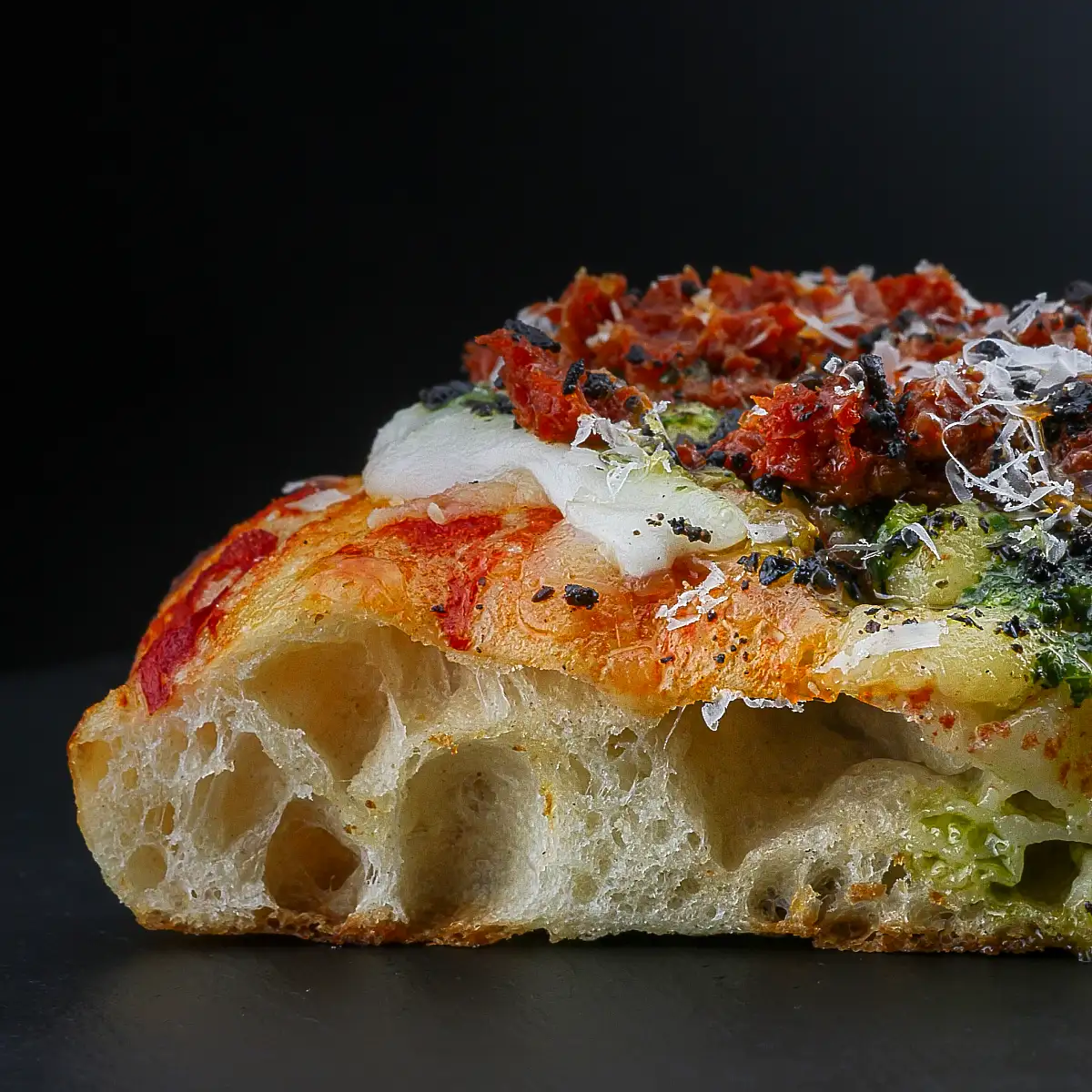
Its rectangular format is not a decorative detail. It is linked to a baking tradition that privileges an airy dough, a crispy crust, and a structure capable of supporting ingredients without becoming heavy. It is cut into slices, shared naturally, and allows each person to map out their own flavor journey throughout the evening.
Slow fermentation is a decisive part of that experience. When a dough ferments for 72 hours, the result can feel more developed in aroma, texture, and lightness. It's not magic or an empty promise: it's time, precision, and respect for the process. That kind of technique turns an apparently simple product into an experience to remember.
That's the point: a casual dinner can have the comfort of eating pizza, but the excitement of discovering a texture that doesn't resemble that of a conventional pizzeria. The first bite crunches. Then a delicate crumb with character appears. Conversation stops for just a few seconds. That is a very good sign.
Sharing doesn't mean settling
There is a misconception that a dinner meant for sharing must be simple or unrefined. In reality, sharing is one of the most generous ways to eat well. It allows you to order different options, combine flavor profiles, and turn the table into a more open experience.
Pizza in teglia is ideal for this because each slice retains its presence. It doesn't arrive as an insignificant side, but as a starring piece. One combination can lean toward the classic, with tomato and mozzarella; another can play with cold cuts, vegetables, creams, or seasonal ingredients. The secret is for the dough to support the whole and remain memorable on its own.
The stuffed focaccia and the schiacciata also elevate the plan. These formats are born from Italian bread culture, designed to be eaten with your hands, but executed with criteria. They work incredibly well when the group wants something different, when there's real hunger, or when a dinner needs more variety without losing coherence.
How to choose casual culinary dinners for every occasion
Not every night calls for the same thing. Choosing well doesn't depend on following strict rules, but on understanding what the table wants to feel.
For a date, a concept that allows for uninterrupted conversation and uncomplicated sharing is ideal. Ordering two different varieties opens up a natural excuse to comment on flavors, swap slices, and discover which one wins the night. It's a relaxed plan, but with more personality than the usual automatic dinner.
For an outing with friends, variety rules. A table with several Roman pizzas, stuffed focaccias, and well-chosen drinks avoids the dilemma of everyone wanting the same thing. In addition, the shareable format keeps the social rhythm going: no one waits too long, no one is left out of the experience, and there is always something new to try.
For a young family, the key is finding quality without solemnity. Children can enjoy a recognizable product, while adults appreciate the technique, ingredients, and a less predictable concept. It is a smart way to turn a practical meal into a small culinary journey.
And if the occasion is a celebration, there's no need to wait for a huge milestone. Finishing a project, hosting a visitor, or simply surviving an intense week also deserves a good table. The best casual dinners have that virtue: they make the everyday feel special without asking for permission.
The atmosphere is also part of the meal
The food is the protagonist, but the place defines the memory. A casual culinary dinner needs a clear energy: attentive service, visual identity, aromas that work up an appetite, and an atmosphere where it feels good to arrive without too much planning.
Too much formality can create distance. Conversely, a space with character allows the product to speak loudly. When you see a rectangular pizza fresh out of the oven, golden on the edges and ready to cut, long speeches are unnecessary. The promise is on the table.
In San Pablo de Heredia, Bianka® Pizza Romana offers precisely that blend of novelty and craft: Roman pizza in teglia, stuffed focaccia, and schiacciata crafted from a specialized perspective of Italian tradition. It doesn't seek to imitate the usual pizzeria. It seeks to offer a dinner with texture, baking culture, and an identity that is noticeable from the very first cut.
Casual is not synonymous with improvised
A relaxed experience can require a lot of hard work behind the scenes. In fact, the simpler it seems to enjoy it, the better the concept is executed. The selection of flours, hydration management, fermentation times, oven temperature, and the balance of ingredients are part of a chain that cannot be resolved at the last minute.
That's why it's worth choosing places that explain their concept clearly and back it up with their product. It's not about chasing premium labels just because. It's about looking for real quality: a dough made with technique, ingredients that bring something concrete to the table, and formats that have a reason for being.
There are nights for a long, formal dinner. There are also nights for something quick. But between both extremes lies a much more interesting space: a dinner without rigidity, with excellent product, and with enough details to make the night out feel different. That's where the casual culinary dinners you truly want to repeat live.
The next time the plan is "let's go grab a bite," raise your expectations a bit: look for a table that invites you to share, a dough that has history, and a slice that makes the night crunch.