May 17, 2026
Artisanal crispy pizza: what makes it unique
There is a difference you can feel the moment the bite crunches. Artisanal crispy pizza is not defined only by being toasted or by having a hard base. It is recognized by that uncommon balance between lightness, structure, and a clean crunch that gives way to an airy crumb, alive and full of flavor. When it is well made, it does not compete with the ingredients: it elevates them.
In Costa Rica, where traditional round pizza has dominated for years, talking about a truly artisanal offering requires raising the standard. It is not enough to say “handmade.” True craftsmanship is in the technique, in the timing, in the flour, in the fermentation, and in an execution that respects a specific Italian baking school. That is where Roman pizza stands apart from the crowd. Che buono.
What truly defines a real artisanal crispy pizza
The first common mistake is to think crunchy means dry. No. A good artisanal crispy pizza has contrast. The base and the surface offer pleasant resistance when bitten, while the interior retains moisture, air pockets, and a light texture. That interplay is the heart of the product.
It also matters how the dough is built. When fermentation is slow, gluten develops properly, and hydration is well managed, the result is not a heavy or compact pizza. It is a piece with character, more digestible and with a deeper flavor. The crust does not need to hide beneath excessive cheese or sauce because the dough already says plenty on its own.
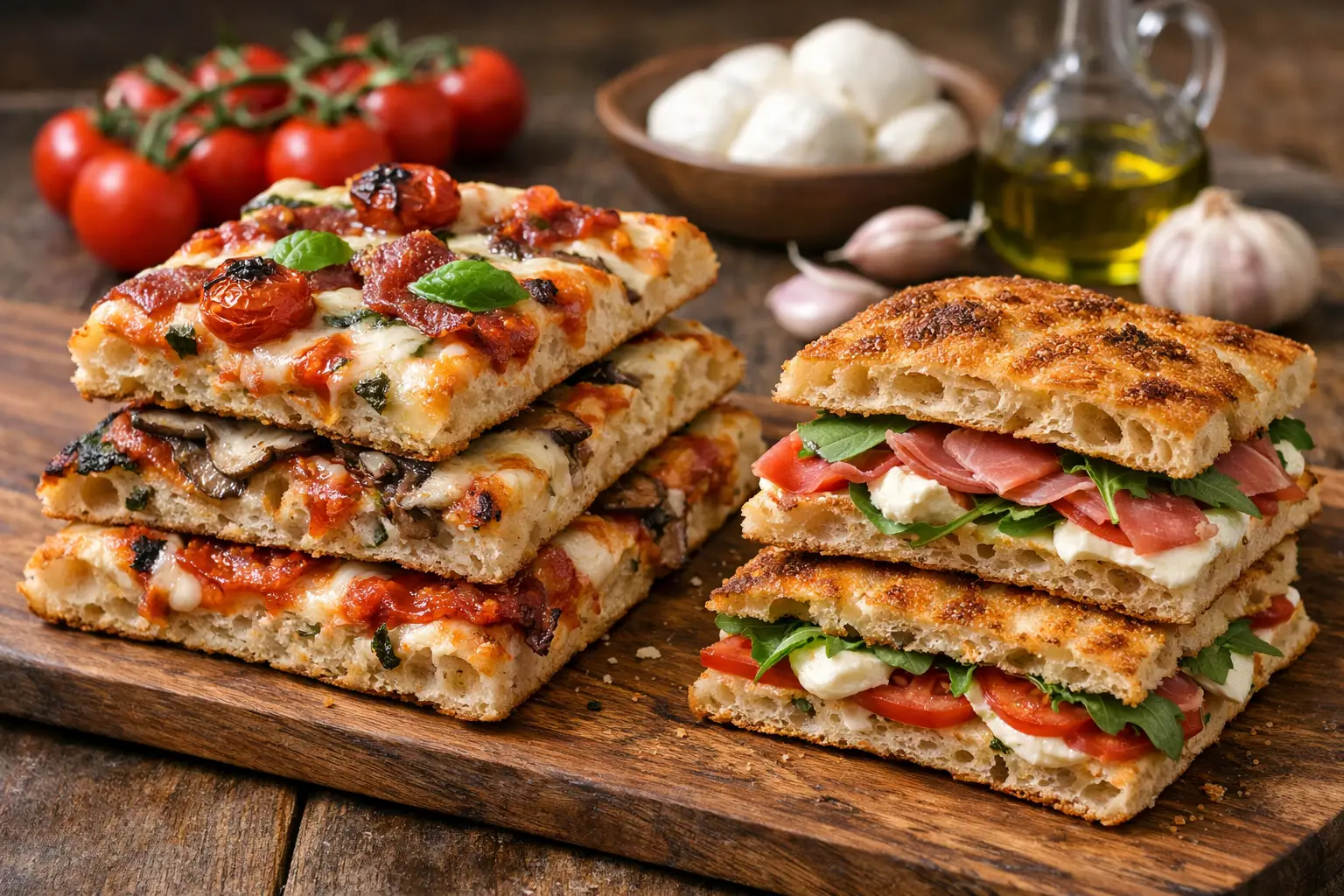
In styles like Roman-style tray pizza, that hallmark becomes even clearer. The square shape is not a visual detail for the photo. It is the result of a technique designed to achieve a crispy base, a light crumb, and an even bake that allows well-defined toppings. It is a pizza that catches the eye, yes, but above all it wins you over with texture.
The role of fermentation in artisanal crispy pizza
If dough ferments in a hurry, it shows. It feels heavier, flatter in flavor, and less elegant to eat. The long fermentation, like the 72-hour kind, completely changes the result. It is not a gourmet trend. It is a technical decision.
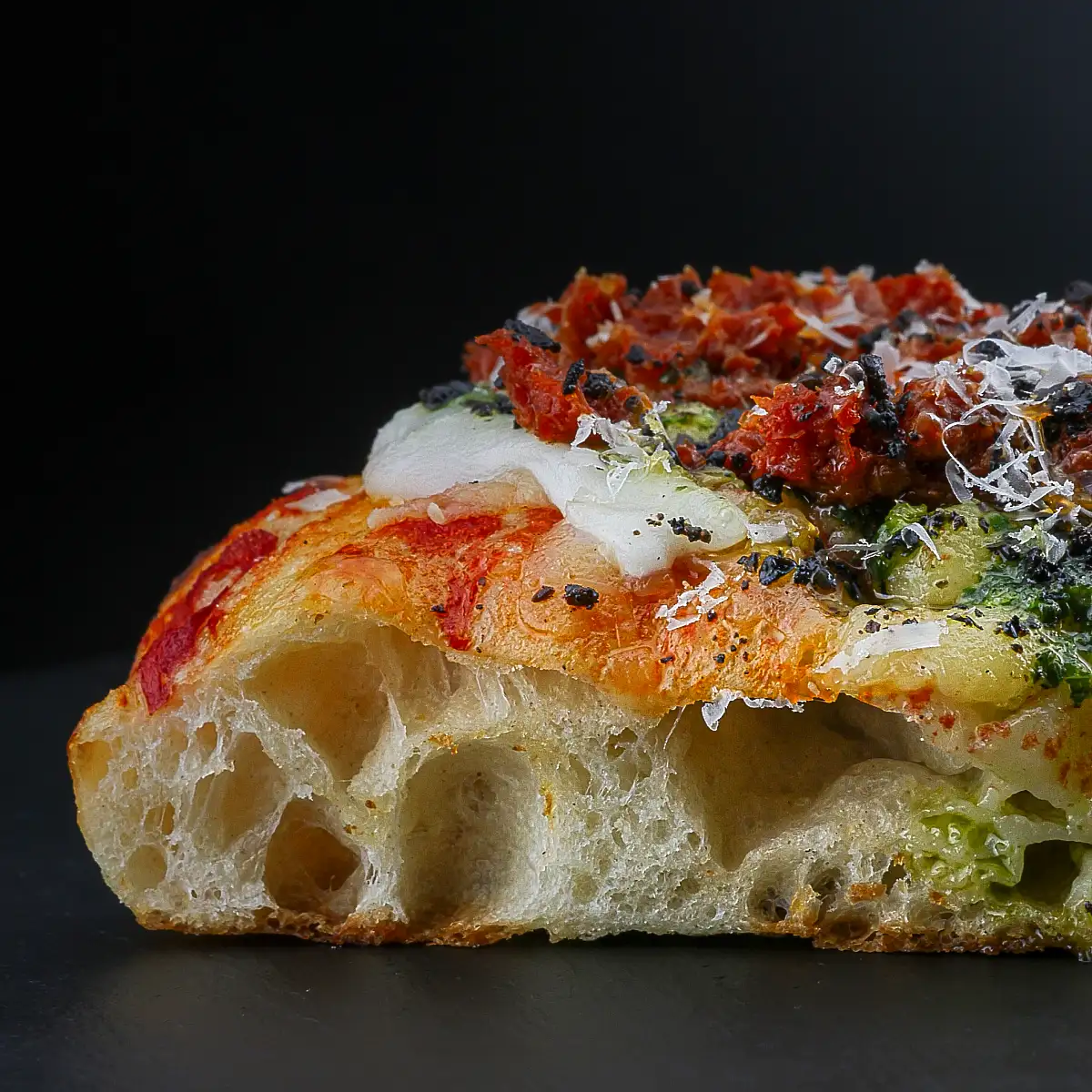
That time allows the dough to mature better and develop complexity. Deeper notes appear, a better internal structure, and a less aggressive experience for the palate and the stomach. In addition, the bake behaves differently: the pizza expands better, creates air pockets, and achieves that thin, crisp edge that does not break like a cracker.
Of course, not every long fermentation guarantees excellence. It also depends on the temperature, the handling of the dough, and the exact moment it goes into the oven. That is the difference between an artisanal-sounding claim and artisanal execution. A truly specialized pizzeria does not improvise that process.
Flour, hydration, and oven: the trio that changes everything
The final texture never depends on a single factor. Flour defines absorption capacity, elasticity, and development. Hydration determines how much air and lightness the dough can hold. And the oven decides whether that promise reaches the table intact.
With the right flour, the dough can withstand longer fermentations without collapsing. With proper hydration, it gains a more open and less dense crumb. But if the bake fails, everything is lost. A pizza can have a great recipe and still come out gummy, pale, or excessively stiff.
That is why, when an artisanal crispy pizza is well achieved, you can see it before you even taste it. The base has color, the edges show well-developed bubbles, and the surface does not look soggy. The sound when you cut it also says a lot. And when you eat it, the feeling is clear: there is structure, but no heaviness.
Not every crunchy pizza is Roman, but Roman pizza plays in another league
Here it is worth making a distinction. There are thin pizzas that end up crunchy because they are stretched to the max and baked until dry. That can be enjoyable, but it does not necessarily offer technical depth. Roman pizza, especially in teglia, seeks something else.
Its identity lies in contrast. The crunchy base lives alongside a tall, airy, light crumb. Baking in a tray allows a very particular texture and a more bread-like reading of the product. It gets as close to the world of good bread as it does to pizza. That is part of its charm and also of its exclusivity.
In addition, the square format changes the experience. It allows more defined cuts, cleaner combinations, and a less predictable presentation. For those looking for something different from the usual generic pizzeria, this proposal has its own weight. It feels more specialized, more deliberate, and much more memorable.
How to recognize a good artisanal crispy pizza
You do not need to be a chef to spot it. Just pay attention to certain details. The dough should have aroma, not just heat. The base should crunch without hardening. The center should not collapse into a wet block. And the ingredients need to be in proportion, without crushing the structure.
It is also worth looking at the finish. A well-made artisanal pizza does not need to hide natural imperfections. The air pockets, the irregular color from baking, and the not-quite-uniform shape are usually signs of real hand work. What matters is that that appearance comes with technical control, not neglect.
Another indicator is how it feels after you eat it. A pizza with well-managed fermentation and dough developed with intention usually leaves a lighter feeling. It satisfies, but it does not weigh you down. That detail matters a lot when you go out to eat looking for quality, not just quantity.
Why this style connects so much with the foodie crowd
There is something very current about a pizza that offers texture, story, and authenticity all at once. People do not just want to eat well. They want to understand what they are trying, notice the difference, and feel they chose something with identity. Artisanal crispy pizza answers that search perfectly.
It has a powerful aesthetic, yes, but it does not live only on being photogenic. Its real appeal is that it delivers a different experience from the very first bite. For a date night, a meal with friends, or a weekend craving that deserves more than the basics, this style has a clear advantage: it turns something everyday into an occasion.
In that space, specialized offerings like Bianka® Pizza Romana have known how to read the moment very well. This is not about selling pizza as if they were all the same. It is about defending a specific tradition, a real technique, and a texture that still surprises in the local market.
The value of choosing craftsmanship over volume
Industrial pizza seeks quick consistency. Artisanal pizza seeks excellence. And although it may sound obvious, at the table the difference becomes huge. One prioritizes speed and standardization. The other takes care of timing, dough, baking, and intention.
That also has practical implications. Sometimes artisanal pizza takes a little longer to wait for or costs more than a mass-market option. But that price and that time are part of a process that is felt in flavor, digestibility, and overall quality. It is not empty luxury. It is technique applied with judgment.
Of course, not every moment calls for the same experience. There are days to get it done and days to truly enjoy. When what you want is a meal with more character, more texture, and more conversation around the table, artisanal crispy pizza stands out effortlessly.
Artisanal crispy pizza in Costa Rica: a category that is growing
The local palate has become more curious. Today there is more interest in long fermentations, quality baking, and Italian offerings that go beyond the classic script. That opens space for less obvious but much more exciting styles, like Roman pizza, the stuffed focaccia, or schiacciata.
The good news is that you no longer need to travel to live that experience. In places like San Pablo de Heredia, this category is beginning to consolidate with a clear identity and a public that knows how to appreciate the detail. And when an offering manages to unite authenticity, crunch, and premium execution, it stops being a novelty and becomes a benchmark.
In the end, a great pizza is not only measured by what it has on top. It is measured by the dough, by the sound of the bite, by the surprising lightness, and by that feeling of having tried something made with real craft. If that is what you are looking for, the answer is not just any pizza. It is a well-made artisanal crispy pizza.