Apr 1, 2026
Difference between Roman and Neapolitan pizza
If you've ever seen a pizza with a puffy crust, a soft center, and charred spots from the oven, and then tried another that was crispier, lighter, and even served in square form, you already noticed that not every Italian pizza plays the same game. The difference between Roman and Neapolitan pizza is not a technical detail for purists. You feel it in the bite, in the texture, in the pace of the meal, and even in the kind of experience you're looking for when you go out to eat something truly good.
In Costa Rica, many people know Neapolitan because it's the most popular style in the world of artisanal pizza. But Roman pizza is still a discovery for many, and that's part of its charm. When it's done well, it has its own identity, serious technique, and a profile that wins you over from the very first crunch. So good.
Difference between Roman and Neapolitan pizza: it's not just the shape
The most common comparison falls short. It's not just that one is round and the other is sometimes square. The real difference lies in how the dough is worked, how long it ferments, how it's baked, and what feeling it leaves when you eat it.
Neapolitan pizza was born in Naples and follows a very specific tradition. Its dough is usually soft, elastic, and moist, with a high, airy crust. It is baked at very high temperatures for a very short time, resulting in a flexible pizza, with a delicate center and a starring cornicione.
Roman pizza, by contrast, has several expressions, but when we talk about the one that most surprises those looking for something different - like the Roman pizza in a tray - we're entering another territory. Here, prolonged fermentation, a well-worked hydration, and a bake designed to achieve a base that is light but intensely crisp rule. It doesn't aim to fold on the plate. It aims to make noise when you bite it.
The dough changes everything
If there's one point where the difference between Roman and Neapolitan pizza is truly defined, it's the dough.
Neapolitan goes for a tender structure. The idea is for the crust to puff up and keep its moisture, while the center stays thinner and softer. It's a pizza you enjoy for its elasticity and for that contrast between air and tenderness. Very tasty, yes, but also more fragile. If the pizza comes heavily loaded or sits a few minutes too long outside the oven, it can lose some of its charm.
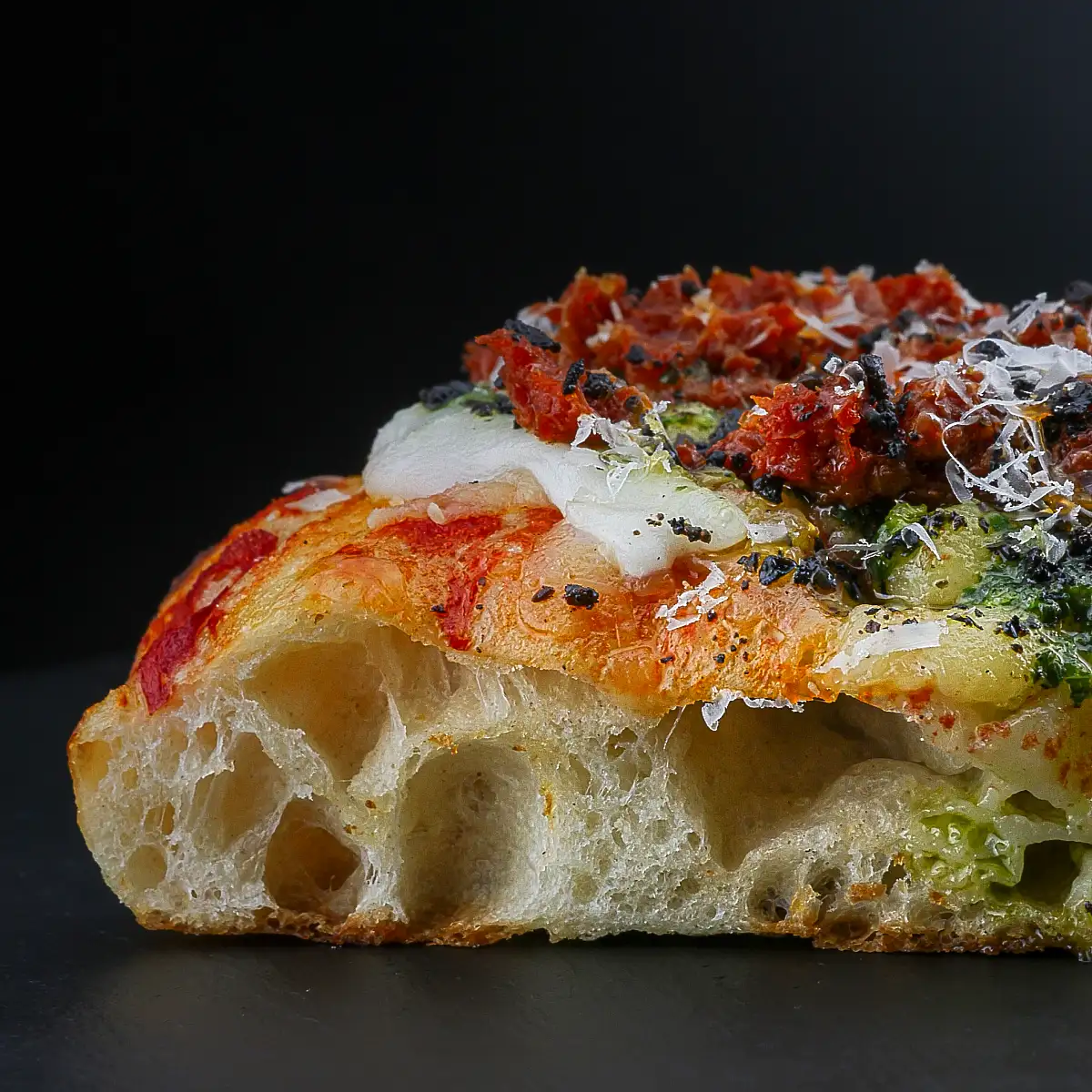
Roman pizza plays by a different logic. In styles like in teglia, long fermentation - often 72 hours - develops flavor, improves digestibility, and creates an alveolated crumb with a crispy crust. It isn't a heavy or dry dough, as is sometimes believed. When it's done well, it's light, airy, and precise. The outside has character. The inside keeps structure. And that makes a huge difference.
For a foodie audience or for anyone who's already tired of generic pizza, this point matters a lot. Roman pizza doesn't compete by trying to look like Neapolitan pizza. It competes by offering another experience. More bread-like, more textural, more specialized.
The baking defines the texture
Another key factor is the oven and the intention behind the bake.
Neapolitan pizza is baked very quickly, normally at very high temperatures. That speed creates a crust with dark spots, a soft base, and a center that often requires a knife and fork if it's heavily topped. There's beauty in that. It has something theatrical and traditional.
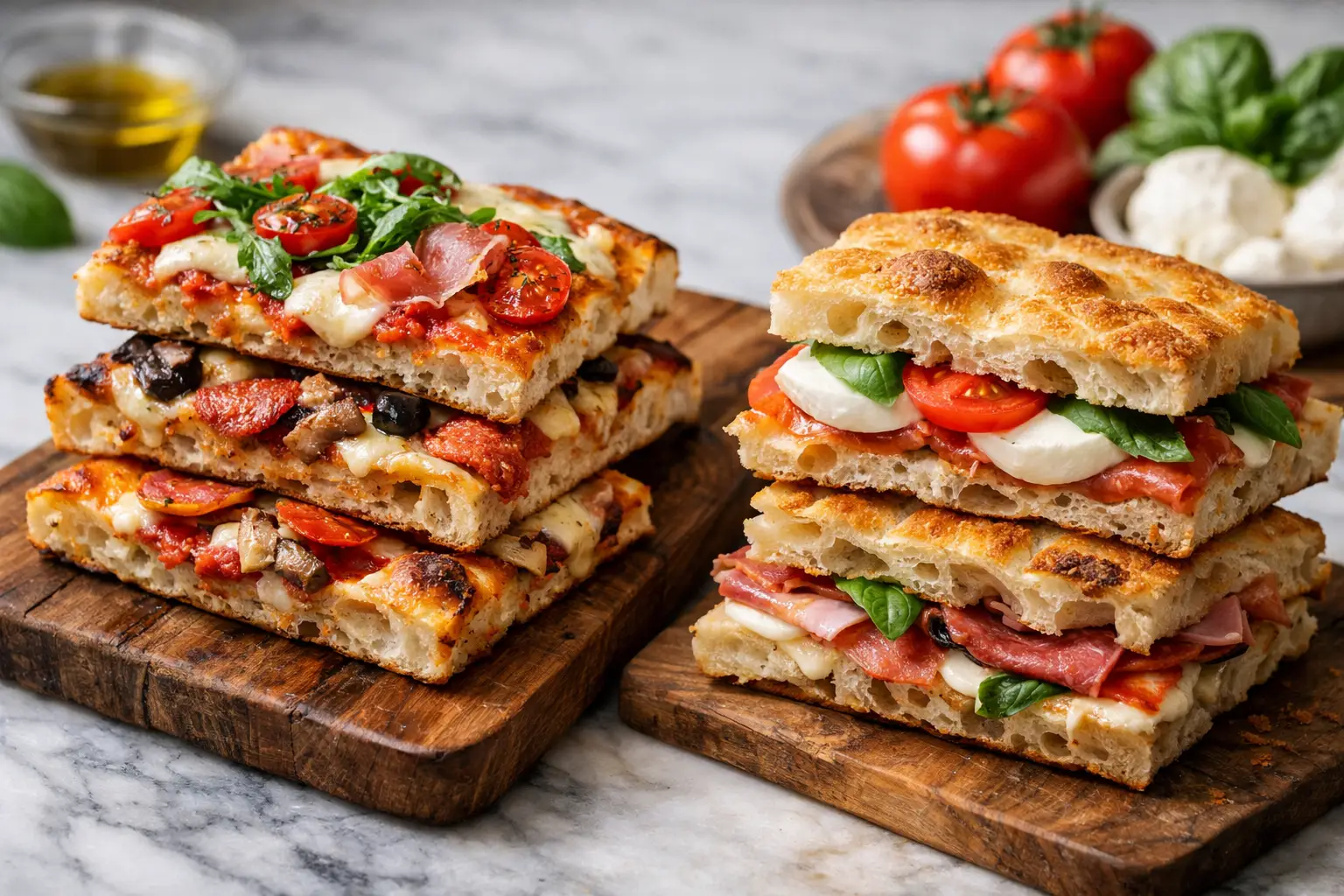
Roman pizza, especially the kind served on a tray or in square slices, works with a different bake. The goal is for the base to be dry in the good sense, firm and crispy, without losing lightness. It's a more stable and consistent texture from beginning to end. It holds up better to certain toppings, is easy to share, and maintains its personality even a few minutes after leaving the oven.
That also changes how it feels at the table. Neapolitan pizza invites a more immediate experience. You have to get into it right away. Roman pizza lets you eat, talk, share, and keep enjoying that crunchy texture that doesn't disappear so quickly.
The ingredients matter, but the style leads
A lot of people think the main difference is in the sauce or the cheese. Of course ingredients matter, but they aren't the heart of this comparison.
Both styles can use top-quality Italian products. Both can include tomato, mozzarella, cured meats, vegetables, or more creative combinations. The point is how those ingredients integrate with the dough.
In Neapolitan pizza, the focus is usually on simplicity and the balance among a few elements. Because the dough is soft and moist, it needs toppings that respect that delicacy.
In Roman pizza, especially in formats like pizza al taglio or in teglia, there is more room to play. The structure allows more varied offerings, seasonal combinations, and a very attractive visual approach. It's a pizza that's made for exploring, sharing several flavors, and turning the meal into a more dynamic experience.
That's where a clear advantage appears for those who enjoy discovering. Roman pizza has an artisanal spirit that connects strongly with a new generation of diners: people who want authenticity, yes, but also real novelty.
Which one is lighter?
The honest answer is: it depends on how it's made.
There are excellent Neapolitan pizzas, well fermented and very digestible. And there are poorly executed Roman pizzas that end up dry or heavy. But when both are made with technique, long-fermented Roman pizza usually surprises with its lightness. The crunch can make you think otherwise, but a dough that's well developed and fermented for hours feels less aggressive and cleaner to eat.
The type of portion also matters. Neapolitan pizza is usually individual, round, and meant to be eaten whole. Roman pizza can be served by the slice, which lets you try more than one flavor or eat according to the craving of the moment. For some people, that makes it more versatile and even more convenient.
The table experience is different
Here's one of the least discussed and most important points. The difference between Roman and Neapolitan pizza is also a difference in ritual.
Neapolitan pizza has something classic, almost ceremonial. It arrives whole, round, steaming, with that puffy crust that steals the eye. It's ideal if what you want is an experience faithful to the tradition of southern Italy.
Roman pizza has a different energy. More contemporary, more surprising, more visual. In square or slice formats, it fits perfectly into plans for sharing, ordering several flavors, and turning the table into a conversation. It has that discovery factor that makes the outing more memorable.
That's why so many people who try authentic Roman pizza feel they found something truly new, not just another version of the same thing. And in a market full of similar offerings, that's worth gold.
So, which is better?
There's no universal answer. There is an answer for every craving.
If you want a soft, traditional pizza with an airy crust and classic profile, Neapolitan does the job perfectly. If you're looking for a crisp bite, long fermentation, a more complex texture, and a less common offering, Roman has a very clear advantage.
It also depends on the moment. A quiet dinner where you eat a whole pizza may call for Neapolitan. An outing with friends, a desire to try several flavors, or a craving for something more special may tip the scales toward Roman.
What's interesting isn't choosing one and discarding the other. What's interesting is understanding that they are two different expressions of Italian cuisine, each with its own character. But if you're into discovering offerings with technique, identity, and a texture that truly breaks from the usual, Roman has something hard to ignore.
Why Roman pizza wins over those looking for something different
Not everyone is looking for a different pizza. But the person who is looking for one recognizes it quickly.
Well-made Roman pizza has that powerful mix of craftsmanship and personality. You can see it in the crisp base, in the long fermentation, in the precise cut, in the format that breaks the routine, and in that feeling of eating something more thought-out, more refined, more special. It's no coincidence that offerings like those of Bianka® Roman Pizza connect so well with people who want to step away from the obvious in Heredia and try a more specialized version of the Italian tradition.
If you still didn't have the difference clear, keep this in mind: Neapolitan wins with its softness; Roman, with its texture and character. And when that combination of crunch, lightness, and deep flavor appears, it's hard to go back.
The next time you see a square, airy, crispy pizza, don't compare it with the usual round one as if they were the same. Taste it for what it is: another school, another craft, and another way to enjoy Italy, bite by bite.