Nov 5, 2026
Artisanal Italian Dining Experience in Heredia
The first bite should make a sound. That croccante snap of a well-baked dough, followed by a light, airy crumb, completely changes the idea of going out for pizza. An artisanal Italian dinner experience has nothing to do with filling the table with any old slice. It means tasting technique, time and character in every cut.
If you're looking for different food plans in Heredia, Italian cooking can be much more than the usual round pizza. Rome and Florence offer an intense, direct and delicious baking tradition where the dough takes the lead and the toppings are chosen to go with it instead of hiding it. That's where a dinner that feels special from the moment it reaches the table begins.
Dough rules an artisanal Italian dinner
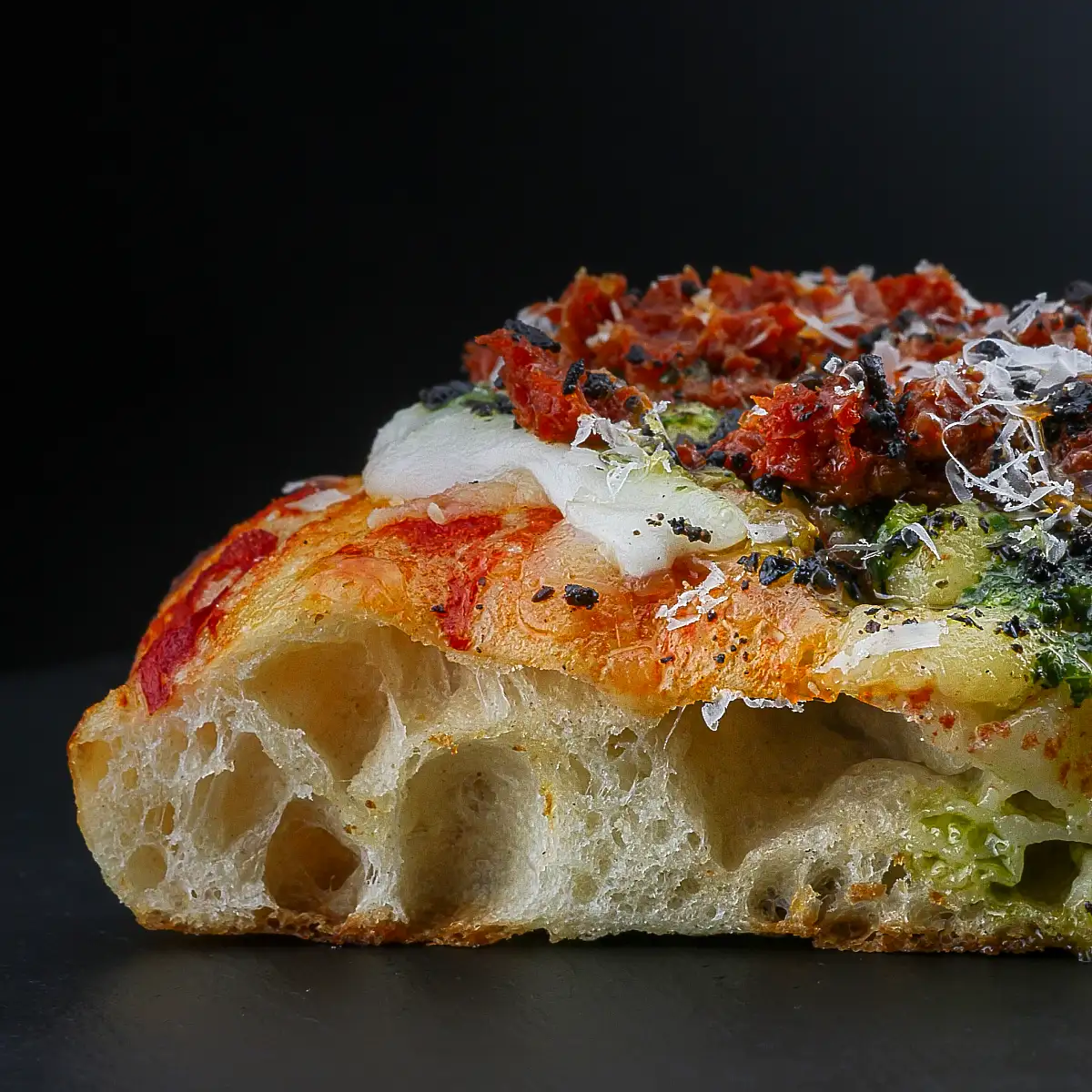
You can recognize a handmade pizza before you taste it. You see it in the golden base, the irregular bubbles in the crumb, the edges that break easily and the aroma coming out of the oven. There are no shortcuts when you're after that texture: time does its part.
Slow fermentation, such as one of up to 72 hours, lets the dough develop flavor and a lighter structure. The result is neither a heavy dough nor a bland platform for piling on toppings. It's a piece with its own identity, croccante outside and soft inside, ready to carry quality ingredients without losing its personality.
That detail matters because a handmade Italian pizza shouldn't taste the same in every bite. One corner can be crunchier, the center more tender, an edge airier. That variation is part of the charm. It tells you the dough was worked, stretched and baked with judgment, instead of being a product designed to come out identical for pure convenience.
Roman pizza in teglia: the star that breaks the routine
Roman pizza in teglia bakes in a pan and comes in a rectangular or square format. It was born for sharing, trying combinations and picking the cut that tempts you most. If you love an extra-croccante base, you'll find a serious reason here to change your ritual.
Its style differs from Neapolitan pizza. Neapolitan favors a soft, stretchy dough with a tall rim; Roman pizza in teglia goes for a firmer, lighter, crisper base. Neither is “better” in absolute terms. It depends on the craving, the moment and the texture you want to chase. If the night calls for contrast, bite and a dough with presence, though, Roman pizza plays strong.
It also changes the dynamic at the table. Instead of ordering an individual pizza and sticking with one flavor, the in teglia format invites you to mix. One bold slice, another fresher one, another with toppings you'd never order on your own. It's a more social way to have dinner and, for groups of friends or curious couples, a lot more fun.
Filled focaccia and schiacciata: Italy won't fit in a single pizza
Shrinking an Italian dinner down to pizza would mean missing a brilliant part of its baking tradition. Filled focaccia and schiacciata take the same logic of excellent dough into another experience: layers, generous fillings and an irresistible contrast between a toasted outside and a soft inside.
Schiacciata, tied to the Florentine tradition, is thinner and more pronounced. Its name refers to a pressed dough, and that apparent simplicity leaves room for well-chosen fillings to speak. It can be a perfect option for a more casual dinner, for sharing in the middle or for anyone who wants something hearty without giving up the quality of handmade baking.
Filled focaccia has a different energy. It gets cut, opened and turned into a generous, practical and deeply Italian piece. It's ideal when the plan calls for long conversation, comforting flavors and a meal you can enjoy without too much ceremony. Handmade doesn't mean rigid. It means every element has a reason to be there.
Ingredients need intention more than excess
At a good Italian dinner, more doesn't always mean better. A dough fermented for hours doesn't need a mountain of toppings to impress. It needs balance. A tomato with acidity, a cheese that melts well, cured meats with character, well-prepared vegetables and a fresh touch at the end can do much more than a combination with no direction.
The key is respecting contrast. Salty needs air. Creamy welcomes something croccante. A bold ingredient can shine brighter next to a simple base. That's why choosing a handmade pizza also means choosing a composition: which flavor opens the dinner, which one you share and which one leaves that last bite that makes you want to come back.
On a first visit, it's worth mixing profiles. A classic option lets you understand the dough; another with bolder toppings shows the kitchen's style. If there are three or four of you, ordering variety is the best way to explore the menu and turn dinner into conversation, and nobody should call it overdoing it.
You taste the atmosphere too
Some meals take care of hunger, and some dinners become a plan. The difference usually lies in what happens around the plate: the anticipation as a rectangular tray arrives, the sound of the cut, the photos before the first bite and the inevitable “try this one.”
An artisanal Italian dinner experience works especially well when you go without hurrying. You don't need to make it a formal event, but you should give it the room it deserves. Going after work, celebrating a small milestone, meeting up with friends or breaking the weekend routine are reason enough when the food has something new to say.
In San Pablo de Heredia, Bianka® Pizza Romana offers exactly that kind of pause with attitude: a specialized take on Italian bakery cooking, less generic, more Roman and proudly croccante. It isn't your usual pizzeria. It's an invitation to try formats, textures and recipes that still surprise people in Costa Rica.
How to choose the plan for the occasion
For a date, order a selection that lets you share and talk about the flavors. Pizza in teglia makes choosing part of the experience: you can start with something familiar and save a more daring slice for the end. A dinner like that has rhythm without feeling heavy or predictable.
For a group, the square format works in your favor. Each person can take a different cut, go back for a favorite and discover a new combination. It's more flexible than ordering several identical pizzas and avoids the endless “which flavor should we get?” debate. The right answer is usually: several.
For a quick meal, filled focaccia or schiacciata can be your best allies. There's a real trade-off here: dinner can be more practical, but it doesn't have to be less memorable. The difference lies in choosing a place that won't sacrifice dough, oven or ingredients for speed.
And if the plan is takeout, think about when you'll eat. Roman pizza holds its structure very well, but it's still best enjoyed close to its peak. If you can, set aside a few minutes to serve it, share it and eat it hot. The croccante deserves your attention.
A dinner that leaves you wanting to keep tasting
The best sign of a handmade concept goes beyond looking spectacular on the table. After you taste it, you understand why it was made that way. You get the value of slow fermentation, the rectangular cut, a well-filled focaccia and ingredients used with precision.
The next time the plan is to go out for dinner, don't settle for a pizza that tastes like routine. Listen for that sound when the base breaks, order variety and make room for an Italian tradition that still has plenty of surprises. Che buono.