Feb 19, 2026
Slow-Fermented Pizza: Why It Tastes Better
There is a difference you notice from the first bite. When we talk about slow-fermented pizza, we are not talking about a foodie trend or a pretty word to sell dough. We are talking about time, judgment, and respect for the craft. That extra time changes everything: the aroma, the structure, the browned color of the bake and, of course, that feeling of eating a pizza that feels light but full of character. How good.
In a well-made Roman pizza, the dough is not there just to hold toppings. The dough is the star. If it fails, everything fails. If it is worked well, the result has that contrast that wins you over: crispy exterior, airy interior, deep flavor and a clean bite, nothing heavy. That is why slow fermentation is not a hidden technical detail in the kitchen. It is a quality decision.
What slow fermentation means in pizza
Slow fermenting means letting the dough rest for a long period, usually cold and with a controlled amount of yeast. Instead of speeding up the process to produce faster, time is given the chance to do its work. In many serious artisanal approaches, that process can reach 48 or 72 hours.
What happens in that time? The yeast acts gradually, starches and sugars are transformed, and the gluten network develops with more balance. Translated to the plate: a dough with more flavor, better aeration, and a much more elegant texture when you eat it. It is not magic. It is real Italian technique.
Now, not every long fermentation automatically produces a great pizza. The point is how it is combined with hydration, temperature, flour type and baking. A dough can rest for a long time and still turn out flat if the execution is not up to par. That is why, when a slow-fermented pizza comes out perfect, you can tell there is craftsmanship behind it, not improvisation.
Slow-fermented pizza and real flavor
Flavor is the first big reason. A dough fermented calmly develops more complex notes, slightly lactic, with a background that recalls well-made artisanal bread. It does not taste only of cooked flour. It tastes like living dough, worked with intention.
That matters much more than people think. In a generic pizza, the sauce and cheese try to carry all the spotlight. In an authentic Roman pizza, the base already brings personality. The topping adds to it, but does not rescue it. That difference elevates the whole experience.
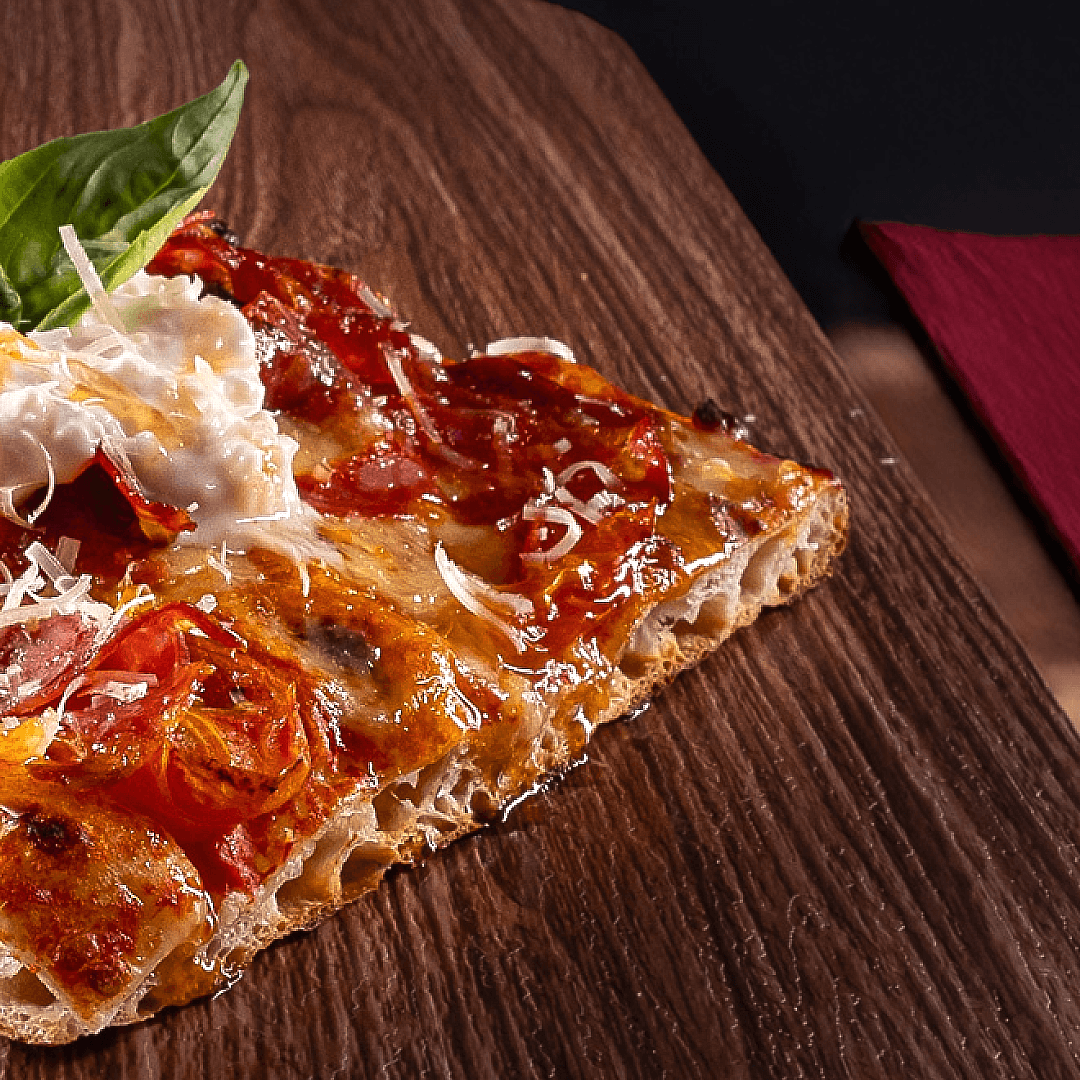
In addition, long fermentation helps the bake produce more golden tones and a more developed aroma. That color not only looks better on the table and in the photo. It also speaks of caramelization, crispness and a more refined structure. In products like the sheet pan pizza, where texture is everything, this is non-negotiable.
The texture that separates a good pizza from a memorable one
If there is something that makes a great Roman pizza addictive, it is the texture. Slow fermentation makes it possible to build a more airy crumb and a lighter crust, without becoming gummy or dry. It is a subtle balance. And when it works, it feels premium from the very first bite.
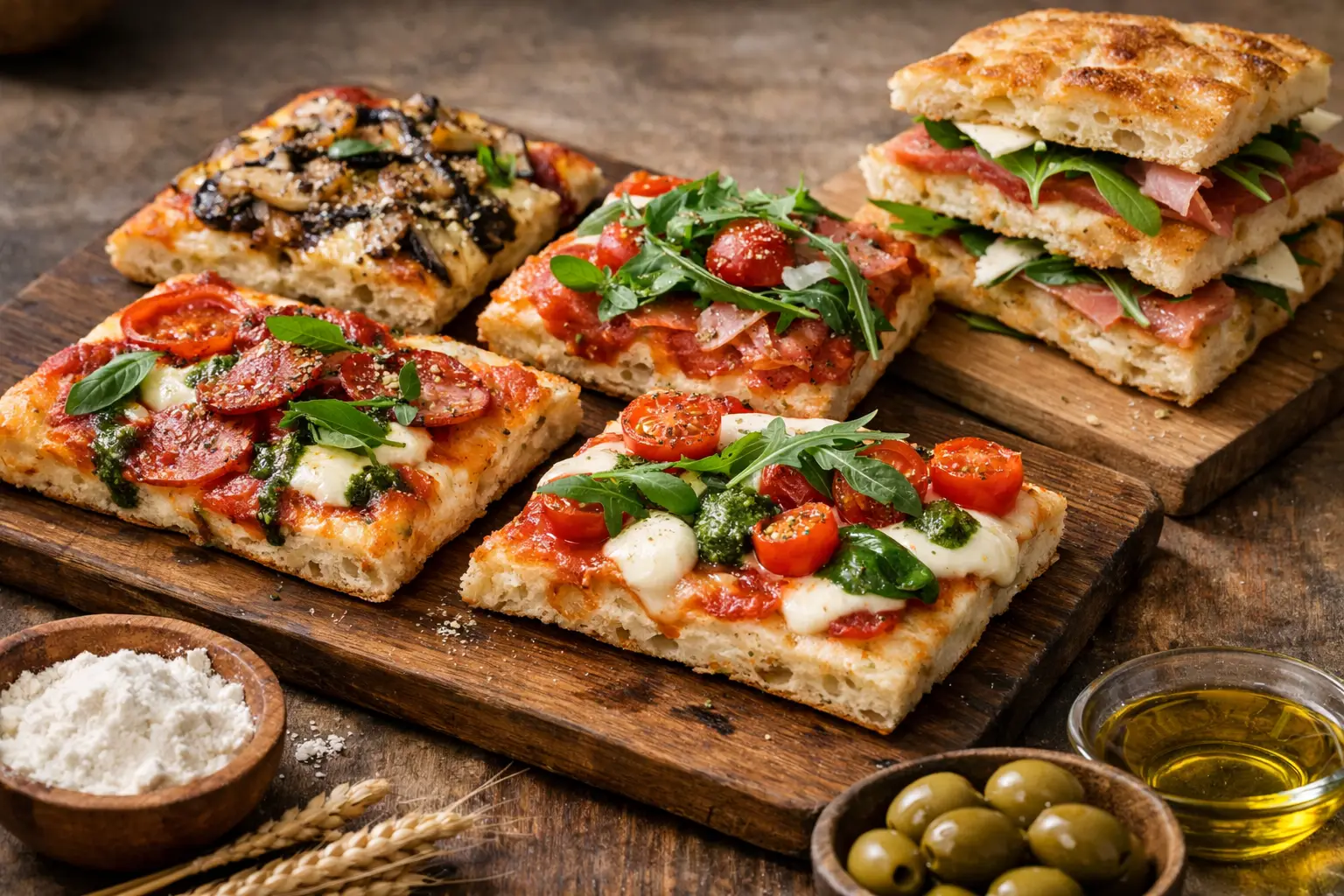
The Roman-style square pizza has a very clear identity: firm base, delicately crispy edge and interior with visible air pockets. It is not a soft dough that folds without grace, nor a hard cracker that breaks apart. It is an architectural texture, almost bread-like, with that sense of craftsmanship that fast pizza simply cannot reach.
Here there is a key point: slow fermentation helps, but it also demands precision. A long dough handled badly can over-ferment and lose strength. So yes, time improves pizza, but only when there is control. In niche Italian cuisine, time is not bragged about. It is mastered.
Does slow-fermented pizza digest better?
In many cases, yes. And that is why more and more people are looking for it. During prolonged fermentation, part of the dough compounds are transformed more completely, which can make the pizza feel lighter when you eat it.
That does not mean every person will digest it the same way, because every body responds differently. Nor does it turn a pizza into a “light” food. It is still pizza, and thank God. But it does usually feel kinder, less heavy, and more balanced than a dough made in a rush.
That difference is very noticeable after eating. It is not the same to finish a meal thinking “what a delight” than to finish thinking “what a bomb.” When the dough is well fermented, the pleasure lasts longer than the heaviness.
Why not every pizzeria bets on this method
The answer is simple: because it takes time, space, planning and discipline. Slow fermentation does not go well with hurry. It forces you to produce ahead of time, manage inventory more rigorously and respect processes that cannot be rushed without sacrificing results.
From a business standpoint, it is a more demanding bet. It requires proofing chambers, careful temperature control, stable recipes and staff who understand that each batch of dough has its own life. For an operation focused only on volume, it can be inconvenient. For a brand that truly wants to differentiate itself, it is a huge competitive advantage.
And here is the big truth: quality almost always needs more intention than speed. In a category saturated with similar offerings, authentic technique becomes identity.
What 72 hours of fermentation really changes
When a dough reaches 72 hours with good handling, the result is usually more expressive in flavor and more refined in texture. It is not a decorative number. It is a time window that, when well managed, allows for a very interesting evolution of the dough.
You get a more stable structure, greater aromatic depth and a bake that responds better to high heat. This is especially valuable in Roman-style offerings where the base must support toppings with elegance, without losing crispness. The dough does not compete with the ingredients. It makes them shine.
Of course, there are also trade-offs. Such a long fermentation requires a lot of operational consistency. If the flour, ambient temperature or shaping method changes, the result shifts. That is why the best pizza houses do not just follow a recipe. They follow a criterion.
At Bianka® Pizza Romana, that vision translates into a proposal that understands 72-hour fermentation not as a technical embellishment, but as part of the standard that defines a different experience. And you can feel it. From the first look to that clean crunch that confirms you are facing something out of the ordinary.
How to recognize a well-made slow-fermented pizza
You do not need to be at a professional tasting to notice it. There are very clear signs. The first is the aroma: more bread-like, deeper, less flat. The second is the texture: light, airy and crispy, not dense or gummy.
The third sign appears when you eat it. A good dough fermented slowly has its own flavor, but it does not overwhelm. It accompanies, elevates and leaves room for the ingredients to breathe. It also usually has a better-browned base and a structure that holds up well to cutting and biting.
And there is another clue that is sometimes overlooked: memory. When the pizza is well made, you remember the dough. Not just the topping. You keep thinking about that texture, that edge, how it crunched without feeling dry. That is the level.
Why this technique matters for anyone looking for something better
If you like eating well, trying new offerings and choosing places with identity, slow fermentation is not a kitchen fact meant to impress. It is part of what defines whether a pizza is worth the trip, the conversation and the recommendation. In a scene where correct but forgettable versions abound, authentic technique makes a real difference.
Real Roman pizza has that: specialization, craftsmanship and personality. It does not try to be everything. It does its own thing. And when the dough has been treated patiently, that difference jumps forward with delicious clarity.
The next time you see a square pizza, crispy and with a crumb that looks like a well-baked cloud, pay attention to the detail you almost never see from the outside: time. Because a great pizza starts long before it goes into the oven, and that time well invested is, many times, what turns a good meal into an experience worth repeating.