Mar 27, 2026
72-hour pizza fermentation: why it changes everything
The difference between a proper pizza and a pizza you remember the next day is almost never only in the topping. It’s in the dough. That’s where the 72-hour pizza fermentation stops being a technical detail and becomes a statement of quality. When a pizzeria works with time, precision, and craft, the result is felt from the first bite: more aroma, more structure, more crispness, more personality.
It’s not a foodie trend or a trick to sound artisanal. It’s a serious, deeply Italian technique that changes how the dough behaves in the oven and how it feels in the mouth. In a well-made Roman pizza, that wait is worth its weight in gold.
What 72-hour pizza fermentation means
Talking about 72-hour fermentation is talking about dough that rests for three days under controlled conditions to develop flavor, texture, and balance. It’s not simply a matter of leaving it aside and waiting for miracles. The flour, hydration, yeast, temperature, and handling of the dough all have to work together.
During that time, real transformations occur. The starches and proteins evolve, the yeast works slowly, and the dough gains complexity. That translates into a pizza with a more airy crumb, a lighter base, and a crust with that elegant crunch that doesn’t crack like a cracker, but instead sounds and yields with purpose.
In styles like the Roman-style sheet-pan pizza, this technique is not a luxury. It’s part of the product’s identity. Without that long rest, it’s hard to achieve that precise combination of a soft interior and a crispy exterior that makes this format so addictive.
Why 72 hours really do make a difference
The short answer is flavor. The full answer is quite a bit more interesting.
A long fermentation allows the dough to develop deeper notes, slightly lactic and toasted, far from that flat sensation many rushed pizzas have. It doesn’t just taste like bread with sauce on top. It tastes like living dough, crafted with intention.
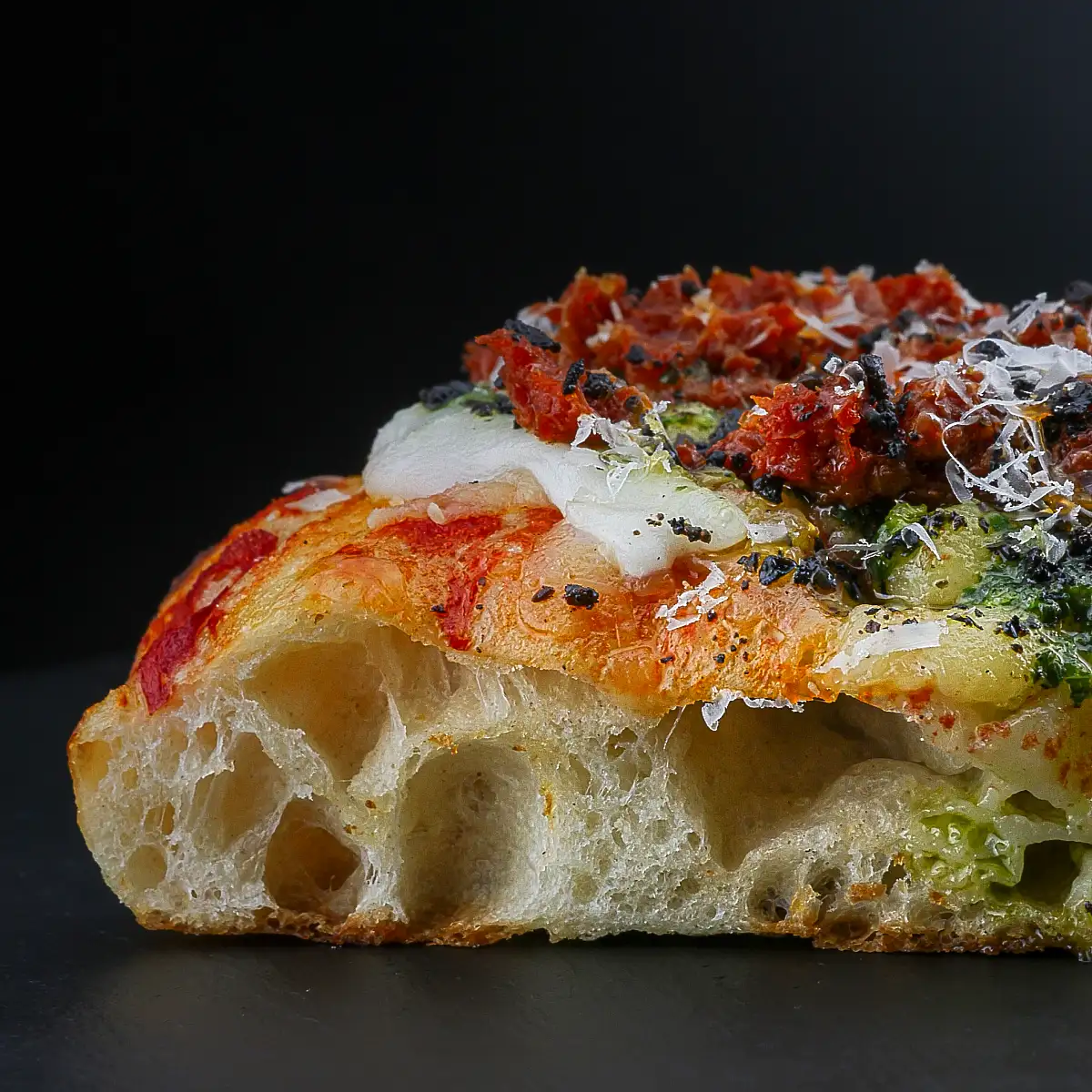
It also improves texture. In a good Roman pizza, the goal is not only for it to rise. The point is how it rises, how it retains air, and how it responds to baking. Slow fermentation helps create a more delicate and stable internal structure. That is why those irregular air pockets appear and that lightness that makes a slice feel generous, but not heavy.
And then there is digestibility, a topic people talk about a lot and sometimes oversimplify. Yes, a well-fermented dough usually feels easier to eat. But it is not magic. It also depends on the recipe, ingredient quality, and the bake. The right way to put it is that, when executed well, a long fermentation can provide a lighter, more balanced experience.
The texture everyone notices, even if they can’t explain it
There are customers who don’t come asking about hydration percentages or cold maturation. They arrive, taste, and say something like: “this pizza feels different.” Exactly. That’s what happens when the technique is doing its job.
The base has more character. The crust doesn’t get in the way. The bite has contrast. The bottom stays firm and golden, while the crumb keeps its air and elasticity. That interplay of textures is part of the charm of a well-made Roman pizza.
In a square pizza served al taglio or in teglia, this point is key. If the dough didn’t go through a serious process, the format loses its appeal. It can turn dense, rubbery, or overly dry. With 72 hours of fermentation, however, that refined texture appears, supporting premium ingredients without collapsing and without stealing all the spotlight.
Long fermentation does not mean perfect pizza by default
This is where it helps to be clear. Saying “72 hours” sounds spectacular, but by itself it does not guarantee excellence. A dough can ferment for three days and still come out unbalanced if the hydration is miscalculated, if the flour was not right, or if the bake did not respect the product.
There is also a style point. Not all Italian pizzas aim for the same thing. A Neapolitan pizza works with different times, a different temperature, and a different structural logic. Roman pizza, especially the sheet-pan version, embraces long fermentation very well because it needs to develop lightness and crispness in a format with more surface, more air, and a different bake.
That’s why, when someone hears “long fermentation,” the important question is not only how long. The right question is: for which style and with what intention?
72-hour pizza fermentation and the Roman signature
Rome’s baking tradition has an intimate relationship with high-hydration doughs, patience, and texture. From that come products that don’t rely on excessive toppings to impress. The dough already brings its own voice.
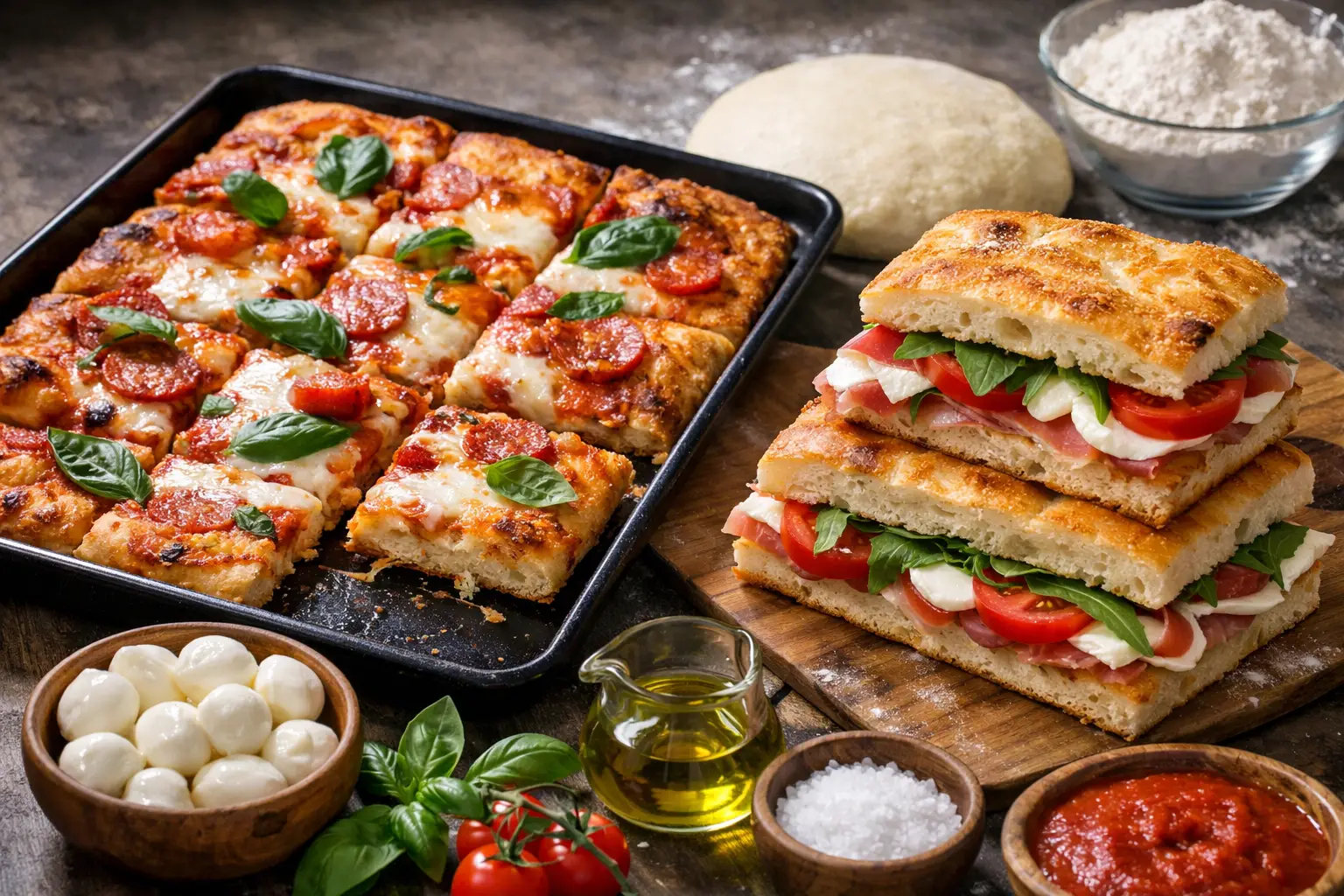
Roman-style pizza in teglia is recognized by its rectangular profile, crispy base, and light interior. It’s a pizza to be sliced, shared, talked over, and enjoyed at a different pace. More urban, more bakery-driven, more focused on the structure of the product.
When that dough goes through 72 hours of fermentation, the result is elevated. The crust takes on color more naturally, the aroma becomes more complex, and the bite has that identity so sought after by those who are already tired of generic pizza. So good.
What changes in the eating experience
The first change is the feeling of quality. Even if the person doesn’t know the technique, they sense it. The pizza feels more cared for, more serious, more premium. It’s not just any base holding ingredients. It’s a complete construction.
The second change is the pace of eating. A well-fermented Roman pizza invites you to eat with enjoyment, not urgency. It’s well suited to sharing several combinations, trying stuffed focaccias, or stretching the conversation out. It has that point between artisanal product and gastronomic experience that makes it memorable and, yes, also very photogenic.
And there is a third change that matters a lot: real differentiation. In a market where similar offerings abound, working with a long-fermented dough is not brand decoration. It is a concrete way to show specialization.
Why this technique matters so much in Costa Rica
In Costa Rica, more and more people are looking to eat better, not just eat something. You can see that in how restaurants are chosen, in the interest in authentic processes, and in the value that strong, identity-driven concepts have today. Pizza no longer competes only on price or size. It competes on texture, on origin, on execution.
That is where 72-hour fermentation carries enormous weight. It speaks directly to an audience that appreciates detail, wants to notice the difference, and enjoys discovering formats less obvious than the classic round pizza everyone knows. For those seeking a more curated, more Italian, less mass-market experience, this technique says a lot before the first slice even reaches the table.
In that space, a specialized proposal like Bianka® Pizza Romana feels especially relevant: not only because it uses the technique, but because it turns it into a visible part of a crispy, modern, character-filled experience.
What you should expect from a good 72-hour dough
You don’t need to become an expert to recognize it. A good dough fermented for 72 hours usually has a clean aroma, appetizing color, and an airy structure that doesn’t feel fragile. When you bite it, there should be contrast between crispness and softness. When you finish, it shouldn’t leave that typical heaviness of rushed doughs.
It should also have its own flavor. This point matters a lot. If the dough says nothing on its own, something is missing. A well-achieved long fermentation doesn’t need to shout, but it does leave a mark.
And above all, it should serve the whole. Because great pizza is not about showing off technique out of vanity. It’s about using it to elevate every detail and give the person eating an experience that feels truly thought through.
The next time you see “72 hours” on a pizza, don’t take it as decoration. Take note. Behind that number there can be patience, craft, and a far more serious way of understanding dough. And when that philosophy is executed well, every bite confirms it.