Apr 7, 2026
Fermented pizza dough: real benefits
Not every pizza feels the same on the first bite. Some doughs fill you up, feel heavy, and are quickly forgotten. And there are others that sound crispy, smell like well-worked bread, and make it clear why talking about the benefits of fermented pizza dough is not a trend, but a difference you can taste in flavor, texture, and experience.
When dough gets real fermentation time, it changes completely. It's not just a base for putting sauce and cheese on top. It becomes part of the star. That's the difference between a generic pizza and a pizza that truly feels artisanal, thoughtfully made, and skillfully executed.
Fermented pizza dough: benefits you can actually feel
The first benefit is flavor. A fermented dough develops more complex, deeper, breadier notes. It doesn't taste flat or neutral. It has character. That complexity comes from yeast and time doing their work, gradually transforming the dough and creating aromas that accelerated fermentation simply can't achieve.
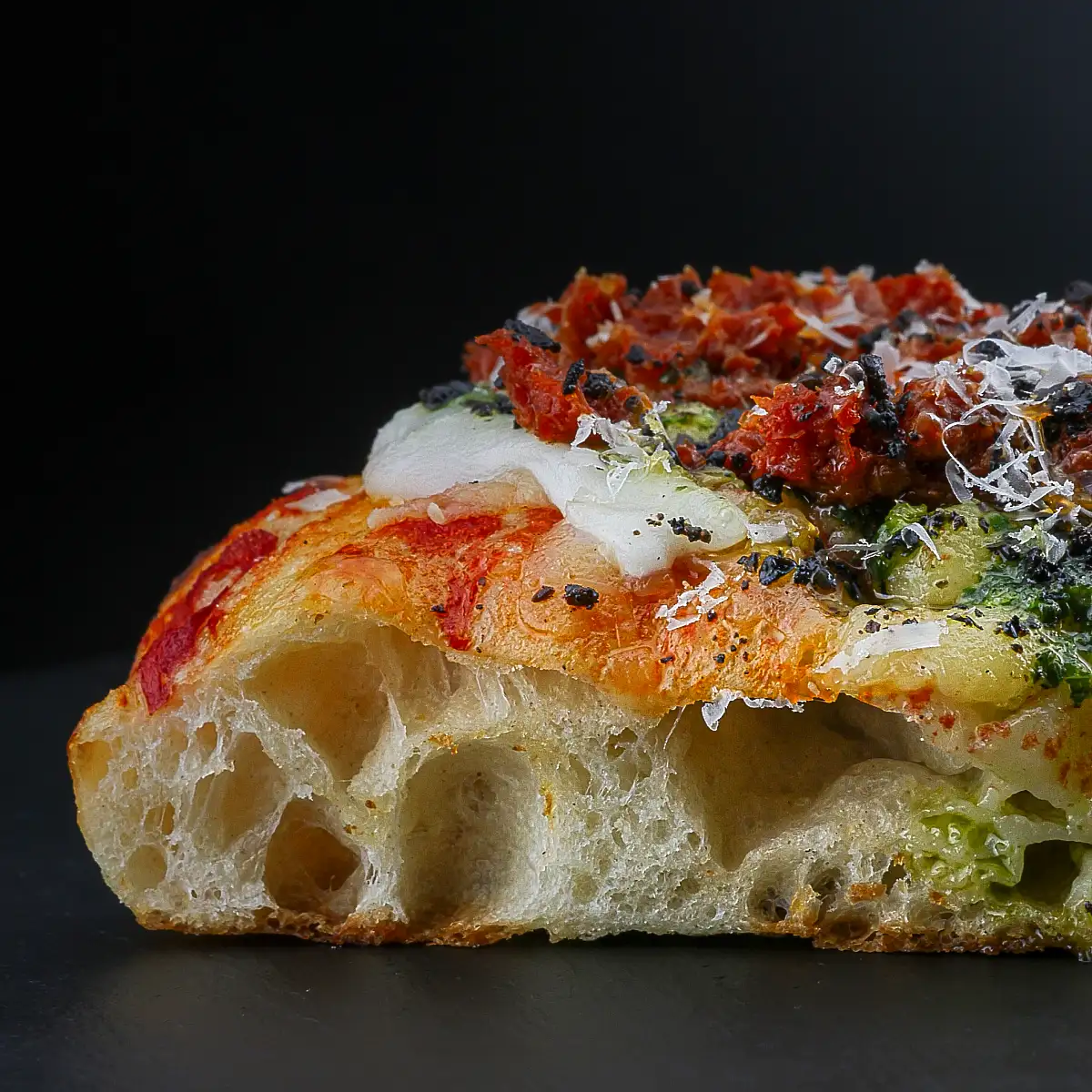
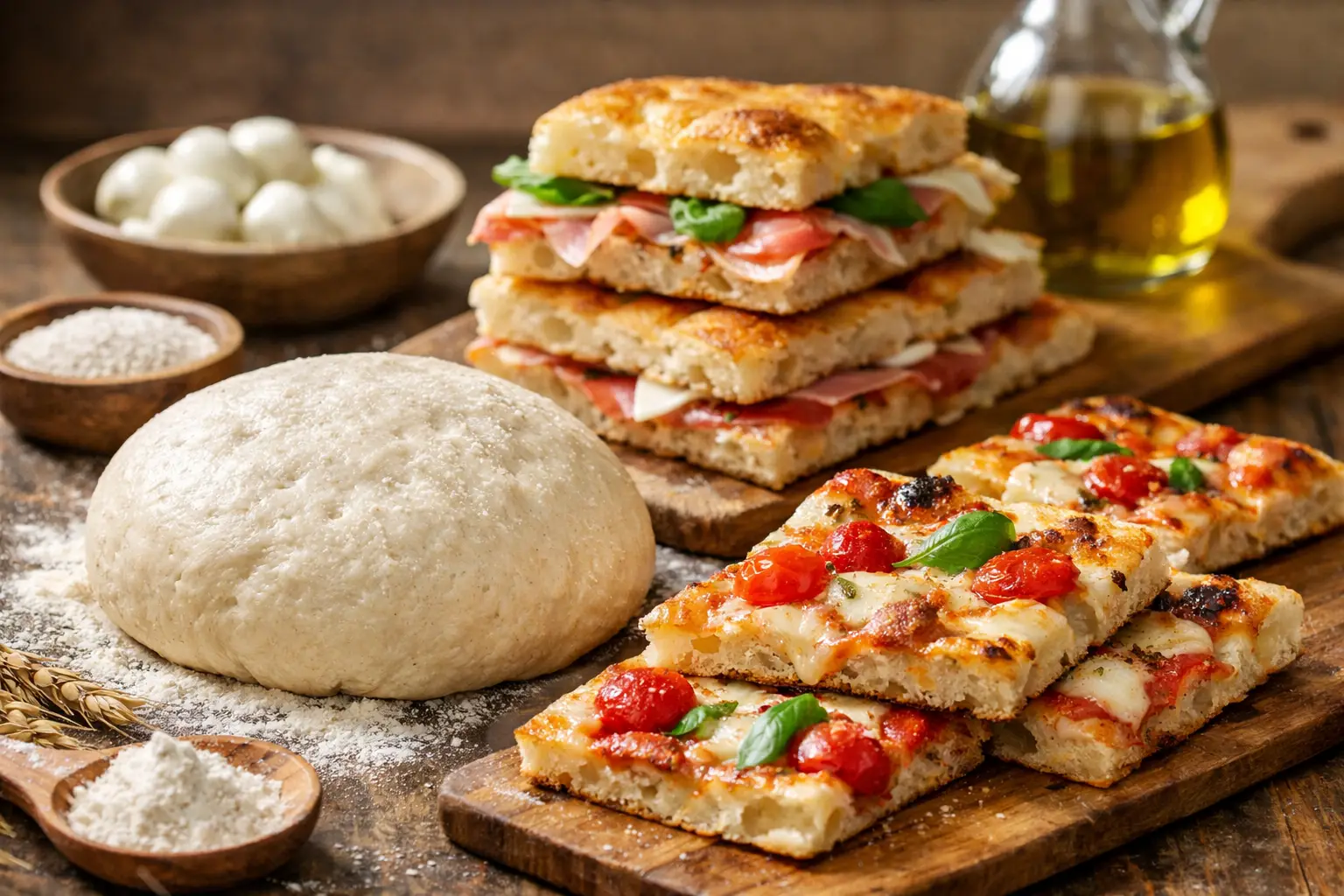
The second big point is texture. Good fermentation helps the dough have internal structure, air pockets, lightness, and an exterior that can turn golden and crispy without becoming dry. In styles like the Roman-style pizza in teglia, this is key. The base must support quality ingredients, but it also needs to crack with personality when you bite into it. So good.
It's also about how it feels when you eat it. Many people associate pizza with heaviness, but not every pizza has to feel that way. When the dough has fermented well, it usually feels lighter and more pleasant. It's not a miracle promise and it doesn't apply equally in every case, because hydration, flour, baking, and toppings all play a role, but there is a clear difference between a well-ripened dough and one made in a hurry.
What happens during dough fermentation
Fermenting is not leaving the dough forgotten. It's giving it conditions so it can evolve. During that process, the yeasts consume sugars and produce gases and aromatic compounds. That makes the dough rise, but also gives it more flavor and changes how it behaves in the oven.
In addition, the long rest improves elasticity and manageability. A well-fermented dough is easier to work with, responds better to heat, and allows for a more precise result. For anyone who makes pizza seriously, this is no minor technical detail. It's part of the standard.
When people talk about long fermentations, like 48 or 72 hours, what's behind it is not a gourmet whim. It's a quality decision. More time doesn't always automatically mean a better result, but within a well-formulated recipe, it does allow for a much more refined profile than an express dough.
The flavor changes, and a lot
If you've ever tried a pizza and thought the dough itself was already delicious, there was probably real fermentation behind it. That is one of the biggest benefits of fermented dough: it doesn't rely solely on the toppings to stand out.
Fermentation adds slightly acidic, toasted, and even subtly sweet notes, depending on the process. That makes every ingredient on top shine more. The tomato tastes fresher, the cheeses feel more defined, and the cured meats or vegetables find a base with its own personality. The pizza becomes more balanced.
That's why, in premium offerings, the dough isn't hidden. It's celebrated. When the foundation is well made, it shows in the whole thing.
Texture: the point where everything is won or lost
A pizza can have excellent ingredients and still fall short if the base fails. Texture is what matters. And here fermentation plays a decisive role.
A properly fermented dough achieves something that seems simple, but isn't: airy inside and crispy outside. That duality is a hallmark of high-level execution. It's not about a hard dough or a chewy one. It's about a clean bite, lightness with structure, a crust and base that sound and respond.
In the Roman pizza, that identity is even more pronounced. Crispy texture is not a nice extra. It's part of the product's language. Fermentation helps build that highly desired texture, as long as it's accompanied by good technique, precise hydration, and baking that's up to the task.
Is fermented dough easier to digest?
This is one of the most common questions, and it's worth answering honestly. Many people feel that a pizza with a long fermentation sits better or feels lighter. That perception makes sense, because during fermentation transformations occur that change the dough's structure.
That said, it shouldn't be oversimplified as if every fermented dough were automatically easy for everyone. The experience depends on each person and the rest of the preparation. A pizza with too much fat, very heavy toppings, or poor baking can feel intense even if the dough is well fermented.
The fair thing to say is this: between two comparable pizzas, a dough worked with time and technique usually offers a more pleasant experience than a dough made quickly and without development. It feels more refined, less aggressive, more rounded.
Long fermentation doesn't just mean waiting
There's a common mistake: thinking the benefit comes only from leaving the dough in the cold for more hours. In reality, long fermentation works when the whole process is well designed. The quality of the flour, the amount of yeast, the temperature, the hydration, and even how the dough is handled all matter.
That's why not all pizzas that advertise “long fermentation” deliver the same result. Time helps, yes, but it doesn't replace judgment. If the recipe is unbalanced or the execution fails, the dough can end up overfermented, weak, or with unwanted flavors.
The difference is in the craft. In knowing when a dough is ready, when it needs rest, and when it should go into the oven. That's where true craftsmanship lives.
Why these benefits matter more than they seem
Talking about the benefits of fermented pizza dough isn't about getting technical for the sake of it. It's about understanding why some pizzas become memorable and others merely do the job. The dough defines the first impression, the texture, the aroma, and even the pace at which you eat.
In a market where many options look similar, well-made fermentation makes a statement. It says there was process here, not haste. That there was a vision for the product. That the pizza wasn't assembled just to solve a meal, but to offer an experience with true Italian identity.
That matters a lot for those looking for something beyond the usual. For the foodie who notices the difference in the first bite. For the couple who wants to go out for something special. For the group of friends who wants a pizza that, besides looking incredible, lives up to expectations when it reaches the table.
When technique becomes experience
Fermentation is technique, yes. But above all, it's enjoyment. It's what allows a pizza to have that aroma that whets your appetite before you even try it. It's what supports a golden, airy, crispy base. It's what makes an authentic Roman-style pizza proposal feel different from the very first minute.
That's part of the Bianka® Pizza Romana signature: a vision where the dough is not filler, but a manifesto of quality. In a gastronomic scene that increasingly demands authenticity, that carries weight. And you can taste it.
If you like eating well, it's worth starting to look at pizza from the base up. Because when the dough is fermented the way it should be, everything changes. The sound when you bite, the lightness, the flavor, the memory. And once you've tasted that difference, it's very hard to go back.