Mar 31, 2026
Authentic artisanal Florentine sandwich
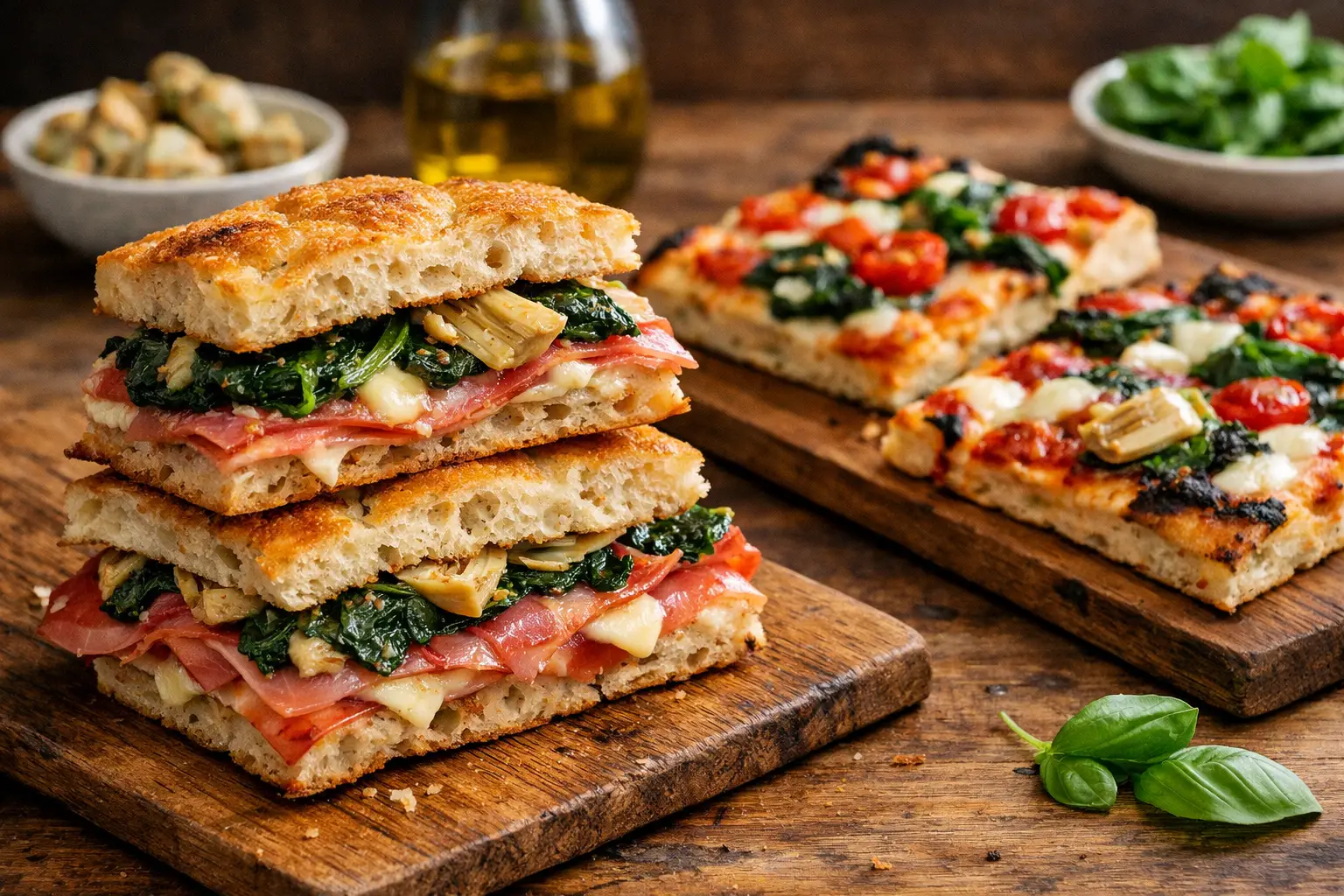
There are sandwiches that solve hunger, and others that completely change expectations. The artisan Florentine sandwich belongs to the second category. It is not just about putting good ingredients between two slices of bread. It is about understanding a bread-making tradition, respecting texture, caring for balance, and achieving that bite that sounds croccante from the very first cut.
When it is well made, you notice it immediately. The bread is not a mere support, but the heart of the product. The filling does not compete aimlessly, but converses. And the result does not taste like improvisation or a half-finished “gourmet version.” It tastes like judgment, craftsmanship, and Italian character.
What defines an artisan Florentine sandwich
If we are going to talk seriously, we have to start with a key distinction. Artisan does not depend on a pretty label or a wooden board for serving. In an artisan Florentine sandwich, craftsmanship is in the process. It is in the dough, in the timing, in the right moisture, in the crust, in the cut, and in how each ingredient is added with intention.
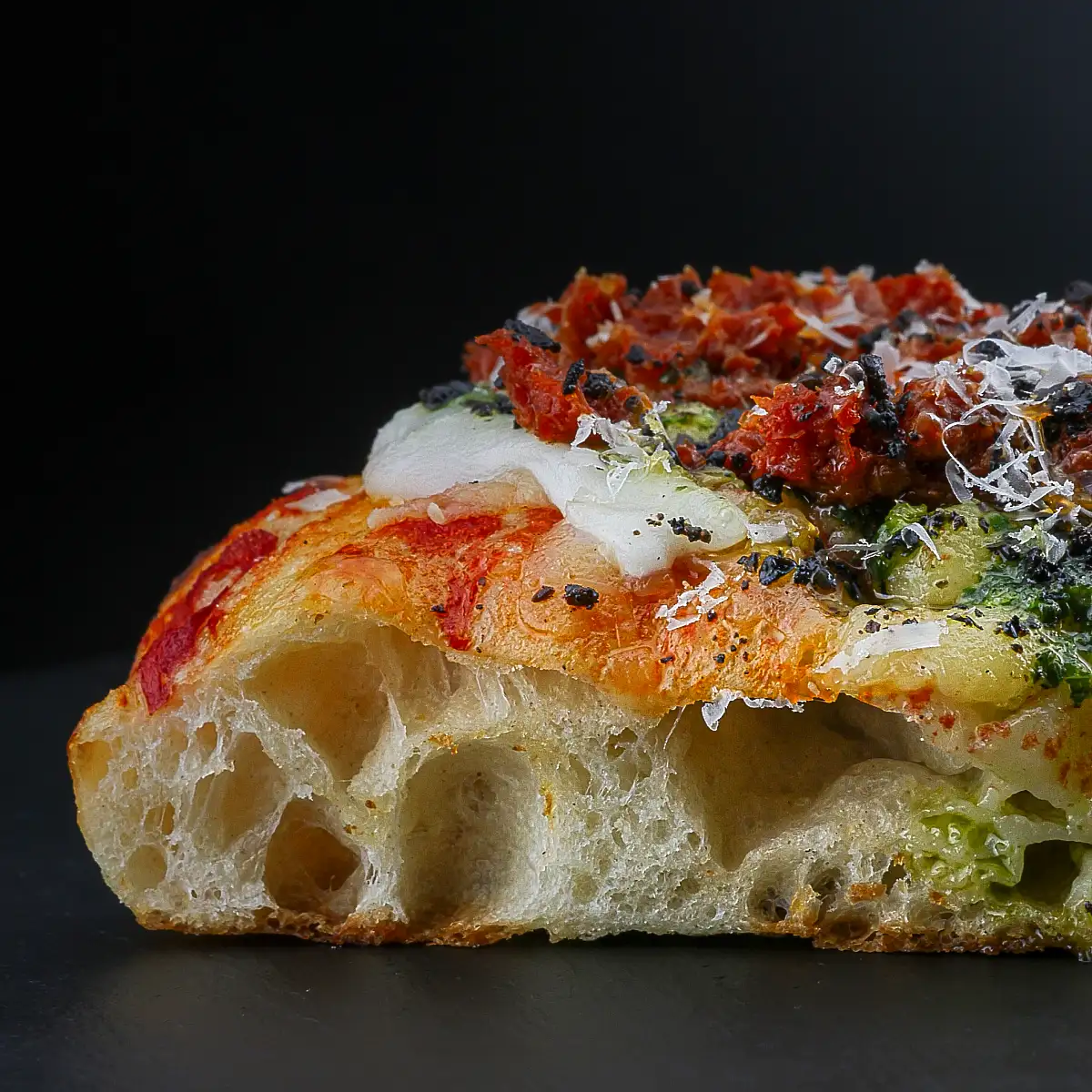
Florentine inspiration is usually connected with breads of great personality, such as the schiacciata, which offers a light structure on the inside and croccante on the outside. That combination is decisive. A bread that is too soft falls apart and kills the contrasts. One that is too hard dominates the experience and turns every bite into a fight. The exact sweet spot is something else: outer resistance, airy crumb, and the real ability to hold juicy fillings without collapsing.
Then comes the second factor: selection. Good-quality mortadella, prosciutto, porchetta, stracciatella, pecorino, grilled vegetables, truffle cream, pesto, or well-made tomato. There is no need to overload it all. In fact, excess is usually the most common mistake. A great Italian sandwich does not seek to impress by volume. It seeks to impress by harmony.
The bread changes everything
Many people think first about the filling. That makes sense, because it is the most visible part. But in an artisan Florentine sandwich, the bread decides whether the experience remains a passing craving or becomes something memorable.
A bread made with slow fermentation develops flavor, better texture, and a gentler digestibility. In addition, it achieves that personality that cannot be imitated with industrial breads made quickly. That is where an enormous difference appears between a correct sandwich and one that truly feels special.
Long fermentation also affects the aroma. Before you taste it, there are already clear signs. That smell of well-made dough, of oven heat, of wheat developed with patience, sets the stage. Then comes the crust, thin but firm, with the right color and a clean crunch. And inside, an open crumb that allows olive oil, the juices from the filling, or a smooth cream to blend in without turning everything into a heavy mass.
It is no coincidence that the best versions rely on real bread-making technique. That is where the difference lives.
Fillings with identity, not noise
A fairly common mistake in the market is to believe that more ingredients means more value. In reality, it often means less clarity. An artisan Florentine sandwich works better when each layer has a purpose.
If the star is a cured Italian sausage, it is best to pair it with elements that elevate it, not hide it. Mortadella, for example, appreciates smooth creams, pistachio, delicate cheeses, or a focaccia with great texture. Porchetta calls for structure, herbal notes, and bread that can stand up to its juiciness. Prosciutto shines with fresh cheeses, arugula, or vegetables with controlled acidity.
Temperature also matters. Some fillings work better just slightly warm to awaken aroma and natural fat. Others need freshness to preserve definition. The artisan approach is to understand that and not treat all sandwiches the same.
The sauce, if there is one, should add to the experience. Never cover up mistakes. A good pistachio cream, a well-made emulsion, or a touch of pesto can take the sandwich to another level. But if they end up saturating the palate or over-wetting the bread, they break what should be a balanced experience.
The croccante texture is not a detail
In authentic Italian offerings, texture is part of the product's language. It is not decoration. It is not a whim. It is sensory structure.
When people talk about croccante, they are talking about contrast. About that exterior that responds with a light break before giving way to a more airy crumb, a creamy cheese, or a filling with deep flavor. That sequence is what makes a good piece so addictive.
That is why a sandwich should not be served without thinking about the exact moment. If too much time passes after it is assembled, the bread loses character. If it comes out cold when it should have come out warm, key aromas fade. If it is pressed too aggressively, it can end up compact and lifeless. All of that may seem small, but it completely changes the result.
The best artisan Florentine sandwich does not just taste good. It has rhythm. First it crunches, then it opens, then it melts.
What to expect from a premium version
If someone is looking for a premium experience, the standard has to go up. And a lot. It is not enough to use Italian names or imported ingredients without criteria. A premium version demands coherence from the dough to the final touch.
That includes well-thought-out portions. A premium sandwich does not have to be huge to feel generous. It has to leave you satisfied without becoming heavy. It also includes clean presentation, precise cutting, and consistent execution. If today it tastes amazing and tomorrow it does not, there is no serious concept behind it.
In addition, a truly carefully made version usually feels more defined on the palate. It does not leave that directionless greasy feeling or the impression of having eaten something confusing. It leaves you wanting to come back. And that detail is worth gold, especially for an audience that no longer settles for the usual and wants to try something that truly has narrative, technique, and personality.
The authentic Italian factor really shows
In Costa Rica, there is already a much more attentive audience when it comes to origin, method, and specialization. It is no longer enough to say “Italian” as a generic concept. Today, people value whether the offering truly understands the tradition it represents.
In the case of the artisan Florentine sandwich, authenticity does not mean rigidity. It means respect for the product's logic. It means using breads inspired by the right tradition, ingredients that make sense, honest techniques, and an aesthetic that does not hide a lack of substance.
It also means accepting that not everything depends on the luxury of the ingredient. An expensive cheese does not fix bad dough. A truffle does not make up for bread without structure. Real authenticity is usually less flashy and much more precise.
That is where a specialized brand makes the difference. When there is bread-making knowledge, Italian judgment, and an obsession with texture, the product speaks for itself. And yes, you can tell.
When it is worth ordering an artisan Florentine sandwich
You do not have to wait for a formal occasion. Part of its charm is that it elevates a casual moment. It can be a lunch that wants to feel less routine, a get-together with friends who want to try something different, or a shared meal that calls for real food instead of generic options.
It also works very well for those who enjoy comparing textures, breads, and fillings. It is a product you can talk about, photograph, and with enough personality to become the center of the table. How good when that happens naturally and not forced.
That said, not every version will appeal to everyone equally. If someone prefers flat flavors, soft breads, and very predictable combinations, a well-made Florentine offering may seem more intense or more structured. And that is fine. Artisan also implies character. It was not born to go unnoticed.
What is really worth looking for
If you are going to choose one, look for simple but decisive signs: bread with identity, a lively crust, a light crumb, fillings that make sense together, and execution that does not rely on exaggeration. If there is also serious bread-making behind it, even better.
In an offering like Bianka® Pizza Romana, where technique, fermentation, and Italian bread culture are part of the DNA, that search makes real sense. Because when you work with real dough and a specialized vision, the result stops being a sandwich that is just pretty for the camera and becomes an experience marked by craftsmanship.
In the end, the artisan Florentine sandwich that is worth it is not the most loaded or the loudest. It is the one that achieves something much harder: making each element feel exactly where it should be, and letting a single bite make it clear that there was technique, intention, and respect for the product.