Sep 18, 2026
Gourmet Italian sandwiches that truly surprise
A good sandwich doesn't need to hide behind twenty ingredients. Gourmet Italian sandwiches are recognized from the very first bite: bread with character, a croccante texture, well-chosen products, and a balance that gives every layer a reason to be there. It's not about putting prosciutto on just any bread and calling it premium. It's about respecting a baking tradition that in Italy turns something seemingly casual into a serious, delicious, and highly photogenic experience.
For anyone looking to eat differently in Costa Rica, this is the difference between a quick lunch and a craving that deserves to be repeated. The key is not in the quantity. It is in the technique, the temperature, the cut, and the quality of each ingredient.
The bread rules in gourmet Italian sandwiches
In Italy, bread is not a simple vehicle for the filling. It is a central part of the recipe. An airy focaccia, a firm-crusted ciabatta, or a well-baked schiacciata completely changes the result. They must hold the ingredients without becoming heavy, contribute a fermentation aroma, and offer that crispy resistance that gives way to a light crumb.
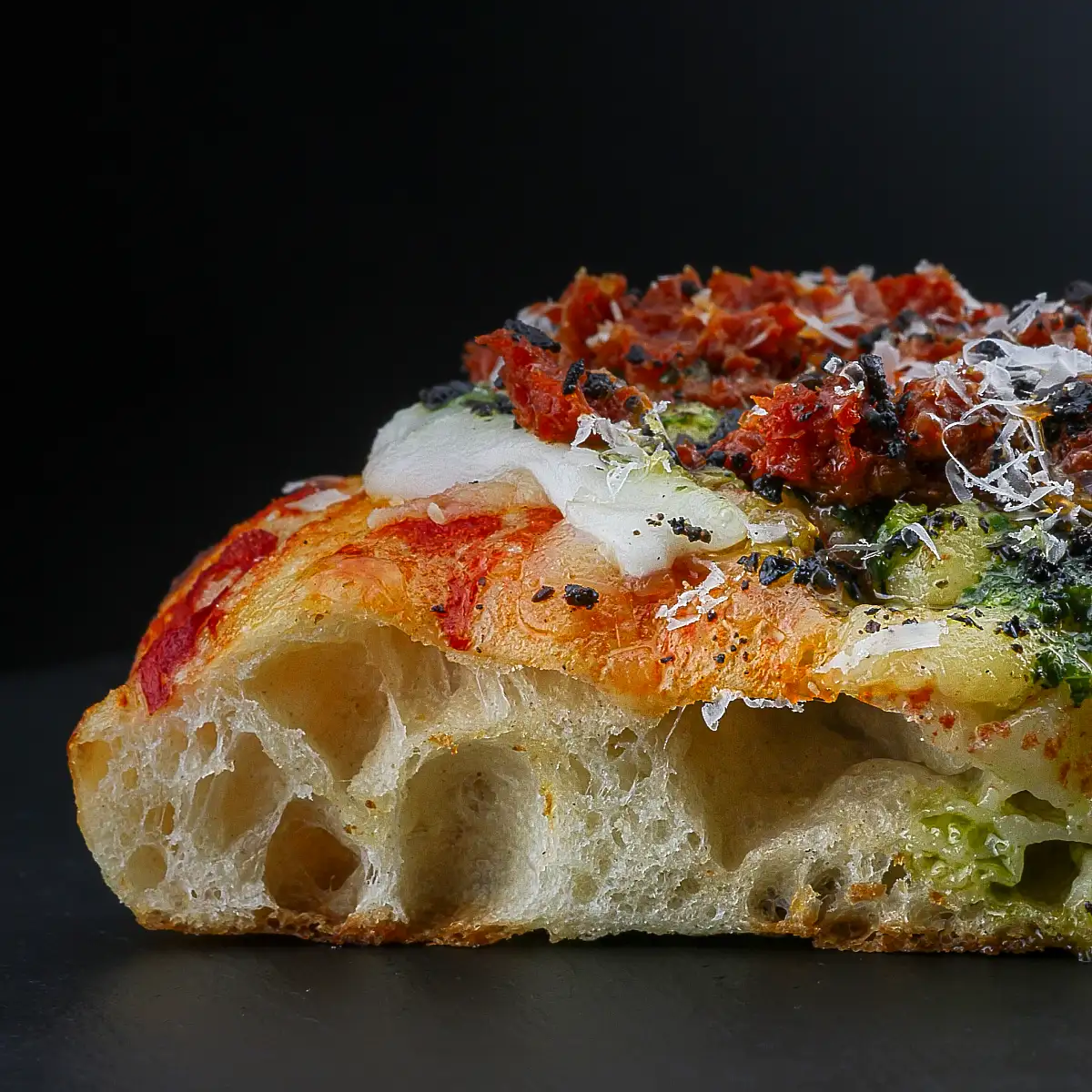
The schiacciata deserves a special mention. Originating from the Tuscan tradition, it is a flatbread that is opened and filled without losing its identity. When well-made, its edges are golden and crispy, while the interior retains an open structure that traps the juices of the filling without falling apart. It is an ideal format for generous yet precise combinations.
The stuffed focaccia plays in another league. Its texture can be softer and fluffier, with olive oil that scents the dough and enhances savory ingredients like mortadella, cheese, or roasted vegetables. The choice depends on the moment: a schiacciata can feel more intense and crispy; a focaccia, more enveloping and comforting. Both work if the dough was worked with patience.
That's where long fermentation comes in. A 72-hour process, for example, allows for the development of flavor, aroma, and a lighter texture. It is not a technical detail to decorate the menu. It is what is perceived when the bread does not feel heavy and retains that contrast between a firm exterior and a soft interior. Che buono.
Fillings with origin, not random combinations
The Italian spirit does not consist of using ingredients with Italian names. It consists of knowing how to combine them. A great sandwich usually starts with few elements, but each must contribute something specific: saltiness, creaminess, freshness, fat, acidity, or spiciness.
Mortadella, for example, asks for an ally that provides contrast. Pistachio, stracciatella, or a touch of cream can elevate it, but excess makes it dense. Prosciutto crudo needs air and freshness: arugula, seasonal tomato, or a good quality mozzarella give it space to shine. Porchetta, more powerful and spiced, welcomes acidic or green elements that cleanse the palate between bites.
There are also vegetarian combinations with huge personality. Roasted eggplant, zucchini, artichokes, pesto, ricotta, or mozzarella can build a memorable filling if the moisture is handled well. The common mistake is to pile up excessively wet vegetables and end up with soggy bread. In a gourmet sandwich, the vegetables must be roasted, marinated, or drained intentionally.
The cheese is not there to fill space either. Mozzarella, provolone, pecorino, ricotta, or stracciatella have different functions. A melted mozzarella provides elasticity and softness; provolone delivers more strength; ricotta adds delicacy. The best choice depends on the protein, the dough, and whether the sandwich is served freshly baked or at room temperature.
The texture decides if the first bite is perfect
A well-executed Italian sandwich must have rhythm. First, the crack of the crust. Then, a crumb that yields without a fight. Then the filling appears, with layers that do not blend into a uniform mass. That sequence seems simple, but it requires craftsmanship.
The temperature is decisive. The cheeses must melt enough to integrate, but not so much as to disappear. The meats need heat if the recipe calls for it, but the bread cannot come out dry nor can the vegetables lose their freshness. The goal is for the sandwich to reach the table alive: croccante, aromatic, and ready to eat without waiting too long.
Proportion also matters. If the filling spills out everywhere, it might look spectacular in a photo, but it could be uncomfortable to eat. If the bread completely dominates, it lacks generosity. A gourmet sandwich finds the middle ground: it feels abundant, but each bite maintains balance.
How to recognize a truly gourmet option
Not every sandwich with imported ingredients deserves that label. Before choosing, it is worth looking beyond the attractive description. Ask yourself what kind of bread is used, how it is fermented, and if it is baked close to the time of serving. Also look at the assembly: a carefully distributed filling speaks of culinary skill; a pile of ingredients without order speaks of haste.
The menu should be clear, not endless. The best proposals do not try to please every taste with fifty options. They have defined combinations, products with personality, and an idea behind each recipe. A short menu with excellent breads is preferable to a very long list where everything tastes similar.
It is also wise to consider the occasion. For a lunch between meetings, a manageable and freshly baked format might be the best choice. To share with friends, a focaccia cut into portions opens up space to try more flavors. If the outing is a date or a gastronomic plan, look for a place where the bread is the star and the atmosphere accompanies the experience, not just the transaction.
Why this tradition connects so well with Costa Rica
The Costa Rican public already knows the value of a good pizza, but Italian baking formats offer another way to enjoy the same obsession with dough. They are more versatile, closer to a full lunch, and perfect for those who want to step out of the predictable without going for a complicated proposal.
In San Pablo de Heredia, Bianka® Pizza Romana brings that specialized approach to stuffed focaccias, schiacciatas, and doughs crafted with Italian technique. It is an alternative for anyone who understands that the difference is not just in the topping, but in everything that happens before: fermentation, baking, structure, and product.
Furthermore, these sandwiches have a quality that is hard to ignore: they turn an everyday moment into a small ritual. Ordering one, seeing it come out of the oven, and hearing it crunch as it is cut changes expectations. It is not fast food in the generic sense. It is food made to be enjoyed with hands, conversation, and zero rush.
The pairing can elevate it even further
A gourmet Italian sandwich doesn't need to be complicated to pair well. A fresh drink with acidity can cleanse the palate when facing cured meats, creamy cheeses, or pesto. If the filling is intense, avoid overly sweet options that compete with the saltiness. If the recipe is vegetable-based and light, a citrusy drink can highlight its fresh notes.
For a shared table, combining different fillings is a great move. One with mortadella, another with roasted vegetables, and another with spiced meat allows you to compare textures and discover which bread responds best to each combination. It is a way of eating with curiosity, which in the end is part of the Italian charm.
The next time a craving calls for something more than an ordinary sandwich, look for a dough with history, a filling with intention, and that croccante sound that announces something special. That is where the difference begins.