Sep 20, 2026
Roman cuisine guide to eat like you are in Rome
Rome is not understood only with a plate of pasta. It is understood when cutting a slice of pizza al taglio, when hearing the crunch of a well-baked base, and when tasting a bread that spent hours developing flavor. This Roman culinary guide goes beyond the well-known names: it is a way of recognizing the technique, the product, and that Italian simplicity which, when well executed, feels extraordinary.
Roman cuisine does not seek to disguise ingredients. It puts them to work. Dough, tomato, cheese, olive oil, pecorino, pepper, seasonal vegetables, and cured meats have to speak clearly. That is why an excellent Roman pizza does not need a mountain of toppings. It needs character, balance, and a texture that makes you say: che buono.
What Defines Roman Cuisine
The gastronomy of Rome was born from a popular, intense, and practical city. It has recipes with few ingredients, but it demands precision. The difference lies in the cooking point, the quality of the raw material, and the respect for each preparation. An overcooked egg, a pasta without al dente, or a rushed dough can change everything.
In this cuisine, two great expressions coexist. There is the trattoria tradition, with hearty pastas and direct flavors. And there is the baking tradition, one of the most vibrant in Italy, where pizza al taglio, focaccia, and stuffed breads are the protagonists of a quick, artisanal, and deeply Roman meal.
Rome is also a city of contrasts. It can serve a creamy cacio e pepe with just cheese and pepper, and a few blocks away offer a square, airy, and croccante pizza, cut with scissors according to each person's hunger. That well-done informality is part of its charm.
Roman Culinary Guide: The Pizza That Changes the Rules
When many people in Costa Rica hear “Italian pizza,” they imagine a round, thin pizza served whole. Pizza romana in teglia proposes a different experience. It is baked in a pan, has a rectangular or square shape, and is sold by the slice. But its greatest difference is in the dough.
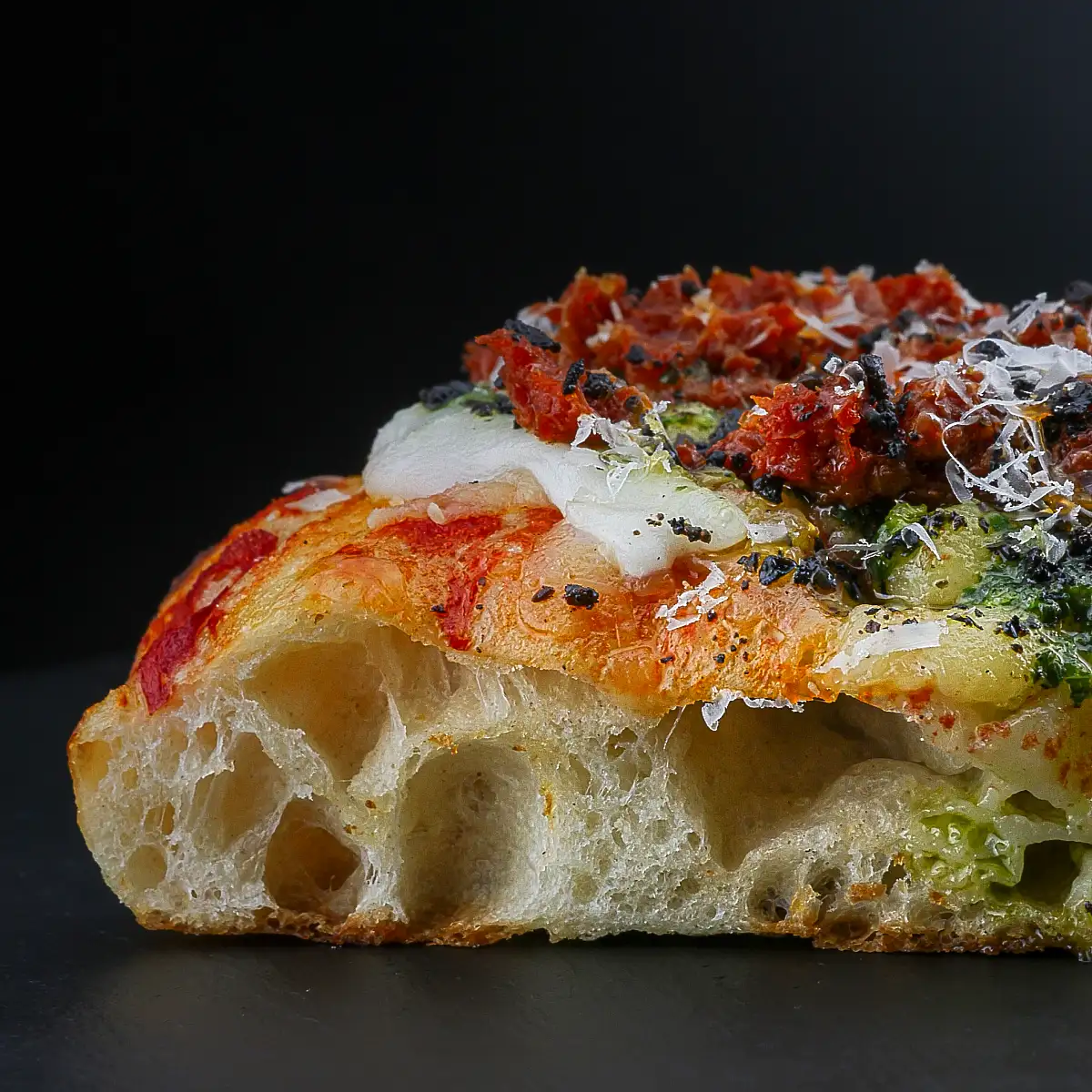
A good Roman dough has high hydration, slow fermentation, and an open structure. On the outside, it should be crispy, almost flaky on the edges. On the inside, light, airy, and with a crumb that supports the ingredients without feeling heavy. It is not a rigid base nor a spongy dough without personality. It is the exact point between air, flavor, and crunch.
Fermentation is decisive. A dough worked for 72 hours develops depth, improves its texture, and allows for a gentler digestion for many people, although each body responds differently. It is not magic or a universal promise: it is technique, time, and control. The temperature, the type of flour, the hydration, and the baking must be aligned.
How you eat it also matters. Roman pizza al taglio is enjoyed without protocol. It is shared, tried in various flavors, and becomes a table for conversation. A slice of potato and rosemary can go next to another of mortadella, pistachio, and stracciatella. A red pizza, intense with tomato, can contrast with a bianca of cheese, vegetables, or cured meats. The format invites curiosity.
In San Pablo de Heredia, Bianka® Pizza Romana brings that tradition to an experience designed for those who want to step away from generic pizza: slow-fermented dough, square cuts, croccante texture, and combinations that feel special from the very first bite.
Pizza al taglio e in teglia: They Are Not Just Italian Words
“Al taglio” means “by the cut.” It describes the way of selling and serving pizza by the slice. “In teglia” means “in a pan” and refers to the baking format. In practice, both concepts usually meet in the same experience: a rectangular pizza baked in a pan and cut to order.
The key is not to confuse quantity with quality. A generous portion should not feel heavy or greasy. It must have a firm base, well-distributed ingredients, and a bake that preserves the contrast between crispy and soft. If it folds completely, it is soggy. If it looks like a dry cracker, it lacks life. Rome demands balance.
The Essential Flavors of Rome
Roman cuisine has dishes that deserve respect because they rely on few elements. Precisely for that reason, they do not accept shortcuts. Traditional Roman carbonara is built with egg yolk, pecorino romano, guanciale, and black pepper. It does not contain cream. Its silky texture comes from properly emulsifying the ingredients with the residual heat of the pasta.
Cacio e pepe seems even simpler: pasta, pecorino, and pepper. However, achieving a smooth sauce instead of a clump of cheese requires temperature, patience, and good technique. It is a dish that proves Italian cuisine is not complicated by excess, but by precision.
Amatriciana incorporates tomato, guanciale, and pecorino, with a more vibrant and deeper flavor. Gricia, on the other hand, can be seen as the cousin prior to amatriciana: guanciale, pecorino, and pepper, without tomato. Each has its own personality. They are not interchangeable versions or recipes to be loaded with extra ingredients.
Aside from pasta, there are classics that reveal the Roman spirit. Supplì are stuffed rice croquettes, fried to a crispy shell. Puntarelle, when in season, are prepared with an intense anchovy dressing. Porchetta brings the fragrance of herbs, juicy pork, and a golden crackling. And artichokes, romana-style or Jewish-style, show why vegetables can also be absolute protagonists.
Focaccia, Schiacciata, and the Power of Italian Bread
Italian baking culture is not a side dish. It is a whole category. Focaccia can be thick or flatter depending on the region and the recipe, but it always needs good olive oil, a moist crumb, and a golden surface. When stuffed with cheeses, meats, vegetables, or spreads, it transforms into a complete, practical, and memorable meal.
Schiacciata comes from Tuscany, especially Florence, not Rome. Even so, it fits naturally into a guide to understanding the Italian bread tradition that accompanies contemporary Roman pizza. It is thinner, crispier, and designed to be split open and filled. Its name refers to a “squashed” dough, and its charm lies in that light shatter that contrasts with creamy or juicy ingredients.
Not all Italian breads aim for the same texture. That is the point. If you want something pillowy and oily, focaccia might be your choice. If you are looking for a thinner, toasted, and substantial bite, schiacciata has the upper hand. If you want an airy dough with toppings and a crust that crackles when cut, pizza in teglia is the answer.
How to Recognize an Authentic Roman Experience
Authenticity does not depend on filling the menu with Italian words. It is noticed in what arrives at the table. Start with the dough: it should have a fermentation aroma, a golden color, and a texture that does not yield under the ingredients. Then look at the product. The tomato must taste like tomato, the cheese must melt without turning the slice into a layer of grease, and the cured meats must complement, not dominate.
Also observe the pace. The best Italian concepts do not need to complicate a casual meal. They allow you to order several options, share them, and discover combinations. Dinner can be a stuffed focaccia, two or three slices of pizza, and something fresh to balance. For a date night or an outing with friends, that variety is part of the experience.
Mind you, authentic does not mean static. A well-interpreted Roman cuisine can use local products, create contemporary toppings, and adapt to Costa Rican tastes. The limit lies in not betraying the essence: doughs with method, ingredients chosen with criteria, and a texture that takes center stage.
The next time you see a square pizza, do not judge it by its shape. Order a slice, listen to that croccante sound when you bite, and let well-made bread tell you a story much more interesting than that of just any ordinary pizza.