May 15, 2026
Guide to pizza al taglio: how to enjoy it
There are pizzas that fill you up. And there are pizzas that tell a story from the first bite. This guide to pizza al taglio is for those who want to understand why in Rome a square, light, and crispy slice can feel much more special than just any pizza.
If you ever saw a pizza served in rectangles, displayed on trays and cut to order with scissors, you were not looking at a passing trend. You were looking at a baking tradition with its own character. Pizza al taglio does not compete by trying to resemble the classic round pizza. It plays a different game. It has a different texture, a different rhythm, and a different way of being enjoyed.
What pizza al taglio is
Pizza al taglio means, literally, pizza by the slice. In Italy, especially in Rome, it is part of everyday life. It is sold by the slice, often priced by weight, and baked in rectangular pans. Its format is not a minor detail. That baking in a teglia allows it to develop a base that is airy inside and crisp outside, with a balance that defines the whole experience.
It is not just about the shape. The identity of this pizza is in the dough. A well-made pizza al taglio usually uses high hydration, long fermentations, and careful handling to achieve a crumb that is light, almost ethereal, without losing structure. The ideal result is not a heavy slice or a gummy base. It should feel light, crispy, and addictive.
That is one of the big differences from more commercial pizza. Pizza al taglio does not try to overwhelm you with cheese or hide the dough under endless toppings. The dough matters. A lot. It is the star.
Pizza al taglio guide: what makes it different
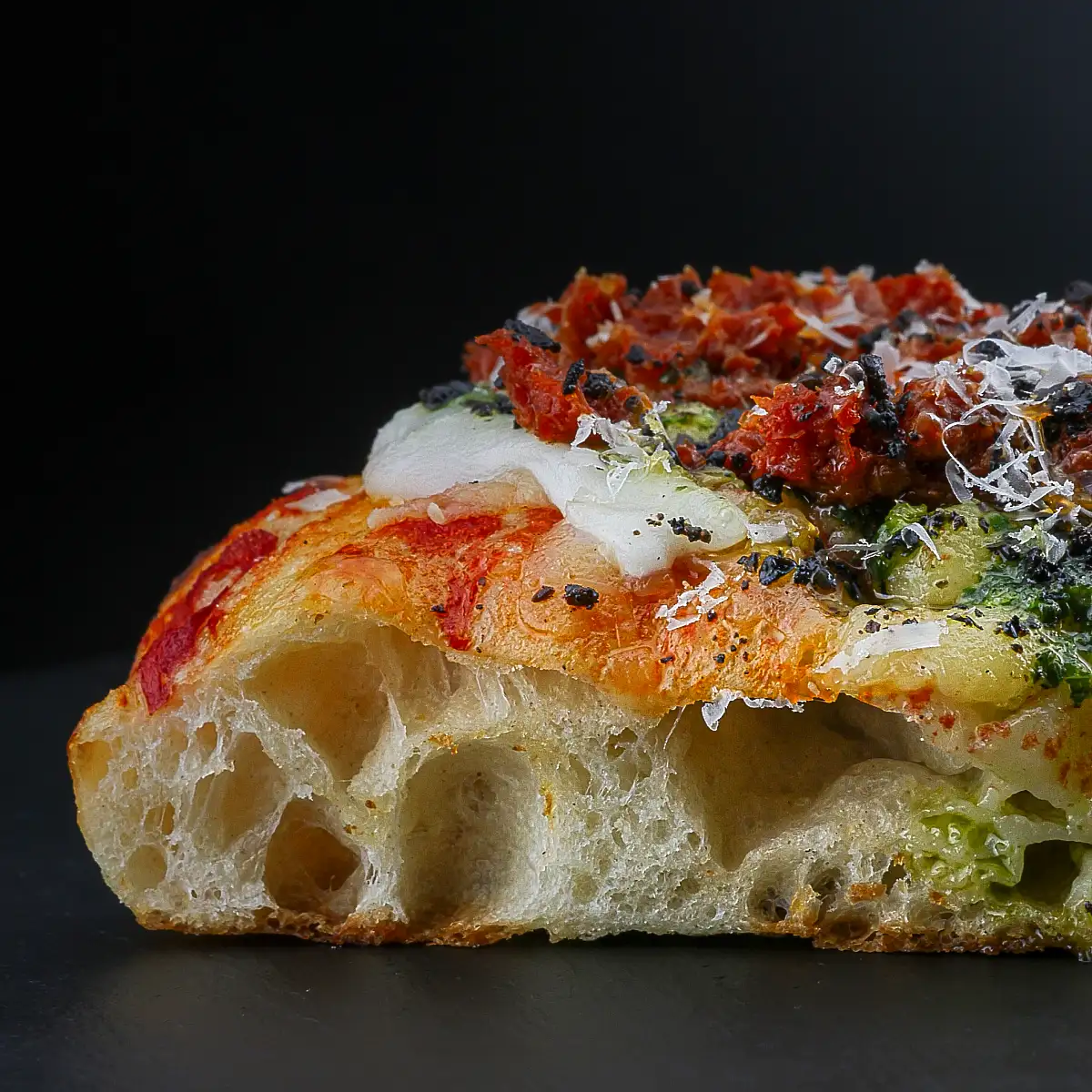
To truly understand it, you have to look at three elements: texture, technique, and service. Texture is the first thing that wins you over. The base should make a slight sound when you bite into it, but without becoming hard. The interior has to retain moisture and visible air pockets. That contrast between crispy and airy is a clear signature of the Roman style.
Technique comes next, although in reality it holds everything together. The best versions start with long fermentations, which develop flavor and favor gentler digestion. That is not just a nice fact to tell. You can taste it. Well-fermented dough has depth, aroma, and a lightness that sets it apart from a pizza made in a hurry.
Service also changes the experience. Pizza al taglio invites you to try more than one flavor in a single visit. Instead of committing to a whole pizza, you can explore different combinations, from very traditional options to more creative versions. It is a way of eating that feels more open, more curious, and much more talkative.
The dough: where it all begins
If there is one thing that separates an authentic Roman pizza from a friendly imitation, it is the dough. Here, it is not enough for it to be "good." It has to have structure, flavor, and a precise texture. Long fermentation, often 48 to 72 hours, helps achieve that profile that feels refined, not improvised.
High hydration gives the dough an open crumb and a light feel. But it also requires skill. It is not easy to handle such lively doughs without losing control. That is why a good pizza al taglio conveys craftsmanship before the first bite. You can see it in the golden color of the edge, in the well-baked base, in the way it holds the ingredients without bending like wet cardboard.
Here an important clarification is worth making. More air does not always mean better pizza. If the structure becomes fragile or the toppings make the base too moist, the balance is lost. Excellence lies in the middle ground: real lightness, a defined crispness, and enough sturdiness to eat the slice comfortably.
Ingredients do not come before technique
In a serious pizza al taglio, the toppings are supportive. They do not hide mistakes or try to impress by quantity. The tomato sauce, cheeses, vegetables, cured meats, or creams should add identity without crushing the dough. That logic is very Italian. Less excess, more intention.
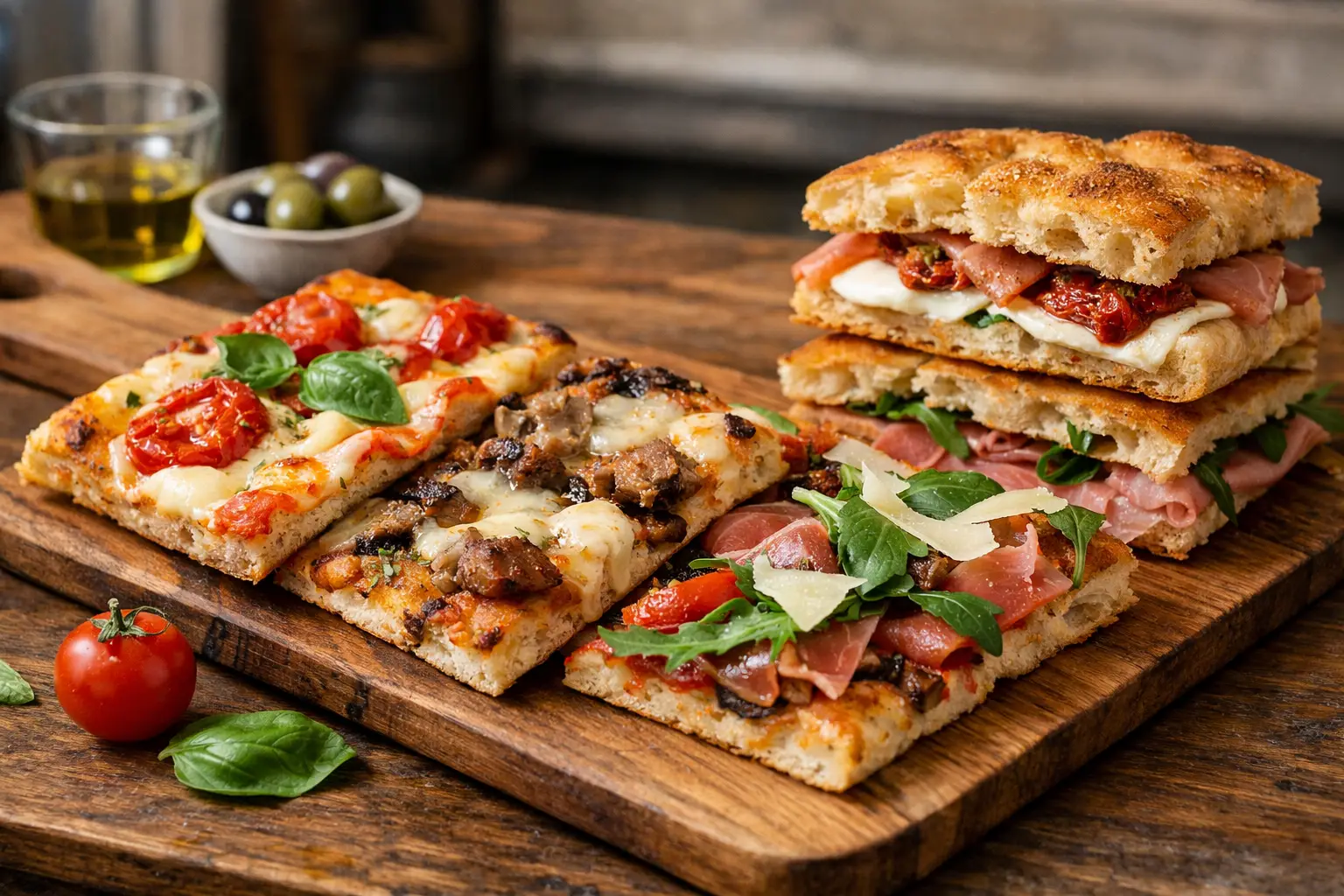
That is why this style works so well with seemingly simple combinations. Potato and rosemary. Mortadella with stracciatella. Tomato with mozzarella and basil. Zucchini, mushrooms, prosciutto, caramelized onion. The secret is not mixing ten things. It is making sure each ingredient arrives at the right point and respects the base.
There is also room for more contemporary ideas. Pizza al taglio welcomes creativity, but punishes disorder. If the topping is too heavy or wet, it ruins the texture. If everything tastes extremely intense, nothing stands out. Good taste here shows in restraint.
How to eat it properly
Part of the charm is that it does not require ceremony, but it does reward attention. Pizza al taglio is best enjoyed fresh out of the oven or just reheated, when the base keeps its crispness and the ingredients remain expressive. Eating it too late can dull the experience, especially if moisture has already compromised the texture.
Another key is the size of the slice. Since it is cut to order, you can ask for what suits your hunger, your curiosity, or your desire to try several flavors. That makes it ideal for sharing, for a quick lunch with standards, or for a casual meal that still feels premium.
There is no single correct way to approach it. Some people start with milder flavors and save the more intense ones for the end. Others mix textures from the outset. What matters is understanding that this format invites discovery, not just repetition of what is already known.
What to look for in a good pizza al taglio
If you want to sharpen your eye, there are clear signs. The base should look well baked, never pale or wet. The edge needs color and character. When you lift the slice, it should feel light for its size. And when you bite into it, the texture should confirm everything: crispy outside, airy inside, flavorful without heaviness.
The aroma also says a lot. Well-fermented dough smells different. It has more complex notes, more bakery character, more honesty. If the first thing that dominates is grease or reheated cheese, the technique probably is not leading the way.
And then there is the overall balance. Pizza al taglio should not leave you feeling like you ate a dry mass or a mountain of toppings on top of a base with no personality. When it is well made, everything talks to each other. Nothing shouts.
Why it is winning over people looking for more
In a market full of pizzas that look alike, pizza al taglio feels like a discovery. It has authenticity, style, and a truly different experience. It does not rely on visual tricks or flashy names. It wins you over through texture, technique, and identity.
That especially connects with an audience that no longer settles for generic food. People who want to try something with history, who value processes like long fermentation, and who recognize when a culinary proposal has real craftsmanship behind it. On that terrain, Roman pizza has the advantage.
That is why it is no surprise that specialized concepts like Bianka® Pizza Romana attract so much attention. They do not just bring a different pizza. They bring a product culture. And you can feel that.
The experience changes when you understand the style
A lot of people try pizza al taglio expecting it to behave like a traditional round pizza. That is where unfair comparisons usually appear. That it has less cheese, that the slice seems lighter, that the cut is different. Of course it is. That is precisely the point.
When you understand the style, you start to appreciate other things. The precision of the bake. The elasticity of the crumb. The contrast between an elegant topping and a powerful base. The ability to eat several flavors without ending up overwhelmed. All of that makes the experience feel richer, more modern, and more memorable.
A good guide to pizza al taglio does not end by telling you what to order. The most useful thing is to invite you to look differently. To value the dough as much as the topping. To look for real crispness, not just appearance. To recognize that a square pizza, well made, can completely elevate your idea of what it means to eat a slice.
The next time you see a rectangular tray come out of the oven, give yourself that treat with curiosity. If the technique is there, the first bite does the rest. Che buono.