Apr 27, 2026
How 72-hour fermentation works
There is a difference you can feel from the very first bite. One pizza may look good, have great cheese, and still fall short. The other cracks when you bite into it, sounds crisp, feels light, and leaves a deeper flavor. When someone asks how 72-hour fermentation works, they are really asking why a well-made dough tastes, smells, and behaves differently.
In a truly Italian-style offering, fermentation is not a technical detail meant to impress. It is part of the product's character. It is what separates a correct dough from a memorable dough. And when it is done well, it completely transforms the experience of a Roman-style pan pizza, a stuffed focaccia, or a schiacciata with character.
How 72-Hour Fermentation Works
72-hour fermentation is a slow process in which the dough rests for three days, generally under controlled cold conditions, so that the yeast and enzymes can do their work without hurry. It is not just about “letting it rest.” During that time real changes occur in the structure, flavor, and digestibility of the dough.
The yeast consumes part of the sugars present in the flour and produces gas. That gas gets trapped in the gluten network and creates a dough with air pockets, volume, and a more airy texture. At the same time, enzymes break down complex components of the flour into simpler molecules. This affects the flavor, the color of the bake, and how the dough behaves when cooked.
When the process extends to 72 hours, the result is not simply a “more fermented” dough. It is a dough with more development. More aroma. More personality. And if the recipe, hydration, and temperature are managed well, a lighter dough to eat as well.
What Happens Inside the Dough During Those 72 Hours
The first hours are for activation. Yeast starts working, the dough comes to life, and an initial structure forms. If everything were done quickly, the dough could puff up, yes, but it would still have a flat flavor and a less refined texture.
Then comes the stage that makes the difference. In the cold, fermentation becomes slow and precise. Time allows aromatic compounds to develop that do not appear in accelerated processes. That is why a long-fermented dough usually has more complex notes, a more bread-like profile, and a flavor that is less aggressively yeasty.
It also changes the texture. The dough relaxes, matures, and improves its extensibility. That helps work it without stressing it too much. In products like Roman-style pizza by the slice or tray-baked pizza, where the texture has to be airy on the inside and crisp on the outside, this point is key.
Not everything is magic or Italian romanticism. There is science and there is craft. If the temperature is off, if the hydration is not right, or if it is over-fermented, the dough loses strength, becomes too acidic, or does not respond well in the oven. The 72 hours work when backed by technique.
Why It Tastes Better
The flavor of a good dough does not depend only on the topping. A well-fermented base has its own taste. And that lifts the whole pizza.
With more time, starches and proteins gradually change. That evolution creates a more aromatic and less simple profile. The crust develops better color in the bake, cleaner toasted notes appear, and the interior keeps a soft feel without becoming gummy.
In simple terms, long fermentation gives it depth. It does not need to disguise itself with an excess of ingredients. The dough already arrives with an argument. That is why, in a premium Roman pizza, the base is not a support. It is the star.
Slow Fermentation and Digestibility: Yes, But It Depends
Here it is worth being clear. Many people associate 72-hour fermentation with a “more digestible” pizza, and in many cases that perception is real. Slow fermentation helps break down part of the flour compounds, which can make the dough feel lighter to eat.
But it is not an absolute promise for everyone. Final digestibility also depends on the quality of the flour, the hydration level, the percentage of yeast, gluten management, baking, and how much you eat. Excellent fermentation greatly improves the result, but it does not fix careless execution.
What you usually do notice is this: a well-fermented dough feels less heavy than one made in a rush. There is less aggressiveness, more balance, and a cleaner overall sensation. That detail matters a lot when you are looking for a premium experience, not just to get full.
The Texture Everyone Remembers
If there is one thing that defines good 72-hour fermentation, it is the final texture. And in the world of Roman pizza, that is sacred ground.
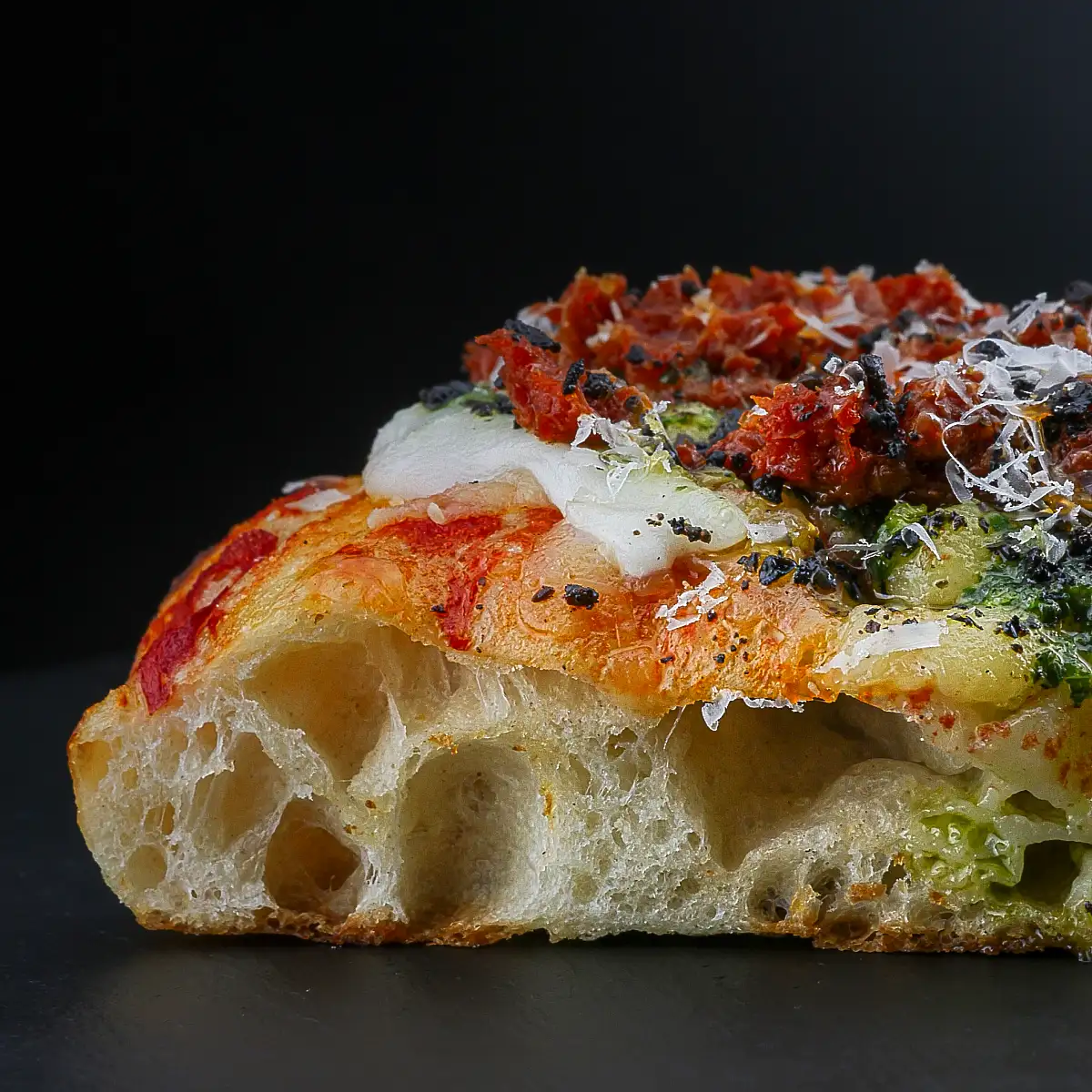
The goal is not a soft dough without character. Nor a hard base that breaks without grace. The goal is that exact point where the interior is airy and light, while the base and the edges offer a crisp, golden, addictive bite.
That combination does not appear by chance. Slow fermentation allows a better-developed internal structure. Then, when it goes into the oven, that structure reacts more precisely: it expands where it should, dries where it should, and caramelizes better. The result is a pizza with contrast, which is exactly what makes it so satisfying.
How 72-Hour Fermentation Works in Roman Pizza
In Roman-style pizza by the slice, long fermentation makes even more sense. This style seeks a highly hydrated dough, with visible air pockets, a crisp base, and a very bread-like profile. To achieve that, a pretty recipe on paper is not enough. It takes time.
The 72 hours help a dough with more water become workable and stable. They give it maturation, organized strength, and better performance during tray baking. That is why the pizza comes out light, structured, and with that finish that makes a well-made corner almost an event.
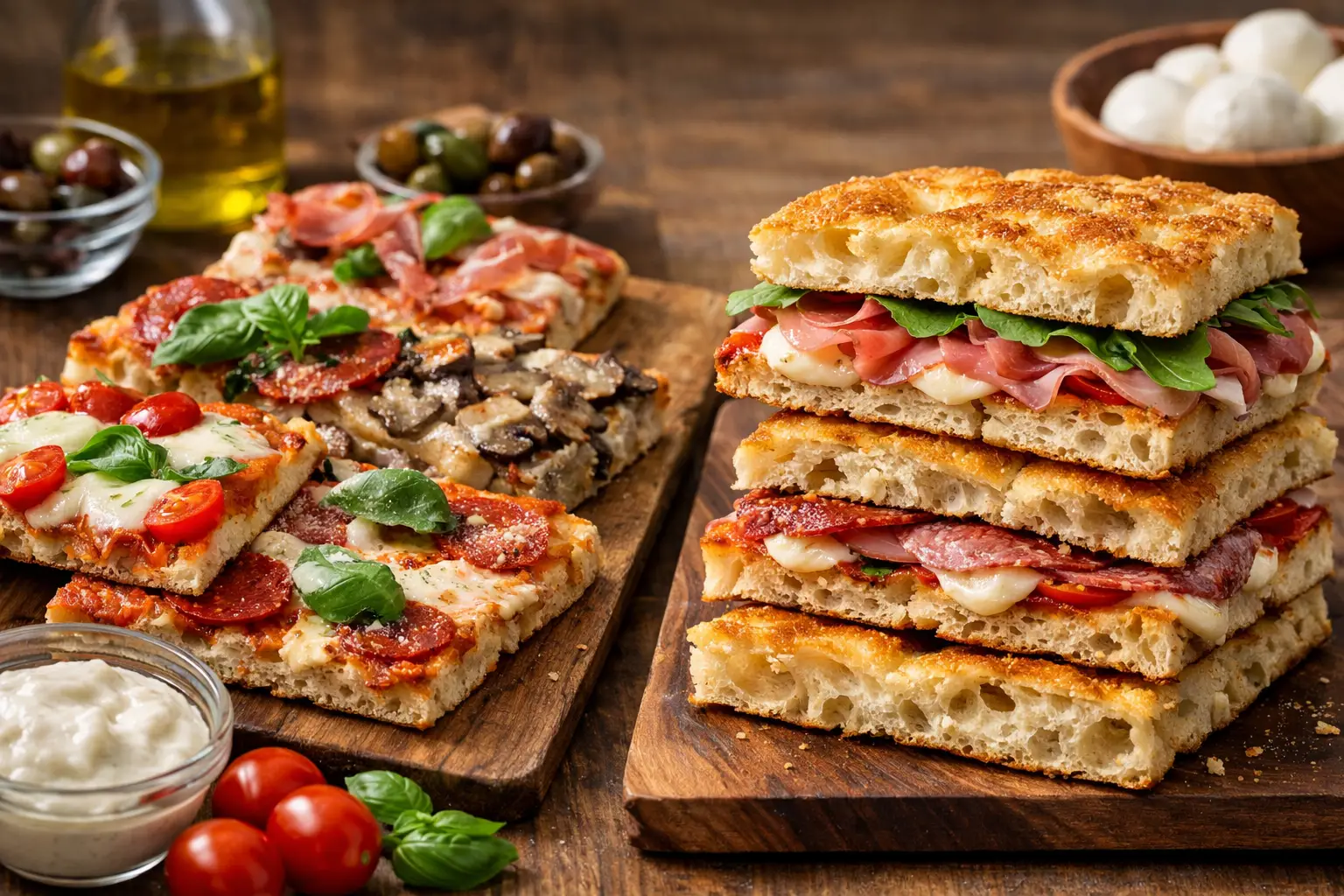
In stuffed focaccias and flatbreads, it also adds a lot. The crumb gains elasticity without becoming heavy, and the crust gets a more marked personality. It is the kind of detail the customer may not explain in technical language, but does recognize instantly. They feel it. And they come back for it.
Not All 72-Hour Doughs Are the Same
Here is the nuance that separates the pitch from the real product. Saying “72 hours” sounds spectacular, but that number alone does not guarantee excellence.
A dough can spend 72 hours fermenting and still turn out mediocre if the flour is not the right one, if cold control is inconsistent, or if the process is poorly balanced. It can also happen that a 48-hour dough, very well designed, works better than a badly executed 72-hour one. Time adds value, but it does not replace judgment.
What makes a long fermentation special is how it integrates with everything else. Formula, temperature, hydration, handling, and oven. When those pieces fit together, that light texture and deep flavor appear, the ones that justify the wait. Then you really understand why an artisanal, specialized pizza plays in another league.
Why This Technique Matters More Than It Seems
For someone who just wants to eat something tasty, the answer is simple: it matters because you can notice it. Because the pizza tastes better, feels better, and offers a much more complete experience.
For someone who appreciates niche Italian cooking, it matters even more. 72-hour fermentation speaks of patience, craft, and respect for the product. It speaks of a way of doing things where the dough is not improvised. It is built.
And that, in a market full of generic options, makes all the difference. A proposal like Bianka® Pizza Romana is not defined only by selling square pizza or by sounding Italian. It is defined by backing up with technique what it promises with identity. So good when the specialty is truly tasted.
If you ever wondered why a pizza can feel crisp, light, and full of flavor all at once, the answer starts here. In giving the dough the time it needs. Because sometimes 72 hours are not a long wait. They are exactly what it takes for a pizza to stop being just another one and become one you want to order again.