Jul 20, 2026
How to choose an authentic Italian restaurant
A pizza with a lot of cheese, a checkered tablecloth, and an Italian song playing in the background can create a nice scene. But they are not enough to talk about authenticity. If you want to know how to choose an authentic Italian restaurant, look beyond the decor: the truth is in the dough, in the respect for each recipe, in the quality of the ingredients, and in the personality of the menu.
Italy does not have just one cuisine or just one pizza. Rome, Naples, Florence, Sicily, and Emilia-Romagna all have different traditions, their own techniques, and flavors that shouldn't be mixed just to sound Italian. A serious restaurant doesn't try to be everything to everyone. It has a clear concept, executes it with conviction, and explains to you why it does things that way.
How to choose an authentic Italian restaurant without falling into clichés
The first sign is simple: look for specialization, not an endless menu. A place that promises pizza, pasta, sushi, hamburgers, wings, and desserts from ten countries is probably chasing volume, not a culinary identity. On the other hand, a focused concept usually reveals true craftsmanship. It might specialize in fresh pasta, regional cuisine, Neapolitan pizza, or pizza romana in teglia. What matters is that there is a standard behind it.
A short menu is not a limitation when every product has been thought out. It is a statement of confidence. It means that the kitchen knows its processes, works with ingredients it can control, and protects the quality during service. If the menu explains the style of pizza, the type of dough, or the origin of a preparation, even better. It is not about using Italian words just because they are trendy, but about demonstrating knowledge.
Also pay attention to what does not appear. A Roman pizza does not have to copy a Neapolitan one, and a focaccia should not be sold as if it were the same thing as a round pizza. The differences matter. Authenticity starts when the restaurant names each product correctly and does not sacrifice its character to seem familiar.
The dough tells a story before the first bite
In a real Italian pizzeria, the dough is not a simple vehicle for toppings. It is the heart of the product. That's why it's worth asking about fermentation, hydration, and the style they work with. You don't need to turn a dinner out into a baking class, but a team that's proud of its technique can answer with clarity.
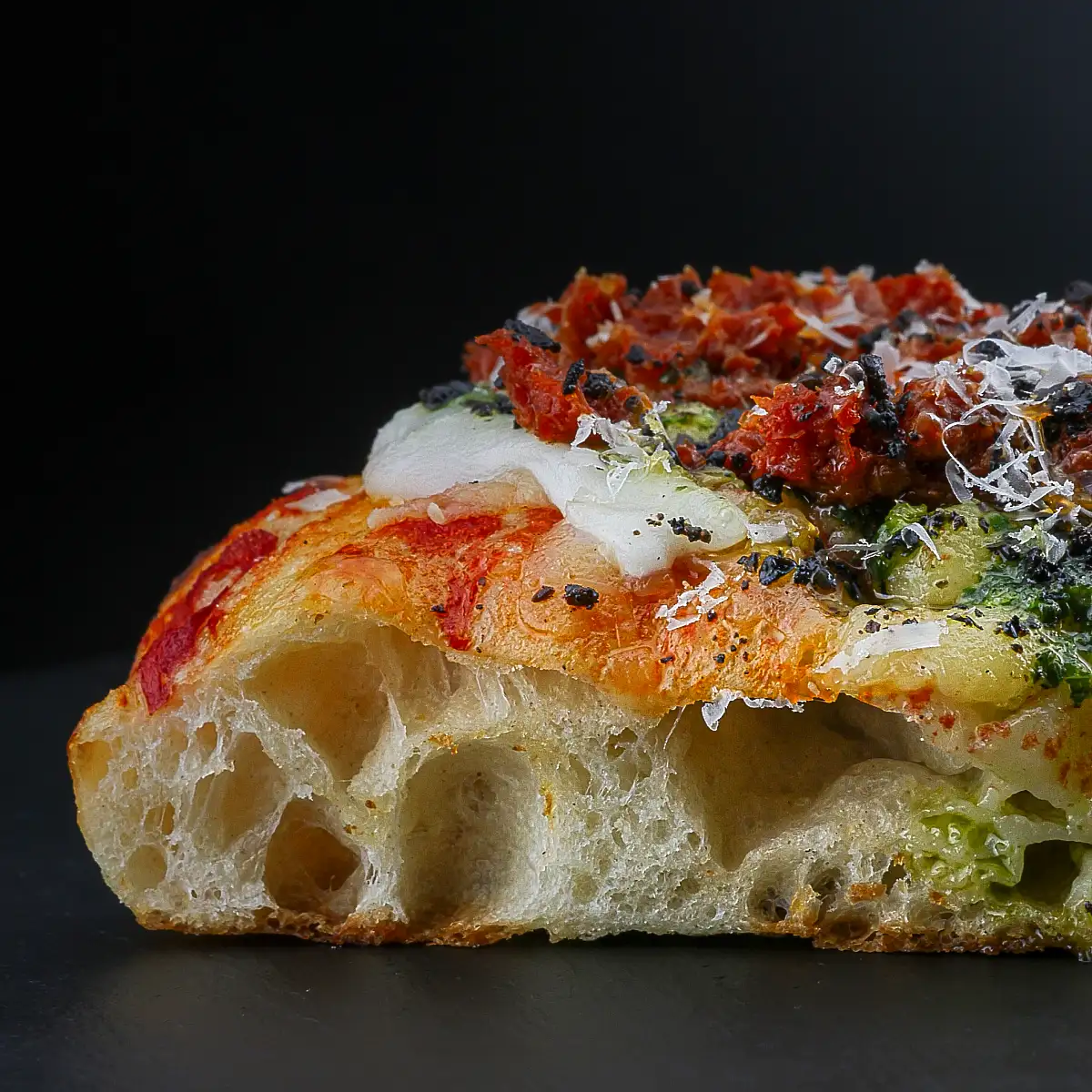
A long fermentation, for example, can develop flavor, aroma, and a lighter texture. It is not a magic formula nor does it guarantee excellence by itself, but it does show that there is time, planning, and craftsmanship involved. A well-made dough should feel alive: golden on the outside, airy where it should be, and with enough structure to hold its ingredients without becoming heavy.
Roman pizza in teglia has its own language. It is baked in a pan, presented in a square or rectangular format, and aims for a croccante base, with a light and airy interior. It does not compete with other styles: it offers a different experience. If you try it and find a crispy bite, a well-cooked base, and a balance between dough and toppings, you are on the right track.
The same applies to schiacciata or a stuffed focaccia. The bread should not be a forgotten side dish. It must have character, crust, aroma, and a texture that makes the filling shine without stealing all the spotlight.
Recognizable ingredients, not a mountain of excesses
Italian cuisine can be generous, but it rarely needs to hide under layers of ingredients. A good restaurant knows that a well-cooked tomato sauce, a purposefully chosen cheese, olive oil, seasonal vegetables, or quality cured meats can do a great deal when combined with precision.
Be a little suspicious of pizzas where everything arrives in overwhelming quantities and nothing stands out. A lot of cheese does not equal a better pizza. Sometimes it just covers up tasteless dough, a flat sauce, or ingredients that are not fresh. The useful question is not how many things are on the plate, but whether each one contributes something.
Quality is noticeable in specific details: tomato with a balanced acidity, mozzarella that melts without flooding the base, basil that retains its fragrance, prosciutto served at the right time, and vegetables that maintain their texture. In Italian cooking, less can be much more, as long as there is technique.
That does not mean that everything must be strictly imported. There are extraordinary local products in Costa Rica, and an honest concept can integrate them with great results. The key lies in not inventing a tradition. Using a high-quality Costa Rican ingredient is valid when the technique is respected and communicated transparently.
Look for regional identity and a team that defends it
Saying "Italian food" is like saying "Latin American food": it encompasses entire worlds. An authentic restaurant usually makes it clear from which region, technique, or tradition it is speaking from. Maybe its strength is Roman pizza al taglio. Maybe it works with Tuscan recipes, northern pasta, or southern flavors. That definition gives depth to the experience.
Do not expect a Roman restaurant to make the Neapolitan pizza you have in mind, nor a place specialized in focaccia to offer twenty types of pasta. Authenticity is not about meeting all the customer's expectations. It's about being faithful to a concept and doing it extraordinarily well.
Listen to how the staff describes the dishes. If they can explain to you what makes a dough special, why an ingredient is added after the oven, or how a preparation is recommended to be eaten, there is a product culture there. That enthusiasm is contagious. It also makes the visit more chatty, richer, and much more memorable.
The atmosphere adds, but the kitchen rules
A nice space helps. The light, the music, the design, and a photogenic presentation can turn a casual meal into a plan you want to repeat. But aesthetics must accompany the product, not distract you from it. A restaurant can have a modern, minimalist, or urban vibe and still be deeply Italian if its kitchen delivers on the promise.
Contemporary authenticity doesn't have to look like an old postcard. It can feel young, energetic, and premium. It can serve square pizza in a vibrant environment, with a clear narrative and flawless execution. In San Pablo de Heredia, Bianka® Pizza Romana bets precisely on that vision: Italian baking tradition brought to a modern experience, with 72-hour fermentation, pizza in teglia, and a croccante texture as the protagonists.
Mind you, service matters. An artisanal product deserves to arrive at the table at its best. A pizza that loses its crispiness because it waits too long, a reheated pasta, or a generic recommendation can lower an experience that promised a lot. Watch for attention to the pace of service, temperature, and details.
Don't confuse authenticity with rigidity
An authentic Italian restaurant does not have to be solemn. It can innovate, create new combinations, and adapt certain elements to local tastes. The limit is in the consistency. A creative version works when it starts from a solid foundation, not when it uses the word "Italian" as an excuse for just any mix.
It also depends on what you are looking for. If you want a long dinner with wine and pasta, your criteria will be different from those of a quick outing for a slice of pizza al taglio or a stuffed schiacciata. What matters is that the place is honest with its format and that the product lives up to that promise.
The next time you crave Italy, order with curiosity. Taste the dough before judging the toppings, read the menu carefully, and choose places that are not afraid to specialize. When there is technique, identity, and real flavor, every bite says much more than any flag hanging on the wall. Che buono.