Jun 2, 2026
How to choose real premium artisan pizza
There is a huge difference between a pizza that simply fills you up and one that lingers in your memory. If you are wondering how to choose premium artisanal pizza, the answer is not just in it looking pretty or having expensive ingredients. It lies in the technique, the dough, the texture, and that immediate feeling that what you have in front of you was made with criteria, skill, and respect for tradition.
In Costa Rica, a generic cheese-covered pizza is no longer enough. Discerning diners are looking for more. They want a crust with character, a well-crafted base, ingredients that do not compete with each other, and an experience that feels special from the very first bite. That is where the difference begins between real artisanal pizza and that which only uses the word as an ornament.
How to choose premium artisanal pizza without getting carried away by the photo
A premium pizza is not defined by excess. In fact, the opposite is often true. When a pizza is overloaded with toppings, sauces, and cheese, it is usually compensating for a weak base. Real craftsmanship begins with the dough. If the dough has no structure, aroma, and texture of its own, everything else is just makeup.
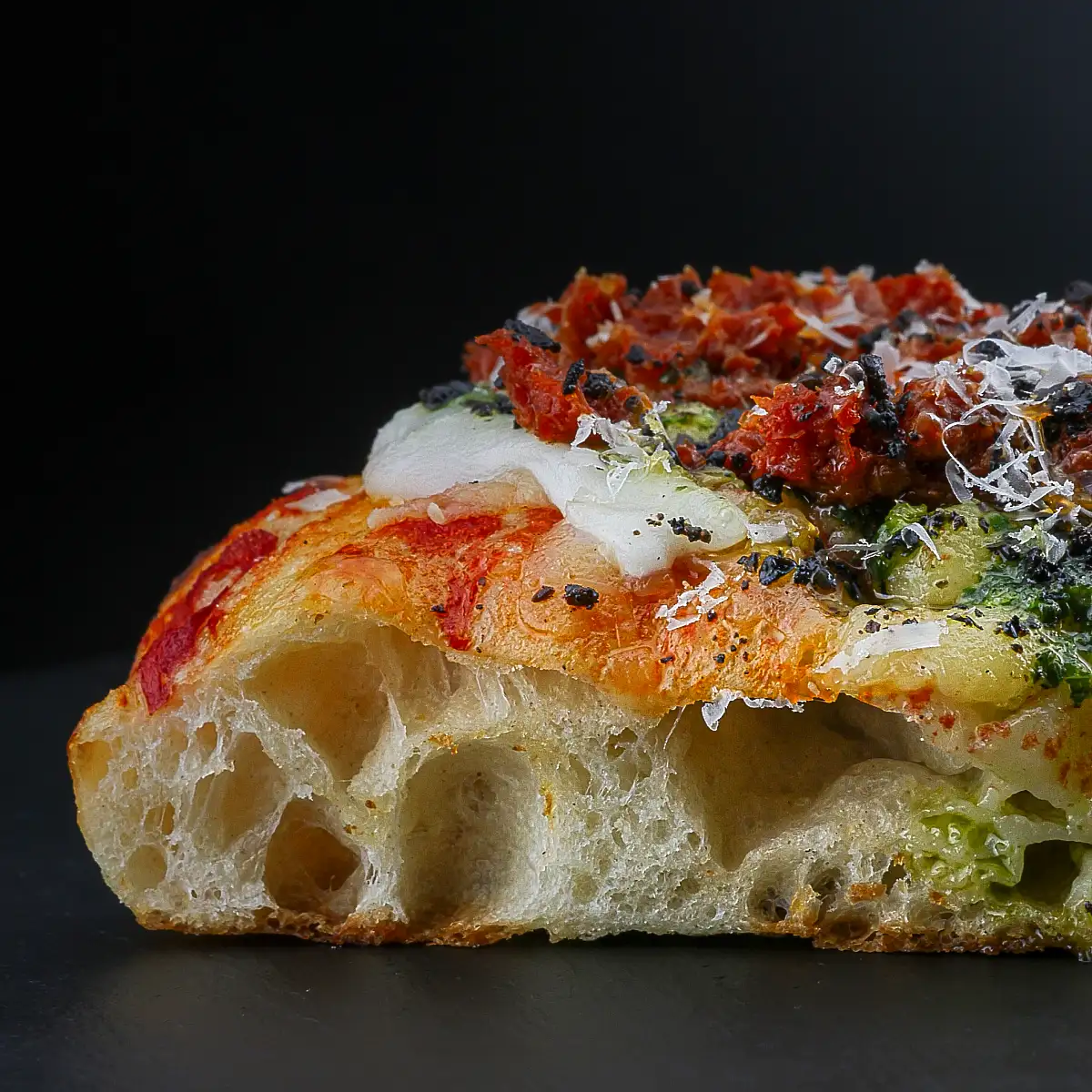
The first sign is in how it looks and how it feels. A good artisanal pizza does not look flat or uniform like an industrial product. It has natural irregularities, bubbles, well-developed color, and a presence that suggests real fermentation. When tasting it, the bite must have contrast. Crispy on the outside, light on the inside, without being chewy or heavy.
It is also wise to be wary of a very established idea: that more ingredients means higher quality. Not always. In premium pizza, balance matters more than quantity. A good prosciutto, a well-chosen mozzarella, tomato with clean acidity, or carefully treated vegetables say much more than a mountain of ingredients placed without intention.
The dough decides almost everything
If there is a core criterion for understanding how to choose premium artisanal pizza, it is this: observe the dough as you would observe the bread in a good bakery. Because that is where the true level of the product lives.
A dough crafted over time develops flavor, digestibility, and better texture. That is why long fermentation is a powerful sign of quality. It is not a decorative detail for the menu. It is a technical decision that transforms the result. A dough fermented for many hours is usually airier, lighter, and has a complexity of flavor that cannot be achieved by rushing processes.
Of course, long fermentation does not guarantee excellence on its own. It also depends on hydration, handling, temperature, baking, and the hand behind the product. But when a place speaks clearly about its process and that process is felt in the mouth, there is a solid foundation to trust.
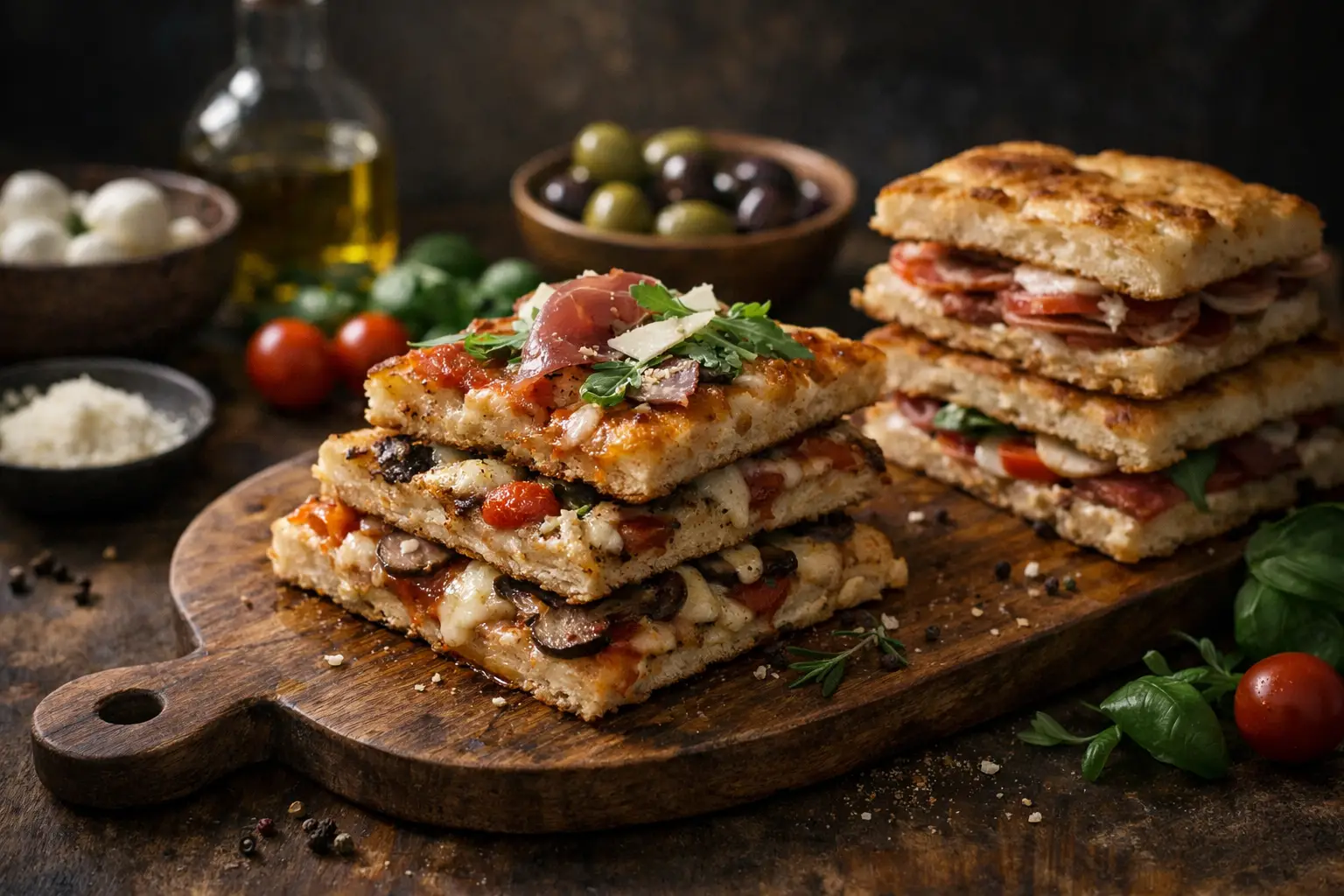
In styles like Roman pizza in teglia, for example, the dough plays an absolute leading role. The goal is a light, airy, and crispy structure, with a base that crackles when bitten. That croccante is not an accident. It is technique. And when it truly appears, it changes the entire experience.
What texture you should expect
The right texture depends on the style, but on a premium pizza, it should never feel neglected. If the base is soggy, if the center gives way without resistance, or if everything becomes gummy after a few minutes, there is an execution problem.
Instead, a great pizza achieves balance. It has enough support to hold its ingredients, a pleasant bite, and an even bake. It is neither dry and scratchy nor falling apart from moisture. It feels alive, fresh, and precise.
This point matters a lot because texture is one of the few things that cannot be faked. Presentation helps, sure. But a photo cannot replace the sound of a crispy base or the lightness of a well-fermented dough.
Premium ingredients are not just expensive ingredients
There is a difference between luxury and criteria. A premium option does not need to fill the menu with sophisticated words to justify its price. What it needs is selection.
The tomato must taste like tomato. The mozzarella must provide creaminess without flooding the base. The cold cuts must add depth, not excessive salt. The vegetables must be well treated, not placed as decorative filler. When ingredients are chosen with intention, each one occupies its place and the pizza feels finely tuned.
You also have to pay attention to the proportion. A premium pizza rarely overwhelms. Rather, it convinces through harmony. The sauce does not cover the dough. The cheese does not overshadow the rest. The main topping has presence, but does not monopolize the flavor. This requires culinary criteria, not just good suppliers.
And yes, origin matters, but not as a pose. It matters when it translates into authenticity, coherent recipes, and execution that understands tradition instead of using it as an empty label.
How to read a menu to spot real quality
A menu says more than it seems. If everything sounds exaggerated, overloaded, or designed solely to impress, the product probably follows the same line. On the other hand, when a menu shows focus, identity, and mastery of certain styles, there is usually a more serious kitchen behind it.
Look for signs of specialization. A place that tries to do everything rarely masters anything. One that works on a specific concept, with precise techniques and less obvious formats, typically has a clearer vision. That translates into consistency.
It also helps to see if the menu educates without becoming pretentious. When a restaurant explains its style, its fermentation, or its approach, it is saying that there is a culinary project, not just a fast-turnover product. In a category as competitive as pizza, that clarity is worth a lot.
Style matters, and a lot
Not all premium pizzas have to look alike. A well-made Neapolitan can be excellent. A Roman in teglia too. The important thing is that the place understands the style it offers and executes it faithfully.
Therein lies one of the most common consumer mistakes: measuring all pizzas by the same yardstick. If you expect a thin, crispy crust but order a style designed to be softer and more flexible, the evaluation gets distorted. Choosing well also implies knowing what experience you want to have.
For those who enjoy a distinct texture, defined cuts, airy dough, and that contrast between lightness and crispiness, the Roman style holds a special appeal. It is less common, more bread-like, more technical, and, when well done, absolutely memorable. Che buono.
The atmosphere and service also communicate if it is premium
A premium artisanal pizza does not exist in isolation from its context. The way it is presented to you, the confidence with which they explain the product, and the coherence of the place also carry weight. Premium does not mean rigidity. It means intention.
If the staff knows the difference between styles, knows how to recommend based on your tastes, and speaks of the product with conviction, that adds real value. The same goes for presentation. A pizza served on time, well sliced, cooked to perfection, and presented with pride conveys care.
It is not about turning every outing into a ceremony. It is about feeling that there is a thought-out experience behind it. That the concept has identity. That you are not eating something interchangeable.
Warning signs worth taking seriously
When a pizza is sold as artisanal but tastes identical to any other, something does not add up. If the dough has no personality, if all the flavors feel flat, or if the cheese dominates aggressively, you are probably looking at a standardized product in premium packaging.
Another warning sign is inconsistency between price and execution. Charging more does not make a pizza premium. Premium is earned in the details, the technique, and the consistency. There are places that invest in image, but not in the process. And that is quickly noticed at the first bite.
It is also wise to be wary of infinite menus. When there are too many combinations, permanent promotions, and little clarity of style, specialization usually gets diluted. In artisanal pizza, less noise almost always means more focus.
Choosing better completely changes the experience
Understanding how to choose premium artisanal pizza is not about becoming a complicated eater. It is learning to recognize when a pizza was made with skill and when it is just marketed well. And once you notice it, it is hard to go back.
You start paying attention to the fermentation, the color of the crust, the structure of the dough, the balance of the toppings, and the coherence of the concept. You start to value pizza that has its own identity. The one that does not need to exaggerate to convince.
In a gastronomic scene where more and more people are looking for something authentic, specialized, and truly enjoyable, it is worth choosing places that take pizza seriously. In San Pablo de Heredia, Bianka Pizza Romana has focused precisely on that difference: a niche Roman concept, crispy and with technique that is felt from the very first bite. When you find a pizza like this, you do not just eat better. You also understand why some experiences are worth repeating.