Apr 15, 2026
How to make truly crispy Roman-style dough
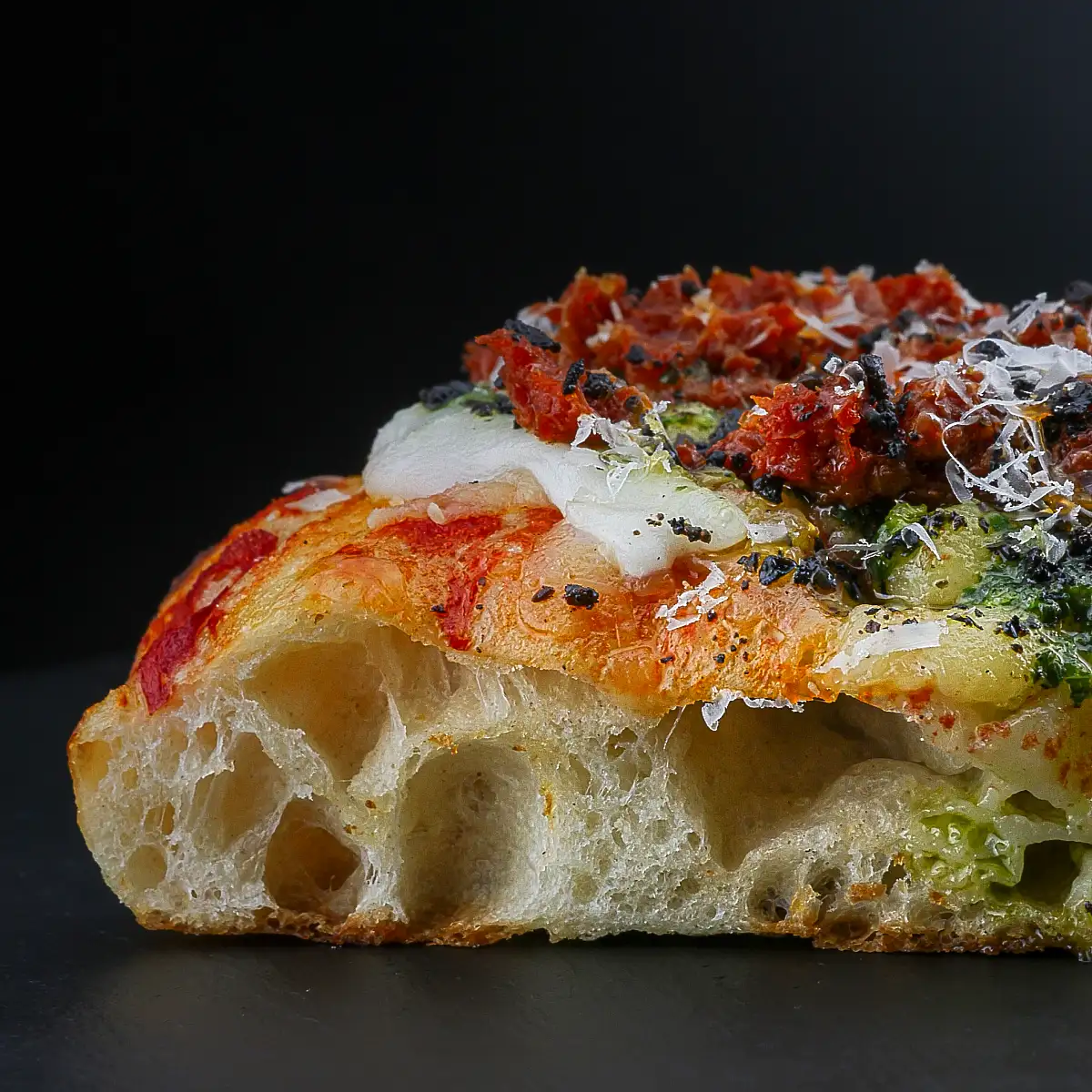
The difference between a tasty pizza and an unforgettable pizza often sounds like this: crisp when you bite it, light in the center, and with a base that doesn't bend like wet cardboard. If you're wondering how to achieve crispy Roman-style dough, the answer isn't a single trick. It's a chain of well-made decisions, from the flour to the last minute in the oven.
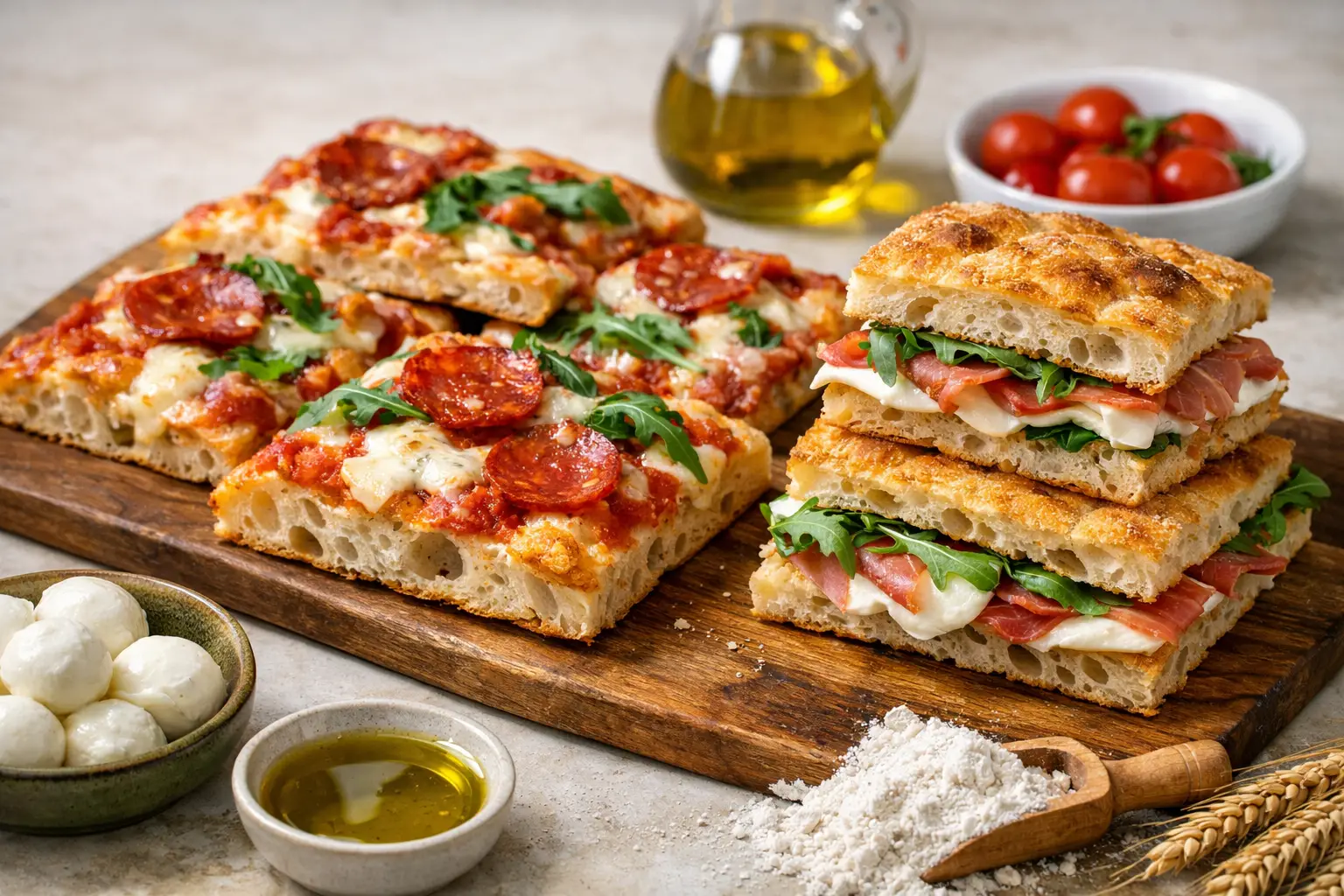
Roman pizza, especially the in teglia style, is not looking for a soft texture or a puffy Neapolitan-style rim. Its charm lies in the contrast: firm bottom, airy interior, and a dry, clean, addictive bite. That balance is more technical than it seems, and that's precisely why when it turns out well it feels superior. Che buono.
How to achieve crispy Roman-style dough without improvising
The first truth is this: crispy Roman-style dough doesn't come from just cooking it longer. If you bake a poorly designed dough too long, you only get a hard base. Real Roman crispness depends on structure, fermentation, and handling.
The second truth is less popular, but decisive: a good Roman dough is usually quite hydrated. It sounds contradictory, because many people associate crispness with dry dough. In reality, well-managed hydration helps create a light crumb, with fine alveoli and a crust that, when baked properly, turns brittle on the outside without becoming heavy.
It also matters to understand the format. In the Roman pizza al taglio or in teglia, the pan plays a key role. Direct contact with a properly hot, lightly oiled metal surface encourages that golden base that makes the difference. It's no coincidence. It's part of the style.
The right flour changes the result
If you want to learn how to achieve crispy Roman-style dough, start by no longer seeing flour as a minor detail. Not all flours behave the same, and in this style that matters a lot.
A flour with good strength allows long fermentations and more hydrated doughs without collapsing. That gives elasticity, better internal development, and a much more refined final texture. With a weak flour, the dough may seem manageable at first, but then it loses gas, spreads poorly, and ends up baking dense.
That said, more strength does not always mean better pizza. If you overdo it, you can end up with a dough that's too tight, difficult to stretch, and less delicate to eat. Like almost everything in baking, it depends on balance.
Long fermentation is not a luxury, it's a technique
Serious Roman dough takes its time. An extended fermentation improves flavor, digestibility, and texture. And when we're talking about truly memorable crusts, that time shows.
During a slow fermentation, the dough develops aromatic complexity and a more stable structure. That allows the oven to do its job with greater precision: controlled expansion, internal evaporation, and a dry, light, crisp crust. When fermentation is short, the result is usually flatter in flavor and coarser in the mouth.
Here it helps to be clear. Fermenting longer does not mean abandoning the dough to its fate. If it over-ferments, it loses strength, becomes sticky, and baking gets complicated. The idea is to mature it, not exhaust it.
In specialized offerings like Bianka® Pizza Romana, this logic is taken to the proper level: real technique, patience, and a texture that does not appear by accident. That's the difference between an ordinary pizza and an experience that feels authentically Roman.
Kneading: less violence, more control
Many people ruin the texture before it even reaches the oven. How? By over-kneading, adding too much flour, or treating the dough as if it had to be hard to be easy to handle.
Roman dough needs structure, yes, but also air and delicacy. Proper kneading develops gluten without overheating the dough. Then the folds during the rest period help strengthen it without punishing it. This detail seems small, but it directly affects the final texture.
If with every handling you add too much flour to “tame” it, you dry the surface, alter the hydration, and lose part of that internal lightness that should later contrast with the crisp base. The result is no longer premium Roman-style dough. It's simply heavy bread-like dough.
Oil does help, but it doesn't solve everything
In sheet-pan Roman pizza, oil serves an important function. It helps lightly fry the base, encourages browning, and provides that much-desired crisp finish. But using more oil won't fix poorly fermented dough or a poorly managed oven.
The ideal is a well-oiled pan, without absurd excess. The dough should settle, relax, and occupy the space without breaking its structure. If you force it, you drive out gas. If you leave it too thick, you lose definition in the base. If you stretch it too thin, you may gain crunch, but sacrifice that lively crumb that distinguishes a good Roman pizza from a salty cracker with toppings.
How to achieve crispy Roman-style dough in the oven
This is where a lot is won or lost. The oven has to be truly hot, not “somewhat preheated.” In Roman pizza, the initial heat transfer is key to setting structure and drying the base at just the right moment.
If the oven doesn't have enough power, the dough starts cooking slowly, the toppings release moisture, and the base ends up pale or gummy. That's the classic home mistake. People think it needed more time, when in reality it needed more temperature.
There's also a subtle point with the amount of toppings. A crispy Roman pizza does not tolerate toppings added without judgment. If you flood the surface with sauce, wet cheese, or vegetables that haven't been pretreated, you block evaporation and the base suffers. Roman pizza rewards balance. Less chaos, more intention.
In home ovens, a baking stone or steel can help quite a bit, but it doesn't work magic. If the dough is bad and fermentation was rushed, the tool won't rescue the result. Even so, a well-preheated surface improves the bottom and gets you closer to the professional effect.
Two-stage baking can make the difference
When the topping has more moisture, an intelligent strategy is to partially par-bake the dough before adding the final toppings. This lets you set the base and structure, and then finish baking without compromising crispness.
It's not always necessary, but in certain cases it works very well, especially if you're working with ingredients like fresh mozzarella, mushrooms, or roasted vegetables. The goal is not to dry out the pizza completely, but to protect the texture that makes the style special.
That kind of decision separates improvisation from craftsmanship. Real Roman pizza is not just a square version of another pizza. It has its own logic.
The most common mistakes that kill the crunch
There are mistakes that repeat themselves constantly. The first is wanting to speed up the process. Without enough rest, the dough doesn't develop flavor or structure. The second is using too much flour when handling it. The third, very common, is overloading it with toppings out of fear that it will “look poor”.
It also hurts to cut the pizza as soon as it comes out of the oven and leave it trapped in steam on a closed surface. The base loses firmness quickly if it can't release moisture. That's why, in professional formats, post-bake handling matters just as much as the baking itself.
And there's another frequent misconception: thinking that “crisp” means dry. No. The best Roman dough is crisp on the outside, yes, but inside it retains life, elasticity, and lightness. If everything is hard, it's not made well. If everything is soft, neither is it.
What makes a well-made Roman dough special
When you understand how to achieve crispy Roman-style dough, you also understand why this style wins over people looking for something more than a generic pizza. There is technique, baking culture, and a mouthfeel that stays in memory.
The bite has sound. The bottom responds. The crumb doesn't weigh you down. The ingredients feel better because the base supports them without stealing the spotlight or disappearing under them. It's a pizza with character, with identity, and with an execution level that shows from the first bite.
That's why Roman dough is not just about the recipe. It's about judgment. About knowing when the dough has matured, how much air to keep, how much moisture the topping can tolerate, and at exactly what point the baking moves from golden to perfect.
If you're chasing that result, don't look for weird shortcuts. Look for technique, time, and sensitivity. Real crispness doesn't shout. You hear it when you bite and confirm it when you want another slice immediately.