Apr 11, 2026
How to make real pan pizza
The first clue to understanding how pizza in teglia is made is not in the sauce or the cheese. It is in the sound. When the base hits the table and you hear that clean crackle, that is where the difference begins between any ordinary pizza and a well-made Roman one. Pizza in teglia is not trying to resemble the classic round pizza. It plays in another league: more bakery-like, more technical, lighter than its volume suggests, and much more addictive when it is executed well.
How pizza in teglia is made and why it is not just any pizza
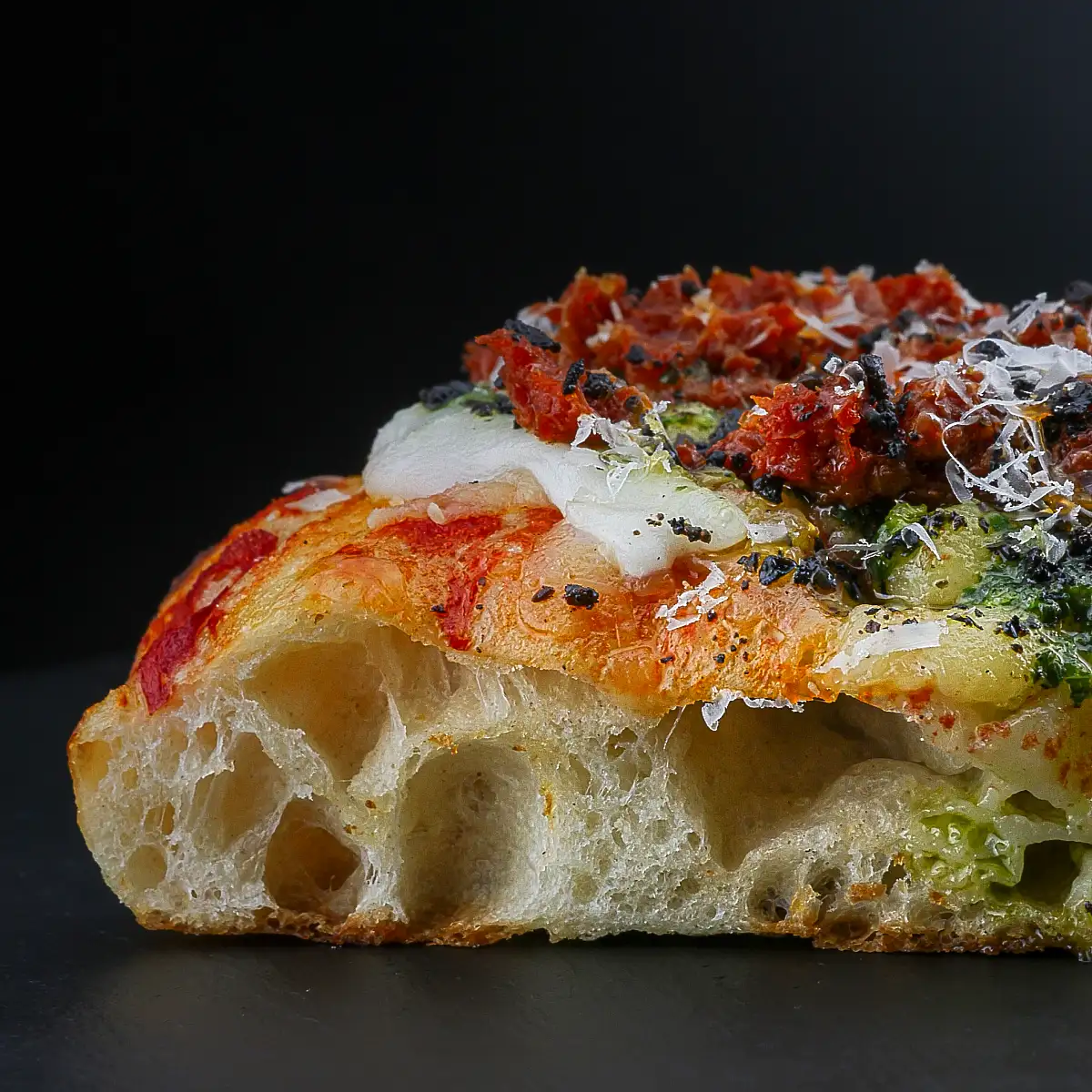
Pizza in teglia comes from Roman baking tradition. It is baked on a rectangular tray, made with high-hydration doughs, and relies on long fermentations that develop structure, flavor, and digestibility. The result is not a heavy or gummy dough. It is a base that is airy inside, golden outside, and with a texture that combines lightness and crunch in the same bite.
That balance does not happen by accident. It requires time, control, and skill. So when someone asks how pizza in teglia is made, the short answer would be: with technique. The real answer is more interesting.
The dough: the heart of pizza in teglia
It all starts with a strong flour, capable of supporting high hydration. In this style, water is not a minor detail. It is part of the product's identity. A dough with more water can develop a more open, lighter crumb, but it also becomes harder to handle. That is the first filter between an improvised version and a real Roman pizza.
Salt regulates fermentation and strengthens the gluten network. Yeast is used with judgment, not to speed things up out of impatience. In pizza in teglia, less haste usually yields better results. The dough needs to mature to gain flavor and become more extensible without tearing.
Long fermentation changes everything
If there is one feature that elevates this format, it is prolonged fermentation. Many serious approaches work for 48 or even 72 hours. It is not just a nice detail to mention. That wait transforms the dough. More complex aromas appear, a more refined texture, and a less heavy feeling when eating.
Of course, there are also trade-offs. Long fermentation requires controlled cold, planning, and experience. If it goes too far, the dough loses strength. If it falls short, the inside does not develop that open crumb that makes pizza in teglia so special. Here, improvisation does not lead. Timing does.
Kneading is not about making a pretty dough; it is about building structure
In this style, kneading has to build gluten without overheating the dough. That means working patiently, often in stages, letting it rest between folds so the dough can gain tension and air. It is not about beating it until it is smooth. It is about understanding it.
Then comes another key point: resting in the tray. The dough is taken to the teglia with oil, allowed to relax, and then gently stretched. It is not flattened as if it were just any focaccia. It is pushed with the fingertips, respecting the gas that has built up. That decision defines much of the final texture.
The tray and the baking: where the crunch appears
The teglia is not just the container. It is an active part of the baking. With oil on the base and a well-hydrated dough, it helps form that golden, crispy bottom that distinguishes Roman tray pizza. The rectangular shape also has a practical and aesthetic logic: it allows clean portions, well-defined edges, and a format perfect for sharing.
Baking is usually done in two stages or with strategy. First, the goal is to develop the base and the structure of the dough. Then toppings are added and the cooking is finished. This avoids one of the most common mistakes: a topping that is ready over a pale or soft base.
In a well-made pizza in teglia, the bottom must have color, firmness, and real crunch. Not dryness, not hardness. The difference is subtle, but it is noticeable at once.
The sauce and the toppings: less weight, more intention
One of the great virtues of this format is that it does not need excess to impress. Since the dough already has character, the ingredients on top should complement it, not cover it up. Tomato sauce is usually used sparingly, to keep freshness and acidity without making the base too wet.
With cheese, something similar happens. If too much is piled on, the pizza loses balance. If you choose one that releases too much water, the texture is compromised. That is why the toppings in this style are thought through more precisely. Each ingredient has to add flavor, contrast, and structure.
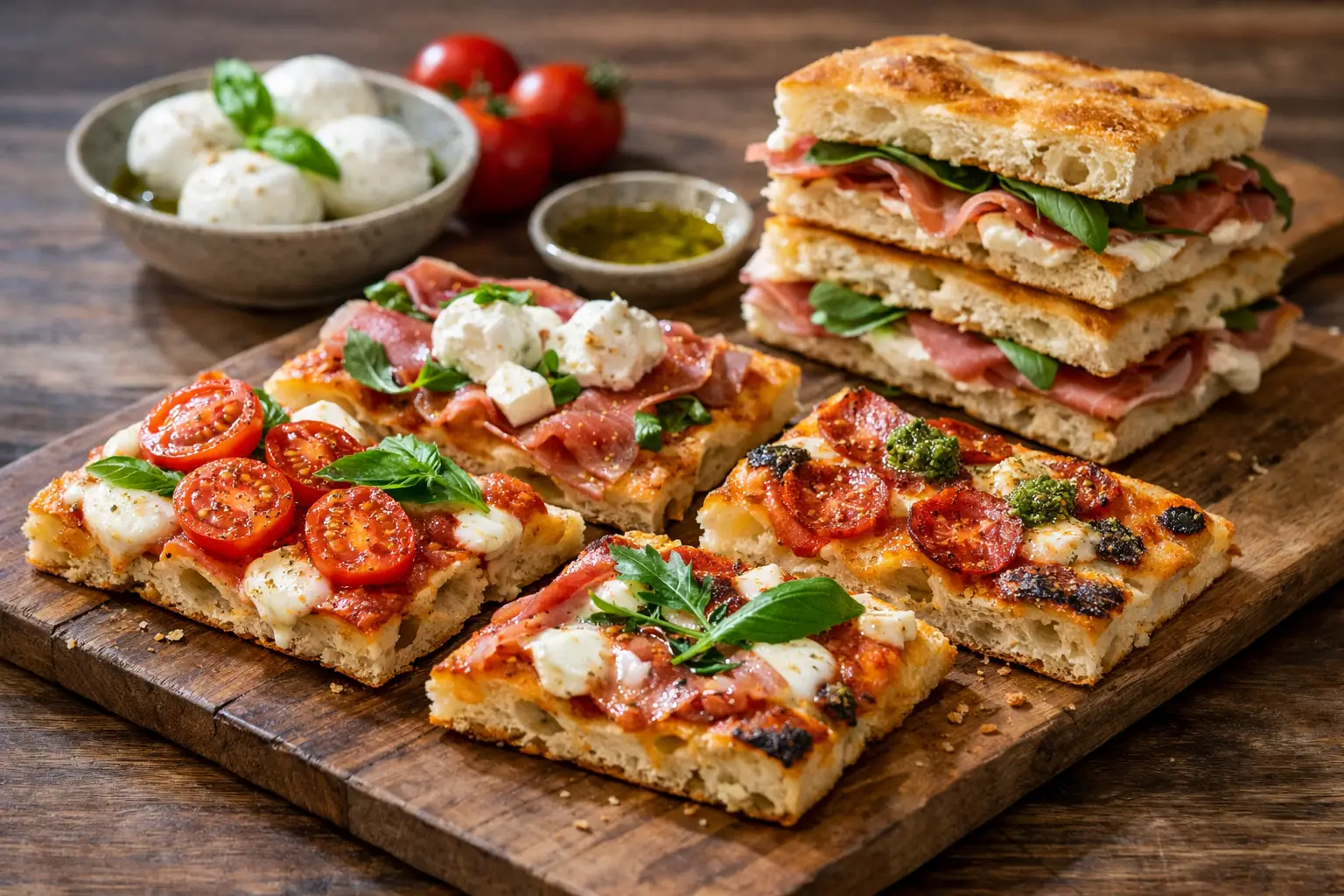
That explains why pizza in teglia shines so much with simple but well-executed combinations: good-quality pomodoro, well-drained mozzarella, mortadella, burrata, roasted vegetables, potatoes, rosemary, or cured meats. Everything can work, as long as the base remains the star.
How to make pizza in teglia at home without ruining the idea
Yes, you can try it at home, but it is wise to adjust expectations. The result depends a lot on the oven, the tray, and how the dough is handled. A home oven rarely pushes the same way a professional one does, so you have to compensate with strong preheating, a suitable tray, and a recipe designed for that context.
The most sensible approach is to start with a medium-high hydration dough, not an extreme one. If someone starts with too much water without experience, the dough becomes unmanageable and frustration comes quickly. It also helps to oil the tray well and respect long rests, even if you do not reach the full 72 hours.
A common mistake is trying to finish everything all at once. At home it usually works better to give the base a short pre-bake with a light sauce, then add the cheese and toppings at the end. That protects the structure and improves the crunch.
What separates a correct pizza from a memorable one
Pizza in teglia does not win on nostalgia. It wins on texture. On contrast. On that feeling of biting into an airy base that also crackles. To get there, several details matter more than they seem.
The dough temperature matters. The quality of fermentation matters. The way you stretch it matters. The order of the ingredients matters. Even the moment you cut it matters, because if it is left to sweat too long, the base loses part of its charm.
It also matters to understand that this style is not trying to be “more loaded” just to justify its format. Its luxury lies in the technique. In a well-crafted Roman pizza, every layer has a purpose and every texture is intentional. That is what makes it truly premium.
Why this style is winning over more demanding palates
There is a reason more and more people are looking for proposals like this. Pizza in teglia offers something different in a market saturated with round versions that are fairly similar to one another. It has visual identity, it has a gastronomic story, and above all, it has a sensory experience that feels new even to someone who eats pizza all the time.
It is photogenic, yes. But it does not live only on looking good. What makes it memorable is how it sounds, how the base breaks, how it holds high-quality ingredients without collapsing, and how it manages to feel light despite its bakery character. So good.
For an audience that no longer settles for the generic, this format responds with authenticity. It does not pretend to copy Neapolitan pizza or compete as if they were the same. Pizza in teglia defends its own territory and does so with serious arguments.
At Bianka® Pizza Romana that philosophy is perfectly understood: real technique, long fermentation, and a crunchy texture that does not need embellishments to stand out.
When it is worth ordering it instead of making it
Making it at home has its charm, especially if you enjoy cooking. But there are also times when the best thing is to leave this pizza in expert hands. If what you want is to taste what a well-executed Roman pizza in teglia really tastes like, the experience changes when there is mastery of the process behind it, calibrated ovens, and a dough worked with patience.
Because yes, learning how pizza in teglia is made opens your eyes. It teaches you to tell a simply baked base from a developed one. It helps you value fermentation, the open crumb, the crunch, and the balance of toppings. And once you understand that, not just any pizza convinces you anymore.
The next time you hear that clean crackle when cutting a rectangular slice, you will know it is no accident. It is craftsmanship, time, and a very Roman way of turning dough into something memorable.