Sep 8, 2026
How to order artisanal stuffed focaccia without failing
Stuffed focaccia is not ordered like any ordinary sandwich. If you want to know how to order artisanal stuffed focaccia, start by understanding what arrives at your table: Italian bread worked with time, a croccante crust, and a light interior that must support the filling without losing character. When the choice is good, the first bite sounds, is felt, and is remembered. Che buono.
In an artisanal offering, ordering well does not mean getting complicated. It means choosing according to your hunger, the moment, and the flavors you really crave. Because a focaccia can be a hearty lunch, a dinner to share, or the centerpiece of a gastronomic outing with friends.
First: look for a real focaccia
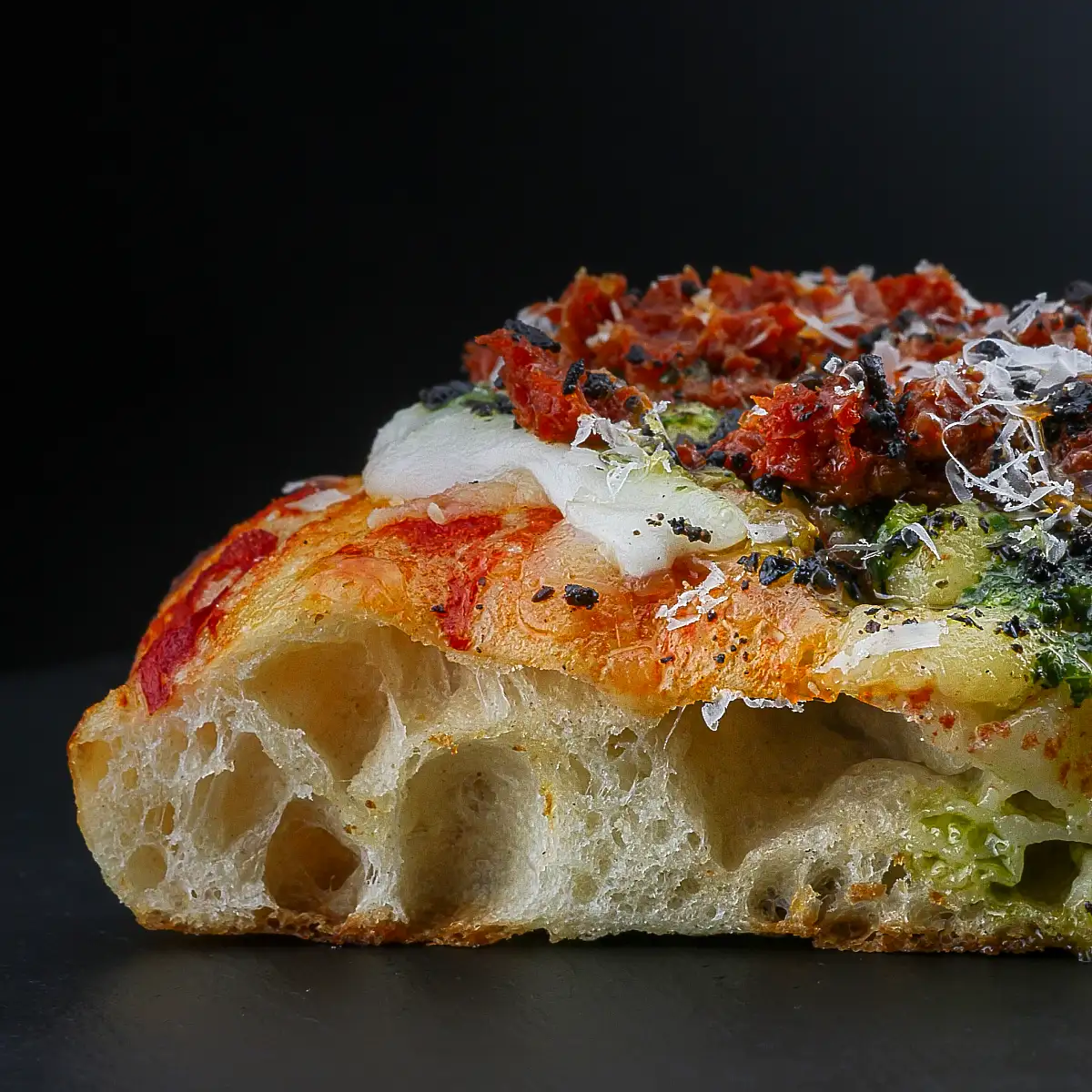
The difference is in the dough. An artisanal focaccia should not feel heavy, chewy, or rely on a mountain of ingredients to get attention. Its value begins before the oven: fermentation, hydration, dough handling, and precise baking.
In the Italian baking tradition, texture rules. You want a golden base, with firm and crispy edges, but an airy center that retains moisture. That combination makes the filling integrate instead of squashing the bread. If the dough is good, even a simple choice can feel special.
At Bianka® Pizza Romana, that idea is expressed through technique: long-fermentation doughs and a Roman perspective that focuses on structure, the oven, and the croccante. It is not a round pizza turned into a sandwich. It is another category, with its own personality.
How to order artisanal stuffed focaccia according to your plan
Before choosing ingredients, think about the occasion. It seems like a minor detail, but it completely changes the order. Eating a focaccia at noon between meetings is not the same as at a long Saturday table, wanting to try several things.
If it is for lunch
Choose a complete and balanced filling. Combinations with protein, cheese, and vegetables work very well because they provide satiety without making every bite feel flat. If you lean towards Italian cold cuts, look for them to have a fresh or creamy counterpoint: salad greens, a light cream, tomato, or roasted vegetables can cut through the intensity and keep the bite lively.
If you are going to continue working afterwards, avoid ordering solely based on a craving for excessively heavy ingredients. A well-made artisanal focaccia already has presence. Sometimes, fewer layers achieve a much more elegant and easy-to-enjoy experience.
If it is for a date or an outing with friends
Here it is best to open up the options. Order two different varieties to share and compare textures, aromas, and levels of intensity. A more classic option, with recognizable flavors, can be accompanied by a bolder one, with salty, vegetable, or spicy contrasts.
Sharing is not just a strategy to try more. It also allows the focaccia to arrive at the table as it should: freshly made, warm, and with that cut that reveals the filling. It is a visual, generous product made for conversing between bites.
If you want to solve dinner at home
Ask which options preserve their texture best during transport and order ahead, especially if you order during high-demand hours. Artisanal focaccia is at its best when fresh. If you are going to eat it a few minutes later, protect it from excessive steam: a box completely closed for too long can soften the crust.
For a dinner at home, the balance depends on how many people are eating and whether there will be appetizers or side dishes. If the focaccia will be the star, choose a more robust combination. If the table will have other bites, two different fillings usually give a better result than repeating just one.
Choose the filling with intention, not by accumulation
The most common mistake is thinking that more ingredients always mean more flavor. In a good focaccia, every element must have a function. A cheese adds creaminess. A cold cut adds depth and salt. A vegetable can provide freshness, acidity, or sweetness. A sauce should accompany, not hide, the dough.
Classic combinations are a great entry point if it is your first time. They are familiar, but when the bread is well-executed, they feel completely different from a conventional sandwich. If you already know the format, look for contrasts: spicy with creaminess, salty flavors with a touch of sweetness, or roasted ingredients alongside fresh elements.
It is also worth asking about seasonal ingredients or house suggestions. That is where combinations designed to give the product rhythm usually appear: an intense note at the beginning, a creamy center, and a fresh finish. That is much more interesting than filling the bread without criteria.
Say how you are going to eat it
When placing your order, share the basics: whether it is to eat in-store, pick up, or receive at home; how many people there are; and if there are dietary restrictions or preferences. This information helps recommend quantities, fillings, and options that truly fit the group.
If you do not consume a certain ingredient, ask clearly about possible substitutions. In artisanal products, modifying a recipe too much can affect the texture or balance, so not all adaptations work the same. It is better to ask for an honest recommendation than to end up with a combination that does not do justice to the focaccia.
The same applies to spicy food, intense cheeses, and cured meats. If you are going with someone who prefers mild flavors, there is no need to lower the level of the entire order. Order a gentle option and another with more character. Everyone wins, and the table becomes more entertaining.
Do not confuse stuffed focaccia with just any stuffed bread
Artisanal stuffed focaccia is defined as much by what is on the outside as by what is on the inside. The crust matters. The alveoli matter. The way the filling heats up and spreads matters. Therefore, an industrial dough, too thick or without enough fermentation, does not offer the same experience, even if it has similar ingredients.
Nor should it be expected to behave like a traditional pizza. The pizza romana in teglia and focaccia share a culture of dough, oven, and cutting to order, but each format has its moment. If you crave an exposed base with toppings, pizza might be the answer. If you want a closed, generous bite that is easy to share, stuffed focaccia steals the show.
That nuance is part of what makes regional Italian baking so special. Not everything has to look or be eaten the same way. Rome and Florence have formats with their own identity, created for different rhythms, tables, and appetites.
The timing of the order also counts
A freshly baked focaccia has a window of glory. The exterior retains that croccante crack, the cheese is at its melting point, and the aromas still come out strong. If you can, order to consume it as close to the preparation time as possible.
In San Pablo de Heredia, an outing for focaccia can turn into a complete plan: a lunch break that feels less routine or a casual dinner with a taste of Italy. If you go to the place, reserve when it is a group plan or during busy hours. If you order, review the available menu and confirm details before finalizing.
Ordering artisanal stuffed focaccia is, in the end, choosing an experience that starts in the dough and ends in that last golden edge that no one wants to leave on the plate. Choose with hunger, order with curiosity, and leave room to try something that feels truly Italian.