Aug 31, 2026
How to pair pizza with wine without failing
The first bite of a crispy pizza calls for more than just a nice glass. Knowing how to pair pizza with wine completely changes the experience: the wine can lift the acidity of the tomato, accompany the creaminess of a melted cheese, or let an artisanal dough be the true star. When the pizza is well made, the pairing does not mask flavors. It organizes them, extends them, and makes each slice feel even more Italian. Che buono.
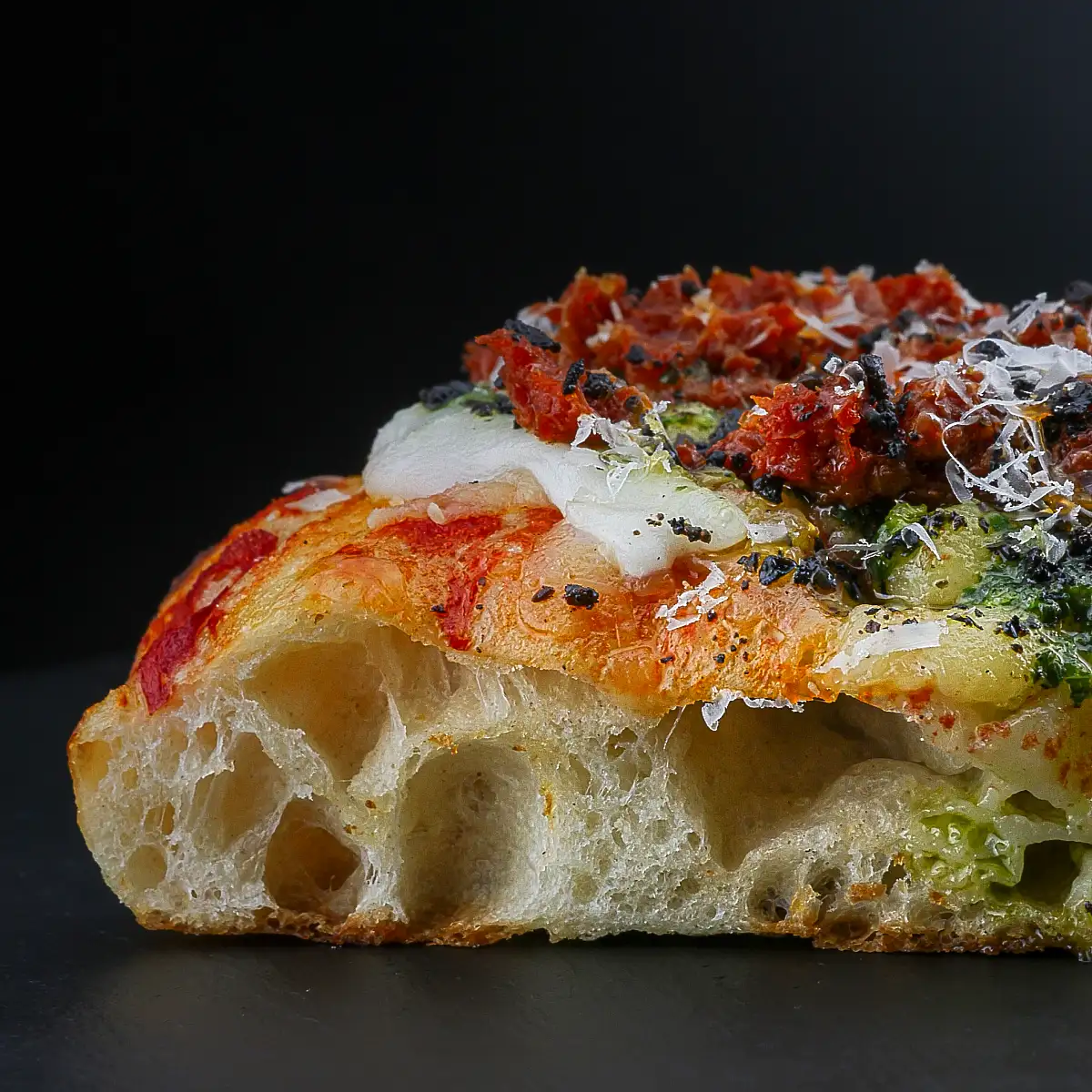
In a Roman pizza in teglia, with long fermentation, an airy base, and crispy-edged crusts, the dough has more presence than in a generic pizza. That is why the old rule of ordering red with pizza is not enough. There are wines that work wonderfully and others that can toughen the tomato, make the cheese heavy, or erase the nuances of a good fermentation.
How to pair pizza with wine according to its flavors
The starting point is not the color of the wine. It is the intensity of the pizza. You have to look at three things: the acidity of the tomato sauce, the fat from the cheese or cured meats, and the weight of the toppings. Added to that is the texture. A light, crispy pizza with alveoli calls for freshness; an abundant slice, with meat or deeper flavors, tolerates a glass with more structure.
Acidity is the great ally. A fresh wine cleanses the palate after a bite of mozzarella, stracciatella, salami, or prosciutto. It also converses very well with tomato, as long as its tannins are not aggressive. Very dry, very woody, or excessively alcoholic red wines tend to clash with an acidic sauce and make it feel sharper.
The other rule is simple: the more delicate the pizza, the more delicate the wine should be. And the more intense the topping, the more body the glass can have. It is not about following a rigid formula. It is about finding balance, without either wanting to steal the show.
Pairings for classic pizzas and pizzas with character
Margherita and tomato pizzas
Tomato, mozzarella, basil, and well-baked dough: it seems simple, but a Margherita demands precision. Look for a young and light red, with good acidity and fresh red fruit. A young Chianti or a Sangiovese of a direct style are usually great companions because they have that energy that refreshes the tomato without crushing the basil.
If you prefer white, a dry Pinot Grigio can surprise. Its clean profile accompanies the mozzarella and lets the crispy dough keep talking. It is an ideal option for a lunch, a hot afternoon in Heredia, or for anyone who wants wine without too much heaviness.
White pizza, cheeses, and stuffed focaccia
When there is no tomato sauce, cheese and olive oil take control. In white pizzas with mozzarella, ricotta, potato, mushrooms, or mortadella, a white with acidity and texture usually shines more than a red. Think of a Vermentino, a dry Sauvignon Blanc, or a Chardonnay without excess oak.
The goal is to cut the greasy sensation without taking elegance away from the bite. Mushrooms, for example, welcome a white with some volume or a very light red like Pinot Noir. If the stuffed focaccia carries salty and creamy ingredients, bubbles also do a spectacular job: a brut sparkling wine cleanses the palate and gives a festive twist to each bite.
Pizza with pepperoni, salami, or nduja
Here comes the spice, the fat, and that intense flavor that lingers nicely in the mouth. The temptation is to order the most powerful red on the menu, but it is wise to hold back. High alcohol intensifies the spiciness and can make it burning. Better to choose a juicy, fruity red with friendly tannins.
A Barbera, a young Montepulciano, or a fresh Grenache have enough fruit to accompany the salami and enough acidity to cut the fat. If the pizza has nduja or serious spice, a dry, cold rosé can be even better. Its freshness lowers the fiery sensation without losing personality. It is a less obvious pairing, but very successful.
Pizza with prosciutto, arugula, or roasted vegetables
Pizzas with prosciutto crudo, arugula, artichoke, zucchini, eggplant, or roasted bell peppers move between salty, vegetal, and aromatic. A dry rosé works especially well because it has freshness, fruit, and a moderate structure. It does not compete with the arugula or toughen the flavor of the vegetables.
A light Italian red can also work if the pizza has more toasted ingredients or oven-roasted vegetables. If prosciutto dominates, look for wines with lively acidity and little oak. The wine should refresh after the saltiness of the ham, not add weight.
Pizza with meats, sausage, or smoky flavors
When Italian sausage, shredded meat, pancetta, caramelized onion, or smoky notes appear, you can indeed go up a level in structure. A Sangiovese with more body, a young Tempranillo, or a Syrah of a fresh profile can support those flavors without turning into a heavy glass.
Watch out for very ripe wines or those heavily laden with vanilla and oak. Pizza naturally has oven toast, fat, and salt. If the wine arrives too sweet, alcoholic, or spicy, the combination quickly loses freshness. In this case, a balanced red is worth more than a muscular one.
Roman dough is also paired
Roman pizza in teglia is not just a base for toppings. Its prolonged fermentation develops aromas, a light crumb, and a crust that crackles when bitten. That crispy texture welcomes wines with tension: dry whites, crisp rosés, brut sparkling wines, and young reds with acidity.
Bubbles are particularly good when sharing several pizzas. They work with tomato, cheese, vegetables, cured meats, and focaccia. They do not force you to choose a single direction and they keep the palate awake between slice and slice. For a table of friends, it is a safe play with plenty of style.
At Bianka® Pizza Romana, where the dough and the in teglia format have their own identity, choosing a fresh glass can reveal details that a drink that is too sweet or heavy would hide. The square pizza is best shared when the wine also invites continued conversation.
Temperature and service: the details that do count
A white that is too ice-cold loses aroma, while a warm red feels alcoholic and heavy. Whites and rosés should be served cold, but not freezing: around 8 to 10 °C usually allows them to express fruit and freshness. Light reds gain immensely if served a bit cooler than usual, close to 14 to 16 °C.
It is also wise to order the wine at the same time as the pizza. Waiting for the slice to cool changes its texture, hardens the cheese, and lowers the magic of the oven. Freshly baked pizza, a glass at its optimal point, and good company: that is a dinner to remember.
The most common mistake when choosing wine for pizza
The mistake is not choosing white instead of red. The mistake is assuming that every pizza needs a big wine. A delicate slice with mozzarella and basil can disappear before a very tannic Cabernet Sauvignon. A spicy pizza can become more aggressive with a high-alcohol red. And a pizza with creamy cheese can become tiring if the wine lacks acidity.
If you have doubts, choose freshness over power. A young, dry, and balanced wine rarely fails. And if the table ordered several options to share, a brut sparkling wine or a dry rosé resolves the challenge with Italian ease.
Next time, do not just think about what pizza you crave. Think about the contrast of a fresh glass, the crunch of the dough, and that exact second when everything fits together. That is where a great pairing begins.