May 23, 2026
How to reheat crispy Roman pizza
The tragedy is not that there is leftover pizza. The tragedy is reheating a crispy Roman pizza and turning it into something soft, sad, and characterless. If you are wondering how to reheat crispy Roman pizza, the short answer is this: dry heat, a firm surface, and zero rush. The good answer - the one that truly respects a fermented, airy dough with a crispy crust - deserves a little more attention.
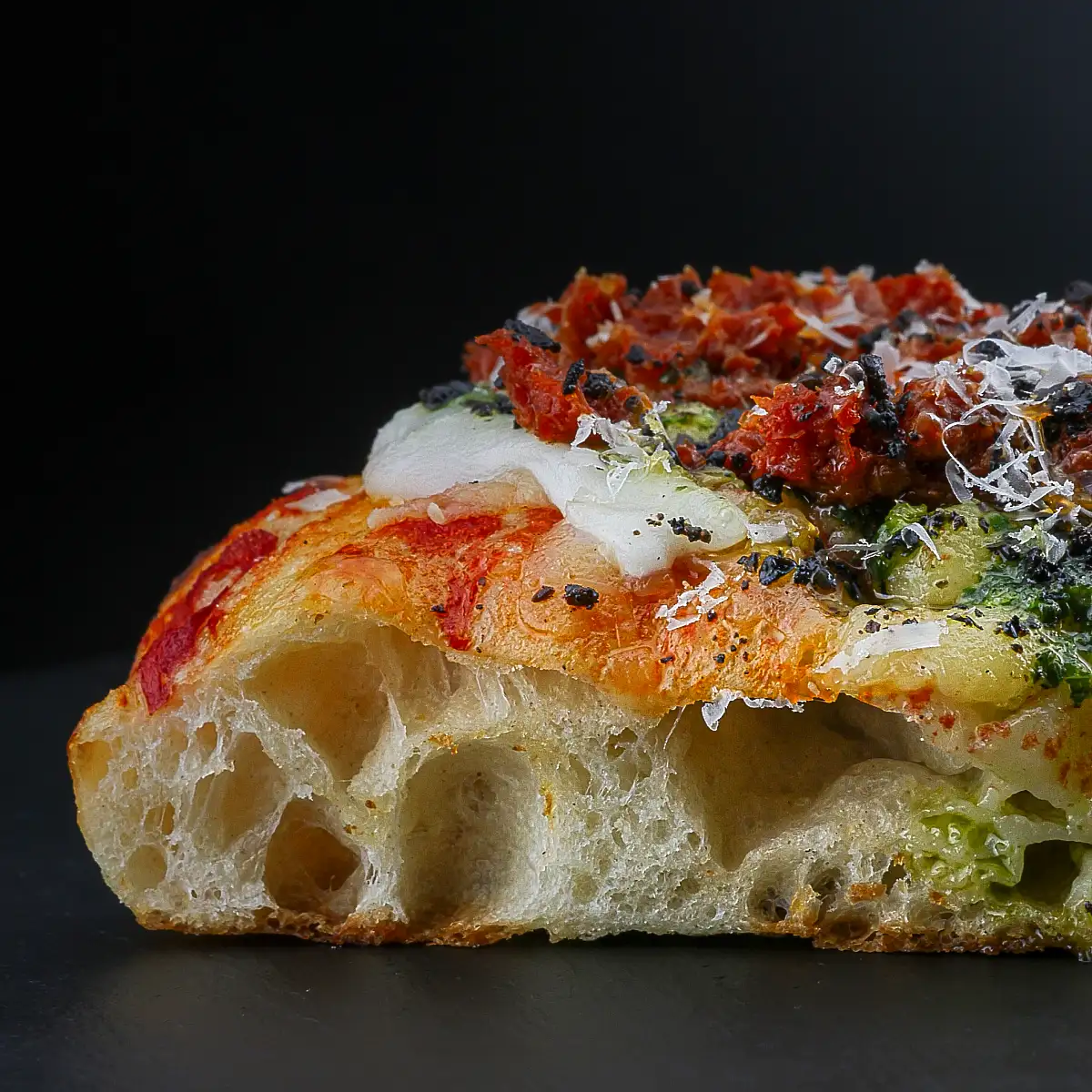
The pizza romana in teglia doesn't behave like a traditional round pizza. It has a different structure, different hydration, and a different kind of bite. Its charm is in that contrast between a firm crust, a light interior, and toppings that are still vibrant after baking. That's why reheating it well is not a minor detail. It is the difference between reviving it and ruining it.
How to reheat crispy Roman pizza without losing the texture
The best technique to reheat crispy Roman pizza at home is a pan with a lid or a well-preheated oven. Not the microwave. Almost never the microwave. If you want to recover the real crispiness, you need to return heat to it without introducing extra moisture.
If you use a pan, put it over medium-low heat and let it heat up first. Then place the pizza slice without oil. This matters, because the crust already has its own structure and natural oil from the ingredients. Adding oil can over-fry it or make it heavy. When the crust starts to activate again, add a lid for a minute or two so the heat rises and melts the cheese well or reactivates the toppings. Then you can remove the lid for a few seconds to recover the crispy bottom.
If you prefer the oven, preheat it for real. Not five symbolic minutes. An oven that hasn't reached temperature yet reheats slowly and dries things out. A preheated baking sheet or a rack with good air circulation is ideal. Between 350 and 400 degrees Fahrenheit (180 to 200 Celsius) usually works very well, for about 5 to 8 minutes, depending on the thickness of the slice and how much topping it has.
There is an important nuance: not all slices require the exact same thing. A Roman pizza with mortadella, stracciatella, or delicate ingredients needs a gentler hand than a margherita or pepperoni pizza. In some combinations, it is best to remove a fresh topping before reheating and return it at the end. Yes, it's a small gesture. But in artisanal pizza, those small gestures separate the okay from the memorable.
The mistake that ruins the crispiness
The microwave heats up quickly, but it ruins the texture. What it does is generate steam inside the dough. And steam is the direct enemy of a well-made Roman crust. You can use it only if you have no other option and prioritize speed over results, but let's be clear: the pizza comes out hot, yes, but it doesn't come out crispy.
If you truly have no other choice, do it in short bursts of 15 to 20 seconds and finish the slice in a pan. That combination rescues some of the crust and prevents the center from getting rubbery. It's not the ideal version, but at least it fixes the main damage.
Another common mistake is reheating over high heat to "get it over with." Bad idea. On the outside, it might look ready, but inside it remains cold or uneven. Even worse: the crust burns before getting light again. Roman pizza does not get along well with anxiety.
Pan, oven, or air fryer: which method is best
The pan is probably the king of reheating when it comes to one or two slices. It's quick, controllable, and very good at bringing back the crispiness of the crust. Also, it doesn't dry it out as much as a poorly managed oven. For impromptu dinners, late-night cravings, or the day after a spectacular order, it works incredibly well.
The oven wins when you have several slices and want consistency. If you preheat it well, it offers a more even reheat that is respectful of the pizza's overall structure. It's a great option if you're sharing or if you want to serve several pieces at the same time without playing roulette between a perfect slice and an overdone one.
The air fryer enters as a third option, and yes, it can do a very good job. Especially with small or medium slices. The advantage is that it concentrates heat and revives the crust quickly. The disadvantage is that it can dry out delicate toppings or brown the corners too much if you overdo the time. Here, less is more. About 3 to 5 minutes at medium-high temperature is usually enough, but it depends a lot on the model.
There is no single universal method. There is a best method according to the pizza you have in front of you, the number of slices, and what you value most: speed, crispiness, or overall balance.
How to reheat crispy Roman pizza according to the type of topping
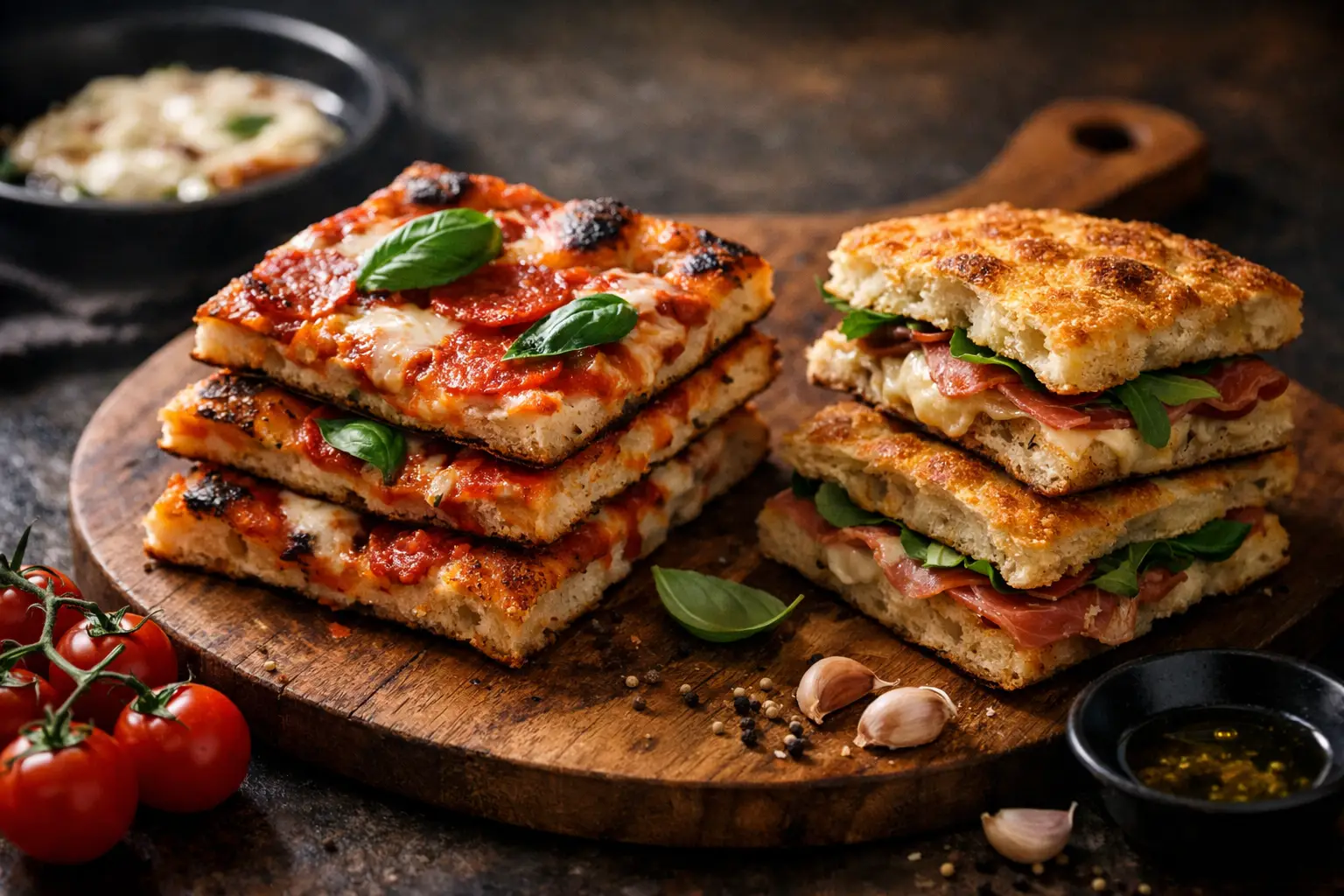
A pizza with red sauce and mozzarella is usually quite forgiving. It reheats nobly, responds well in a pan, oven, or air fryer, and maintains a fairly stable profile. If the base was good from the start, it usually returns with a lot of dignity.
Pizzas with cured meats, roasted vegetables, or oilier cheeses require more observation. Intense heat can cause the topping to release oil or make certain edges dry out. In these cases, a medium temperature is best, and check on it before assuming "it still needs more time."
When there are fresh ingredients added after baking, such as burrata, arugula, or soft creams, not everything should go back to the heat. Reheat the crust with its baked elements and return the fresh ones at the end. That way you maintain contrast, aroma, and a much cleaner experience. Che buono when it's done right.
Thickness also plays a role. Pizza romana in teglia has an airy structure that may seem resilient, but if the slice is thick and heavily loaded, the center takes longer to react. In those cases, a progressive reheat is better than an aggressive blast of heat.
What to do from the moment you store the pizza
Reheating starts beforehand, in how you stored the pizza. If you put it in the fridge while still warm, you trap condensation. And that moisture then settles into the crust. Result: more work to recover crispiness, and sometimes it's impossible.
The ideal is to let the temperature drop a bit before refrigerating it, without leaving it out too long. Then store it in a container or wrap that protects it, but without squishing it. If you stack slices on top of each other without separation, the toppings and the crust start to suffer long before the next day.
A simple detail helps a lot: if you know you are going to reheat it the next day, don't wrap it tightly while it's still releasing heat. The final texture will thank you.
Signs that the pizza is ready
Not everything is measured in minutes. A well-reheated Roman pizza lets you know. The crust feels firm again when lifted, the cheese regains its shine, the edges smell toasted without being burned, and the slice doesn't bend as if it were soggy.
If you hear a slight crunch below when you bite and feel the light interior, you're on the right track. If the topping is boiling but the crust is still soft, not yet. If the crust is already too crunchy and the topping is dried out, you went too far. That balance is the sweet spot.
When it's worth reheating and when it's not
Let's be honest: there are pizzas that are still wonderful the next day and others that work best fresh out of the oven. Artisan Roman pizza, when well made, usually has a very good second act precisely because of its structure and fermentation. That is part of its charm.
But it also depends on time. Reheating the next day is not the same as several days later. The more time passes, the more the dough loses its original balance. It can be rescued, yes, but we are entering compromise territory. It can still be tasty. Just like fresh-baked, not always.
That's why, if you have a real Roman pizza, made with technique, long fermentation, and that crispy character that makes a difference, treat it like what it is. Not like any random fast food. In Bianka® Pizza Romana we have it very clear: a good pizza deserves a good second moment.
Reheating well is not about complicating your life. It is about giving an excellent slice the opportunity to shine again for real. The next time you have leftover pizza, don't run to the microwave. Give it a few more minutes and let that crispiness return that makes all the difference.