Oct 6, 2026
Teglia pizza ingredients that change the dough
The first bite of a pizza in teglia shouldn't feel heavy or predictable. It should crunch at the base, yield lightly in the center, and hold toppings that taste of something. There lies the difference. Talking about pizza teglia ingredients isn't making a shopping list: it's understanding how each choice builds that tall, airy, and deeply croccante texture that defines Rome.
The Roman pizza in teglia is baked in a pan, cut into slices, and has an identity of its own. It doesn't seek to copy Neapolitan round pizza or compete with it. Its character lies in a high-hydration dough, fermented with patience, and a generous surface where the toppings accompany without crushing the base. Che buono.
Pizza teglia ingredients: the dough rules
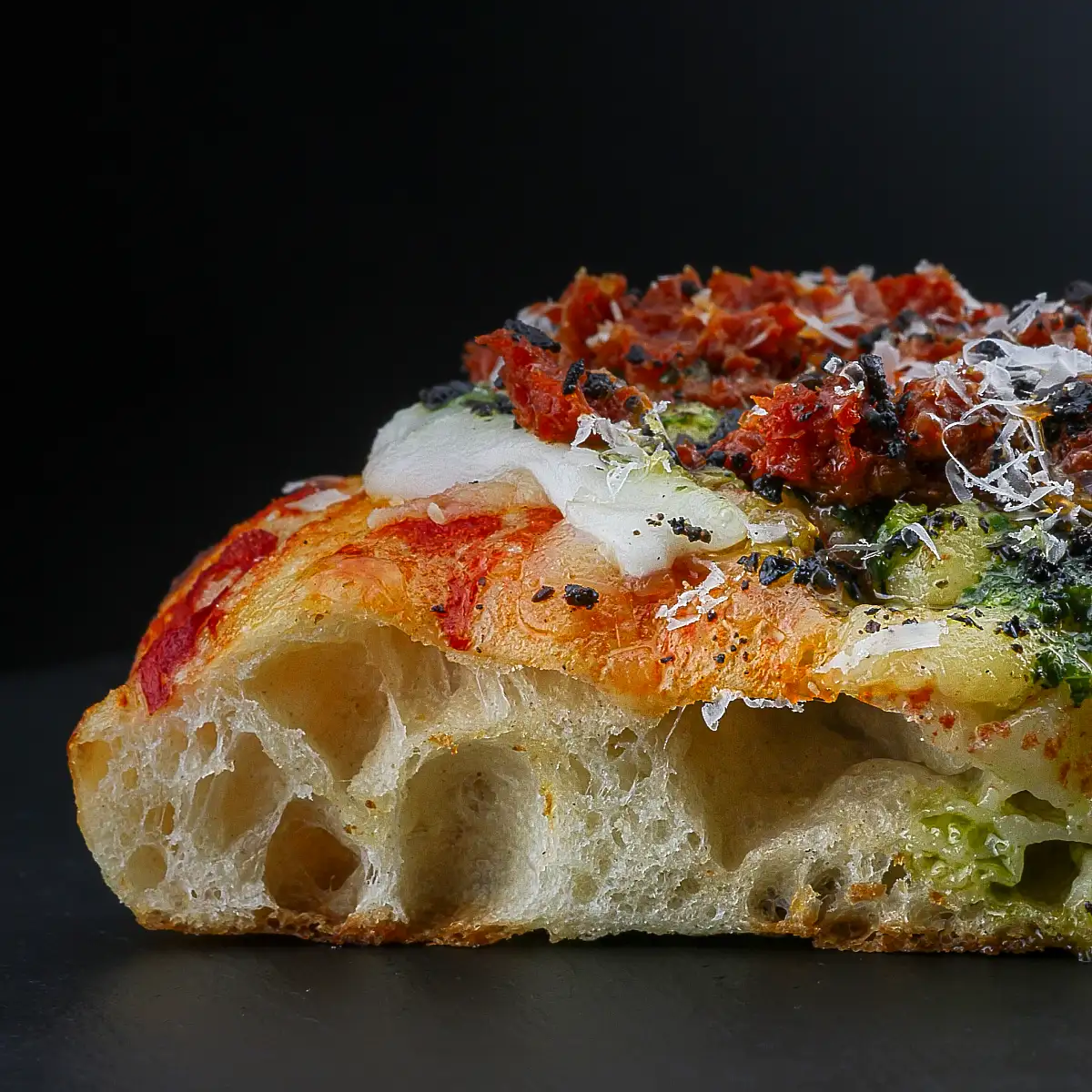
In a serious pizza in teglia, flour is not a technical detail reserved for bakers. It is the starting point of everything. The dough needs enough strength to absorb plenty of water, withstand a long fermentation, and retain a structure full of bubbles when it enters the oven. A weak flour may work in quick preparations, but it will hardly yield that light and elastic interior that makes a teglia memorable.
That's why flours with good protein content and development capacity are usually chosen. Sometimes they are blended to adjust elasticity, extensibility, and flavor. There is no single sacred formula: it depends on the temperature, the available time, the oven, and the desired result. But there is a clear rule: if the flour cannot support the hydration, the dough loses height and the croccante becomes an empty promise.
Water is the second major protagonist. A more hydrated dough creates an open, moist, and light crumb, though it also requires technique. With too much water and little handling, the dough spreads out. With too little, it remains dense, dry, and closer to a flatbread than a Roman pizza. The magic is in finding the balance so that the base is crispy on the outside and soft on the inside.
Yeast is used with moderation. There's no need to load the dough with yeast to speed up the process, because speed doesn't mean flavor. At Bianka® Pizza Romana, the 72-hour fermentation is part of the signature: time for the dough to develop aroma, a more complex texture, and a gentler digestion. The wait is felt in every alveolus.
Salt fine-tunes the flavor and helps control fermentation. Olive oil, when incorporated thoughtfully, provides elasticity, fragrance, and a seductive golden color to the base. They are small amounts, but they have a huge effect. A great pizza doesn't depend on extravagant ingredients: it depends on the essentials being well understood.
Fermentation isn't seen, but it's tasted
There are processes that cannot be faked. A long fermentation transforms a simple mixture of flour, water, salt, and yeast into a dough with identity. During this time, nuances reminiscent of artisanal bread develop, deeper aromas appear, and the structure gains air.
This doesn't mean that every dough must ferment for exactly 72 hours. The Heredia climate, kitchen temperature, and type of flour change the behavior of the dough. What matters is respecting the process instead of forcing it. A fermentation that is too short usually yields a pizza that is flatter in flavor and heavier. An excessive one, on the other hand, can weaken the structure and leave unwanted sour notes.
Handling also matters. Pizza teglia dough is not stretched aggressively. It is guided with the hands, letting the air that formed during fermentation stay inside. Flattening every bubble before baking would be like erasing several days of work in a few seconds.
Tomato sauce: minimal, bright, and with intent
A good sauce doesn't need to hide behind sugar, dried herbs, or too much garlic. For pizza teglia, the tomato must have clean acidity, natural sweetness, and a texture that doesn't soak the dough. It can be crushed tomatoes, selected pulp, or a briefly cooked sauce, depending on the house style and the final topping.
The amount matters more than it seems. Too much sauce blocks the heat, dampens the surface, and turns a croccante base into a soggy slice. Too little can make the pizza feel dry. The correct proportion lets the tomato be perceived without stealing the texture of the dough.
Olive oil, salt, and, if appropriate, a basil leaf can be enough. Real Italian cooking doesn't need to disguise a good product. It needs to know when to stop.
Cheeses that melt without suffocating
Mozzarella is a favorite for a reason, but not just any mozzarella behaves the same on a teglia. If it releases too much water, the surface becomes soggy and the base loses its croccante bite. That's why the draining, cutting, and the moment it is added are carefully controlled.
Fiordilatte offers a clean dairy flavor and a delicious melt, while buffalo mozzarella can be spectacular when used in moderation and added after or near the end of baking. Pecorino, parmigiano, and provolone bring depth, saltiness, and character. Each cheese has a function, not just a pretty picture of stretching cheese.
A well-thought-out combination creates contrast: a soft cheese for melting, another cured for intensity, and, in some recipes, a cream or ricotta to add creaminess. The risk lies in overdoing it. Pizza in teglia should feel generous, never saturated.
Toppings with product, not noise
The baking pan allows you to play with incredible combinations, but creativity works best when it respects balance. Quality mortadella asks for pistachio and stracciatella. Italian sausage finds a great partner in mushrooms or potato. Roasted vegetables need to be treated beforehand so they arrive concentrated, not watery.
These are four criteria that separate a well-thought-out topping from an improvised one:
Choose ingredients with defined flavor and good origin.
Control the moisture of vegetables, cheeses, and meats.
Add delicate elements at the end, when the oven has already done its part.
Look for contrast between fat, acidity, salt, freshness, and texture.
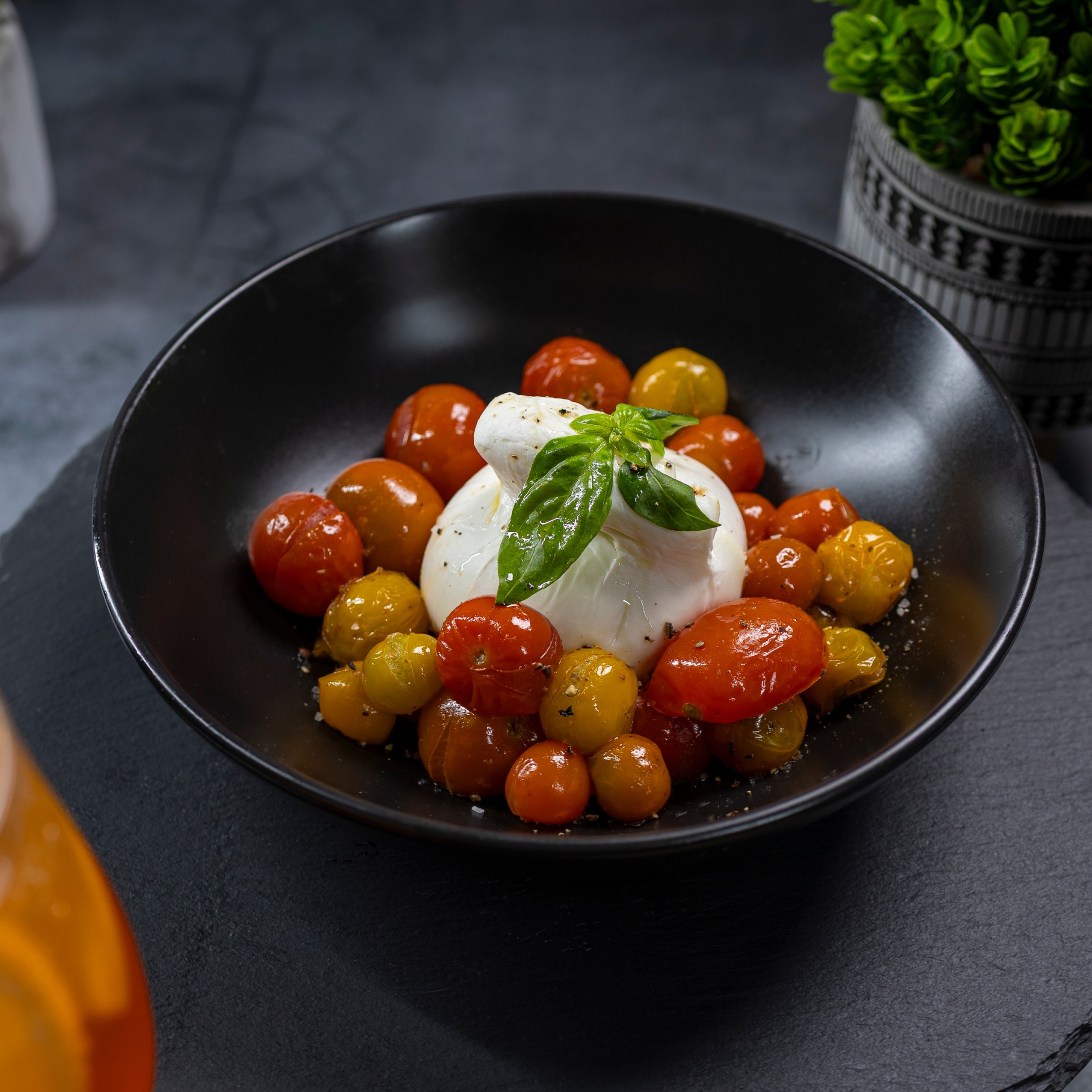
Arugula, for example, is added fresh after baking. Prosciutto shines with the residual heat, not burnt from the start. A burrata is sliced open just before serving to preserve its creaminess. These are small decisions that make a slice go from decent to unforgettable.
Olive oil and the oven close the deal
A drizzle of good olive oil might seem like a final gesture, but it is an ingredient that connects all the others. It brings fragrance, shine, and a fruity note that lifts tomato, cheese, and vegetables. Using it well doesn't mean bathing the pizza: it means leaving a precise aromatic trace.
Then comes the oven. A pizza teglia needs strong heat and a pan that helps conduct it to the base. The goal is a golden, firm, and crispy bottom, with a crumb that retains moisture. If the oven is warm, the dough dries out before browning. If the topping is overloaded, not even the best oven will be able to save the balance.
The pizza is ideally served shortly after baking, when the contrast of textures is at its peak. A freshly cut slice should sound slightly when broken, but not crack like a cracker. That is the sign of a well-crafted dough.
What is worth looking for in every slice
The best pizza teglia ingredients are not necessarily the most expensive or the most numerous. They are the ones with purpose: capable flour, water in the correct proportion, patient fermentation, honest tomato, well-handled cheese, and toppings that respect the base. The difference is not in accumulating, but in building.
When you try a Roman pizza in teglia, look for that croccante edge, the irregular bubbles, and the deep flavor of a dough that had time. If you also find fresh ingredients and combinations with character, you are not in front of a generic pizza. You are tasting an Italian baking tradition made to stay in your memory.