Jun 28, 2026
Italian gastronomic trends in Costa Rica
There is a huge difference between eating pizza and experiencing a true Italian food culture. When discussing Italian gastronomic trends in Costa Rica, it is no longer enough to think of generic pastas, quick portions, or the classic old round pizza. The local palate is changing, and it is asking for something more specific, more artisanal, and much more memorable.
This shift is no coincidence. In the Greater Metropolitan Area, more and more people are looking for experiences with identity. They want to know what makes a dough different, why a long fermentation changes the texture, or what makes a well-executed stuffed focaccia special. Italian cuisine, when worked with technique and criteria, has plenty of room to grow in that direction.
Italian gastronomic trends in Costa Rica that are indeed shaping taste
The clearest trend is the transition from mass-market to specialized. Before, it was enough to offer "Italian food." Today, that sounds broad, even vague. The curious consumer wants a niche. They want Roman pizza in teglia, schiacciata, doughs with personality, well-chosen ingredients, and formats that do not feel repetitive.
That explains why more focused concepts are gaining attention. Authenticity is no longer sold just with an Italian flag or a pretty name. It is proven in the product. In the croccante texture. In a 72-hour fermentation. In a light yet structured dough. In a proposal that feels thought out, not improvised.
There is also a reassessment of bread as a protagonist. Italian cuisine in Costa Rica is stopping treatment of bread as a simple accompaniment. Now it can be the center of the experience. A well-made focaccia, a pizza al taglio, or a schiacciata with balance between crumb, crust, and filling already compete as main dishes, not as extras.
The rise of Roman pizza and less common formats
If there is a clear sign within the Italian gastronomic trends in Costa Rica, it is the growing interest in styles that stand out from the traditional pizzeria. Roman pizza is entering strongly because it offers something the market has not always seen well-represented: lightness, crunchiness, and a very marked visual and sensory personality.
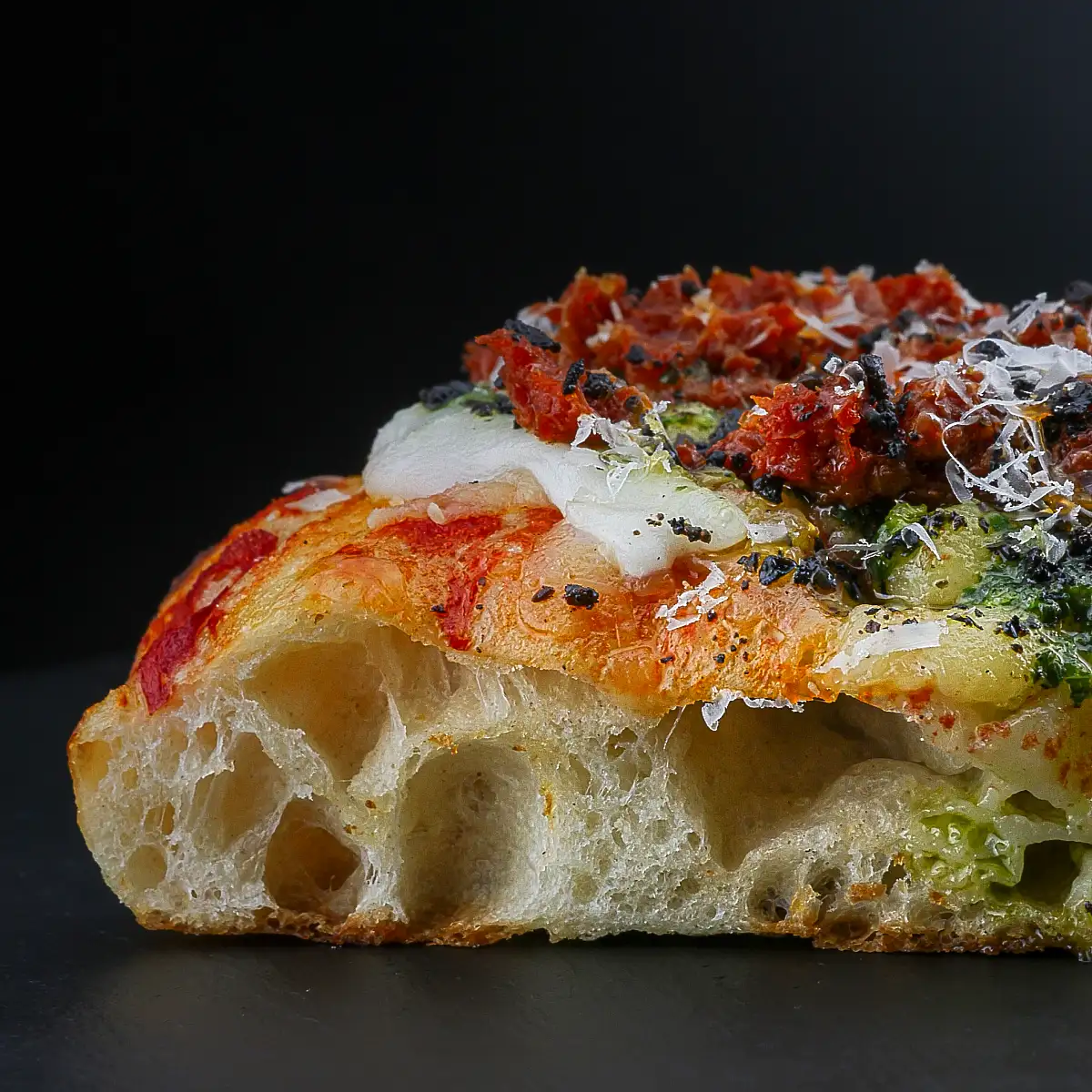
It is not just about changing the round shape to a square one. That would be superficial. What attracts people to Roman pizza in teglia is its structure. The base has a particular crunch, the interior keeps air and softness, and each bite feels more refined. It is a different experience, more technical and more addictive for those who appreciate the details.
Furthermore, these formats connect very well with the urban consumer. They are ideal for sharing, ordering various flavors, and turning food into conversation. That matters a lot today. People are not just looking to eat delicious food. They are looking to order something that surprises at the table, looks incredible, and has a story behind it.
In this field, the more specialized Italian offerings have an advantage. When a brand dominates an uncommon category and executes it with consistency, it stops competing just for hunger. It starts competing for desire.
Long fermentation, digestibility, and texture: the new language of flavor
A few years ago, talking about long fermentation might have sounded overly technical. Today, the foodie public already understands that there is real value there. And it is not an empty fad. A dough fermented for a longer time develops flavor, improves its texture, and offers a lighter experience when eating.
That is why one of the big Italian gastronomic trends in Costa Rica is the interest in processes, not just the final outcome. People ask more questions. They want to know how the dough was made, how long it rested, why it feels different. That curiosity raises the bar for the entire market.
Of course, there is also an important nuance. Not every long fermentation guarantees excellence. If the technique is not well crafted, the narrative falls apart quickly. That is why the truly strong brands are the ones that turn that process into a tangible product: an airy bite, a well-developed crust, a croccante base, and a less heavy feeling.
This point is key in Costa Rica, where the consumer appreciates eating well but also values feeling good afterwards. Indulgence is still alive, but now it coexists with a higher expectation of quality and balance.
Less infinite menu, more Italian curation
Another clear trend is the reduction of the generic menu. Premium Italian cuisine is finding more strength when it stops trying to do everything. Instead of covering pizzas, pastas, meats, salads, desserts, and breakfasts without focus, the most memorable concepts are betting on curation.
That means fewer options, but better executed. It means specializing in a technique and taking it to the highest level. For the customer, this conveys confidence. If a place dedicates itself to a very specific category and works on it obsessively, the perception of value immediately rises.
This logic fits perfectly with the current gastronomic scene. The 20 to 45-year-old consumer in Costa Rica rewards strong identity. They prefer a brand that says "this is what we do and we do it brutally well" over a long menu without character.
This is where formats like stuffed focaccia, artisanal square pizza, or niche Italian bakeries start to stand out. They are not mass-market yet, and precisely because of that they generate attraction. They have novelty, but also depth.
Premium ingredients, but with criteria
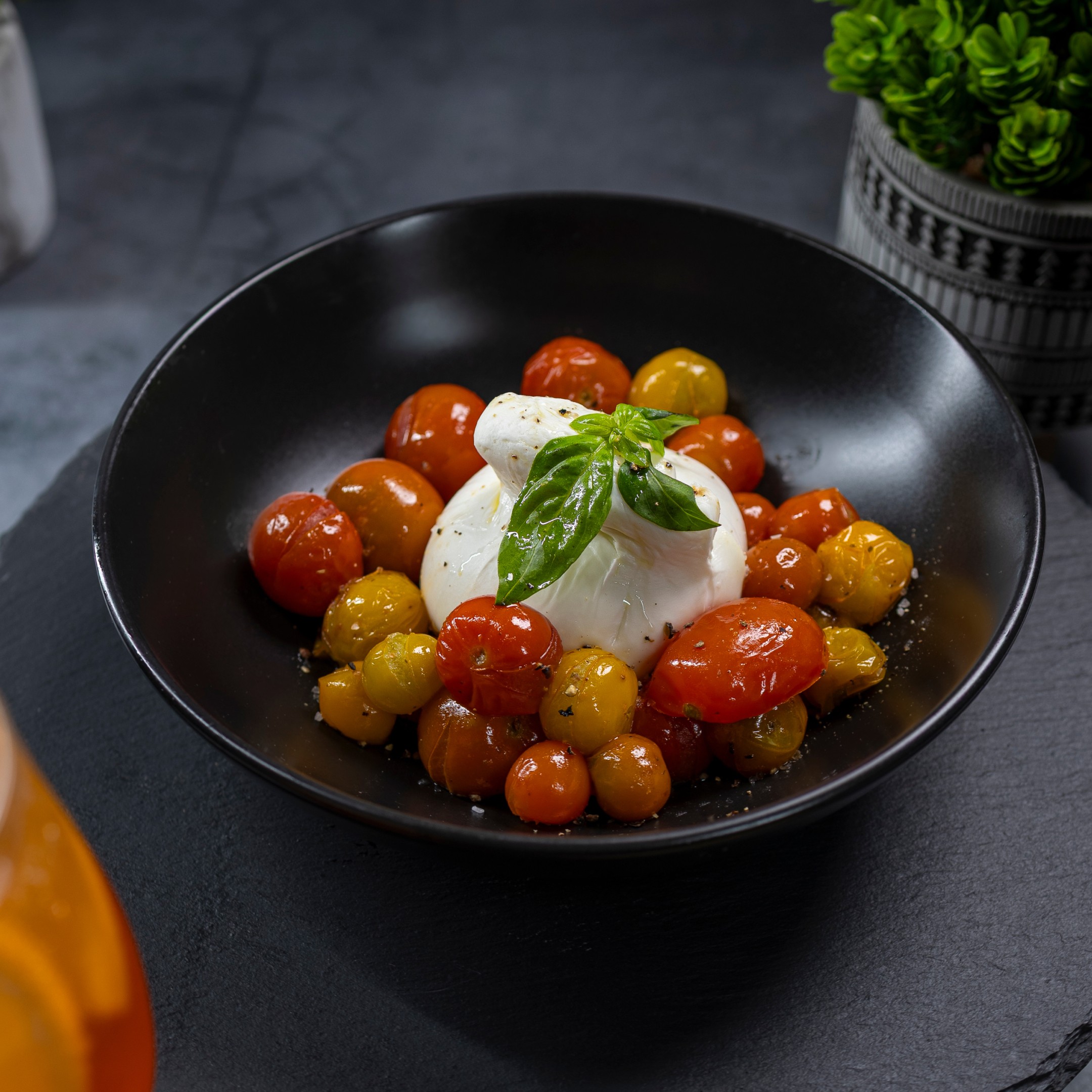
Premiumization continues to grow, but today it feels more mature. It is no longer enough to put burrata, prosciutto, or pistachio on everything. The Costa Rican customer is sharpening their eye. They want premium ingredients, yes, but used with intention.
In the Italian gastronomic trends in Costa Rica, that translates into cleaner, less overloaded, and better-balanced combinations. Authentic Italian cuisine does not need excess to impress. It needs harmony. A good tomato sauce, an impeccable dough, a well-chosen cheese, and a topping that complements, rather than covers up everything.
This approach also gives space to well-integrated local ingredients. Not to "tropicalize" Italian cuisine without criteria, but to dialogue with the environment when it makes sense. Therein lies one of the big challenges: to innovate without losing identity. Some concepts achieve it; others drift so far from the origin that they end up looking like any random fusion without direction.
Experience also counts: visual, atmosphere, and narrative
Today's Italian gastronomy does not only enter through the palate. It enters through the eyes, through texture, and through the story. A well-presented product, a space with personality, and a clear narrative make the experience much more powerful.
This matters especially in the premium casual segment. People want places with aesthetics, character, and something to tell. If they are going to go out, book, or order for a special occasion, they expect more than just a decent meal. They expect a brand that feels alive.
That is why the Italian offerings growing in Costa Rica usually share something: they understand that the specialty must be felt in everything. In the name of the products. In how a portion is served. In the confidence with which the technique is communicated. In that pride of saying "this is not the usual stuff."
Che buono when it actually happens. Because the consumer perceives it quickly.
What comes next in the Italian gastronomic trends in Costa Rica
Everything points to a more segmented, more cultured, and more demanding Italian cuisine. Offerings that educate without becoming pretentious, that offer authenticity without rigidity, and that make the artisanal a desirable experience rather than a heavy speech, will gain ground.
We will also see more interest in shareable formats, high-hydration doughs, savory Italian bakery items, and concepts where texture is the protagonist. A well-made crunch has a future. Lightness with flavor does too. And businesses that understand that combination are going to connect very well with an audience that is no longer impressed by the basics.
In that scenario, pioneering offerings like Bianka® Pizza Romana have a very clear opportunity: to lead the conversation from real specialty. Not from a passing fad, but from execution. When a brand bets on Roman pizza in teglia, stuffed focaccia, and authentic processes, it is not following the trend. It is pushing it.
For those who love eating well in Costa Rica, that is excellent news. It means that the local Italian cuisine is getting more interesting, more precise, and much more delicious. And when the market steps up, whoever dares to try something different wins.