Sep 14, 2026
Artisanal Roman dough: the secret of the croccante
Artisanal Roman dough is not recognized by a puffy crust or a round pizza cut into triangles. It is recognized at the very first bite: a light, airy, and deeply croccante base that supports quality ingredients without losing its personality. It is Italian pizza, yes, but with a different rhythm, another technique, and a texture that completely changes the experience.
In Rome, pizza in teglia was born to be eaten casually, by the slice, and with the freedom to combine flavors. But behind that apparent simplicity is baking craft, time, and precision. It is not a dough made to go out quickly. It is a dough designed to wait.
What distinguishes artisanal Roman dough
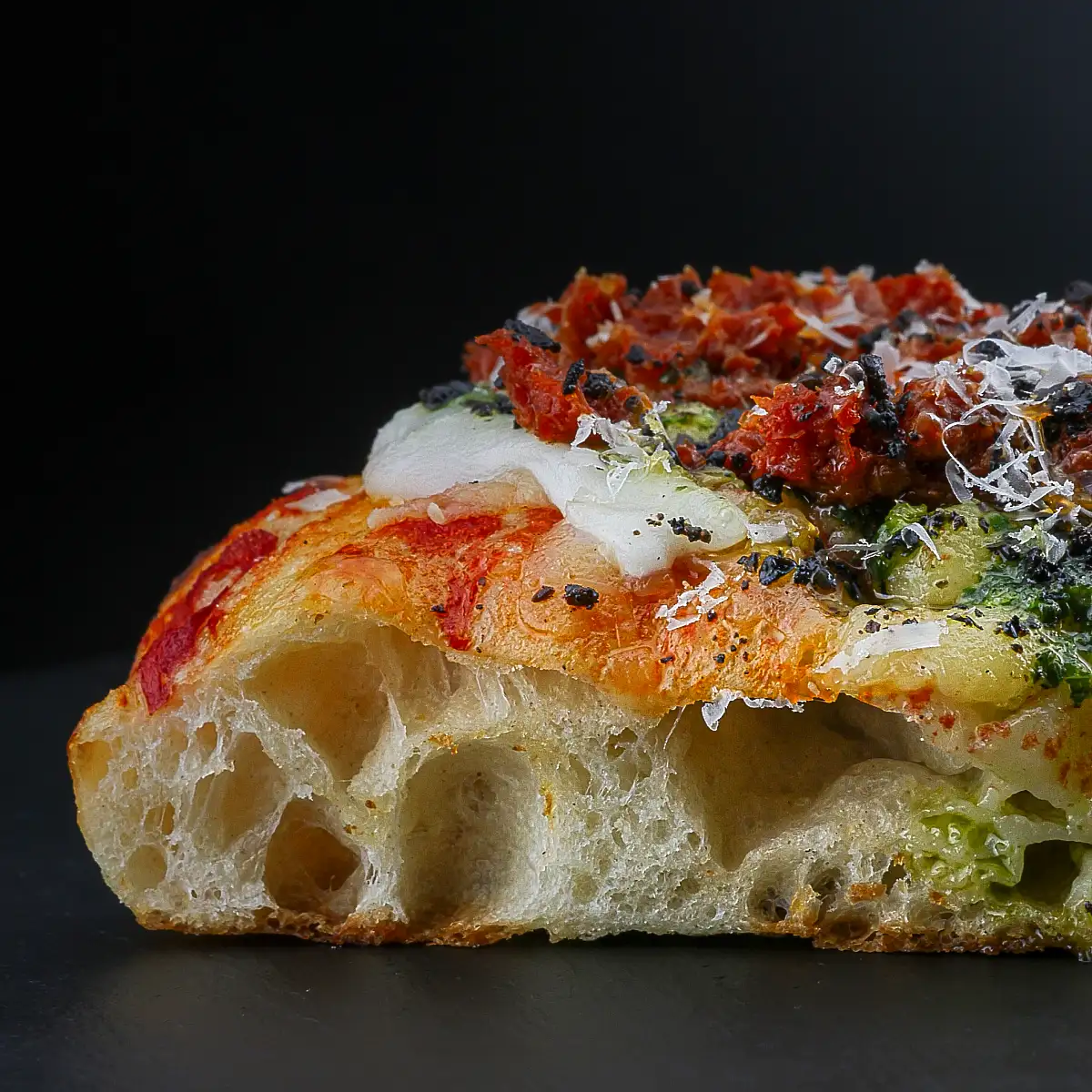
The big difference lies in the fact that this pizza is built from the dough up, not from the amount of toppings. A good teglia must have a firm and crispy base underneath, a crumb filled with small air bubbles, and a surface capable of browning without becoming hard.
Artisanal Roman dough works with high hydration. That means it incorporates a higher proportion of water than many traditional doughs. The result is not a heavy or chewy pizza: when well-crafted, that hydration creates a light structure with irregular alveoli and a bite that feels alive.
The format also changes. Roman pizza in teglia is baked in a pan, presented in rectangular or square shapes, and cut into generous slices. Each piece has more croccante area, more contrast of textures, and a visual presence that is impossible to mistake. It is a pizza that looks as good as it tastes.
72 hours: where the true flavor begins
The long fermentation is not a decorative detail. It is the heart of the recipe. For 72 hours, the dough evolves slowly: it develops aroma, gains complexity, and acquires a particular elasticity that would be difficult to achieve with accelerated processes.
Time allows the flavors of the flour to express themselves more clearly. Instead of a flat base that only works as a support, a dough with its own character appears: lightly toasted, fragrant, and with notes reminiscent of freshly baked artisanal bread.
In addition, a careful fermentation promotes a lighter feeling when eating. It is not magic or a universal promise, because digestion depends on each person and many factors. But it is indeed a technique that seeks to respect the natural times of the dough and avoid that heavy feeling that usually accompanies a pizza made in a rush.
The key lies in controlling temperature, hydration, resting, and handling. If the dough is overworked, it loses air. If it is baked past its prime or before it is ready, it ends up pale or dry. If it is loaded with wet ingredients without balance, the croccante disappears. That is why authentic Roman pizza demands attention at every stage.
Croccante is not just a pretty word
In Italy, saying a pizza is croccante speaks to a precise quality. It is that soft sound when cracking the base. It is the contrast between a golden crust and a fluffy interior. It is feeling that the pizza has structure, without turning into a cracker.
Achieving this depends on the oven, the pan, the baking time, and the dough. A good pizza in teglia comes out with a base that withstands the weight of a mortadella, roasted vegetables, melting cheeses, or intense tomato. It does not fold sadly in your hand. It does not get soggy within minutes. It maintains its identity until the last bite.
That balance is part of what makes artisanal Roman dough special. It does not seek to compete with a Neapolitan one, because it plays a different game. The Neapolitan celebrates the soft center and the raised cornicione; the Roman in teglia celebrates the lightness of the crumb and the snap of the base. Both have tradition. Both require technique. But the experience is totally different.
Flour, water, and hands: the part that is not improvised
A memorable pizza does not need an endless list of ingredients. It needs well-chosen raw materials and someone who knows how to read the dough. The flour defines a big part of the structure, but it does not work alone. The amount of water, the kneading strength, the folds, and the resting change the final result.
In a high-hydration dough, hands matter more than force. It is not about flattening it until it is uniform. It is about preserving the air that formed during fermentation, stretching it gently, and transferring it to the pan without breaking what time has built.
That is why an artisanal Roman pizza can look imperfect in the best way. Its bubbles do not turn out identical. Its edges do not respond to a machine. Each teglia has subtle variations that speak of a real process, made in the kitchen and not on a production line.
The topping should add, not cover up
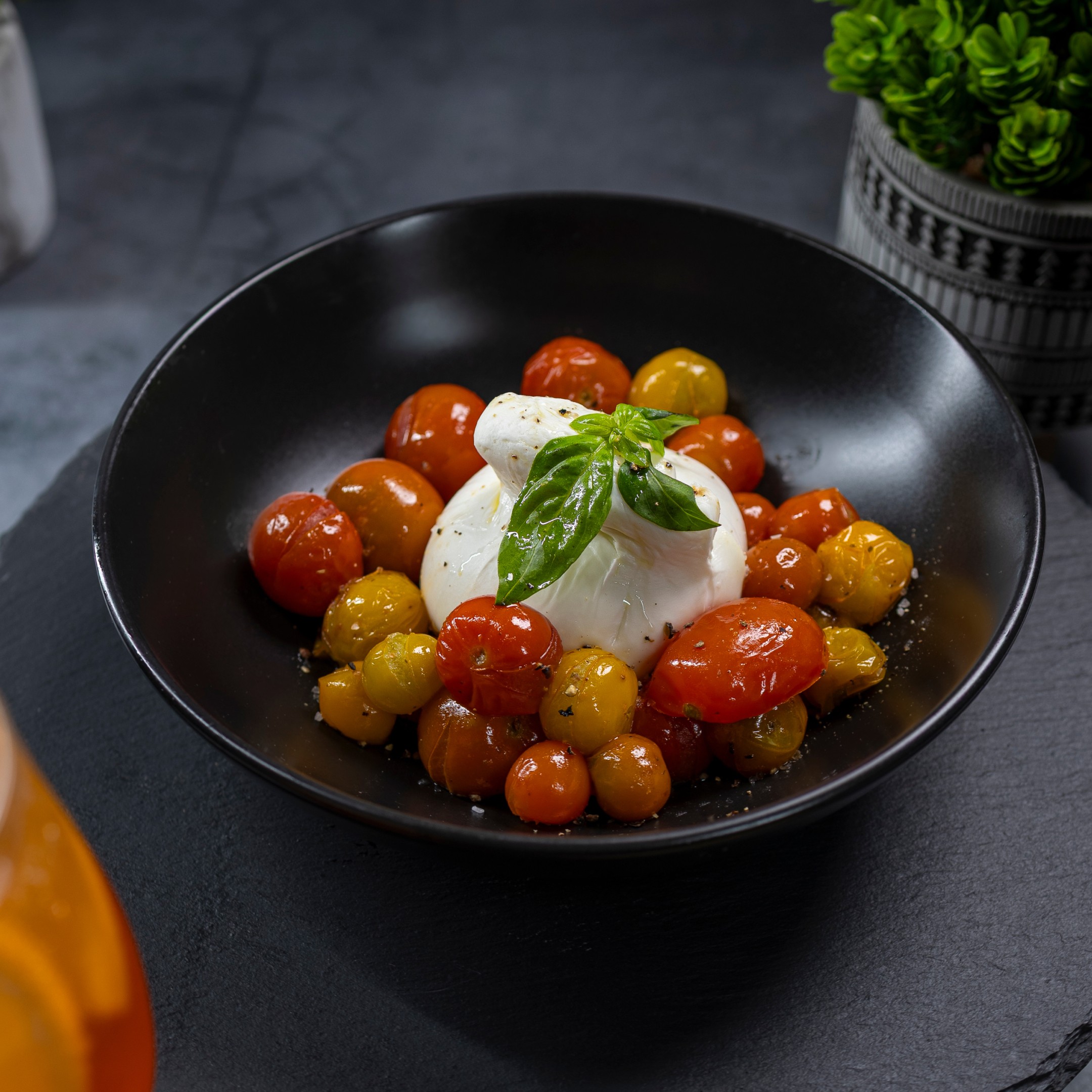
When the dough has flavor, the ingredients stop being a mask. The tomato can be bright and acidic. The mozzarella can melt without flooding the base. A cream, an Italian cold cut, or well-roasted vegetables can provide contrast without erasing the fermentation work.
There is a simple rule here: more is not always better. A saturated pizza can look spectacular for five seconds, but it loses balance when eaten. Instead, a well-measured combination lets each layer express itself. First comes the croccante, then the light crumb, then the flavor of the topping, and finally, the toasted touch of the dough.
This also allows for playing with options that go beyond classic pizza. The same baking tradition inspires stuffed focaccias and schiacciatas with generous layers, ideal for sharing or for turning a common lunch into a serious craving. The Roman technique converses with creativity without losing its roots.
Why this pizza feels different in Costa Rica
Costa Rica knows pizza well, but Roman pizza in teglia still retains that element of discovery. For those who have already tried dozens of round pizzas, encountering a square, tall, crispy, and airy slice changes expectations from the very first glance.
It is not an option for someone looking for a thin and flexible dough, nor for someone who wants a Neapolitan pizza with a wet center. It is for those who want texture. For those who appreciate a long fermentation. For those who understand that a good pizza can be casual, photogenic, hearty, and technically demanding all at the same time.
In San Pablo de Heredia, Bianka® Pizza Romana brings that vision to the plate with a pioneering concept that puts the teglia, the stuffed focaccia, and the Italian craft at the center. It is not about copying a trend: it is about serving a tradition with the level of detail it deserves.
The next time the craving calls for pizza, look for something more than cheese and dough. Look for that croccante snap, the air-filled crumb, and the flavor that only appears when someone decided to give a dough 72 hours of patience. Che buono.