Oct 10, 2026
Gourmet pizza: the technique that changes every bite
Gourmet pizza is not recognized by a random, expensive ingredient. It is recognized at the very first break: a light, airy, and crispy base that supports bold flavors without giving up along the way. When the dough is made with technique, the tomato tastes more intense, the cheese finds its place, and every topping stops being mere decoration and becomes part of an idea.
For those looking to eat something different in Costa Rica, the difference lies in looking beyond the usual round pizza. Italy has many pizzas, many doughs, and many regional traditions. Romana in teglia is one of the most fascinating: square, baked in a tray, with an open crumb and a crispy base. It is not just a trendy alternative version. It is a baking and pizza language of its own.
What makes a gourmet pizza truly gourmet
The word "gourmet" can be used too easily. A drizzle of truffle oil or a burrata on top of a characterless dough does not create a superior experience. A truly special pizza begins long before the oven: it starts with the selection of flour, water management, resting times, and the hand that understands when a dough is ready.
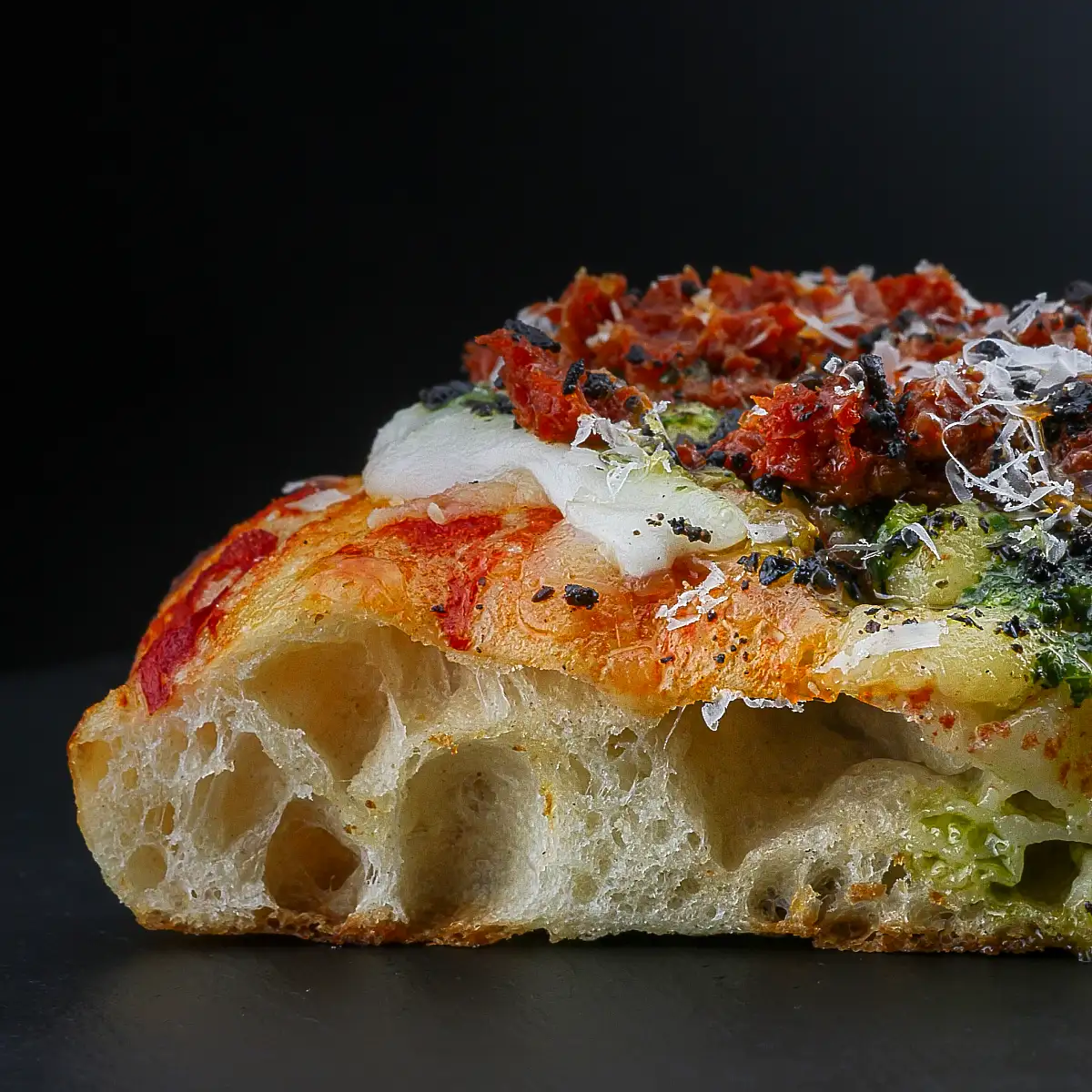
In an artisanal approach, slow fermentation is a decision you can taste in every bite. A dough fermented for 72 hours develops flavor, structure, and a lighter texture. It is not about complicating something simple, but about respecting a process that allows no shortcuts. The wait builds an open crumb, with irregular bubbles, and a crust that crunches without feeling heavy.
Then comes the produce. Tomatoes with balanced acidity, cheeses that melt well, vegetables treated with intent, Italian cold cuts, and combinations that respond to the season or a specific inspiration. Premium ingredients matter, of course. But what matters even more is knowing how much to use, when to place it, and what temperature it needs. A pizza can have few elements and be unforgettable if there is balance.
The big difference is that every component serves a purpose. The sauce adds brightness and freshness. The cheese adds creaminess and salt. A crispy ingredient creates contrast. Herbs lift the aroma. The result should not feel overloaded, but precise. Che buono when everything fits together.
Romana gourmet pizza: texture before excess
Pizza romana in teglia does not seek to impress with excessive height or a mountain of toppings. Its strength lies in the contrast. Underneath, a firm, golden, and crispy base. Inside, a soft crumb full of air. On top, ingredients that keep their identity and do not disappear under a layer of cheese.
That contrast transforms even familiar flavors. A classic tomato sauce and mozzarella becomes more vibrant when served on a well-fermented dough. A prosciutto feels more delicate on a light base. Roasted vegetables gain depth when their sweetness meets the salty point of a good cheese. Texture is not a technical detail: it is part of the flavor.
It also changes the way we share. The square format allows you to cut generous portions or try several recipes at the same table. It is ideal for an outing with friends, a dinner for couples who want to order something outside the predictable, or a lunch that doesn't feel routine. There is no need to choose between casual and special. A good teglia can be both.
There is another point worth celebrating: romana pizza speaks of the baker's craft. The dough is not just a plate on which ingredients are placed. It is the core of the offer. If it lacks flavor, elasticity, and an impeccable bake, nothing on top can save it. That is why true gourmet pizza is heard before it is tasted: that crack when breaking a slice says it all.
The balance that separates a great pizza from an overloaded one
More does not always mean better. In fact, one of the most common pitfalls in premium pizza is confusing abundance with quality. Too much sauce makes the base soggy. An excess of cheese masks the other flavors. Excellent ingredients, combined without criteria, compete instead of complementing each other.
A well-thought-out menu plays with clear contrasts. It can unite the acidity of the tomato with the pleasant fat of mozzarella; spiciness with a sweet touch; the intensity of an aged cheese with fresh vegetables. But it also knows when to stop. A pizza's personality lies in its decisions, not in the number of names that fit into a description.
This does not mean that every gourmet pizza must be minimalist. There are intense and generous combinations that work very well. It depends on the dough, the baking, and the intent. A recipe with porchetta, potato cream, and herbs can be hearty without losing harmony. A veggie option can be complex and memorable without feeling like a substitute. The key is for the whole to have rhythm.
The baking stage also rules. Some toppings go in from the start to concentrate flavor. Others are added fresh out of the oven to preserve their freshness, such as aromatic leaves, delicate charcuterie, or creamy cheeses. That management of heat is the kind of detail that turns a good slice into one you talk about long after dinner.
How to choose a gourmet pizza that is worth the night out
You don't need to be an expert to spot a pizza crafted with respect. Look at the base: it should look golden, not pale or burnt. When you lift a slice, it should hold itself up without turning into a soft dough. Look at the ingredients: they should look distinct, with vivid colors and no excess of pooled grease.
Then taste it slowly. Feel if the dough has its own flavor, if the crust is crunchy, and if the crumb remains light. A well-made pizza fills you up, but doesn't weigh you down. It leaves you wanting to try another combination, not with the feeling of having eaten something heavy.
It is also worth looking for places that champion a specific style instead of trying to do it all. A pizzeria that deeply understands the romana, florentina, or napoletana tradition knows that each dough demands different times, temperatures, and formats. That specialization shows. In San Pablo de Heredia, Bianka® Pizza Romana bets precisely on that less conventional culture: pizza in teglia, stuffed focaccia, and schiacciata with an Italian identity and a contemporary attitude.
The complete experience counts. An exceptional pizza deserves to be served fresh out of the oven, shared while still crispy, and accompanied by a long conversation. It is accessible food, yes, but not ordinary. It has something of an urban ritual: choosing flavors, opening the box or sitting at the table, breaking the first slice, and finding out that the dough lives up to the promise.
Next time you look for pizza, ask for more than flashy toppings. Look for fermentation, craft, balance, and that crispy crack that cannot be faked. That is where a pizza that truly deserves to be called gourmet begins.