Nov 7, 2026
Italian Pizza: Why Each Style Tastes Different
You can recognize real Italian pizza before the first bite. It's in the smell of the dough, the croccante sound of a well-baked base and toppings that don't need to hide under a mountain of cheese. Italy didn't create one pizza. It created a language of doughs, ovens, fermentations and formats that changes from city to city.
If you want to eat something more interesting than the same generic pizza, that variety is the best news. Pizzas don't all have to be round, they don't all need a soft center, and a light dough can still have plenty of character. Each style answers a different way of understanding bread, time and flavor.
Italian pizza isn't a single style
Talking about Italian pizza as if it were one recipe is like talking about pasta as if it were all cooked the same way. Naples, Rome, Florence and other cities have their own techniques, local habits and a very distinct personality in each dough. The key is to stop asking which pizza is the “original” and start tasting what each style offers.
Neapolitan is probably the best known: round, with a tall rim, a tender center and a quick bake at extreme temperatures. It's a pizza you enjoy fresh from the oven, with a flexible base and direct flavors. Its charm lies in simplicity, but it demands absolute precision. A poorly hydrated dough or an oven that doesn't reach the right temperature changes it completely.
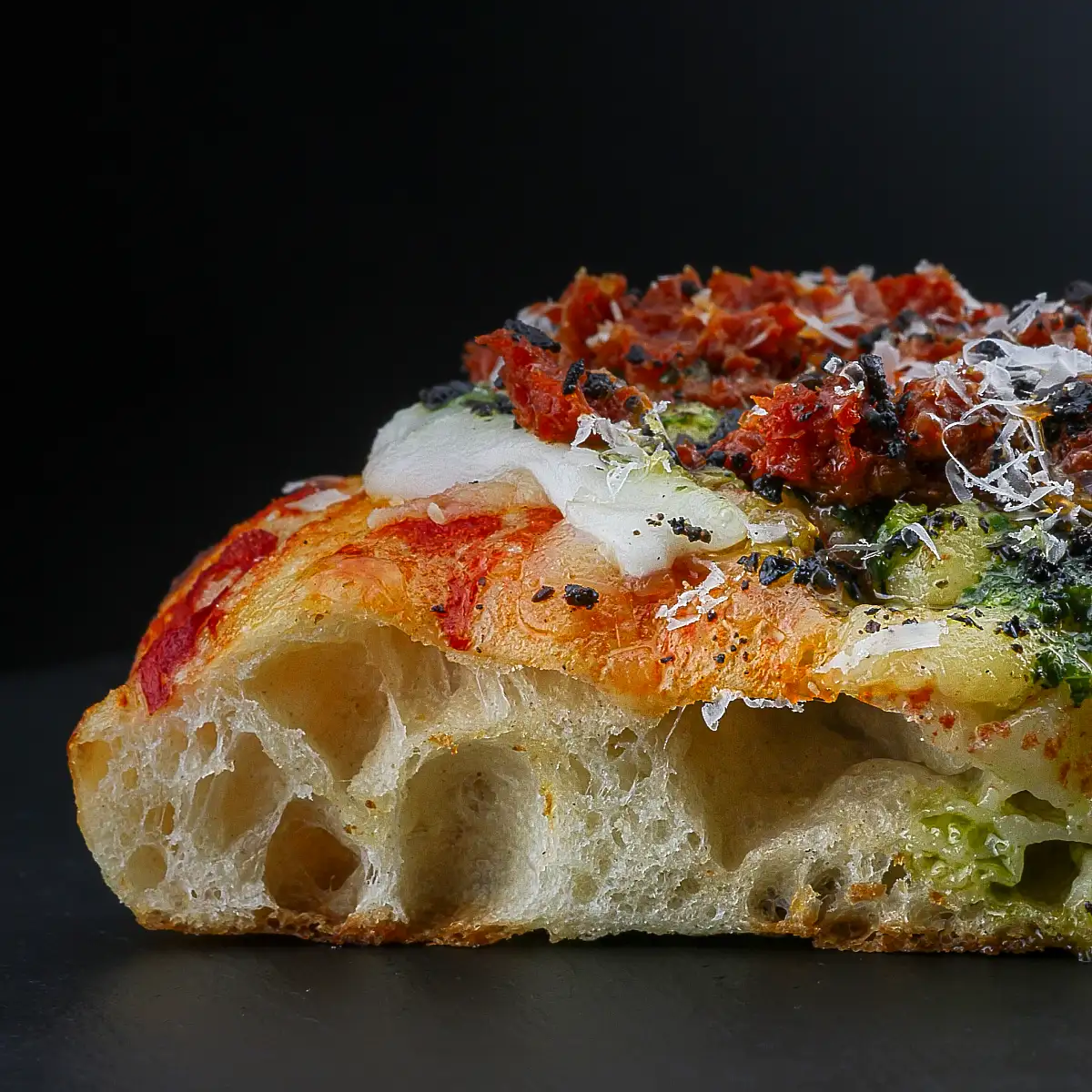
Rome takes another path. Roman pizza can be thin and crisp, or it can come in its in teglia version: baked in a pan, rectangular or square, with an airy crumb and a firm base. Here, contrast rules. Croccante outside. Light inside, full of air pockets, with a bite that holds generous toppings without turning heavy.
No style wins on every occasion. It depends on what you're after. A Neapolitan works when you want a delicate, hot, quick pizza. A Roman pizza in teglia shines when the table wants to share, try several flavors and enjoy a texture that stays crisp bite after bite.
The secret lies in the dough and in time
A great pizza doesn't start with the topping. It starts much earlier, when flour, water, yeast and salt become a dough with an identity. That's where fermentation comes in: the process that turns a basic mix into a more aromatic, lighter and more complex base.
Long fermentations, like 72-hour ones, are much more than menu decoration. They give the dough time to mature. The result can feel lighter to eat, with deeper flavors and a structure that can create a crisp crust without losing softness inside. One caveat: leaving a dough to rest isn't enough. Temperature, hydration, handling and baking all have to be calibrated.
In a Roman pizza in teglia, high hydration is part of the magic. The dough holds more water than a conventional one and takes trained hands to handle it without destroying the air bubbles that form during fermentation. That's the difference between a dense base and a pizza that seems light yet has real presence.
The oven finishes the job. A good bake should give color, firmness and that unmistakable snap when you cut the slice. If the base comes out pale, it loses character. If it dries out too much, it turns hard. Hitting the exact point comes down to craft, and luck has nothing to do with it.
Croccante doesn't mean dry
A common mix-up is thinking a crispy pizza is a rigid or overly toasted one. It isn't. A well-made croccante texture breaks easily but keeps a lively, pleasant crumb. It's the balance between strength and lightness.
That's why pan pizza is so appealing. The base holds cheese, vegetables, cured meats or creams without collapsing. At the same time, the dough doesn't steal the spotlight from the toppings: it makes them look good. It's a more intense experience in texture and, for many people, a far more memorable one.
From Rome to Florence: two ways to love bread
The Italian dough tradition goes far beyond pizza served on a plate. In Rome, pizza al taglio and pizza in teglia are part of daily life. People buy them by the slice, share them with friends and try different flavors at the same table. The square format is no fad. It's a practical, delicious way to eat well.
In Florence, schiacciata moves the conversation to a flat dough, baked and split open to take fillings. It has a crisp surface, a soft crumb and a personality made for heartier combinations. It doesn't pretend to be round pizza under another name. It's a baking specialty with its own place in Italian food culture.
These foods have something in common: they respect the ingredients. Good mortadella, creamy stracciatella, roasted vegetables, quality tomato or fresh pesto don't need excess. When the base is well made, each ingredient can speak clearly.
Fewer toppings, more intention
You don't measure a memorable Italian pizza by its number of toppings. In fact, loading a dough with too many ingredients can ruin its texture, soak the base and blur the flavors. The selection has to make sense: contrasting temperatures, a balance of fat and acidity, fresh notes that cut through the richness of the cheese.
Mozzarella brings softness and stretch. Tomato delivers acidity and sweetness. Italian cured meats add saltiness and character. Herbs, olive oil and well-prepared vegetables finish the dish with precision. The difference lies in knowing when to stop.
How to eat Roman pizza in teglia the right way
The best way to enjoy it is simple: fresh from the oven, shared and unhurried. Ordering more than one flavor lets you understand the play of textures and combinations. A slice with tomato and mozzarella shows off the quality of the base. Another with bolder toppings reveals how far creativity can go while keeping the Italian spirit.
It's also worth looking at the edges and the underside. A well-made base should look golden and feel firm. When you break it, the crumb should show air instead of a compressed, stodgy dough. That detail tells you far more than a pretty photo.
In San Pablo de Heredia, Bianka® Pizza Romana brings that culture to the table with a menu specialized in Roman pizza in teglia, filled focaccia and schiacciata. Imitating a traditional round pizza isn't the goal. You're tasting a different category, made with technique, long fermentation and a very Italian obsession with texture.
Why this experience feels different
Pizza can be casual, sure. Casual doesn't have to mean ordinary, though. When there's a handmade dough, a clear method and a concept with identity, a night out with friends or a dinner date turns into an experience people talk about afterward.
Roman pizza has that advantage: it's visual, shareable and surprising from the first cut. Its format invites you to try things. Its texture makes you want more. And its variety leaves room for every visit to be different, from a classic slice to a bolder combination.
The next time you choose pizza, look past the size and the amount of cheese. Ask about the fermentation, feel the base as you break it and dare to order a slice that truly crunches. Che buono starts when the dough gets the respect it deserves.