Jun 6, 2026
Regional Italian pizza differences
Ordering "an Italian pizza" as if it were a single thing is missing half the charm. When one talks about regional Italian pizza differences, they are actually talking about geographies, techniques, flours, fermentation times, and a very Italian idea that each city protects its style with absolute pride. And yes, that completely changes what arrives at the table.
In Costa Rica, the conversation often stays on the basics: thin or thick, round or square. But Italy plays in another league. There is no single, perfect Italian pizza. There is an entire family of regional pizzas, each with its own rules, texture, and character. That is where the beauty lies. And also the difference between eating pizza and truly understanding it.
Regional Italian pizza differences you can actually feel on the first bite
The most obvious difference is in the base. Not all Italian pizzas strive for the same thing. Some look for elasticity and an inflated rim. Others bet on a croccante bite. Others are born to be sold by the slice, served on a tray, or stuffed as if they were part of the bakery tradition rather than the classic pizzeria.
The use of the oven, web hydration of the dough, and fermentation time also change. A Neapolitan pizza is designed for fast cooking and extreme heat. A romana in teglia needs a different structure, airier on the inside and crispy on the outside. A Sicilian can feel taller, doughier, more generous. It is not just aesthetics. It is technique.
And then come the toppings. In Italy, the topping does not always seek excess. Many regions prefer balance, seasonality, and precise combinations. Less weight, more intention. When a pizza is well made, the crust is not the vehicle for the topping. It is the protagonist.
Naples: softness, inflated rim, and flexible center
If there is one pizza that became a global icon, it is the Neapolitan. It was born in Naples and responds to a very clear logic: soft dough, high and airy rim, thin center, extremely fast baking, and a very moist result compared to other Italian styles.
Neapolitan pizza does not aim for total crispiness. This is one of the most common misunderstandings. Its charm lies in the contrast between the inflated cornicione and a flexible central part, even slightly moist, which is often eaten with a knife and fork or folded. It is a pizza of a fierce oven, precise rising, and few, well-chosen ingredients.
The marinara and margherita remain its statement of principles. Tomato, olive oil, garlic or mozzarella, basil, and little else. When the base is well made, there is no need to hide anything.
Rome: crispier, more structure, more bakery culture
To talk about Rome is to talk about plurality. Because in the capital there is not just one format, but several. And that makes it especially fascinating for those who enjoy the differences of regional Italian pizza in closer detail.
Pizza romana tonda
The round Roman pizza is usually thinner and more croccante than the Neapolitan. It has less moisture, more structure, and a drier feel to the bite, in the best sense. Here the focus is on lightness and that brittle texture that crackles a bit before giving way.
It does not have the exuberant rim of Naples. It is more contained, sharper, more direct. If the Neapolitan seduces with its softness, the romana tonda conquers with precision.
Pizza in teglia
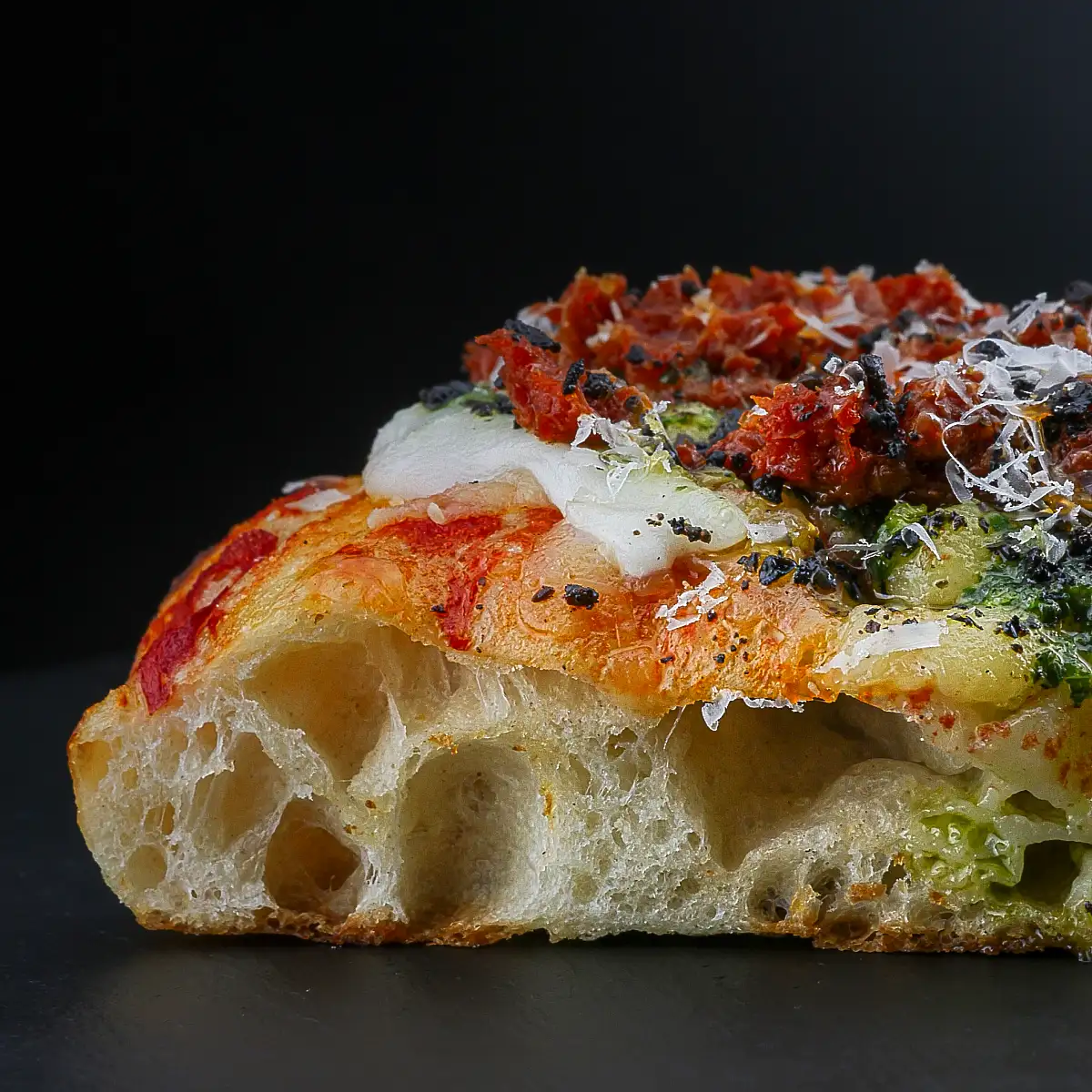
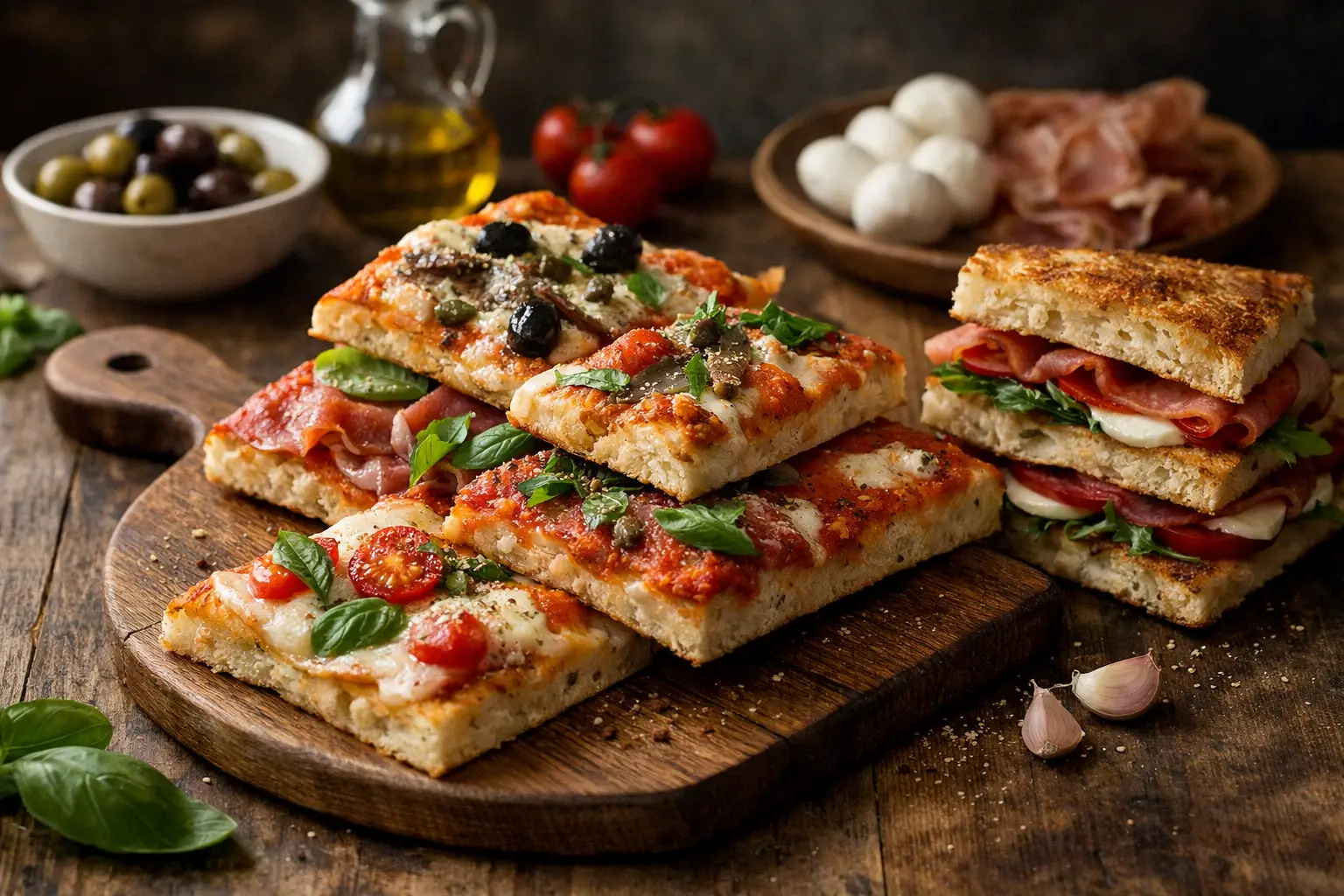
Then there is the gem for those who value bakery technique: pizza romana in teglia. It is baked on a tray, usually in rectangular or square format, and often sold by the slice or by weight. The dough usually has high hydration, long fermentations, and a texture that feels bubbly inside while maintaining a spectacular crispy base on the outside.
This style has a very different DNA from traditional round pizza. It does not compete with it. It plays a different game. It is pizza, yes, but it is also Roman baking at its finest. More artisanal, more technical, more linked to dough work than to generic nostalgia for "the usual pizza."
That is why when a specialized brand bets on this format, it is making a strong statement: we are not copying the most mass-market version here. We are bringing a specific tradition, with its own identity. Che buono.
Sicily: generous, taller, and with a homemade spirit
Sicilian pizza changes the tempo. It is usually thicker, fluffier, and with a more bread-like feel. In some versions, it is baked on a tray and can resemble an enriched focaccia, although with its own logic. Sauce, cheese, anchovies, onion, or breadcrumbs appear with more presence depending on the area and the recipe.
It is not a delicate pizza in the minimalist sense. It is ample, abundant, and closely linked to home cooking. It has a more robust profile, ideal for those who enjoy a dough with body. Even so, reducing Sicily to "thick pizza" would be oversimplifying. There are local styles within the island itself, and that diversity matters.
Liguria and Tuscany: focaccia, schiacciata, and delicious borders
Here the conversation becomes even more interesting, because formats appear that live between bread and pizza. In Liguria, focaccia holds a central place in daily life. In Tuscany, schiacciata occupies a similar territory: baked dough, olive oil, salt, expressive texture, and huge versatility to serve plain or stuffed.
They are not always labeled as pizza in the strict sense, but they are part of the gastronomic landscape that explains why in Italy the culture of baked doughs is much richer than the international mold of round pizza with heavy toppings.
The schiacciata, for example, has an incredible personality. It can be crispy on the outside, tender on the inside, and perfect for fillings that respect the product. It is urban, elegant, and highly photogenic, but above all, delicious. If one appreciates the Italian baking tradition, they quickly understand why these formats inspire such loyalty.
Regional Italian pizza differences are not just about shape
It would be easy to think that everything is summed up by whether the pizza is round, square, or tall. But the core of the matter lies in the intent. Each region decides what it values most: elasticity, crispiness, moisture, aeration, cooking speed, ease of sale by the slice, or integration with local baking.
The flour can change. The hydration too. The resting of the dough can be short or prolonged. The oven may require extreme temperatures or more controlled baking. Even the timing of adding certain ingredients alters the final result.
That is why it does not make much sense to argue which Italian pizza is "the authentic one." There are many authentic ones. The right question is different: authentic to what tradition.
Which style each person usually likes best
If someone loves a soft pizza with an inflated rim and a classic profile, they will likely connect quickly with Naples. If they prefer a thin, crispy base, Roma tonda has a lot to offer. If they are excited by airy texture, long fermentation, and the portion format, romana in teglia often becomes a favorite. And if they look for something more abundant, fluffy, and homemade, Sicily comes in strong.
The moment also plays a part. There are pizzas perfect for a sit-down dinner and others ideal for sharing with friends, ordering several slices, and trying different combinations. There, pizza in teglia has an absolute advantage: it invites eating with curiosity, not on autopilot.
Why this conversation matters more than it seems
Understanding these differences improves the experience. It helps to order better, to value the technique, and to recognize when a place truly respects a specific tradition. In a market full of proposals that lump everything under the same label, specialization makes itself felt.
And it is felt even more when the dough is treated with the respect it deserves. Long fermentation, well-crafted texture, precise baking, and a clear vision of the style. That is where a proposal becomes memorable, not by adding more ingredients, but by having more identity.
At Bianka® Pizza Romana, this identity is clearly seen in the commitment to pizza romana in teglia, stuffed focaccia, and schiacciata: formats with history, character, and a crispiness that needs no introduction. It is not generic Italian pizza. It is a specialized, proud, and very well-executed interpretation of a regional tradition that is well worth trying.
The next time you think of Italian pizza, do not put it all in the same box. Ask yourself which region the idea comes from, what texture it aims for, and what technique sustains it. That is where the richest part of eating mindfully begins: discovering that Italy does not have just one star pizza, but many, and each one has something serious to say.