Sep 24, 2026
Modern Italian restaurant: the flavor changes
The difference between eating pizza and living an Italian experience begins long before the first bite. A modern Italian restaurant is not defined by putting a couple of Italian words on the menu or by serving a round pizza with familiar ingredients. It is defined by technique, respect for the dough, well-chosen ingredients, and a personality that is felt from the moment the dish arrives at the table.
For those looking for more than a quick dinner in Heredia or the GAM, Italian cuisine is entering a much more interesting phase. Less generic. More precise. More croccante. And, yes, much more memorable.
What makes a modern Italian restaurant different
Modernity in Italian cuisine does not mean abandoning tradition. On the contrary: it means knowing it so well that it can be presented with intention, style, and its own identity. True innovation is not about disguising a classic recipe, but about understanding why it works and bringing it into a contemporary experience.
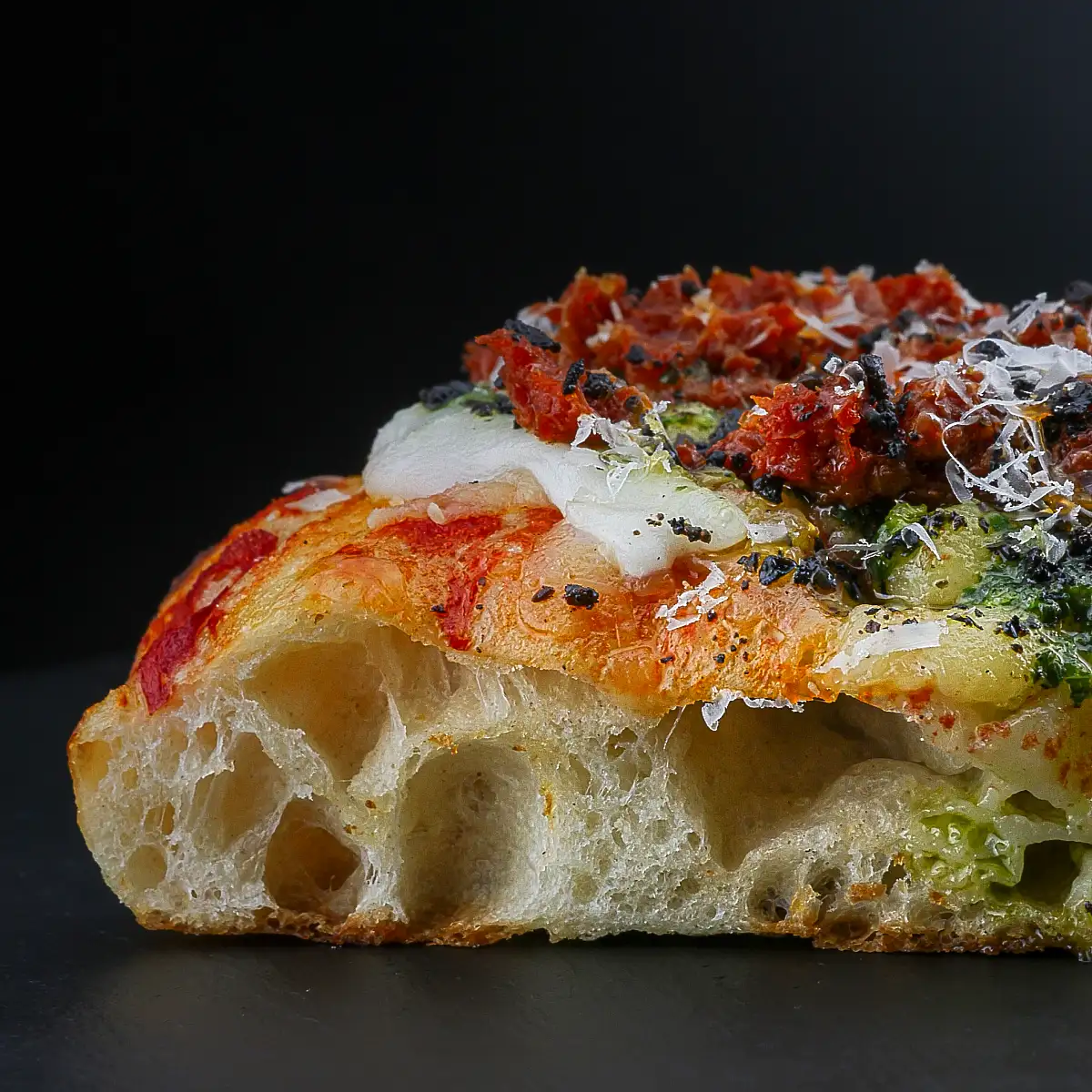
Let's think about the dough. An industrial pizza can satisfy hunger, but a dough crafted with patience completely changes the result. A long fermentation allows flavor, lightness, and a texture to develop that cannot be achieved by rushing. When a pizza spends 72 hours fermenting, it is not a technical detail to decorate the conversation: it is part of what gives the base character, makes the crust crunch when cut, and makes every bite feel more balanced.
The format also matters. The pizza romana in teglia, baked in a tray and served in square slices, proposes another way of understanding pizza. Its airy and crispy base supports toppings without losing structure. It doesn't need excesses to impress. It has presence, texture, and a personality that is recognized as soon as it comes out of the oven.
That is what a restaurant with a modern vision should look for: dishes that not only look good in a photo, but have a reason for being on the palate.
Roman pizza does not compete to be round
For years, the conversation about pizza was reduced to the same codes: round dough, high or thin crust, abundant cheese, and predictable combinations. But Italy is much broader than a single version of pizza. Rome has its own baking language, and pizza in teglia speaks that language with pride.
The key is in the contrast. Below, a firm and croccante base. Inside, a light crumb, with air and flavor. On top, ingredients that must complement the dough, not hide it. Each element has to arrive at just the right moment: a sauce with acidity, well-melted cheeses, textured vegetables, quality cured meats, or a fresh touch to finish bringing the whole thing together.
Roman pizza may seem simple at first glance. That is precisely its challenge. When there is nothing to hide, execution is everything. If the dough does not have the correct fermentation, it shows. If the baking is not precise, it shows. If the ingredients are not up to standard, that shows too.
That is why a well-made slice does not feel heavy or repetitive. It feels alive. It invites you to try another combination, to share, and to compare textures. It is ideal for an outing with friends, a couple's dinner, or a family gathering where everyone wants to try a bit of everything without resigning themselves to the usual.
Focaccia and schiacciata: the most irresistible side of Italian bread
The experience of a modern Italian restaurant should not stop at pizza, either. The baking tradition of Rome and Florence offers formats that deserve their own spotlight.
The stuffed focaccia is a direct invitation to eat with your hands and without unnecessary protocols. But doing it well requires much more than opening a bread and putting ingredients inside. The dough must have elasticity, good baking, and the right balance between interior softness and a golden surface. The filling must provide intensity without turning every bite into a mess.
The Florentine schiacciata, for its part, has a thinner presence and a texture that captivates from the first snap. It is Italian bread with attitude: crispy, light, and perfect for fillings that feel generous without losing elegance. In a market accustomed to repetitive sandwiches, finding such a proposal is a way to travel without leaving Costa Rica.
The technique is noticeable, even if it is not always seen
There is a part of cooking that happens far from the table: the resting time, the hydration of the dough, the temperature control, the selection of flours, and the precise reading of the oven. That part is silent, but it defines everything.
A slow-fermented dough is usually more complex in flavor and more pleasant to eat. However, it is not a magic formula either. It requires control, consistency, and a team that understands how each variable affects the result. More hours do not always mean a better pizza if the technique behind it is not cared for. The difference lies in using time with purpose.
There is also the matter of the product. A tomato must provide freshness and depth, not just color. The cheese must melt correctly without flooding the base. The meats, vegetables, and herbs must have a specific function. Real Italian cooking has a clear rule: a few well-chosen ingredients outperform a mountain of directionless toppings.
This precision is what turns a casual outing into a culinary experience. You don't need a formal table or a menu that is impossible to understand. You need intention. And when that intention is combined with a vibrant atmosphere, a powerful visual presentation, and attentive service, the meal becomes a conversation.
An experience designed for sharing
Italian food has something naturally social about it. It is split, passed, tasted, commented on. The square-format pizza boosts that energy because it invites everyone to assemble the table together. A slice of one combination, another of a more intense recipe, a stuffed focaccia in the center. Dinner stops being an individual decision and becomes a shared journey.
For the urban public looking for different places, this is worth a lot. It is not just about finding a nice place or a hearty dish. It is about choosing a place with a narrative, with a clear proposal, and with something to talk about afterward. How was the dough? Why was it so crunchy? Which combination surprised the most? Those kinds of questions are the sign that the experience worked.
In San Pablo de Heredia, Bianka® Pizza Romana proposes precisely that specialized look: pizza romana in teglia, stuffed focaccia, and schiacciata with an identity that does not try to look like the usual pizzeria. It is a bet on the less obvious Italian tradition, executed with technique and presented with energy.
Choosing well is also part of the flavor
Not every occasion calls for the same thing. If the priority is to sort out a quick, familiar meal, a conventional option can do the job. But if the idea is to celebrate, discover, or simply treat yourself to something with personality, it is worth looking for a proposal that works from the roots up: good dough, precise baking, and ingredients that have something to say.
A modern Italian restaurant does not need to promise a futuristic version of Italy. It needs to do justice to its crafts, its breads, and its regional flavors, with a contemporary outlook. Real novelty does not come from inventing for the sake of inventing. It comes from serving a pizza that actually crunches, a focaccia that is remembered, and an experience that makes someone say, without thinking too much: che buono.
Next time you want a pizza, do not just stop at the question of what ingredients it has. Ask how the dough is fermented, what style it represents, and what texture it promises. That is where a better dinner begins.