Sep 28, 2026
Pizza al taglio review: what should stand out
A pizza al taglio review should not be limited to saying whether a slice "tastes good." The real test happens when the first square of pizza is lifted, that delicate crack is heard at the base, and the crumb retains lightness under generous toppings. That is where the difference begins between just any pizza cut into rectangles and a Roman experience made with technique.
Pizza al taglio is sold by the slice, yes, but it is not fast food without history. It is an urban tradition of Rome: a dough stretched in a teglia, baked until it reaches a croccante and airy base, displayed in a showcase and cut to the size that each person wants to eat. It seems simple. Executing it well is another matter.
What a pizza al taglio review should look at
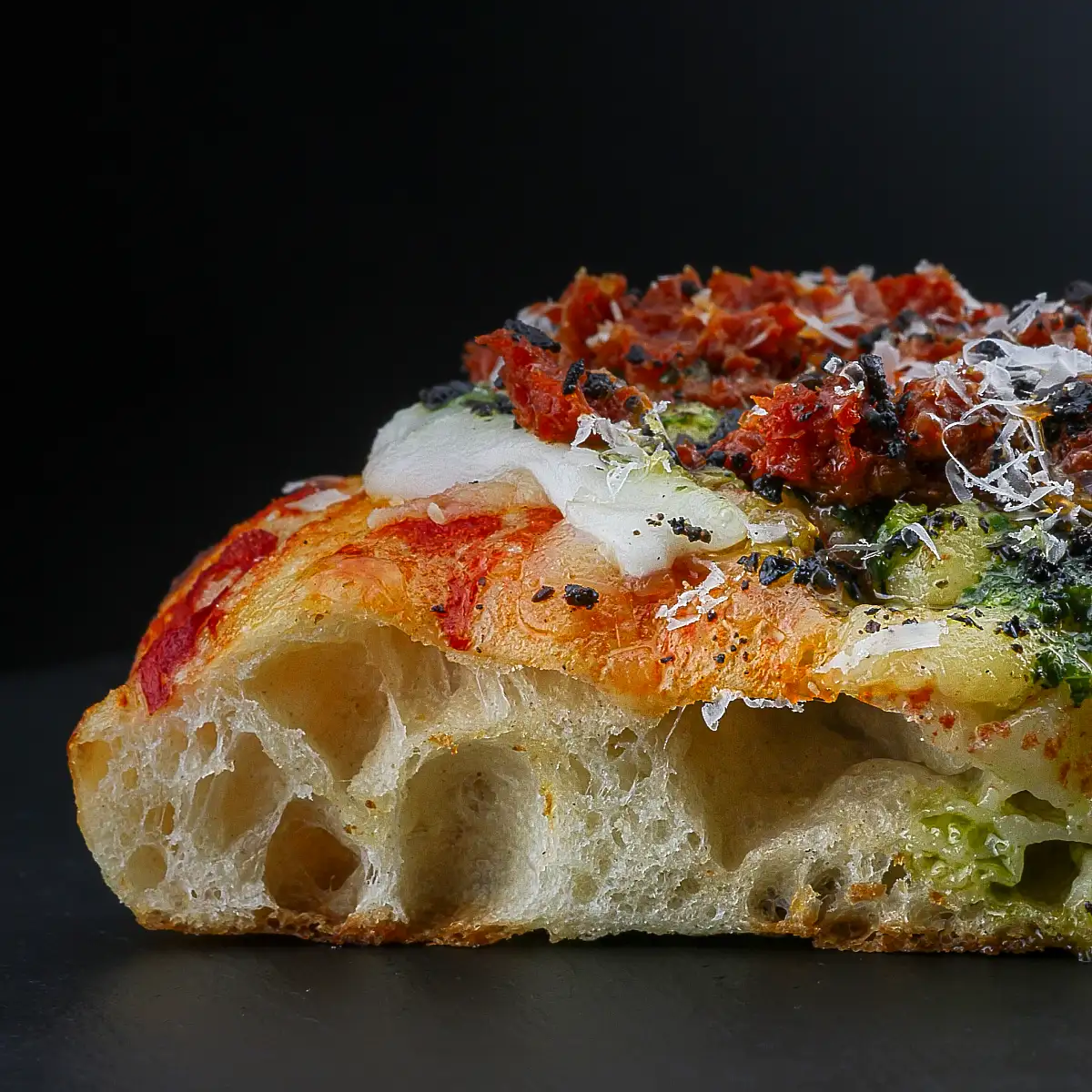
The first question is not how many toppings it has. It is what happens with the dough. A memorable pizza al taglio has a firm, golden, and crispy base, capable of being held in the hand without bending or feeling heavy. But the inside should tell another story: visible alveoli, balanced moisture, and a light bite that invites you to keep going.
That contradiction is the heart of the product. Croccante on the outside, soft and alive on the inside. When the dough is dense, dry, or too bready, it may fill you up, but it does not convey the character of a well-crafted Roman pizza. When it is too soft, the toppings overwhelm it and the slice loses its structure. The right spot requires time, temperature, and craftsmanship.
A long fermentation is usually a great sign, though not an automatic guarantee. 72 hours, for example, allows for the development of flavor and a more open texture if timing and hydration are managed well. It is not about using a number as menu decoration. It is about the dough arriving at the table with aroma, depth, and a gentler digestion.
The base must have personality
In a good slice, the crust is not a flavorless air filling or a hard crust left on the plate. It must be toasted, thin, and fragrant. The bottom needs to crunch decisively, especially if the pizza has wet toppings like tomato, mozzarella, mushrooms, or roasted vegetables.
Thickness also matters. Pizza al taglio does not seek to imitate a round Neapolitan pizza nor turn into a heavy focaccia. It has its own format: rectangular, generous, with enough height to express its crumb and with a base that maintains control. That balance is part of what makes ordering "just one more slice" so addictive.
Ingredients: fewer poses, more flavor
An honest review of pizza al taglio should evaluate the quality of the ingredients both separately and together. A bright tomato sauce, with pleasant acidity and natural sweetness, can elevate an otherwise classic recipe. A well-distributed mozzarella should melt without turning the slice into an oily layer. The cheese has to accompany, not erase the work of the dough.
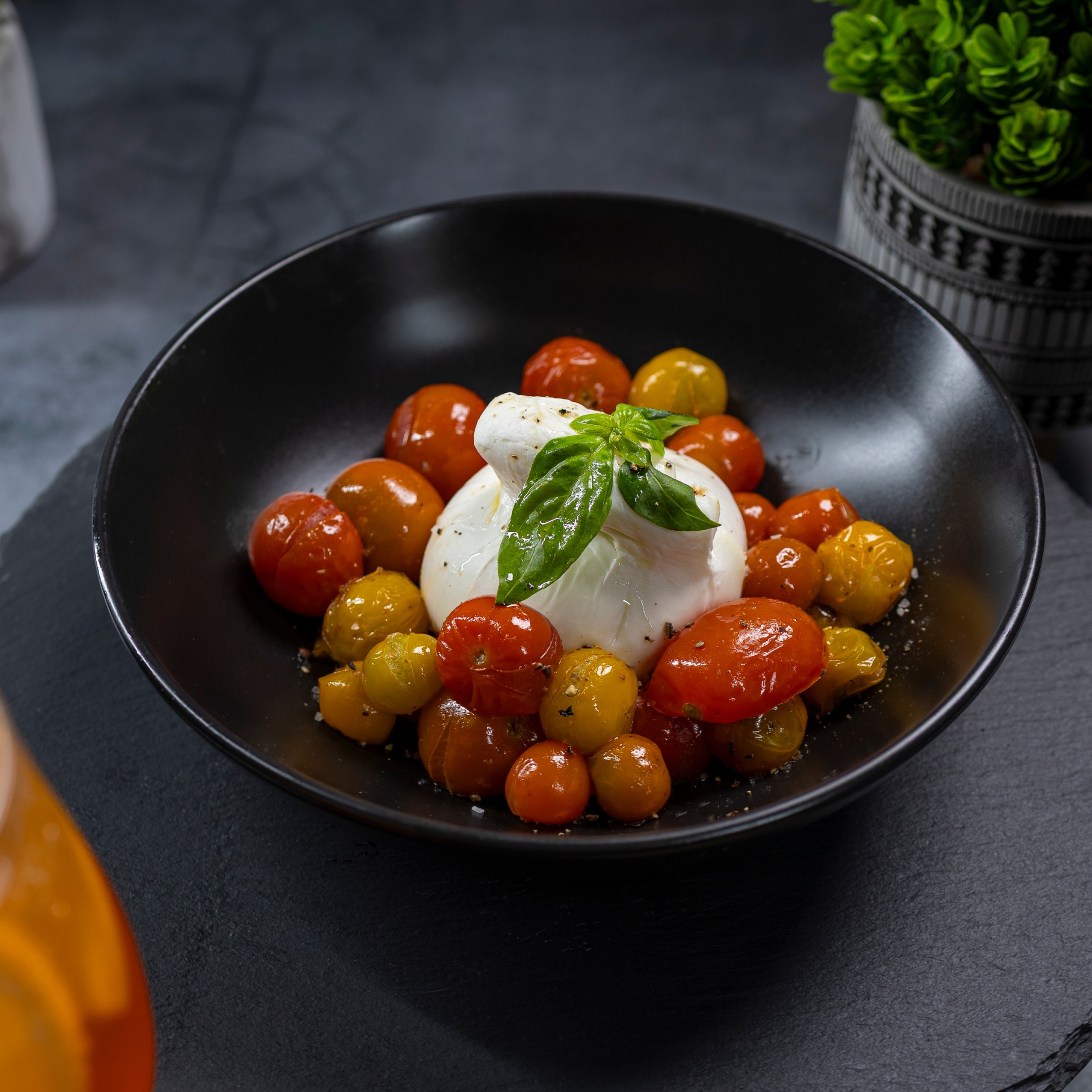
The most creative combinations also deserve discernment. Potato, rosemary, and mozzarella can be spectacular if the potato is well cooked and the rosemary appears as an aroma, not a punishment. Mortadella, pistachio, and burrata call for contrast: salt, fat, freshness, and a crunchy touch. Seasonal vegetables should arrive roasted, vibrant, and with intent, not as an obligation to complete the menu.
Excess is one of the most common mistakes. A loaded pizza can look amazing in a photo, but if the toppings drown the base or release too much moisture, the experience falls apart. The best Roman pizza knows how to edit. Each ingredient has a place, a temperature, and a function.
Temperature and cut: details that change everything
Pizza al taglio is enjoyed freshly baked or precisely reheated. If it arrives lukewarm, the base loses its magic. If it is too hot, the flavors hide and the cheese can feel heavy. A well-served slice has enough heat for the aroma to open up, without burning or sacrificing texture.
The cut also speaks of the place. It should be clean, proportional, and suitable for sharing or eating on the go. There is no single measurement: some people want to try several recipes; others prefer a hearty slice for lunch. What matters is that the cut respects the composition of the pizza and does not leave one person with only crust and another with all the burrata.
The menu should invite you to try more than one recipe
Part of the charm of pizza al taglio is the possibility of putting together a personal tasting. A slice of marinara can show the quality of the dough and the sauce. One with cheese and cold cuts reveals how the place handles the oven. A seasonal option shows whether the kitchen has imagination beyond the classics.
That is why a good menu needs contrast. There must be recognizable recipes for those arriving on a craving and bolder proposals for those looking to discover. It is also wise to include vegetarian alternatives that are truly desirable, not a scaled-down version of the others. In this format, ordering three or four flavors to share is not indecision: it is the correct way to explore the showcase.
Schiacciata and stuffed focaccia can complete the experience if they maintain the same technical standards. They are not accessories. They are part of an Italian baking tradition where the dough is the protagonist and each filling must make sense. When well made, they expand the visit and give the customer a reason to return with another combination in mind.
Atmosphere, service, and real value
A review of pizza al taglio should also look at what happens before and after the bite. The showcase should whet the appetite: well-presented slices, fresh colors, golden doughs, and a selection that looks cared for. The staff should be able to explain what is in each recipe, guide on quantities, and recommend combinations without complicated speeches.
Value is not measured solely by the price of a slice. It is measured by the quality of the product, the technique behind the dough, the balanced generosity of the ingredients, and the feeling of having tried something different from the generic pizzeria. A premium pizza must justify its place from the very first bite, not from a promise written on the wall.
In San Pablo de Heredia, Bianka® Pizza Romana bets on that difference with pizza in teglia, 72-hour fermentation, and a proposal that celebrates Roman formats uncommon in Costa Rica. It is not about competing to look like everyone else. It is about bringing a square, croccante slice with identity to the table.
How to know if it is worth returning
The clearest sign is simple: you finish the slice satisfied, but with curiosity. You want to try another flavor, return with friends, or bring someone who still believes all Italian pizza is round. You do not just remember the cheese or the trendy topping. You remember the crunch, the scent of the dough, and that precise combination that made a casual meal feel special.
The next time you find pizza al taglio, ask for variety, look at the base, and bite without rushing. If the dough crunches, breathes, and holds ingredients with character, you found much more than a slice. Che buono.