Oct 2, 2026
Roman bakery trends that are setting the craving
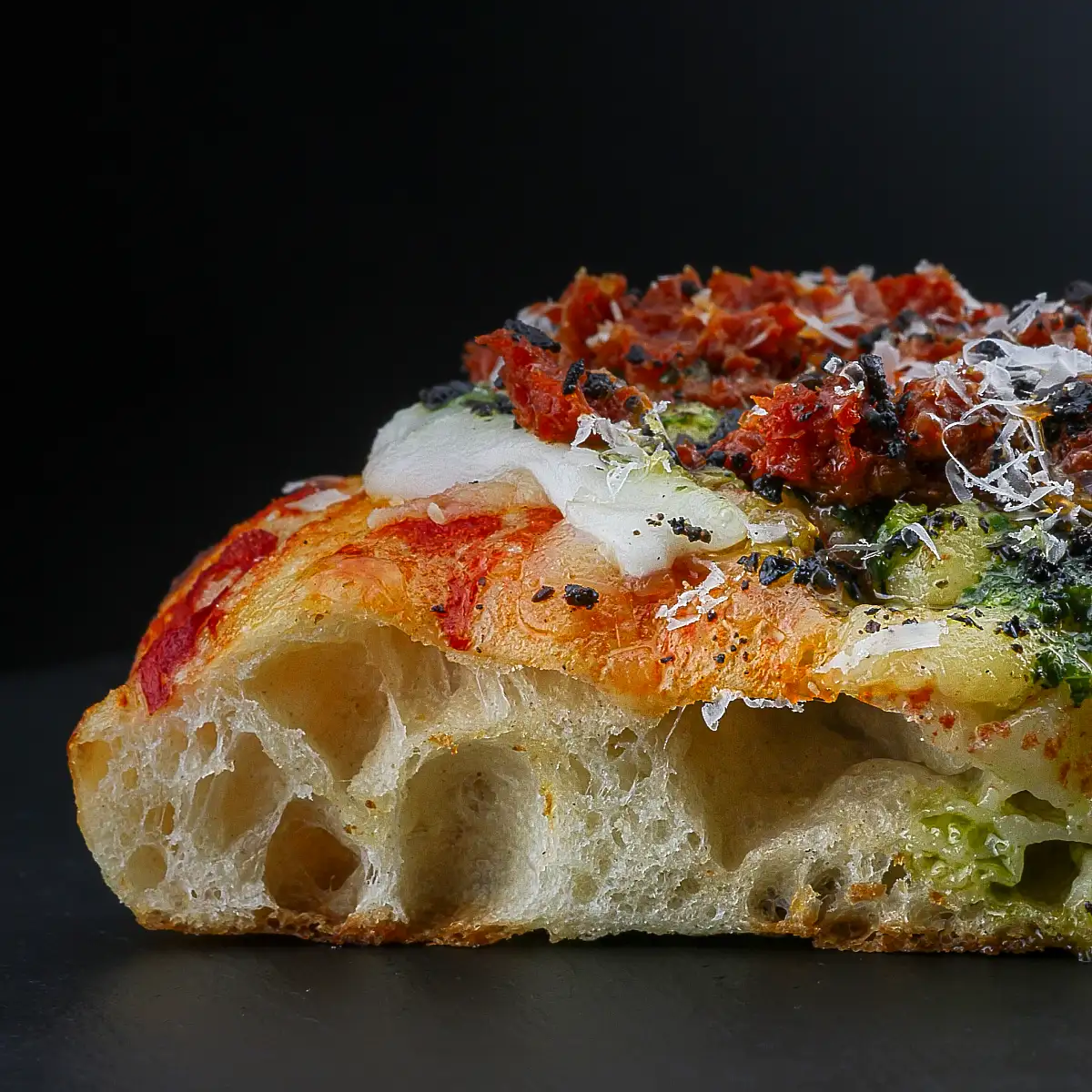
The first sign is in the slice: a rectangular, golden base with edges that truly crackle and a light crumb that supports ingredients without giving up. Roman bakery trends are not chasing a larger or more loaded pizza. They are chasing something much more interesting: dough, technique, and texture with personality.
For those who are already tired of generic pizza, Rome offers a powerful answer. Pizza in teglia, focaccia, and schiacciata put bread at the center of the experience. Not as an accompaniment, but as the protagonist. Every bubble, every croccante layer, and every well-crafted fermentation tell a story that is felt from the first bite.
The dough is no longer just a detail
For years, the conversation around pizza was reduced to toppings. More cheese, more meat, more combinations. Roman bakery changes the focus. Here, the question is not only what is on top, but what is happening underneath.
A long-fermentation dough develops flavor, aroma, and a much more interesting structure. Fermentations of up to 72 hours are not a decorative phrase on a menu: they require time, control, and craftsmanship. The result can be a more airy dough, with a firm crust and a light bite, far from that heavy feeling left by a pizza made in a rush.
That does not mean that every long-fermentation dough is automatically superior. Flour, hydration, temperature control, and baking matter just as much as the hours. But when the technique is well executed, the difference is immediate: a base that crackles, a crumb with air pockets, and a flavor that does not need to hide under an excess of ingredients.
Pizza in teglia: the square shape that changed the conversation
Roman pizza romana in teglia is baked in a pan and served in rectangular slices. Its appearance is unmistakable: a tall, light, and crispy base, designed to hold fresh, classic, or intense combinations without losing texture.
This is one of the strongest Roman bakery trends because it responds to how we eat today. It can be shared with friends, ordered in various combinations, and allows for trying more than one flavor at the same table. It is visual, practical, and deeply satisfying. It also has that photogenic factor that turns a casual outing into a plan.
The square shape is not a simple aesthetic novelty. It affects the baking, the heat distribution, and the type of bite. In a good teglia, the bottom has a croccante character, while the interior retains elasticity and air. That contrast is the signature.
Stuffed focaccia: more layers, more intention
Roman focaccia is living a special moment because it goes beyond flatbread with olive oil and salt. Stuffed, warm, and generous, it becomes a complete meal with a much more refined identity than a conventional sandwich.
The trend is in working with clear and well-balanced fillings. Mortadella, Italian cheeses, roasted vegetables, cured meats, pesto, or seasonal ingredients can shine when the dough has the right texture. The goal is not to pile products without measure. It is to make sure each layer contributes something: creaminess, saltiness, freshness, acidity, or contrast.
Stuffed focaccia also adapts to different moments. It can be a quick lunch between meetings, a light dinner, or the center of a table to share. It depends on the filling and the hunger, of course. What does not change is the value of a well-made dough, capable of supporting the concept without overshadowing its flavors.
Schiacciata: the Italian bread waiting to be discovered
Among the Roman and Florentine bakery trends awakening curiosity, the schiacciata deserves attention. It is a bread with a thinner profile, a crispy surface, and a pleasantly soft interior. Its name refers to the idea of crushing or pressing the dough, although its result is far from flat in flavor.
In Florence, schiacciata is part of an everyday bakery culture. It is stuffed, shared, and eaten without complications, but with ingredients that matter. That mix of informality and precision is exactly what makes it attractive to a new generation of diners in Costa Rica.
Its greatest virtue is contrast. A delicately croccante crust, a clean cut, and fillings that feel more defined thanks to a lighter base. It does not seek to compete with round pizza. It plays a different game, with a different rhythm and another personality.
Less excess, more product
Another clear sign is the return to combinations that respect the ingredient. Italian cuisine has always understood that three or four excellent elements can say more than ten ingredients without order. In Roman bakery, this idea gains strength.
Good-tasting tomato, correctly used mozzarella, a cheese cream, mushrooms, seasonal vegetables, cured meats, or a touch of herbs can build a memorable slice. The key lies in the proportion. If everything competes, nothing stands out.
This does not mean there is no room for bold proposals. There is. Spicy flavors, cheese combinations, intense vegetables, and generous fillings can work very well. But the dough must remain recognizable. When a pizza in teglia loses its croccante or a focaccia becomes wet and heavy, the technique has stopped leading.
The experience is also to be eaten
The rise of these formats is not just due to flavor. It also responds to a search for experiences with identity. The urban public wants places that have something to say: a specific technique, an unusual format, a clear aesthetic, and a product that cannot be easily replicated in any chain.
In San Pablo de Heredia, Bianka® Pizza Romana brings that vision to the table with pizza romana in teglia, stuffed focaccia, and schiacciata crafted from Italian baking tradition. It is not about dressing up a conventional pizza with Italian words. It is about respecting the fermentation times, the baking, and the texture that make this style special.
For a date night, a meal with friends, or a craving that deserves something better, these formats have a real advantage: they share well. Ordering several slices allows for contrasting flavors, discovering favorites, and turning the table into a small tasting. Che buono.
What to look for when trying Roman bakery
Texture is the best starting point. A well-baked base should sound slightly when cut and feel firm on the outside, without being dry or hard. The crumb should have air and springiness, not a gummy density. The ingredients should accompany the dough, not hide it.
It is also worth looking at the edge and the bottom. If they are pale, soft, or greasy, it probably lacked temperature, time, or balance. Conversely, a good golden brown does not mean burnt: it should provide a toasted flavor and that croccante that invites another bite.
Finally, try more than one format. If you like a rectangular pizza, follow up with a stuffed focaccia. If you usually order a sandwich, try a schiacciata. The grace of this trend lies precisely in discovering that Italian baking has much more to offer than just one form of pizza.
Next time the craving calls for something Italian, choose with curiosity. Look for the crust that crackles, the dough that took its time, and a cut that promises texture before reaching the table. That is where a Roman experience worth repeating begins.