Apr 21, 2026
Schiacciata vs. traditional sandwich
There is a difference you notice from the very first bite. When we talk about schiacciata vs. traditional sandwich, we are not just comparing two ways of eating bread with filling. We are comparing technique, texture, identity, and the level of experience on the plate.
For anyone who is already tired of the generic sandwich with soft bread, heavy sauce, and a filling with no character, schiacciata comes in with a different attitude. Crispier, lighter in feel, more focused on the balance of each ingredient. It is a proposal that does not try to look like everything else. And that is its charm.
Schiacciata vs. traditional sandwich: the real difference
A traditional sandwich is usually built from practicality. Two slices of bread or a roll, protein, cheese, vegetables, some sauce, and that’s it. It works, yes. It solves hunger, too. But it often prioritizes volume over texture and filling over bread.
Schiacciata plays in another league. It comes from an Italian baking tradition where the dough is not just a simple vehicle. It is the star. Its structure, its fermentation, and its baking matter just as much as what it carries inside. The result is not just a stuffed bread, but a complete piece, designed so that every layer makes sense.
In simple terms, the traditional sandwich is usually soft, quick, and familiar. Schiacciata is crunchy, artisanal, and much more expressive. One option does not always replace the other. It depends on what you want to eat. If you’re looking for familiar comfort, the sandwich does the job. If you want an experience with more character, schiacciata has the edge.
The bread changes everything
The most obvious difference is in the base. In a traditional sandwich, the bread often plays along without standing out. It can be soft, fluffy, or neutral. At best, it adds something. At worst, it disappears behind the sauces or gets soggy too quickly.
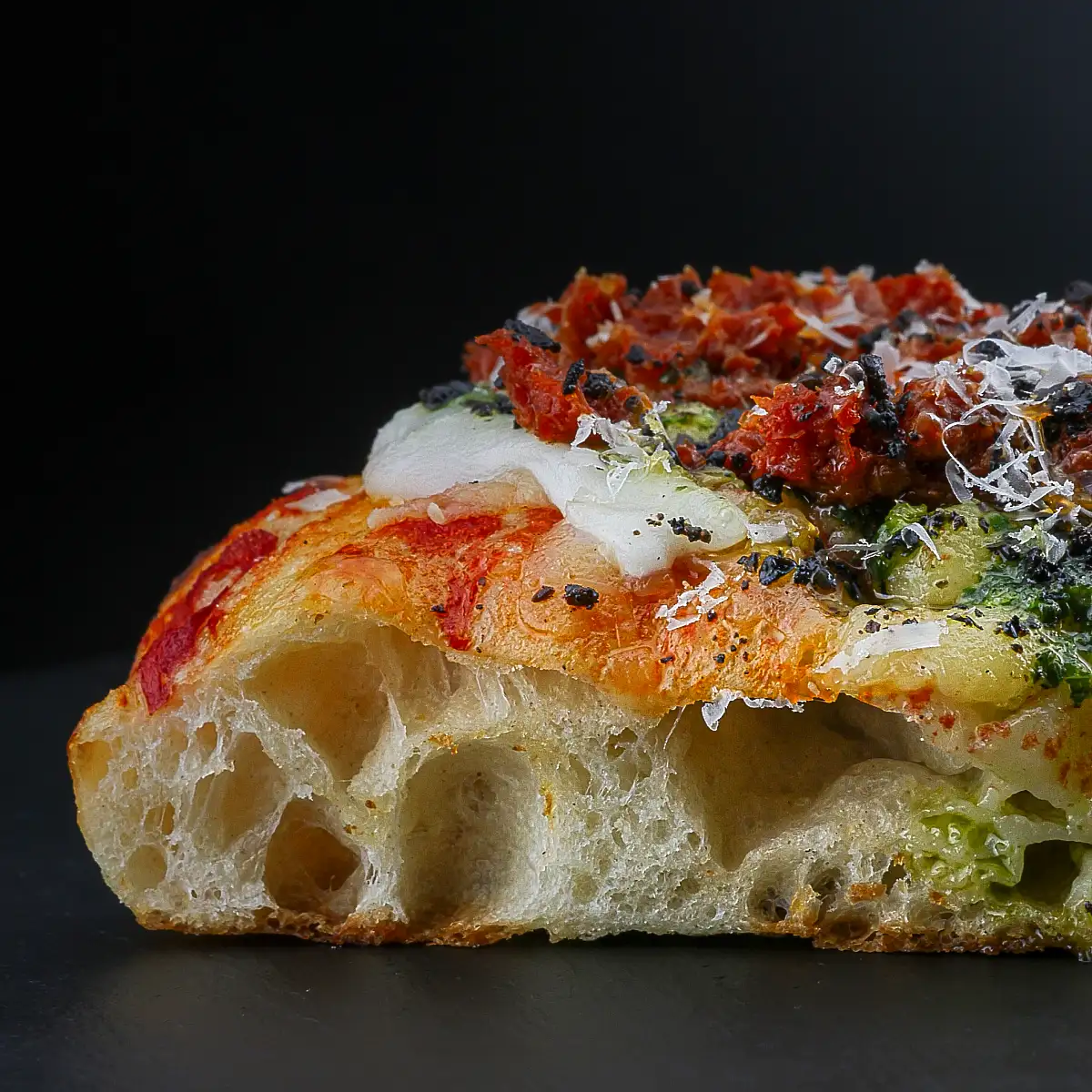
With schiacciata, that almost never happens. The dough has personality. Its exterior tends to be firm and crunchy, while the inside retains air, elasticity, and structure. It does not break easily, it does not turn into a mush in your hand, and it does not need an excess of dressings to feel interesting.
That contrast in textures completely changes the experience. There is sound when you bite. There is resistance. There is a cleaner, more clearly defined sensation in the mouth. For an audience that values artisanal product and real technique, that detail matters a lot.
In addition, fermentation makes a difference that you do not always see, but you can feel. A well-worked dough develops its own flavor, better digestibility, and a more refined texture. That’s why schiacciata can feel lighter even when it is generously filled. It is not magic. It is craftsmanship.
Filling: quantity or intent
Many traditional sandwiches go for excess. More sauce, more cheese, more cured meat, more volume. That formula can be indulgent, but it does not always achieve balance. Sometimes everything tastes the same and the bite ends up feeling heavy.
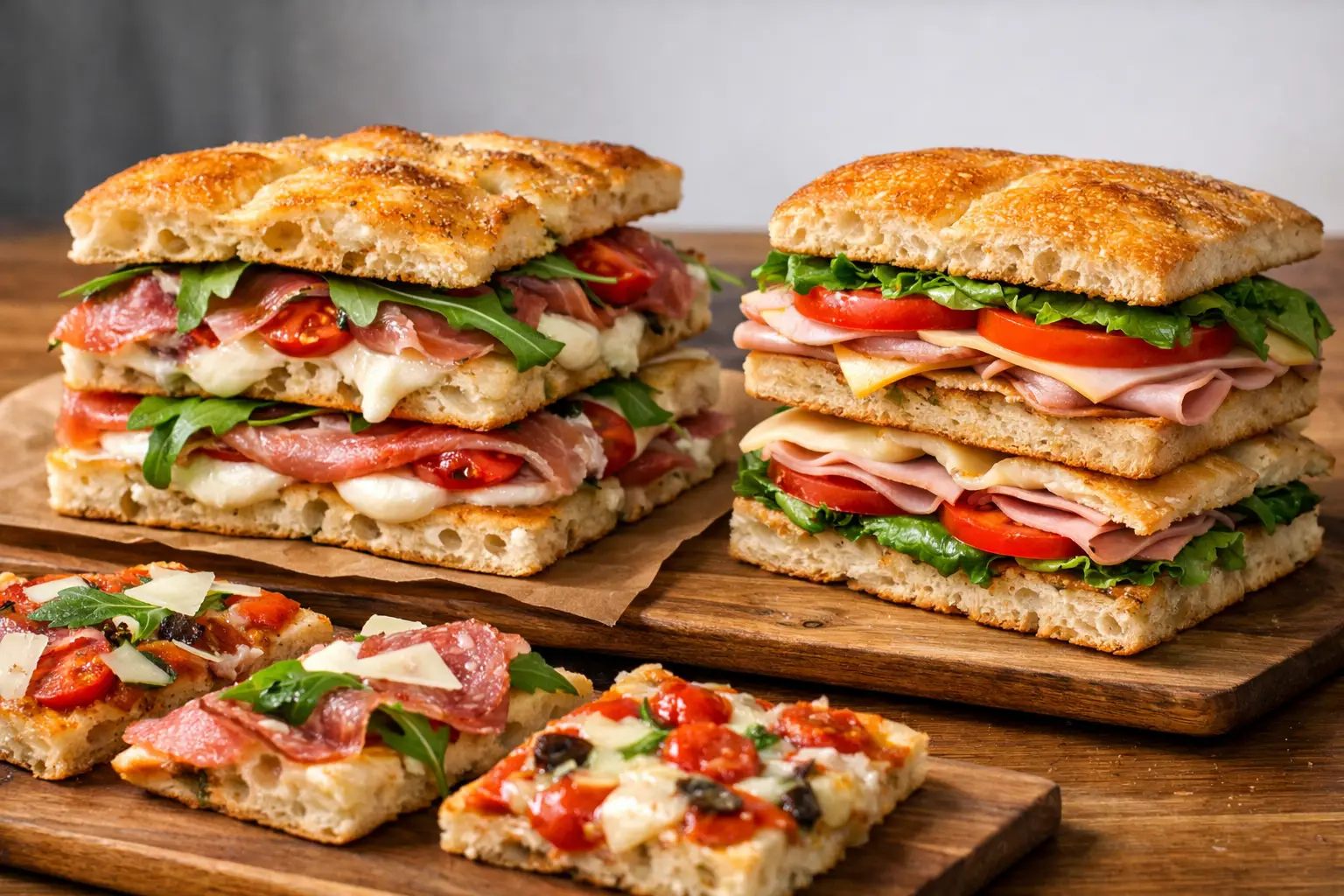
Schiacciata, when it is well made, usually takes another route. The filling is not meant to cover the dough, but to dialogue with it. The ingredients are chosen to create contrast and harmony. A well-cured prosciutto, high-quality mortadella, creamy stracciatella, fresh vegetables, olive oil, some cream or pesto made with intention. Less saturation, more precision.
That does not mean schiacciata is small or timid. It means that each component has a role. The bread supports, the fillings shine, and nothing competes in a chaotic way. It is a more gastronomic experience and a less improvised one.
For those who enjoy trying things with a clear identity, that matters. A lot. Because it is not just about getting full. It is about eating something that feels special.
Schiacciata vs. traditional sandwich in texture and bite
If this comparison had to be summed up in one word, it would be texture. The traditional sandwich usually moves in a more uniform zone: soft bread, soft filling, melted cheese, creamy sauce. Tasty, yes, but linear.
Schiacciata has more sensory layers. Crunchy on the outside, airy on the inside, creamy in some fillings, fresh in others, with ingredients that keep their character. Every bite changes a little. That makes eating it more entertaining and much less flat.
Temperature also plays a role. A traditional sandwich often depends a lot on being served hot to stand out. Schiacciata can better maintain its personality even when it is not fresh out of the oven, because its structure and dough already have enough presence.
That detail makes it especially attractive for those looking for something practical but with quality. A quick lunch can still feel premium if the product is well executed.
The cultural experience also matters
Here we come to a point that is often overlooked. A traditional sandwich is universal, everyday, and easy to recognize. That has value. It is convenient, accessible, and part of almost anyone’s routine.
Schiacciata, on the other hand, brings a different story. It has Italian roots, a baker’s craft, and an aesthetic that connects with a more thoughtful way of understanding casual food. It is not an invention meant only to look pretty in a photo, although it is photogenic. It is a preparation with tradition behind it.
And that adds a lot for an audience that wants to discover new offerings, with origin and real substance. Eating a schiacciata does not feel like ordering the usual. It feels like stepping into a more specialized category, more authentic, more memorable. Che buono.
In Costa Rica, where for years the market had gotten used to more generic offerings, that difference weighs even more. The novelty is not just in the name. It is in the product.
So which is better?
It depends on what you are looking for.
If you want something familiar, quick, and with no major expectations, the traditional sandwich still has its place. It is practical, familiar, and does the job when you just need to solve a meal.
But if you value texture, fermentation, dough quality, and a combination of ingredients with more intention, schiacciata offers much more. Not just for flavor, but for the full experience. It feels more artisanal, more carefully made, and more aligned with a gastronomic consumption that many people seek today: less generic, more authentic.
There is also a question of occasion. A traditional sandwich is usually functional. Schiacciata can be functional and aspirational at the same time. It works for lunch, sharing, trying something different, or turning a casual outing into a small everyday luxury.
That is where its strength lies. It does not compete on hunger alone. It competes on desire.
Why schiacciata is gaining ground
It is no coincidence that more and more people are looking for less obvious and more specialized Italian formats. There is a clear change in what many people expect when they go out to eat. It is no longer enough for something to be abundant. It has to have history, technique, texture, and personality.
Schiacciata responds perfectly to that search. It has visual presence, yes, but also substance. It does not depend on a marketing trick. Its value lies in the product itself.
For an urban, foodie, and curious audience, that connects immediately. Especially when there is already some fatigue with repeated options that promise a lot and deliver little. Schiacciata comes in fresh, different, and with identity. And when it is well made, you can tell from the very first bite.
That is why, in an honest comparison of schiacciata vs. traditional sandwich, the point is not to declare a universal winner. The point is to understand that they do not play with the same ambition. One solves. The other proposes.
If you like eating with intention, noticing real fermentation, feeling the crunch, and discovering a more refined version of stuffed bread, you probably already know the answer. And if you still have not tried it well made, there you have the perfect excuse to change your routine for something with more character, more craftsmanship, and much more flavor.