Apr 17, 2026
Square vs. round pizza: which should you choose
There is a difference you notice from the moment the pizza reaches the table: one gets shared out of habit, the other gets talked about. When we talk about square vs. round pizza, we are not comparing just a shape. We are talking about texture, technique, baking, and how the whole pizza-eating experience changes completely.
The round pizza has earned a place in almost everyone's imagination. It's the immediate reference, the classic one, the one many people associate with a casual night with friends. But square pizza, especially when it comes from a well-executed Italian tradition, offers something more specific, more artisanal, and much more interesting for someone who truly enjoys eating attentively.
Square pizza vs. round pizza: the difference isn't aesthetic
Saying the only difference is the shape is to stay at the surface. Geometry does matter, but what really changes is what happens in the dough, in the baking, and in the bite.
The classic round pizza is usually thought of for individual consumption or sharing in triangular slices. It has a simple logic: softer center, visible crust, even baking if it's well made. It's an iconic, practical, and familiar format.
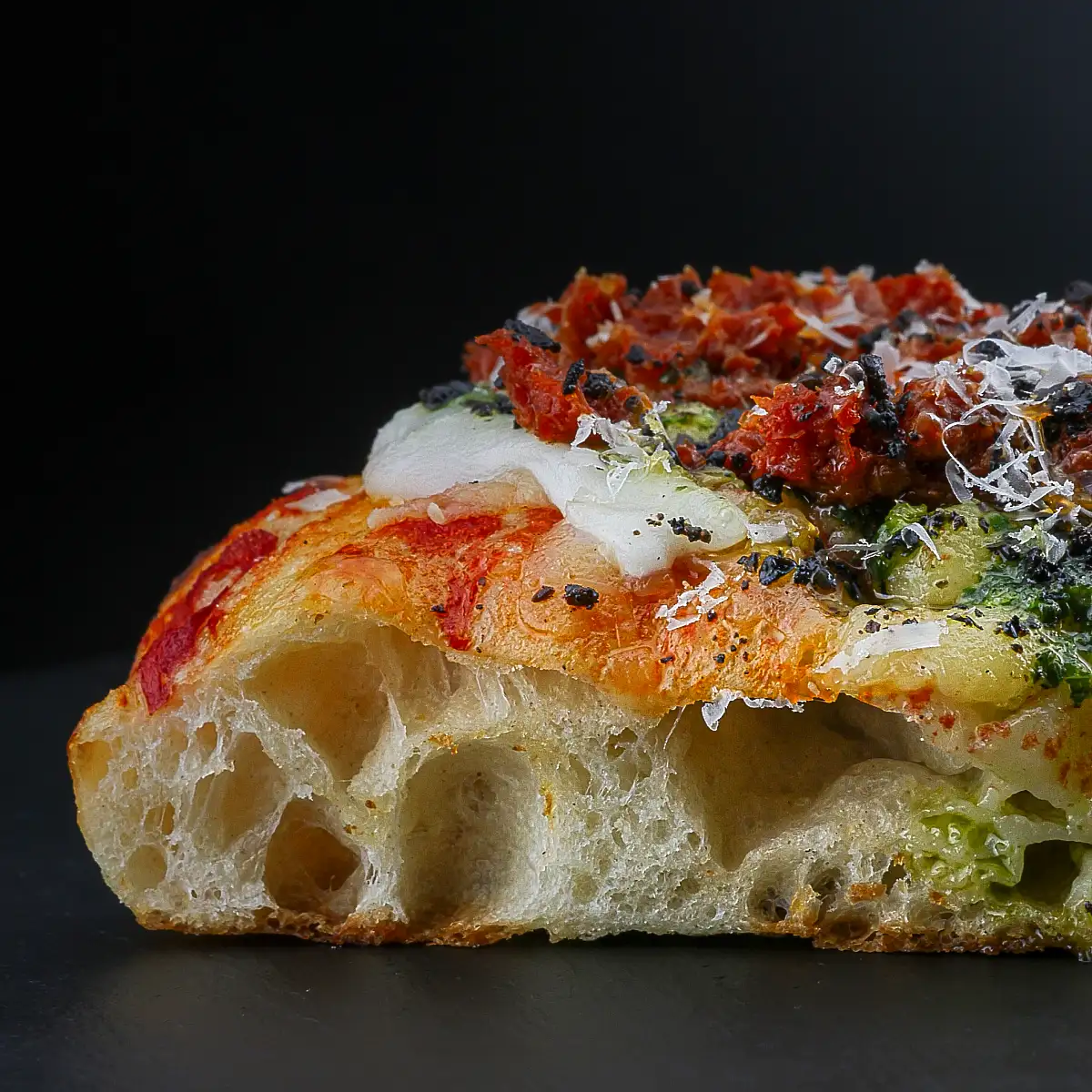
The square pizza, by contrast, responds to another tradition. In the case of the Roman tray-baked pizza, it comes from a baking technique. It's baked in a tray, made with high-hydration doughs and long fermentations, and the result points to something very specific: a base that's light inside, crispy outside, and with enough structure to hold quality ingredients without becoming heavy.
That's the real conversation. It's not round versus square as if it were just a visual gimmick. It's a pizza designed from the dough versus a pizza that is often judged more by habit than by technique.
What changes in the dough
If you're someone who pays attention to texture before size, this part says it all. Traditional round pizza can range from a very thin base to fluffier versions, depending on the style. Its great virtue is versatility. The problem is that under the same label, everything fits, from a good artisanal pizza to more generic options where the dough only serves as support.
The Roman square pizza plays in another league. Its identity is much more tied to a specific process. Long fermentation, careful handling of the dough, and a bake that seeks real contrast between the inside and the outside. It doesn't feel dense or gummy. It feels airy, light, and crispy at the same time.
That also changes digestibility. A well-fermented dough tends to feel lighter, less harsh, and cleaner on the palate. It doesn't work magic, of course, but it does mark a clear difference compared with pizzas made with shorter processes and heavier results.
Baking defines the result
Here the comparison of square vs. round pizza becomes even more interesting. The shape of the mold or tray doesn't just organize the pizza. It also affects how heat circulates and how the base develops.
In round pizza, especially when made directly on stone or a hot surface, the bake favors a well-defined crust and a center that can vary a lot depending on the style and the hand of the pizzaiolo. When it comes out well, it has balance. When it doesn't, it can end up with a weak base in the center or with an uneven texture from slice to slice.
Square pizza in a tray allows a much more focused bake on the crispness of the base. That's one of the reasons it is so appealing to those who enjoy a pizza with character. Each slice maintains structure. It doesn't fold without control. It doesn't get soggy so easily. And that elegant resistance makes each ingredient feel more clearly defined.
In simple terms: round pizza often prioritizes visual tradition; square pizza, when well made, prioritizes the performance of every bite.
The dining experience also changes
Not every pizza is eaten the same way, nor shared the same way. Round pizza is designed for the classic division into triangular slices. It works, yes. But it also conditions the experience. Some people fight over the crust, some prefer the center, and some end up with a less stable slice if the pizza comes very loaded.
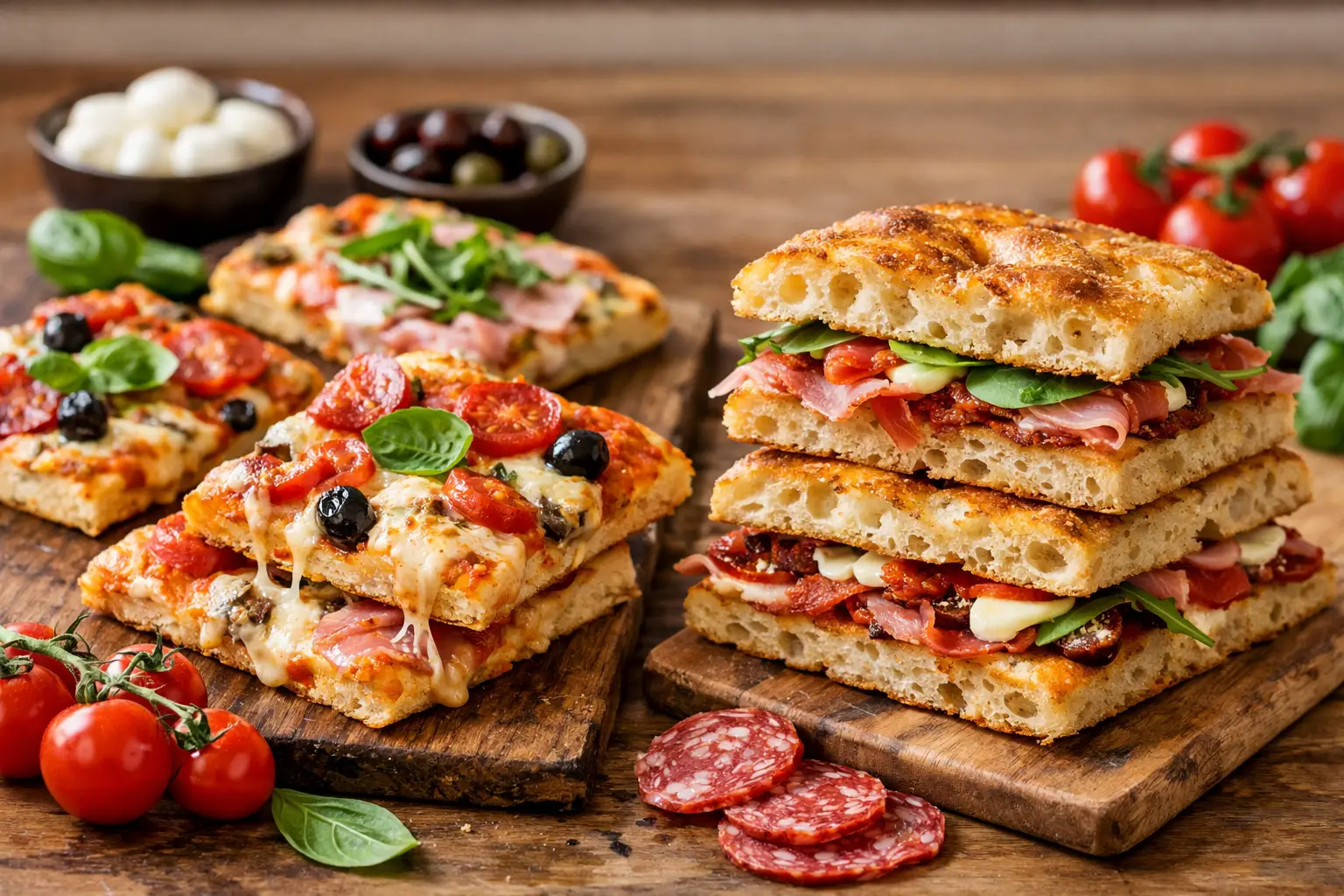
Square pizza divides differently. Its cuts tend to be more uniform, more comfortable for sharing, and more practical if the idea is to try several flavors. That makes it very powerful for group outings, tables that want to talk while they eat, and people who enjoy ordering with curiosity instead of sticking to the usual.
There's also a detail that isn't said often enough: square pizza lends itself better to a premium presentation. It looks clean, orderly, photogenic, and contemporary. And yes, that matters. Especially for an audience that values the complete experience, from the first glance to the last bite.
Ingredients: when they shine most
A pizza is not defined only by the dough, but the dough does decide how much its ingredients stand out. On a traditional round pizza, the spotlight is usually shared among sauce, cheese, and toppings, with a crust that acts as the signature of the style. It's an effective structure, but not always the most refined for highlighting more delicate combinations or premium products.
The square, especially in the Roman style, offers a more neutral base in the best sense. It has personality, but it doesn't take over. Its crispness, lightness, and structure allow ingredients like mortadella, burrata, prosciutto, roasted vegetables, or stuffed focaccias inspired by Italian baking to come through more clearly.
That makes it ideal for a more specialized offering. It doesn't just aim to fill you up. It aims to impress. It aims for the diner to notice layers of texture, contrasts in temperature, and real quality in every component.
So, which is better?
The honest answer is: it depends on what you want to eat.
If you're looking for a classic pizza, familiar and without much surprise, round pizza does the job. It has tradition, it has familiarity, and it remains a valid option when what you want is something straightforward.
But if what you want is a more current, more artisanal experience, and one more connected to a less mainstream Italian tradition, square pizza has a clear advantage. It feels more specialized. More thought out. More memorable.
It's not a trend. It's another pizza language.
And for an audience that no longer settles for a generic pizzeria, that matters a lot. Because today, eating pizza also means choosing a proposal with identity. A well-crafted dough. A texture that truly surprises. A format that doesn't look repeated on every corner.
Square vs. round pizza in Costa Rica
In Costa Rica, round pizza is still the norm. So for many people, the first reaction to a square pizza is to think that only the presentation changes. But once they try an authentic version, well-fermented and truly crispy, the difference becomes obvious.
That's part of the charm. Square pizza doesn't compete on nostalgia. It competes on sensory quality. It speaks to whoever wants to try something truly different, not a superficial variation. It speaks to the foodie, to the couple looking for a more stylish outing, to the group of friends who prefer sharing something worth talking about, and to anyone who has already understood that a good dough can elevate everything.
That's why a proposal like Bianka® Pizza Romana draws so much attention in San Pablo de Heredia. It doesn't come to copy what has always been done. It comes to defend a specialty with technique, 72-hour fermentation, and a more precise Italian identity. So good.
The best choice is the one that makes you want to come back the most
If round pizza is the familiar reference, square pizza is the one that reminds you there is still a lot to discover within Italian cooking. Not everything fits into the traditional mold, and thank goodness for that.
Sometimes the best pizza isn't the most famous or the most common. It's the one with a crust that crackles when you bite into it, a texture that stays in your memory, and a personality that doesn't need to resemble anyone else's. If that's what you're looking for, you already know where to start.