May 13, 2026
Stuffed focaccia vs. panini: which should you choose?
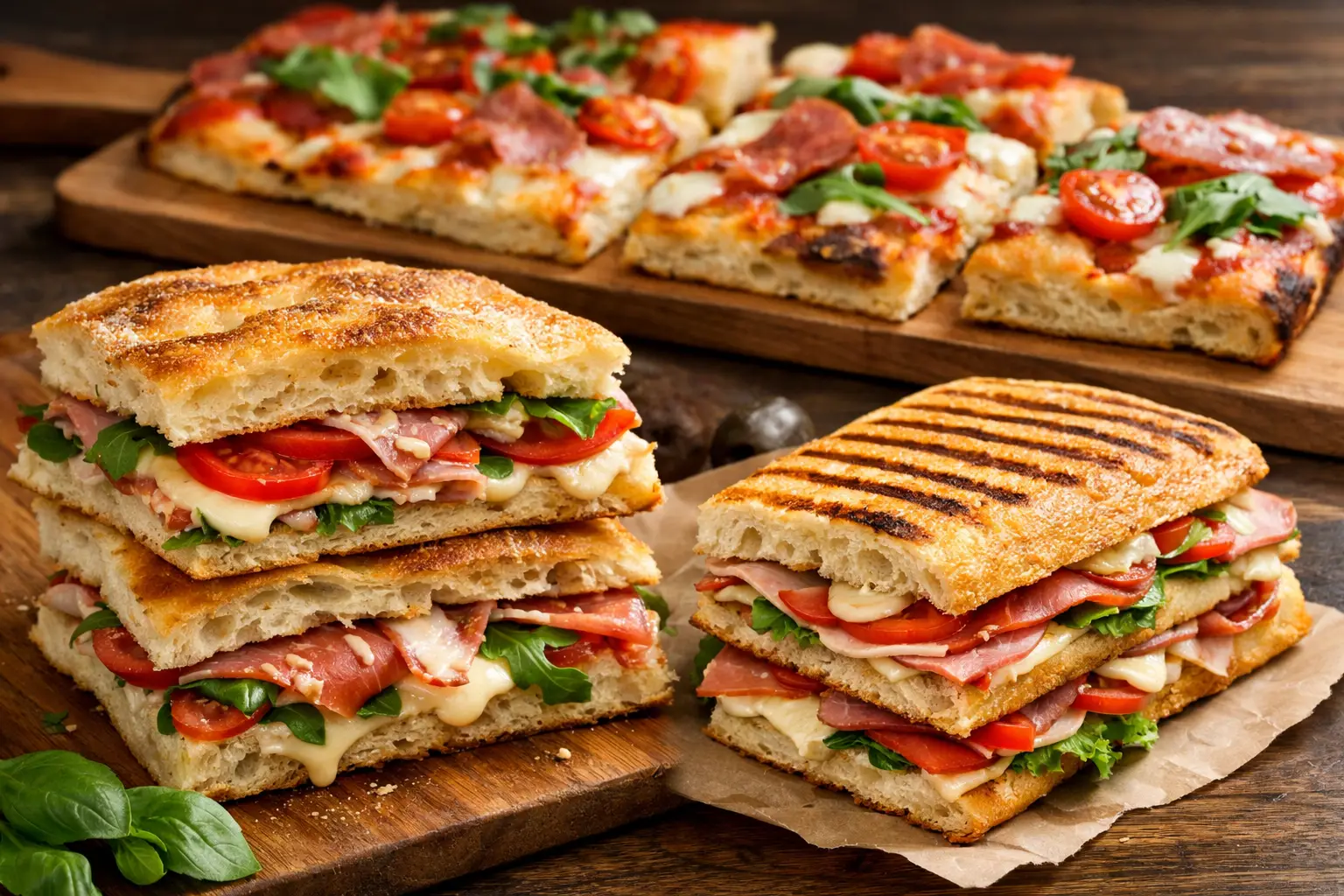
If you've ever seen an Italian display case and thought stuffed focaccia vs panini were almost the same thing, you're not the only person. At first glance, both can seem like breads with fillings and the promise of a craving satisfied. But when dough, fermentation, texture, and the way you eat them come into play, the difference is felt from the very first bite.
In Costa Rica, where the panini became a fairly well-known reference in cafés and casual menus, stuffed focaccia still has that feel of a find. It looks more artisanal, more generous, more truly Italian. And it's not just an aesthetic matter. It's a different experience, with its own personality and a much more serious relationship with baking.
Stuffed focaccia vs panini: the difference starts with the bread
The right comparison doesn't start with the filling. It starts with the base. Panini are usually made with breads like ciabatta, baguette, michetta or even more generic breads meant to be pressed and toasted. Their identity is very closely tied to the format of a hot, compact sandwich marked by the griddle.
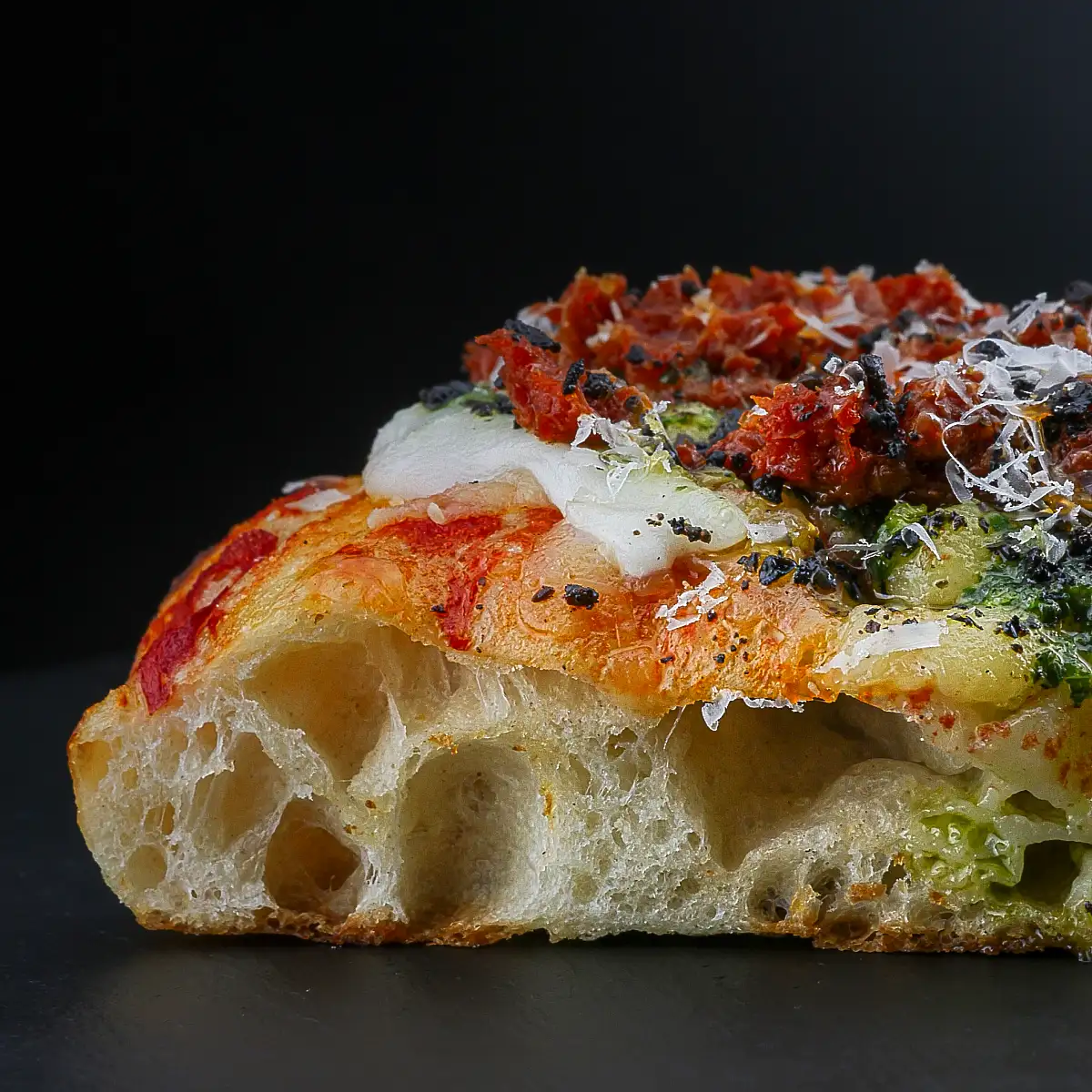
Stuffed focaccia, by contrast, starts from a dough with a different intention. It has a more airy structure, a livelier crumb, and a surface that can be crispy on the outside, but soft and elastic inside. When that dough comes from careful processes, with long fermentations and good hydration, the result doesn't just hold the filling: it elevates it.
That changes everything. In a panini, the bread takes a back seat. In a well-made stuffed focaccia, the bread is the star.
What makes stuffed focaccia special
Stuffed focaccia has that rare balance between abundance and delicacy. It can carry intense ingredients, but the dough doesn't disappear under the filling or turn into a mere wrapper. It still has presence, aroma, and texture.
Also, focaccia has a more expressive bakery identity. You can see it in the alveoli, in the crust, in the way it responds to the oven. It doesn't aim to be flat or uniform. It aims for character. That's why every bite can feel more complex and more memorable than that of a pressed sandwich.
There's also a format factor. Stuffed focaccia usually reads as more gourmet and more generous-looking visually. It looks artisanal, it looks premium, and it feels designed for someone who enjoys eating attentively, not just for quickly taking care of hunger.
Texture rules
If we had to sum up a large part of the debate between stuffed focaccia vs panini in a single word, it would be texture.
Panini go for toasted and pressed. They have defined edges, compressed layers, and a denser bite. That can work very well when you want something hot, practical, and familiar. The problem appears when the pressure and heat flatten the bread too much or make everything feel a bit uniform.
Stuffed focaccia plays in another league. It can have a golden exterior, a firm base, and that addictive crispy touch, but it still keeps air. There is contrast. There is lightness. You taste the ingredients better because they aren't squeezed between two rigid surfaces. That difference, for an audience that values artisanal products, matters a lot.
The filling doesn't behave the same
Another key point is how the filling lives with the dough. In a panini, because of the pressure from the griddle, the ingredients tend to fuse into a more compact block. Cheeses, cured meats, vegetables, and sauces end up integrated, yes, but sometimes with less definition.
In stuffed focaccia, the filling can breathe more. You perceive the layers, the moisture, the nuances of each ingredient better. That opens the door to more interesting combinations, from classic Italian options to more creative profiles. The overall feeling is less like a quick sandwich and more like a gastronomic piece.
Panini: why they remain popular
It would be unfair to treat the panini as a lesser version. It isn't. It has clear virtues. It's known, practical, easy to understand, and very convenient for anyone looking for a meal without complications. It works well in casual settings, cafés, quick lunches, and cravings where familiarity matters.
Also, panini have something very effective: the toasted exterior and melted cheese usually appeal to almost everyone. It's a safe choice. And sometimes that's exactly what a person wants.
The point isn't to say that one eliminates the other. The point is to understand that they play different roles. If you're looking for convenience and simplicity, the panini delivers. If you want an experience with more identity, more technique, and more Italian character, stuffed focaccia has the edge.
Stuffed focaccia vs panini depending on the moment
This is where the famous it depends comes in. Because yes, it depends on the plan, the appetite, and the type of experience you want to have.
If you're thinking about something quick between meetings, the panini can do the job well. It's easy to eat, usually comes in a controlled format, and doesn't demand much of a pause. It goes straight to the point.
But if the plan includes sitting down, sharing, trying something different, or simply treating yourself to something with a bit more level, stuffed focaccia feels like the better choice. It has more presence on the table, more visual strength, and more conversation around it. It's the kind of product that arrives and immediately prompts the comment, 'that looks really good.'
For couples, outings with friends, or foodies who are already tired of the generic menu, stuffed focaccia offers something rarer in the good sense. More authentic. More special. More of those things you want to repeat and recommend.
It also changes the perception of quality
There's a detail that many times isn't put into words, but it is felt. Stuffed focaccia usually communicates greater artisanal work. Not only because of the dough, but because of everything it represents: fermentation, careful baking, balance of the filling, respect for a specific baking tradition.
That matters a lot for an urban consumer who has already learned to differentiate between a decent product and a truly memorable one. When someone is looking for a premium experience, it isn't enough for the food to be tasty. It has to feel special from the first glance to the last crumb.
That's why, in a brand that works from Italian authenticity and technique, stuffed focaccia doesn't enter as an accessory of the menu. It comes in as a style statement.
So, which tastes more like Italy?
If we're talking about the global image, the panini became famous as a broad, adaptable, and very commercial format. It became Italianized in many markets, but it also turned into a flexible category, sometimes too flexible. You can find excellent panini and others that are totally generic.
Stuffed focaccia keeps a clearer link to the Italian baking tradition. It has a more specific, more regional, and more artisanal root. It feels less standardized. And for those who value origin, technique, and products with a story, that matters.
This isn't about romanticism. It's about gastronomic identity. There are foods that fill you up. And there are foods that tell you something. Stuffed focaccia, when it's well executed, says quite a lot.
What to choose if texture, technique, and craving matter to you
If you're the kind of person who pays attention to the dough, to the crunch, to how the bread breathes, and to whether the filling is really well supported, you probably already know where the balance tips. Stuffed focaccia offers more nuances and more of a sense of a product made with intention.
If, on the other hand, you prefer a known, compact, and straightforward option, the panini still has its place. Not every moment calls for ceremony.
But when the goal is to eat better, not just eat something, the difference is noticeable. That's where a well-made stuffed focaccia pulls ahead with authority. More structure, more personality, more crunch, more pleasure.
At Bianka® Pizza Romana, that difference is understood from the very first bite, because the proposal isn't trying to seem Italian: it is born from that technique and that obsession with texture that completely changes the experience.
The best choice isn't always the most familiar
For years, the panini occupied the space of 'Italian sandwich' in many people's minds. Fair enough. It's popular, recognizable, and easy to sell. But that doesn't mean it's the most interesting option.
Stuffed focaccia has everything today's more curious diner is looking for: authenticity, craftsmanship, visual impact, and a texture that really stands out from the ordinary. It's less obvious and precisely for that reason wins people over faster.
If you had doubts between stuffed focaccia vs panini, keep this idea in mind: one gets the job done; the other leaves a memory. And when the opportunity comes to eat something made with technique, character, and true Italian spirit, it's worth choosing the thing that turns a craving into an experience. Che buono.