Jun 8, 2026
What is the difference with pizza al taglio?
The first time someone sees a real pizza al taglio, they almost always make the same pause: it does not look like the round pizza of a lifetime. And right there the question is born that is worth answering well: what is the difference between pizza al taglio compared to other Italian pizzas or compared to the more commercial version that dominates so many menus. The short answer is simple: it changes the format, changes the dough, changes the texture, and completely changes the pizza-eating experience.
What is the difference with pizza al taglio in reality
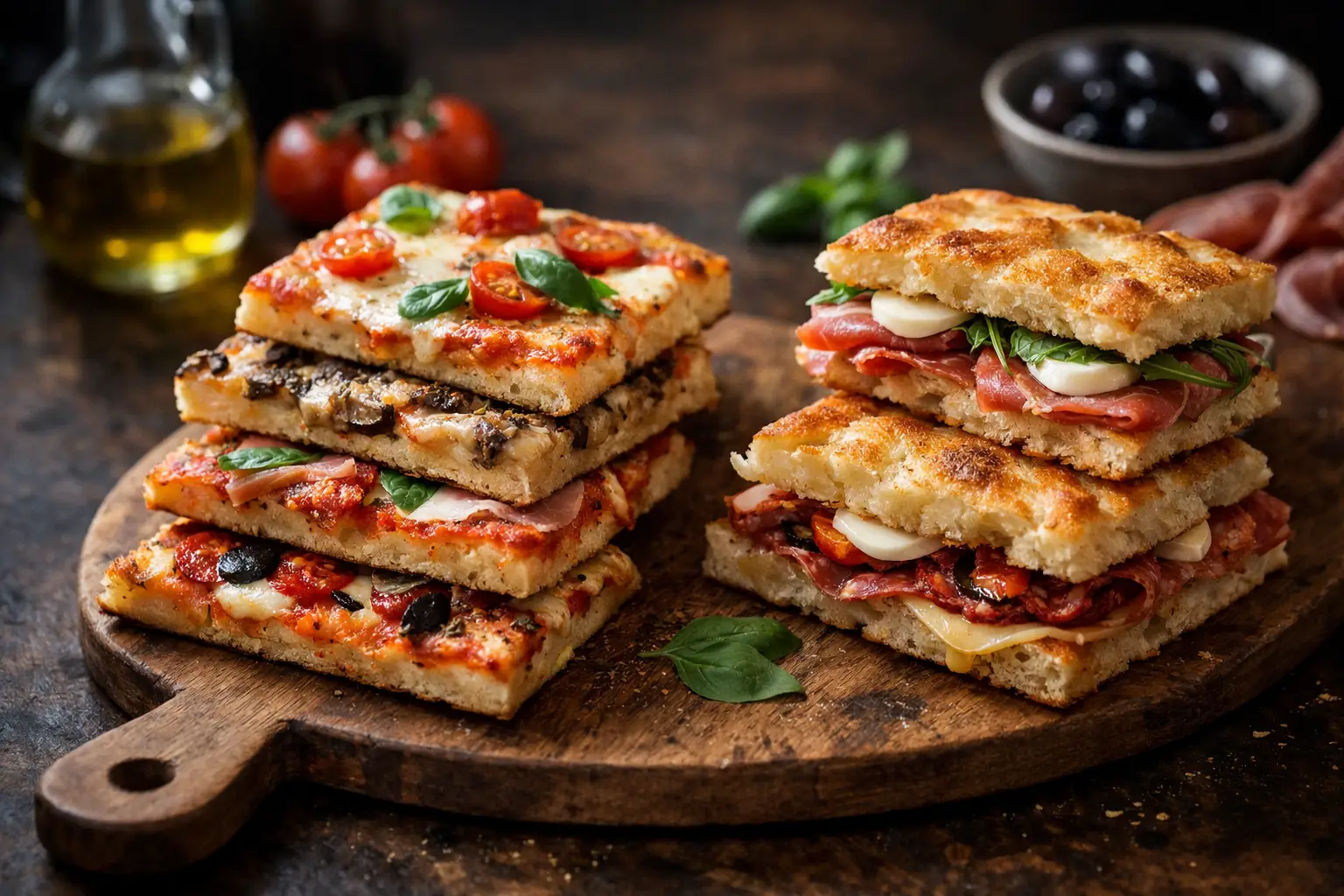
Pizza al taglio is a Roman specialty that is baked in rectangular trays, sold by the slice, and cut with scissors or a spatula according to the size each person wants. That detail, which seems minor, actually defines a lot. It is not designed as an individual round pizza where everything comes out the same from center to edge, but as a more technical, crispier, and much more versatile bakery piece on display.
In Rome, this style lives between the tradition of bakery and well-made urban food. It is not an improvised square version of pizza. It is a category of its own. It has structure, method, and a very clear identity: light base, airy interior, croccante crust, and toppings that show off without sinking the dough.
When someone asks what is the difference with pizza al taglio, the best way to explain it is this: not only does the shape change, the entire logic of the product changes.
The dough: where the real difference begins
If there is one point that separates an authentic pizza al taglio from any random pizza cut into rectangles, it is the dough. Here it is not enough to stretch, top with sauce, and bake. The dough is usually worked with high hydration, long fermentations, and a technique that seeks real lightness, not just volume.
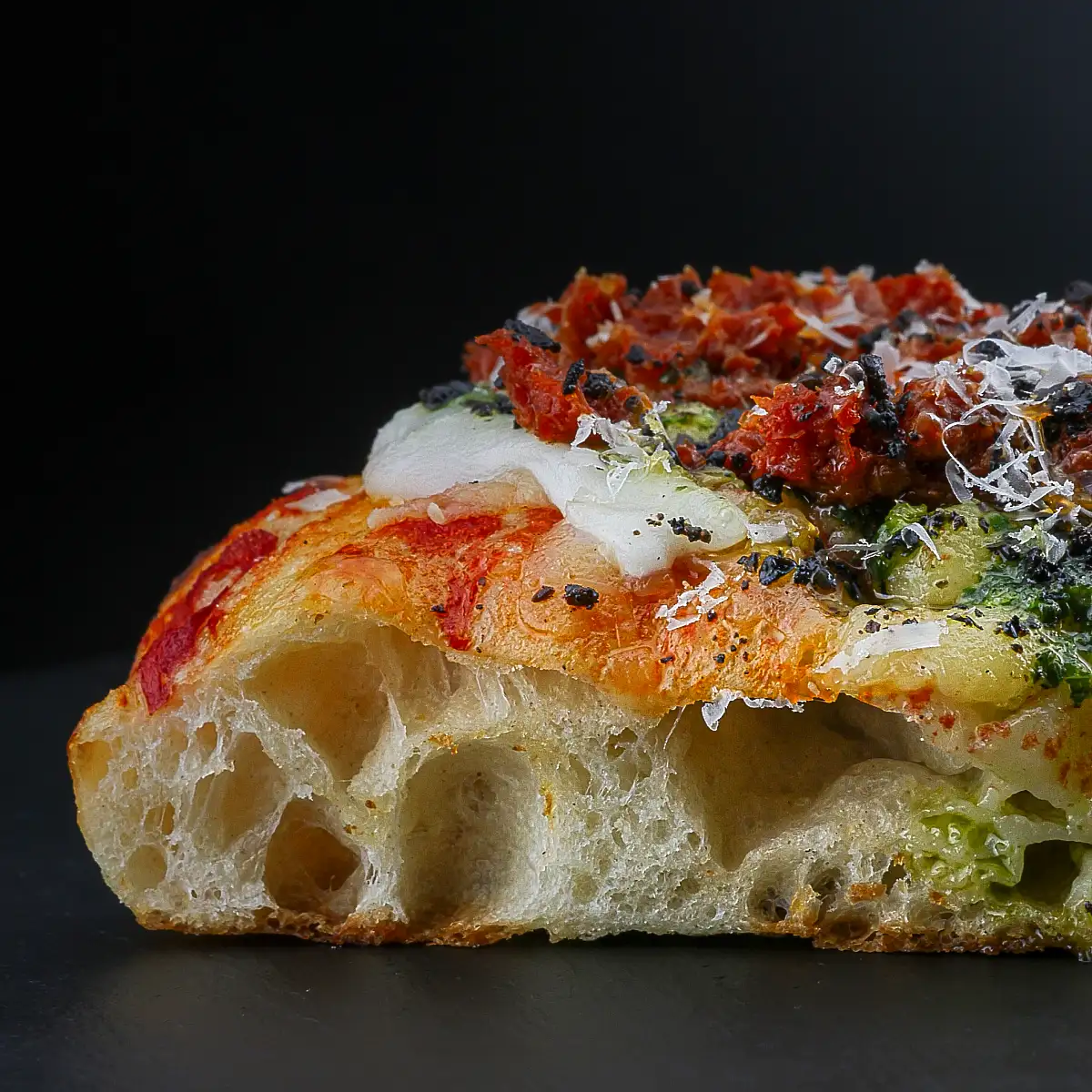
That translates into an open crumb with visible alveoli, an airier bite, and a less heavy feeling. Good pizza al taglio does not sit like a brick. It has bread-like character, yes, but also an elegance that can be felt in the mouth. It crunches top and bottom, but maintains softness inside.
That is also why not all rectangular pizzas are pizza al taglio. Many might look similar from a distance, but upon eating them, the difference is noticeable. A short-fermentation dough is usually denser, flatter in flavor, and less digestible. In contrast, when you work with time and technique, the result changes completely.
Croccante texture, not heavy dough
The word that best accompanies this style is croccante. And it is not about a dry hardness or a lifeless, crumbly base. It is about a well-constructed texture with contrast. The base has firmness, the edge responds with a crunch, and the center retains enough moisture to hold the ingredients without becoming gummy.
That balance is part of its charm. Pizza al taglio is designed to be practical to eat, but without sacrificing quality. It can be picked up with your hand, shared, ordered in various flavors, and you still feel there is technique behind it.
Compared to a Neapolitan pizza, for example, the difference is crystal clear. The Neapolitan bets on a wetter center, an inflated crust, and rapid cooking at high temperature. Pizza al taglio, on the other hand, moves in another register: more structure, crispier, more play between bakery and pizza. Neither is better in absolute terms. They are separate experiences. But if someone is looking for a distinct texture and a firmer bite, Roman al taglio usually wins that ground.
The format also changes how it is enjoyed
Another key answer to what is the difference with pizza al taglio lies in its consumption format. Since it is sold by the slice, it allows you to try more than one flavor in a single visit. That makes it ideal for curious people, groups of friends, couples who want to share, or foodies who prefer to explore rather than marry a single topping.
It also gives a different rhythm to the experience. You do not need to order a whole pizza to find out if you like a style. You can try a classic slice, another more creative one, and compare textures, combinations, and balance. That format has something very Roman and very modern at the same time: well-executed informality.
In addition, being displayed on a tray, pizza al taglio first catches the eye. You see the color of the dough, the shine of the ingredients, the volume, the crunchiness. It is a pizza that speaks to the display case and to the visual appetite. And yes, to the phone camera as well.
It is not just pizza "by the slice"
There is a common confusion: thinking that pizza al taglio simply means pizza sold by the slice. It is not the same. Many pizzerias sell slices of a round pizza that has been reheated, but that does not make the product pizza al taglio.
Authentic pizza al taglio is born from the beginning with that intention. The dough is formulated for a tray. The baking responds to that format. The relationship between the base and the ingredients is designed for rectangular slices. Even the cut is part of the experience, because each piece is adjusted to the taste or hunger of the moment.
That explains why this style has so much strength as a culinary proposal and not just as a practical format. There is craftsmanship behind it. There is culture. And there is a standard that is noticed immediately when it is well done.
Ingredients matter more than it seems
In pizza al taglio, the toppings should not hide the dough. In fact, one of the signs of quality is that both understand each other. The base has its own personality, so the ingredients must complement, not cover. Well-balanced tomato sauce, cheeses that melt without smothering, well-cooked vegetables, cold cuts with a clean profile. Everything counts.
Since the dough is usually airier and crispier, it also resists different combinations very well. From classic flavors to more gourmet proposals, this format lends itself to playing without losing identity. But there is a limit: if it is overloaded, it loses its grace. Good pizza al taglio knows when to stop.
There is another important difference compared to more generic proposals. It is not about putting a lot on just for the sake of putting a lot on. It is about building a slice with balance, texture, and flavor.
What is the difference between pizza al taglio and traditional pizza
If we put it in simple terms, traditional round pizza usually focuses on a more uniform experience. You order a pizza, choose one or two toppings, and share triangular slices. It works, of course. It is familiar, comfortable, and very popular.
Pizza al taglio offers something else. More exploration, more texture, more artisanal identity. It has a deeply Roman DNA and a clear connection to Italian bakery. It feels less standardized and more specialized.
It also changes the perception of satiety. Although it depends on the recipe and the size of the slice, a well-made pizza al taglio can feel lighter than one expects, precisely because of the fermentation, aeration, and structure of the dough. That does not mean it always has fewer calories or that it is "light" in any context. It depends on the topping, the size, and the technique. But it can indeed be more digestible and pleasant than a compact dough.
Why this style enchants those looking for something better
There are pizzas that satisfy the craving. And there are pizzas that stay in your memory. Pizza al taglio falls into that second category when it is made with rigor. It has something special because it combines Italian tradition, contemporary aesthetics, and a texture unlike what is common in the market.
For an audience that has already tried many pizzas and wants a more authentic experience, this format makes perfect sense. It feels different without becoming pretentious. It is casual, yet premium. Its way of being served is accessible, but its execution is demanding.
That is why it has gained so much attention among those who value artisanal product, slow fermentation, and proposals with real identity. In a context where many pizzas end up resembling one another, pizza al taglio sets itself apart just by looking at it. And when it is well made, it confirms it on the first bite.
At Bianka® Pizza Romana, for example, that difference is celebrated from the technique to the texture: long fermentation dough, Roman format, and that croccante that completely changes the idea of what a pizza can be. Che buono.
So, is it worth trying?
If you are only looking for a familiar pizza with no surprises, maybe you will stick with the usual option. But if you want to understand why Rome developed such a particular style, why texture matters so much, and why a good dough can elevate everything, pizza al taglio is absolutely worth it.
It is not a trend. It is not a square pizza just for the sake of it. It is a specialty with history, technique, and plenty of personality. And when you find an authentic version, you notice it immediately.
The next time you see a beautifully golden Roman pizza tray, with a croccante base and slices ready to cut to taste, do not think it is just another pizza. Think that it could be the start of a new standard to measure them all.