Sep 16, 2026
What is actually on a real Roman pizza bianca
A good answer to what goes on a pizza bianca starts with a surprise: sometimes it takes very little. No tomato sauce to hide the dough, no mountains of toppings, and no excesses. Roman pizza bianca stands on a precisely worked base, olive oil, salt and, depending on the version, rosemary, cheese, or fillings that respect its character. It seems simple. It is not.
In Rome, pizza bianca is a statement of the baker's craft. The dough must be light on the inside, croccante on the outside, and flavorful enough for a drizzle of olive oil to feel like the star. That is why, when it is well made, it needs no disguise.
What goes on pizza bianca and what makes it different
The literal translation would be white pizza, but reducing it to a pizza without tomato would be to miss the essential. Pizza bianca can refer to a preparation without red sauce, yes, although in Roman tradition it also names a simply baked dough, close to a thin and airy focaccia.
Its most classic version has dough, extra virgin olive oil, and salt. Some bakeries add fresh rosemary, others incorporate mozzarella or pecorino, and many open it freshly baked to fill it with mortadella, prosciutto, roasted vegetables, or stracciatella. The point is not to put everything on at the same time. The point is to maintain balance.
The absence of tomato changes the conversation. On a pizza rossa, the acidity and moisture of the sauce are part of the profile. On a bianca, every detail is exposed: the fermentation, the quality of the flour, the browning of the base, the oil, and the hand that manages the salt. If the dough is not up to standard, it shows in the first bite.
The dough: the ingredient that cannot be hidden
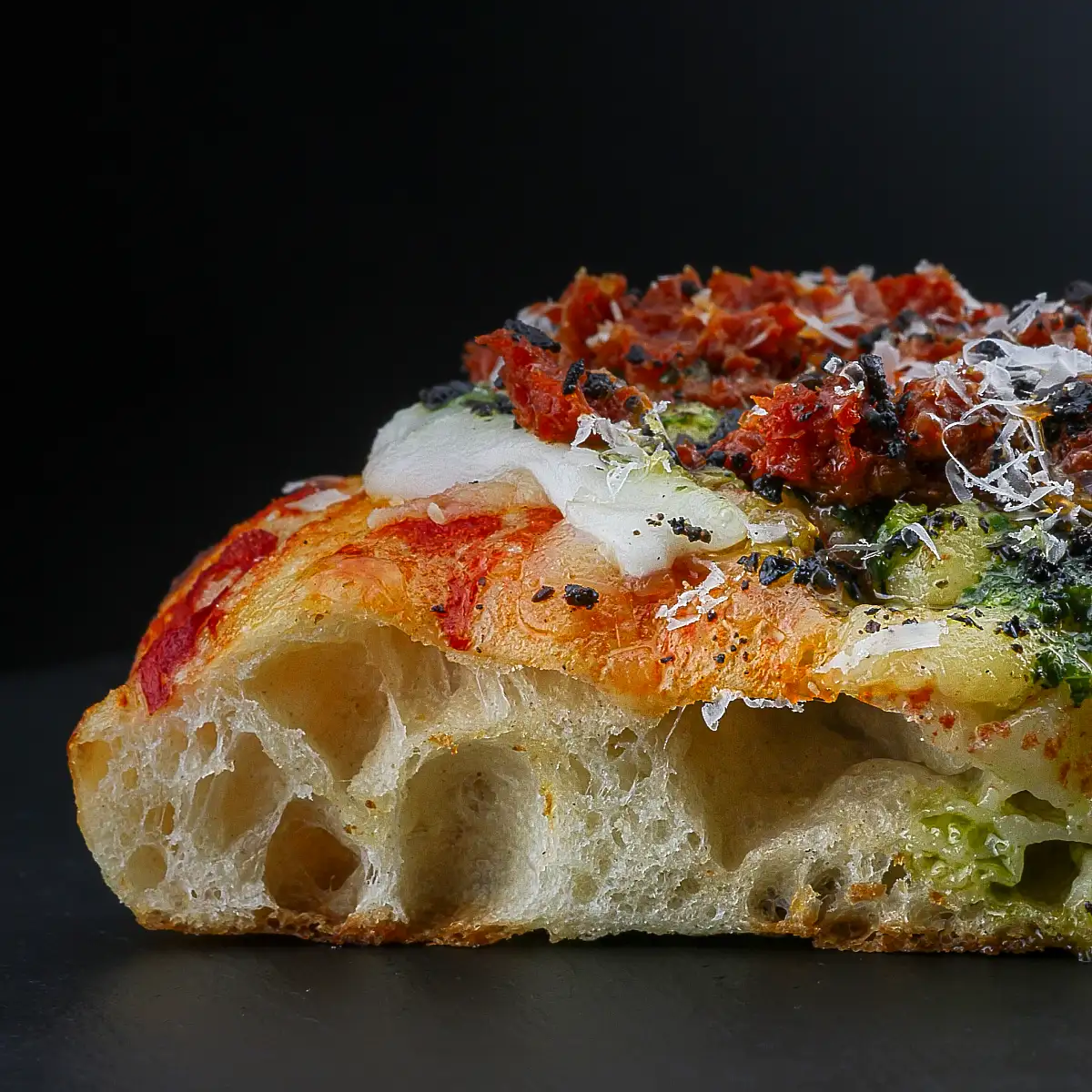
Roman pizza bianca is born from a dough with generous hydration and a well-controlled fermentation. This process develops flavor, improves digestibility, and creates the irregular alveoli that give a light crumb, with real air and not just volume.
Not all white doughs taste the same. A short fermentation can yield an acceptable pizza, but one that is less deep, heavier, and with a crust that hardens quickly. A prolonged fermentation, on the other hand, allows for a more elastic texture before baking and a more fragrant interior after. The ideal result crackles when broken, but does not feel dry or rigid.
The format also matters. The pizza romana in teglia is baked on a tray and cut into rectangular or square slices. That geometry is not just aesthetic. It favors a well-cooked base, defined edges, and a wide surface to enjoy the texture. It is pizza to see, hear, and eat with your hands.
Olive oil, salt, and rosemary: little, but well chosen
When the recipe is minimalist, the ingredients cannot be generic. The olive oil must provide a fruity perfume without covering the dough. It can be used before baking to help with browning, and finished with a few drops when it comes out of the oven to elevate the aroma. The difference between both moments is felt.
Salt is just as decisive. On the surface, well-distributed crystals give each bite contrast and awaken the natural flavor of the dough. If too much is used, it dominates. If it is lacking, the pizza is flat even if the fermentation was impeccable.
Rosemary is one of the most recognizable additions. Its resinous scent pairs especially well with the oil and the intense heat of the oven. But it is not mandatory. In fact, a classic pizza bianca can be spectacular with just oil and salt, as long as the dough has the necessary character.
Does pizza bianca have cheese?
It depends on which pizza bianca is being discussed. The purest Roman baker's version may have no cheese at all. It is enjoyed hot, on its own or opened to turn it into a high-level Italian sandwich.
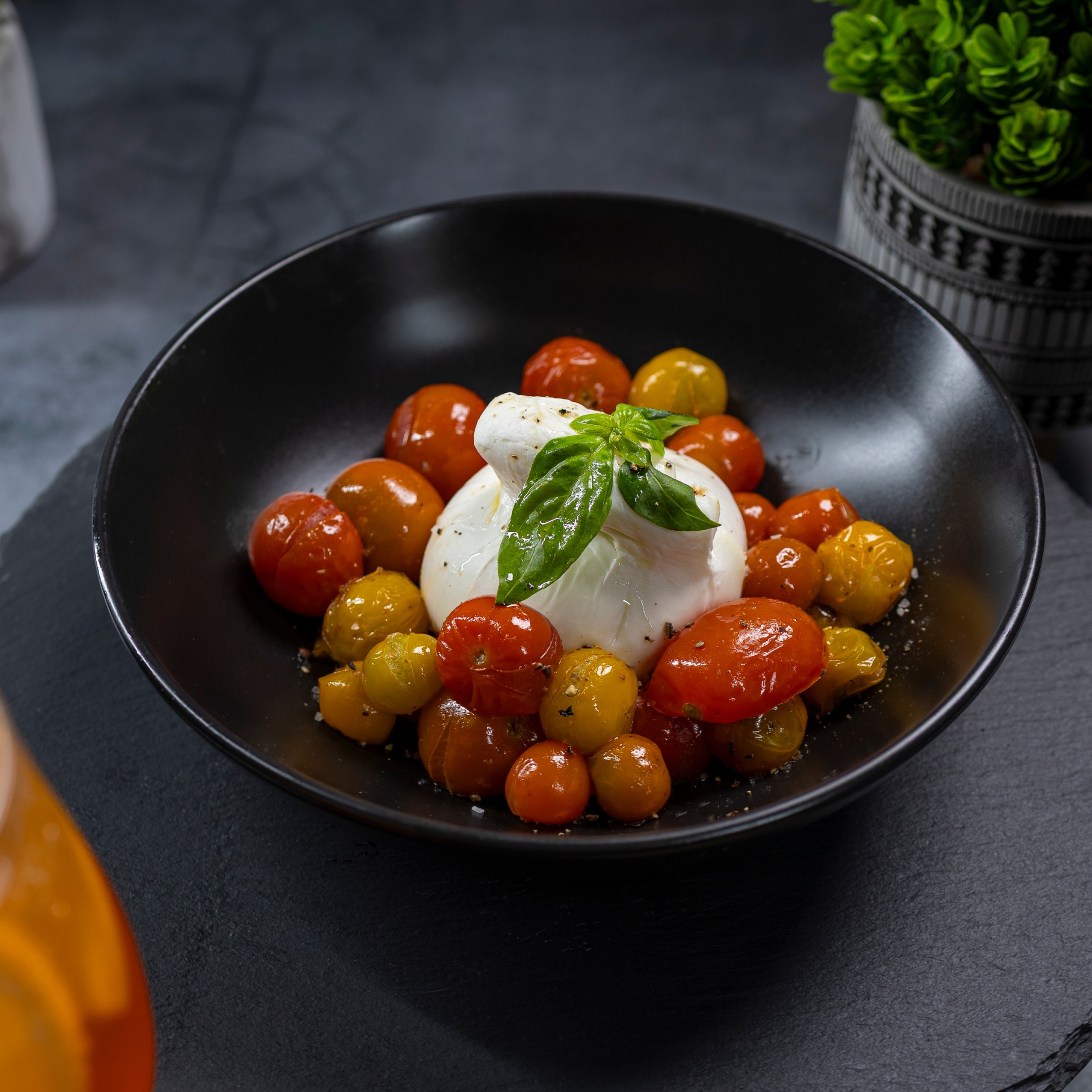
In a pizzeria, pizza bianca usually describes any pizza without tomato. There, combinations with fior di latte mozzarella, ricotta, burrata, gorgonzola, pecorino, or parmesan appear. All can be delicious, but they do not work the same way. Mozzarella adds elasticity and softness; ricotta provides a more delicate creaminess; cured cheeses deliver saltiness and depth.
The risk lies in overloading it. Without tomato, a heavy mix of cheeses can make the pizza greasy and erase the work of the base. That is why it is best for the cheese to accompany rather than invade. Less quantity, better distribution, and an appropriate temperature usually yield a much more elegant result.
Ingredients that truly pair well
Pizza bianca accepts intense ingredients because its base is clean, but it needs contrast. Mortadella, for example, shines best when added after the oven: it retains its silky texture and spiced scent. With pistachio or stracciatella, the combination can be extraordinary, provided there is moderation.
Prosciutto crudo also asks to be added at the end. The residual heat is enough to release its aroma without overcooking it. Roasted vegetables, such as zucchini, eggplant, or mushrooms, provide sweetness and a green layer that balances creamy cheeses. In contrast, very wet ingredients, like undrained fresh tomato, can ruin the croccante of the base.
There are combinations that celebrate the most Roman side of pizza bianca: thinly sliced potatoes with rosemary, Italian sausage with mozzarella, or a version stuffed with porchetta and greens. There are also more contemporary proposals, with truffle cream, mushrooms, and pecorino. The key is that the dough remains center stage.
The oven defines the croccante
A pizza bianca should not feel like bread with toppings. It must have a firm, golden base, a moist but light crumb, and a bite that makes that small crack announcing a precise bake. To achieve this, the oven needs a high temperature and a correctly stretched dough.
The tray also plays its part. In pizza in teglia, it helps build a crispier and more uniform base. Then comes a detail that many underestimate: the resting time. Cutting it as soon as it comes out of the oven can flatten the crumb. Waiting a few moments allows the steam to settle and the slice to retain its structure better.
How to recognize a great pizza bianca
Look at it before tasting it. The surface should show uneven browning, bubbles, and areas with glistening oil, not an oily layer. When lifting a slice, the base should support itself without folding completely, even though the crumb retains softness.
Then comes the aroma: baked flour, olive oil and, if it has rosemary or cheese, clear but clean notes. In the mouth, a great pizza bianca is not cloying. It has salt, fat, air, and toast in proportion. It leaves you wanting another bite, not a drink to correct the excess.
That is the standard that makes an apparently simple pizza memorable. At Bianka® Pizza Romana, in San Pablo de Heredia, the pizza romana in teglia brings that idea to its best version: 72-hour fermentation, croccante texture, and a dough that deserves attention from the first cut.
The next time you see a pizza bianca on the menu, do not just ask about the toppings. Ask how they ferment the dough, when they add the oil, and what they look for in the oven. That is where the difference begins between just any white pizza and a slice that transports you straight to a Roman bakery. Che buono.