Apr 13, 2026
What is Roman pizza and why is it different
If you've ever wondered what Roman pizza is after trying a square, crispy, light slice that looks nothing like the usual round pizza, the short answer is this: it's a more bread-focused, more technical, and much more textural expression of Italian cuisine. And when it's well made, you can tell from the very first bite.
We're not talking about a trend or a “gourmet” version invented to sound good. Roman pizza has history, character, and its own rules. Its charm lies in the dough, in the fermentation, in the crunchy base, and in that feeling of lightness that surprises you even though the pizza has structure, volume, and generous toppings. So good.
What is Roman pizza
Roman pizza is a style of pizza originating in Rome that is distinguished by a high-hydration dough, prolonged fermentation, and a final result that is crispy on the outside, airy on the inside, and full of flavor. Unlike the more popular round pizza in many markets, here the dough is not just a support: it is the star.
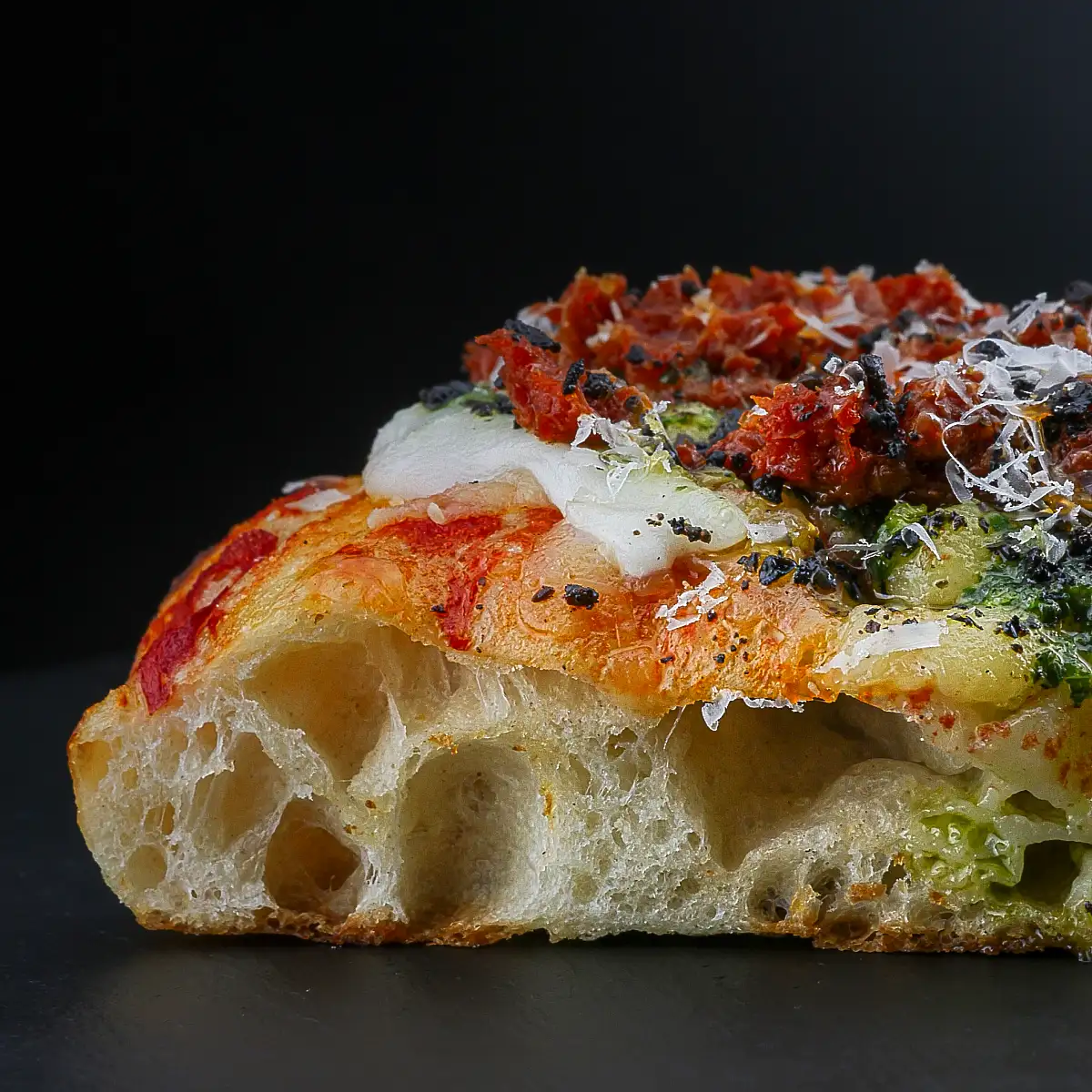
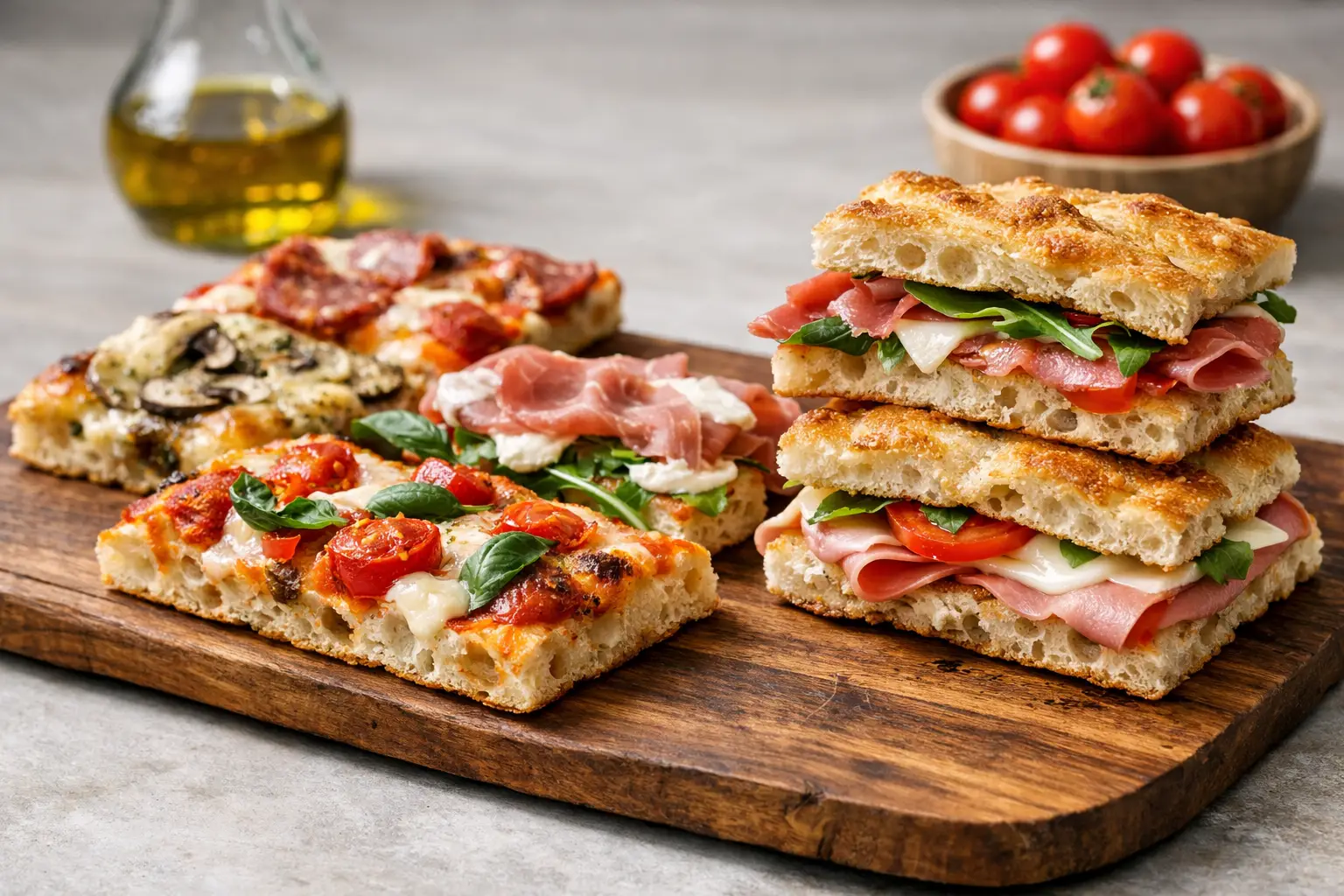
Within the Roman universe there are several expressions, but one of the most celebrated is pizza in teglia, baked in a tray. It is recognized by its rectangular or square shape, its crispy base, and its light crumb, with visible air pockets that speak to good technique and patience. It is a pizza meant to be cut into slices, shared, and enjoyed calmly, even if it gets finished too quickly.
That difference matters. Because when someone asks what Roman pizza is, they are really asking about a different experience: a less heavy pizza, more artisanal, and with an identity that feels closer to the craft of breadmaking than to fast production.
It's not “just another Italian pizza”
Italy does not have just one pizza, and that is exactly the point. Reducing Italian pizza to a single format means missing a huge part of its gastronomic culture. Roman pizza does not compete by trying to look like Neapolitan pizza or American pizza. It plays its own game.
The Neapolitan style goes for a soft center, puffed edges, and an intense bake that leaves oven marks and a more flexible texture. Roman pizza, on the other hand, usually aims for more crunch, more bite, and a base that cracks when you break into it. It is not better in absolute terms. It is different. And for a lot of people, that difference changes everything.
It also changes the way you eat it. Roman pizza in teglia works incredibly well for sharing with friends, trying several flavors at the same table, and for those who enjoy that combination of well-made bread and quality ingredients. It has something casual, yes, but at the same time it feels special.
The dough: where everything really begins
If you really want to understand what Roman pizza is, you have to talk about the dough. That is where its personality lives.
The base is usually made with high hydration, which means the mixture has quite a lot of water relative to the flour. That makes the process more technical, because the dough is more alive, more delicate, and requires knowledge of fermentation, handling, and baking. But when it is done well, the result is worth every hour of waiting.
Long fermentation is another decisive factor. In truly specialized offerings, it can reach 72 hours. That is not done to sound sophisticated. It is done because it transforms the dough: it develops flavor, improves texture, and gives a lighter feeling when you eat it. The pizza comes out with character, but without heaviness.
Then comes the baking, which defines that sought-after duality: crispy outside, airy inside. That combination does not happen by accident. It is pure technique. And you notice immediately when a Roman pizza was made with judgment and not just from a copied recipe.
Why its texture wins people over so much
Some pizzas win you over with the cheese. Roman pizza wins you over with the sound.
That first crack when you bite into a good rectangular base is addicting. The bottom crust crunches, the crumb stays light, and the topping does not crush the structure. Everything holds together. Everything feels balanced. That is why so many fans are won over as soon as they try it.
The texture also allows something key: enjoying the ingredients more. A heavy dough hides flavors. A well-fermented, airy dough supports them. The sauce, the cheeses, the vegetables, the cured meats, or a stuffed focaccia inspired by Italian tradition have more room to shine when the base does its job without stealing all the attention.
Of course, not every crispy pizza is Roman. Sometimes the word is used to describe any thin or dry pizza, and that causes confusion. Authentic Roman pizza is not a cracker with toppings. It has structure, internal moisture, elasticity, and a complexity that comes from time and technique.
What makes pizza in teglia special
Within this style, pizza in teglia deserves its own chapter. It is one of the most expressive and current forms of Roman tradition, especially for those looking for something different from traditional round pizza.
“In teglia” basically means baked in a tray. But that translation falls short. The tray allows a golden and crispy base, a tall and airy crumb, and a perfect format for cutting into rectangular slices. Visually, it is spectacular. On the table, it works even better.
It also opens the door to a more versatile experience. You can order several flavors, share without complications, and turn a casual outing into a much more talkative meal. That makes it ideal for a foodie audience, curious and eager to try something with real identity, not just something “pretty for the photo”.
Although yes, it also looks great in photos.
The ingredients matter, but technique leads
A lot of people think that a memorable pizza depends only on premium toppings. That helps, of course. Good cheese, a balanced sauce, and well-chosen Italian products elevate any offering. But in Roman pizza, technique weighs as much as the ingredients.
If the dough is poorly fermented, it does not matter what you put on top. If the baking does not achieve contrast between crunch and lightness, the magic is lost. And if the product is assembled without understanding the breadmaking tradition behind it, what remains may be tasty, but not necessarily Roman.
That is why this style usually stands out more in truly specialized places. It is not enough to add a square pizza to the menu and give it an Italian name. Craft is needed. Judgment is needed. Respect for the process is needed.
In Costa Rica, where the pizza offering is still dominated by much more conventional formats, finding a proposal focused on well-executed Roman pizza feels fresh, unusual in the best sense, and memorable. That is a big part of its appeal.
What to expect when you try a real one
Expect a golden, firm, crispy base, but not a hard one. Expect a crumb with air, not a compact one. Expect flavor in the dough, not just in the topping. And expect to leave wanting more, because the lightness changes the whole experience.
Also expect a certain personality. Roman pizza is not trying to please everyone in exactly the same way. If someone prefers very soft doughs, moist centers, or pizzas loaded to excess, they may need to adjust their expectations. This style rewards balance, structure, and precision.
But for anyone who enjoys craftsmanship, long fermentation, and that feeling of a well-thought-out product, there are few things as satisfying. It is no surprise that more and more people look for it as a superior alternative to the generic pizzeria.
And when it is presented with pride, authentic technique, and a clear specialty vision, something even better happens: it stops being just a pizza and becomes a small statement of taste. In proposals like Bianka® Pizza Romana, that language is understood perfectly.
So, what is Roman pizza in one idea
It is Italian pizza with a baker's mindset. It is time, fermentation, and crunch. It is a dough that breathes, a base that crackles, and a format that turns something everyday into a much more special experience.
If you've never tried it, it is worth doing so with attention. Not to compare for sport, but to discover another side of Italy, a more specialized one, more textural, and deeply delicious. Sometimes one well-made square slice is enough to understand that not all pizzas are playing in the same league.