Mar 26, 2026
What is Roman pan pizza
If you've ever seen a square pizza with an airy base, a crispy edge, and a precise cut into portions, and thought it looked different from the usual pizza, you probably came across the answer to what Roman pizza in teglia is. It is not a passing trend nor a "gourmet" version invented to sound fancy. It is a real Italian tradition, deeply tied to Roman baking, with technique, character, and a texture that completely changes the experience.
In Costa Rica, where round pizza dominates almost the entire map, this style feels like a discovery. And that makes it even more exciting. Because when it is done well, Roman pizza in teglia does not compete by trying to resemble classic pizza: it wins by being something else. Lighter, crispier, more artisanal, and much more memorable.
What is Roman pizza in teglia and why does it look different
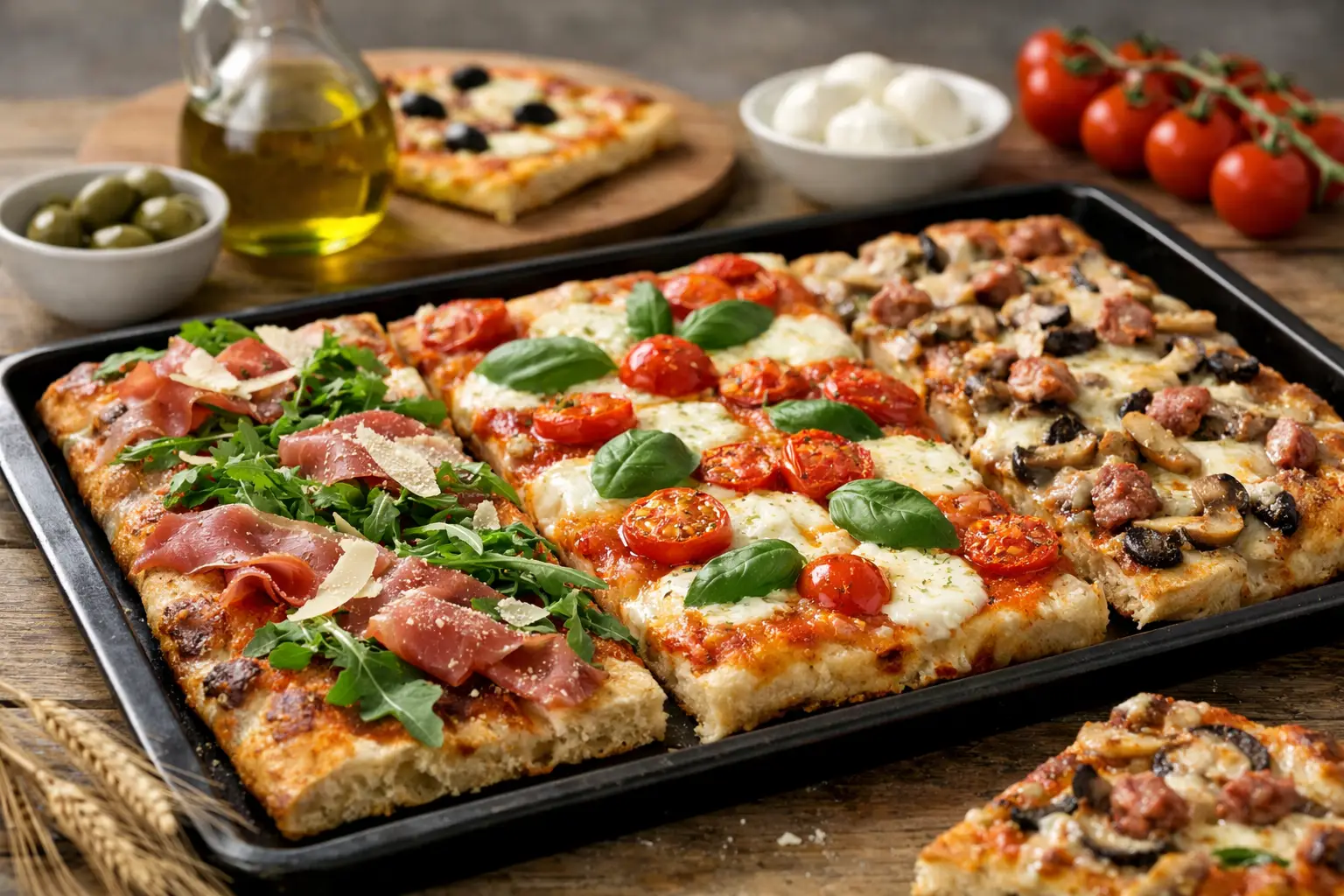
The expression in teglia means, literally, "in a tray". That is the first big difference. Instead of being stretched like a round disc and baked individually, this pizza is worked in a rectangular tray. The result is a square or rectangular pizza, meant to be cut into portions and served with a very distinct identity.
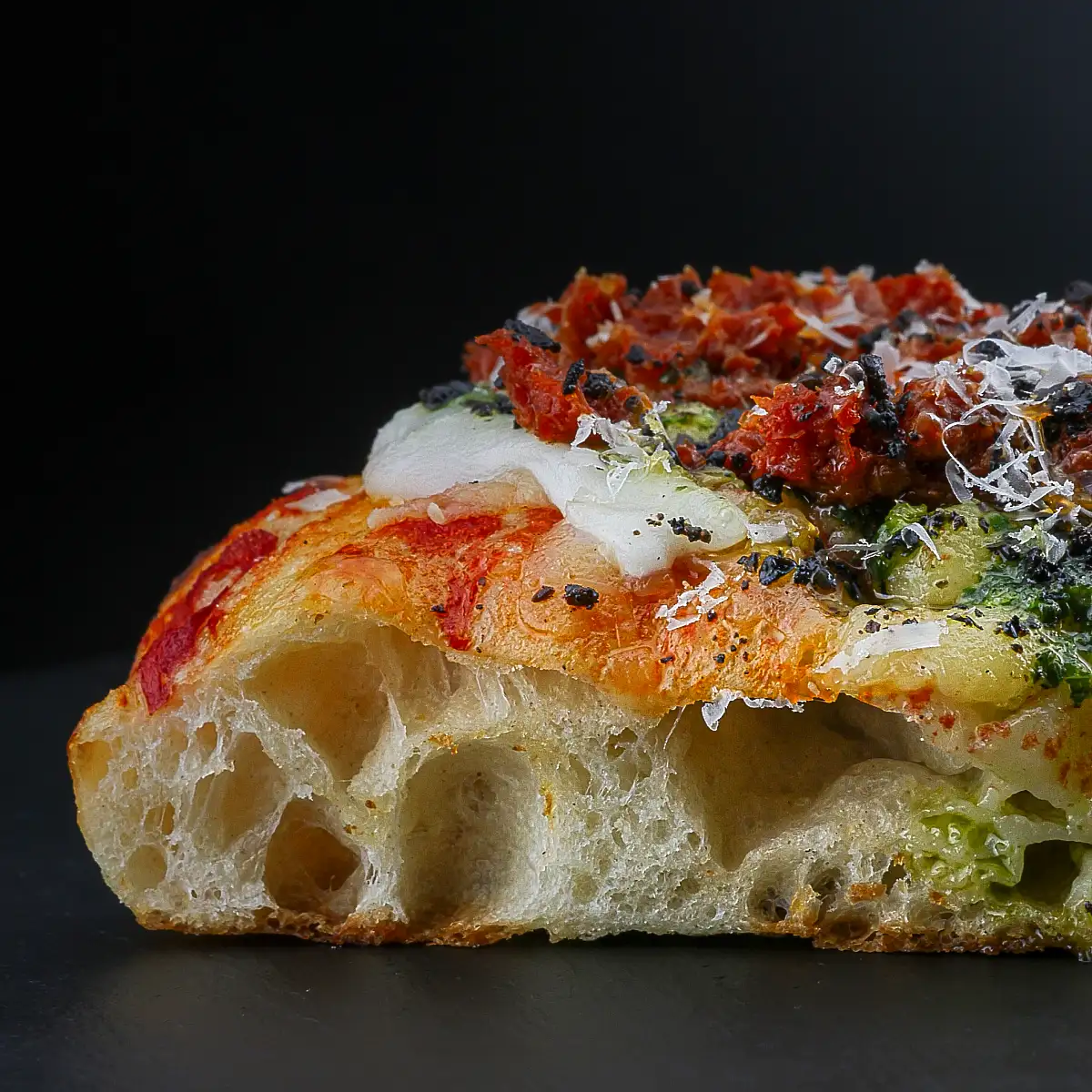
But the shape is not the most important thing. What really defines Roman pizza in teglia is the dough. It is usually made with high hydration, prolonged fermentation, and a very precise bread-making technique. That creates a light base inside, with visible air pockets, and a crispy surface outside. It is not a heavy or compact dough. It has structure, it has air, and it has that contrast between crispy and softness that makes it addictive.
So when someone asks what Roman pizza in teglia is, the correct answer is not just "square pizza". It is a Roman specialty born between oven, dough, and the craft of the baker. The tray is the format. The technique is the soul.
The secret is in the dough, not just in the toppings
A lot of people judge a pizza by the ingredients on top. Of course they matter. A good sauce, a well-worked fiordilatte, fresh vegetables, or an elegant combination can make a big difference. But in this style, the conversation starts below: in the dough.
Roman pizza in teglia requires patience. A long fermentation, like 72 hours, completely transforms the result. The dough develops flavor, improves its texture, and becomes lighter to eat. That is one of the reasons this style feels refined without ceasing to be deeply comforting.
High hydration also plays a role. It is not always easy to work with. In fact, it is a more technical dough, less forgiving of mistakes, and much more demanding in the hands of the pizzaiolo. But that is precisely where its value lies. It is not about making pizza faster. It is about making it better.
The ideal result is neither a stiff base nor a gummy dough. It is a crispy structure on the outside, moist at exactly the right point on the inside, and able to hold toppings without losing lightness. That combination does not happen by accident.
It's not focaccia, but it shares baking DNA
A common confusion is to think that Roman pizza in teglia is simply a focaccia with toppings. It makes sense: both are baked in trays, both can show an airy crumb, and both come from an Italian baking tradition. But they are not the same.
Focaccia usually has a more pronounced olive oil presence, a more uniform texture, and a different purpose. Pizza in teglia, instead, seeks balance between base, bake, and topping. It is designed to be pizza, not decorated bread. It has more structural tension, a different treatment in the oven, and a much more defined bite.
That said, they do share a beautiful philosophy: respecting the dough as the main product. That is a very Italian and very powerful idea. When the base is well made, everything else goes up a level.
Why Roman pizza in teglia feels lighter
Here is a detail that changes the whole experience. A lot of people associate pizza with heaviness. Eat two slices and be ready for a nap. With well-executed Roman pizza in teglia, that does not necessarily happen the same way.
The long fermentation helps. Hydration does too. And the airy structure creates a lighter mouthfeel, even when the portion has personality. Note: lighter does not mean small, timid, or "fit." It means the dough was worked with technique to offer flavor and texture without becoming a burden.
That makes it perfect for those who enjoy going out to eat well, trying something different, and feeling that the product has intention behind it. It is a pizza that catches the eye, yes, but stays in the memory because of how it feels when you bite into it.
What makes this style special in Costa Rica
In markets where traditional round pizza is the norm, Roman pizza in teglia has an immediate effect: it surprises. And today, surprising is worth gold. It is not enough to put trendy ingredients on top of just any base. The public recognizes when there is an authentic proposal, with history and real technique.
That explains why this format connects so well with foodies, couples, groups of friends, and people who want to step out of their gastronomic routine. It has that perfect balance between novelty and legitimacy. It looks incredible on the table. It is easy to share. It invites conversation. And it tastes like craft.
In that context, specialized proposals like Bianka® Pizza Romana have helped elevate the conversation in Costa Rica, bringing a version that is truer, more bread-forward, and crispier to the Roman tradition. Not as a copy of popular pizza, but as a category with its own identity.
What to expect when trying it for the first time
Expect texture before excess. The first sign of a good pizza in teglia is the sound. That clean crisp when you bite says a lot. Then comes the airy crumb, which does not flatten or turn gummy. And then comes the balance. Because although toppings matter, they should not cover the dough or make it sink.
Also expect rectangular or square portions, with a more architectural, more precise, more Roman presentation. It is not a pizza made to hide flaws under plenty of cheese. On the contrary: here every layer is exposed. If the dough is bad, it shows. If it is spectacular, that too.
That level of honesty is part of its charm. Roman pizza in teglia does not need a disguise. When it is well made, it says everything by itself.
So, what is Roman pizza in teglia in one idea
It is Italian tray pizza, yes, but that definition falls short. It is an expression of Roman baking applied to pizza with a clear obsession for fermentation, lightness, and crispiness. It is a top-level dough turned into a gastronomic experience.
And it is also a more contemporary way to enjoy pizza without falling into the generic. Because it offers something that does not always appear in the market: real difference. Not only in the story, but in the bite.
That is its strength. It does not try to appeal to everyone by looking like everything else. It appeals to those who know how to appreciate when a recipe has technique, culture, and a very clear identity. To those who want to eat something with history, but also with presence. To those who understand that a pizza can be casual and, at the same time, extraordinary.
If you still have not tried it, it is worth doing so with an open mind and serious hunger. Because a good Roman pizza in teglia is not just eaten. It is discovered. And once you understand that crispiness, that long fermentation, and that very Roman way of respecting the dough, it is hard to ever see pizza the same way again. How good.