May 25, 2026
What to order at an artisanal Italian restaurant
Walking into an artisanal Italian spot and ordering "the usual pizza" sounds safe, but it's almost always the most boring way to live the experience. If you really want to get it right with what to order at an artisanal Italian restaurant, you have to look beyond the name of the dish. The real difference lies in the dough, the fermentation, the texture, the product, and the intention behind each recipe. That is where the good stuff begins.
An artisanal Italian restaurant shouldn't feel generic. It should have criteria. That means not everything on the menu is there to please everyone, but rather to express a way of cooking. And when that happens, choosing well is not about ordering the most well-known item, but what best represents the house specialty.
What to order in an artisanal Italian restaurant according to its specialty
The first rule is simple: order what that place does best. It sounds obvious, but many people walk into a specialized restaurant and end up ordering the most conventional thing on the menu. If the house’s forte is Roman baking, long fermentation, or a specific style of pizza, that's where the best decision lies.
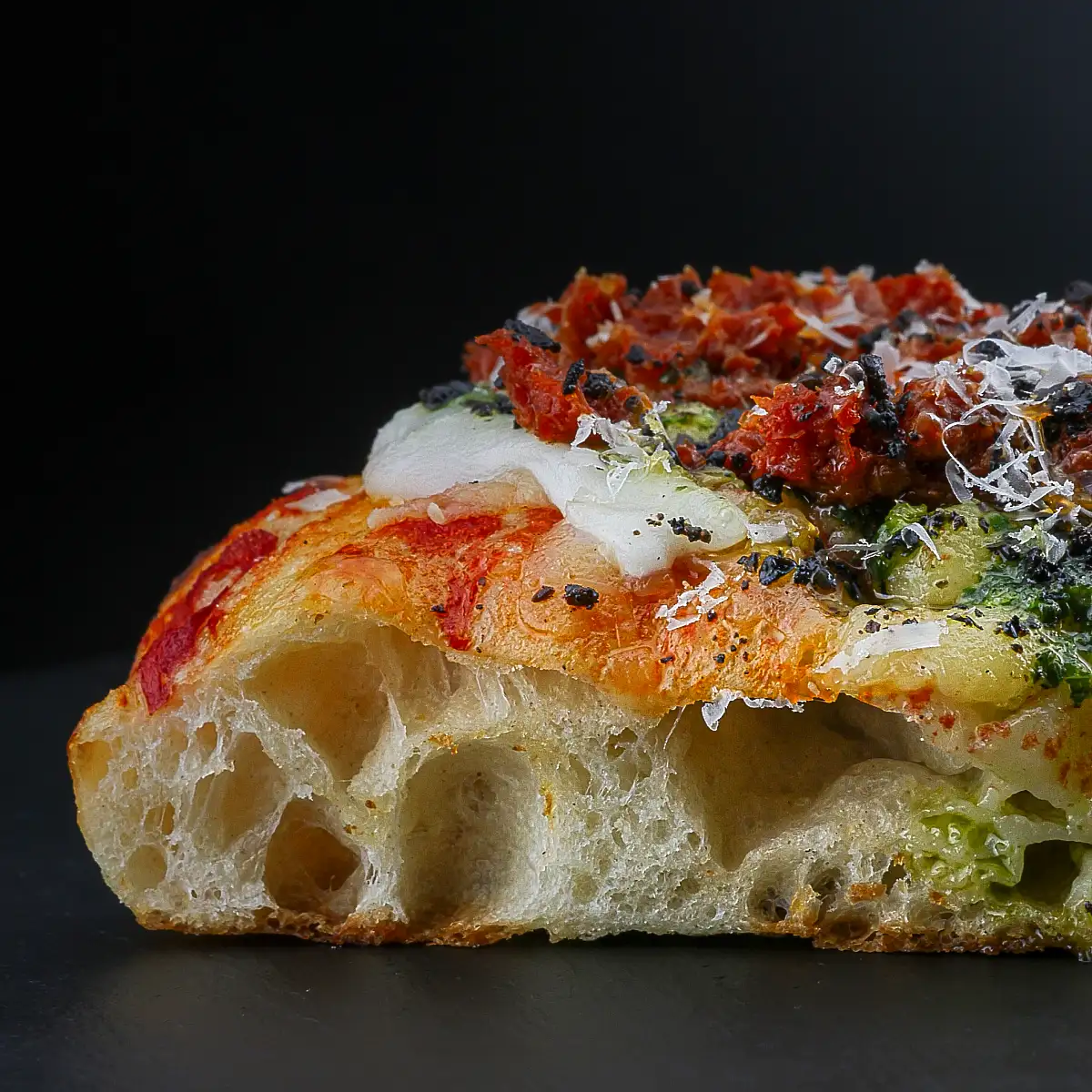
In a serious artisanal Italian place, the dough is not a detail. It is the protagonist. A fermentation of 48 or 72 hours, for example, changes texture, flavor, and digestibility. It's not just foodie talk. You feel it in every bite. If you see choices like pizza romana in teglia, stuffed focaccia, or schiacciata, don't overlook them just because they aren't the most well-known. That is precisely where the place's signature usually lies.
Traditional round pizza can be excellent, of course. But if the restaurant works with less mass-market formats, specific baking techniques, and regional profiles from Italy, ordering that makes more sense than going for a standard option. It's like going into a specialty coffee shop and ordering instant coffee. You can do it, but you miss the point.
How to read the menu without ordering blindly
A good artisanal menu gives clues. It doesn't need to explain everything with fancy words. It's enough to look at certain details. If they mention the origin of ingredients, types of flour, fermentation times, or specific techniques, that usually indicates real work behind the dish. If everything sounds generic, the experience probably will be too.
Another key point is the number of options. In artisanal cooking, more doesn't always mean better. A more focused menu usually speaks of execution, not limitation. A few well-thought-out combinations are worth more than twenty pizzas that taste similar.
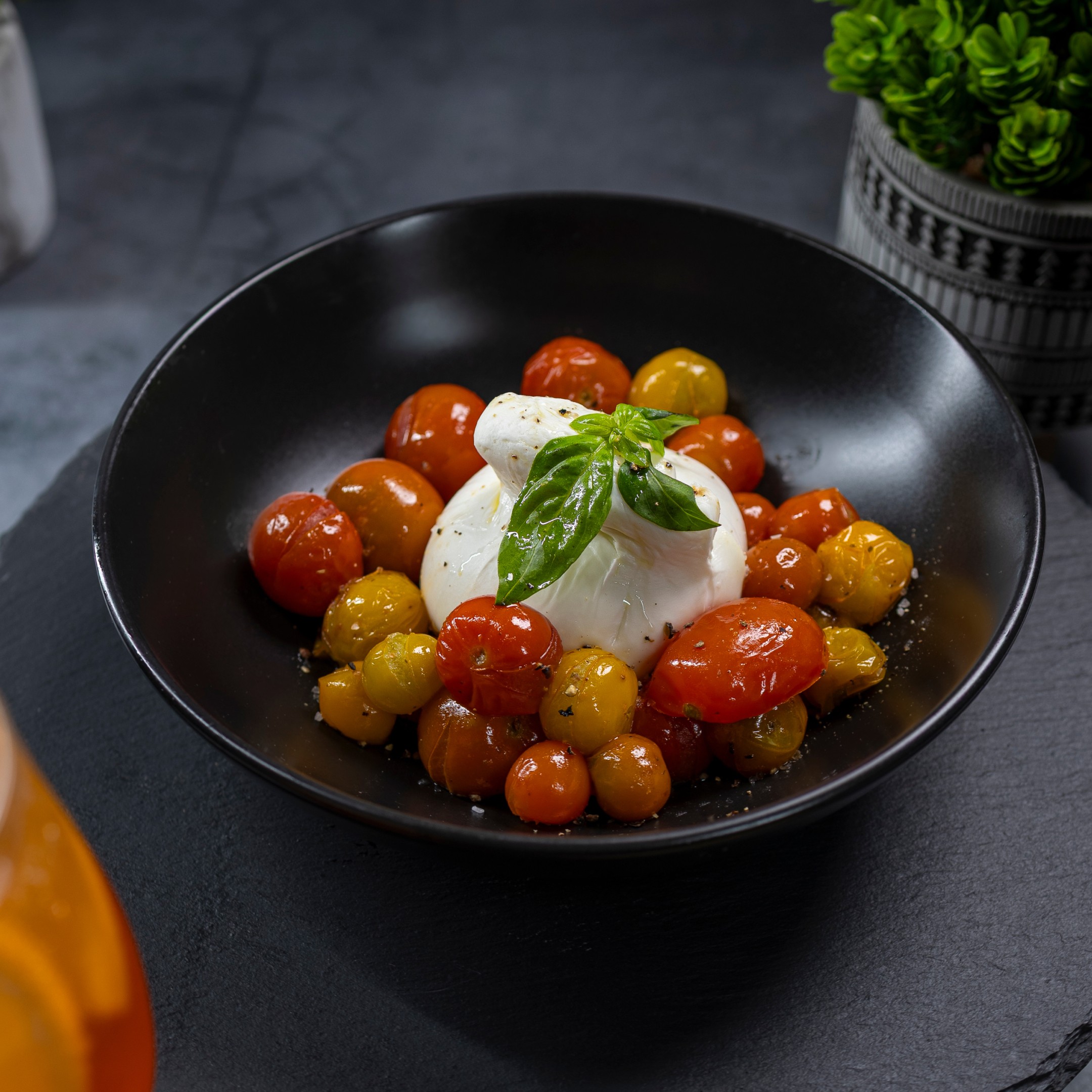
It is also wise to observe whether the ingredients are built with Italian logic or if they are combinations made just to get attention. Artisanal Italian cuisine doesn't need excesses to impress. It needs balance. A good burrata with well-cooked tomatoes, mortadella with pistachio on a croccante base, or a stuffed focaccia with precise ingredients can say much more than a mountain of toppings.
If you go for pizza, choose by texture, not just flavor
When the specialty is pizza, the best question is not "which one comes with more things?", but "how is the dough?". Because in a real artisanal restaurant, texture defines the experience as much as the ingredients.
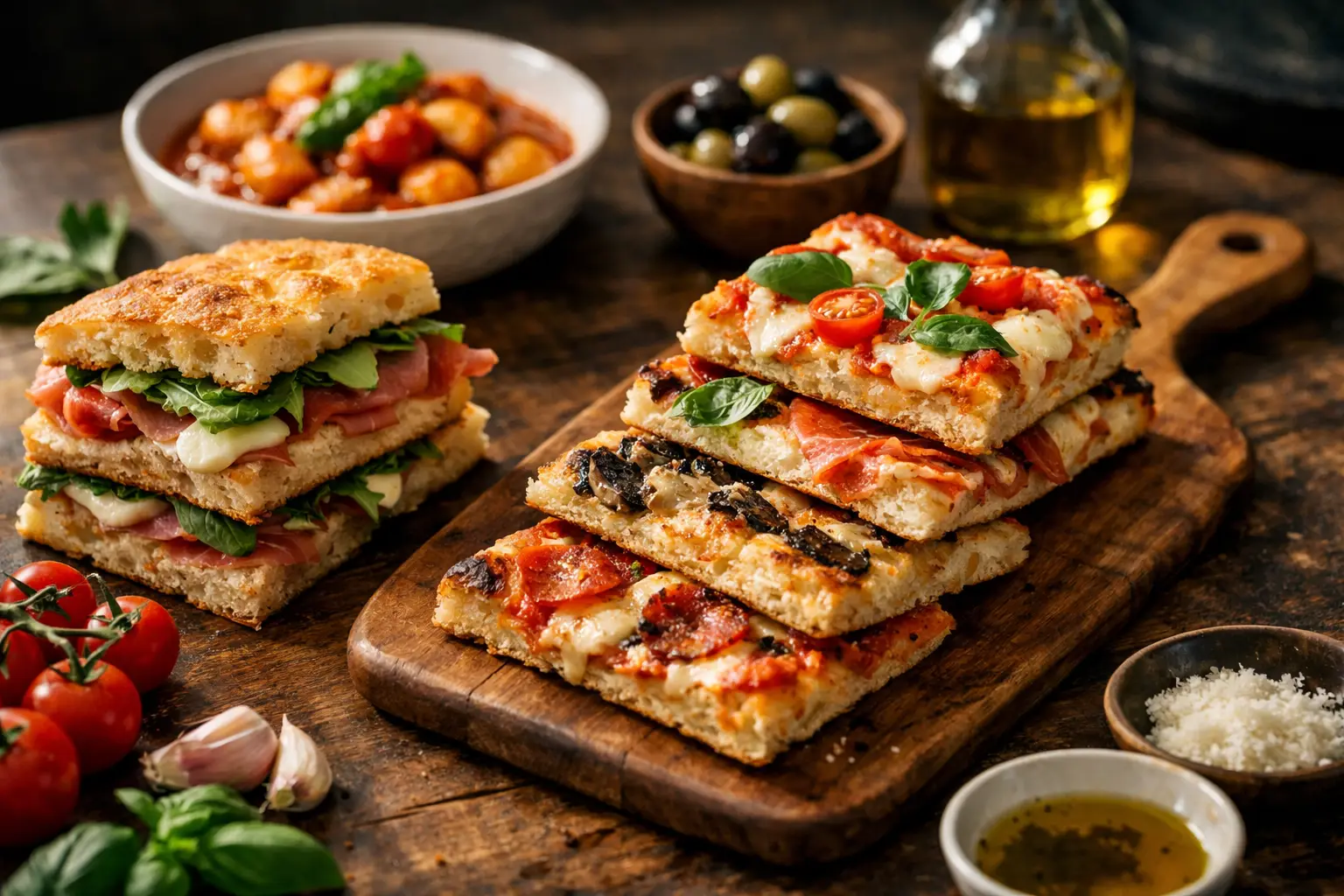
If you find pizza romana in teglia, you are looking at a different proposal from classic round pizza. Here, the rule is an airy base on the inside, croccante on the outside, light but structured. It is a pizza that relies heavily on baking technique. It doesn't just seek to fill. It seeks to surprise from the first bite.
Stuffed focaccia goes another way. It has a more enveloping feel, more like a premium sandwich taken to an Italian level, where the bread doesn't just accompany the filling: it elevates it. And the schiacciata, with its Tuscan identity, has that rustic, crispy, and elegant character all at once, which quickly wins over anyone who wants to try something less obvious.
If you have never tried these formats, that is precisely the moment to do so. Ordering the unknown in a place that masterfully dominates its craft usually turns out better than ordering the familiar anywhere else.
What to order in an artisanal Italian restaurant if you go as a couple or with friends
Here, it pays to think like an Italian: sharing makes sense. Not only because it allows you to try more, but because certain products shine brighter when they arrive at the center of the table and are experienced together.
A very good formula is to start with a simple and well-executed appetizer, continue with two or three house specialties to share, and close with a classic dessert. That sequence leaves room to notice nuances. Plus, it avoids the common mistake of ordering dishes that are too heavy from the start.
If there are two of you, a focaccia or light appetizer and then two different pizza or schiacciata options usually work very well. If there are more, it is worth combining flavors: a more delicate option, a more intense one, and a third that clearly represents the restaurant's identity. This way, the table is turned into conversation, comparison, and experience. Much more interesting than everyone just ordering their own thing.
The starters that are actually worth it
Not every starter deserves to open the meal. In some places, it is pure formality. In a well-conceived artisanal Italian spot, however, the starter primes the palate and introduces the style of the house.
Look for options where the bread, cold cuts, cheeses, or vegetables have their own weight. A well-served burrata, a simple but carefully curated board, or a focaccia with good olive oil and select toppings can be better than any overloaded starter. Less noise, more intention.
If the restaurant does artisanal baking, it is almost always worth starting there. It is a quick way to gauge the level. The crumb, the crust, the crispness, and the aroma say a lot before the main courses even arrive.
And the pasta? It depends on the place
Pasta has a natural magnet. Many people walk into an Italian restaurant and assume they must order pasta no matter what. But in an artisanal place, that depends on what its culinary heart is.
If the house is truly strong in fresh pasta, go ahead. If it isn't, there is nothing wrong with choosing something else. In fact, ordering the main specialty is almost always a better strategy than chasing a generic idea of "Italian food." Italy is not a single table, nor a single recipe. It is region, technique, and character.
That is why, if the restaurant defines itself through Roman pizza, focaccia, or bread-making tradition, it's more worthwhile to honor that identity than to force a dish that doesn't lead the menu. Choosing well is also about understanding what makes each concept unique.
How to know if dessert deserves space
Yes, many times it deserves space. Especially if the rest of the meal was balanced. A well-made Italian dessert doesn't have to be huge or overly sweet. It has to close with elegance.
Tiramisu, panna cotta, or seasonal offerings can work very well, but again, the clue lies in the execution. If the menu takes care of doughs, ferments, dairy, and noble ingredients, it is logical to think that the end has also been well-crafted.
If you shared appetizers and main courses, leaving room for dessert is a great decision. Not just out of craving. Also because it rounds out the experience. That last spoonful often defines the memory you leave with.
The most common mistake when deciding what to order
The number one mistake is ordering out of habit, not based on what is being offered. Choosing the most well-known combination, the heaviest one, or the one most similar to other experiences leaves out the most valuable part of the artisanal restaurant: its uniqueness.
The second mistake is confusing abundance with quality. A memorable artisanal pizza doesn't need excess to shine. It needs an impeccable base, well-treated ingredients, and a composition that makes sense. When that happens, each element stands out more.
And there is a third mistake, very common in impromptu outings: not asking. If a place takes its kitchen seriously, it should also be able to guide you. Sometimes a recommendation from the house completely changes the experience. Especially when there are seasonal products or combinations that best express the identity of the menu.
The best choice is the one that leaves you wanting to come back
If you want to get it right with what to order at an artisanal Italian restaurant, think less about what is familiar and more about what is distinctive. Look for technique, texture, specialty, and balance. Choose what that place makes with pride, not what you could find on any menu.
Therein lies the difference between simply going out to eat and sitting down to experience a concept with identity. And when you find a place that masters the dough, respects tradition, and turns it into something vibrant, modern, and che buono, the right thing to do is not to play it safe. It is to order what makes it unforgettable.