Aug 19, 2026
Artisanal pizza trends 2026 that matter
The conversation around artisan pizza trends for 2026 is no longer about putting increasingly extravagant ingredients on just any base. The real difference is underneath: in the dough, in the time, in the oven, and in that first crispy bite that makes a pizza memorable. For those looking to eat better in Costa Rica, the question is no longer just "what toppings does it have?" but rather "how is it made?".
Artisan pizza enters 2026 with more personality, fewer generic formulas, and a clear requirement: technique that you can feel on the plate. Diners want products with origin, honest processes, and textures that have something to say. Che buono, because that is where Roman pizza in teglia plays in another league.
Artisan pizza trends 2026: dough takes center stage
For years, pizza was sold by its toppings. Extra cheese, meats, intense combinations. In 2026, the star ingredient is well-crafted dough. This is not a superficial trend: it is a response to a consumer who recognizes the difference between a heavy base and a dough that fermented patiently.
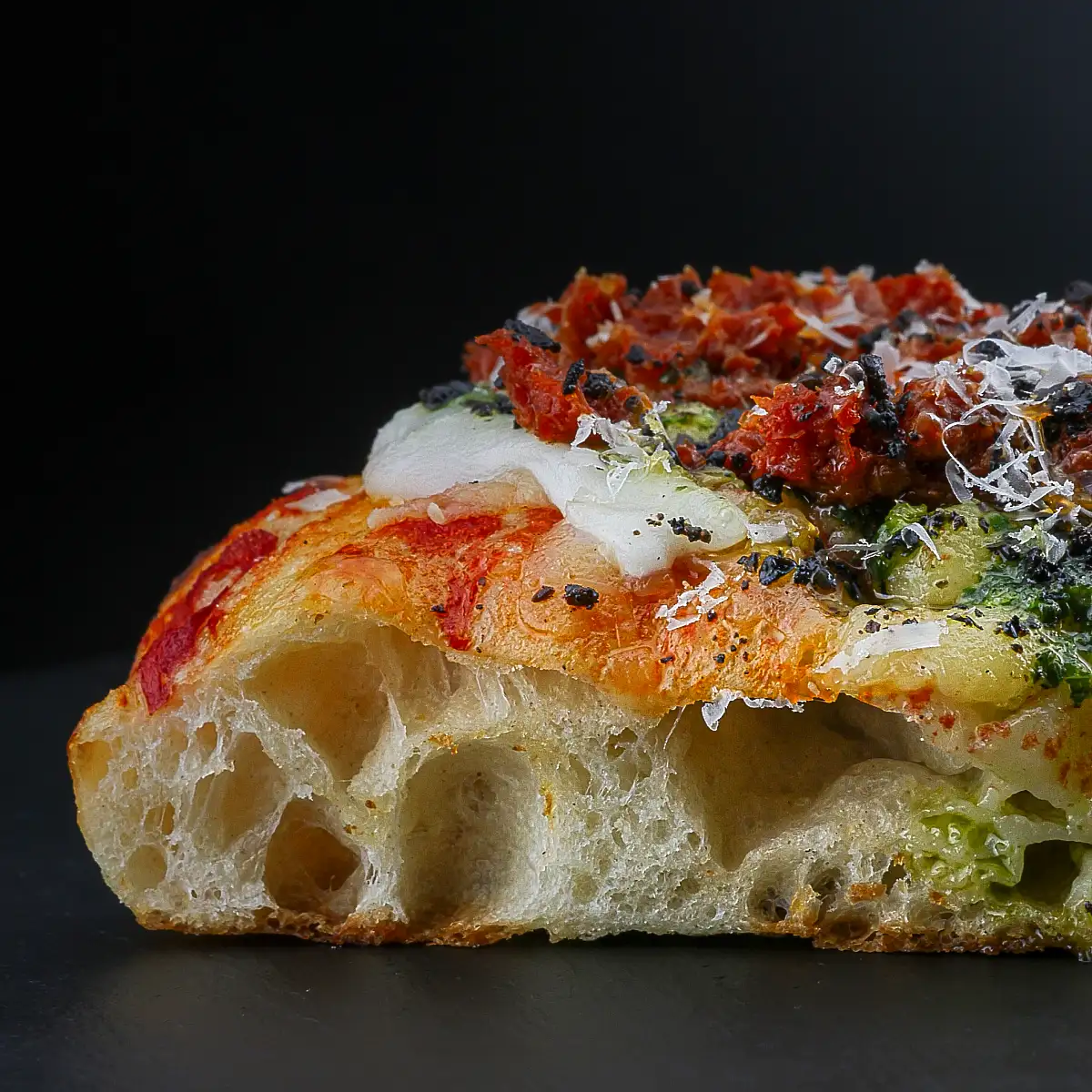
Long fermentations will continue to define the premium category. A dough fermented for 72 hours develops flavor, aroma, and a much more interesting structure. The result should not feel dense or greasy. It should offer an airy crust, a firm base, and that irresistible contrast between crispy on the outside and lightness on the inside.
That does not mean that every pizza has to taste sour or that "long fermentation" is an automatic label of quality. The technique needs precision: the right flour, controlled hydration, temperature, resting, and baking. When everything fits, the pizza doesn't need to hide under a mountain of ingredients. It stands on its own.
More texture, less characterless dough
Texture will be the new everyday luxury. Instead of looking for a pizza that simply fills you up, the public will look for an experience: the snap of the base, the bubbles in the crumb, the light crust, and the melted cheese without turning the slice into an excess.
The Roman-style pizza in teglia responds exactly to that expectation. Its rectangular format, baked in a tray, allows for a crispy base and an open crumb that absorbs flavor without losing structure. It is pizza to eat with your hands, share with friends, photograph, and, above all, repeat.
In this trend, there is also a change of criteria. Artisan pizza is not measured by being huge or by having an inflated crust at all costs. It is measured by balance. A good slice holds the weight of its ingredients, cuts cleanly, and arrives at the table with identity.
Regional formats gain ground
The culinary consumer of the GAM already knows Neapolitan pizza. They like it, they look for it, and it will continue to have its place. But 2026 opens up more space for regional Italian styles that were previously rare in the local market. Curiosity is no longer a small niche: it is now part of the dining out experience.
The square Roman pizza, the stuffed focaccia, and the Florentine schiacciata fit with a generation that wants to try something different without giving up the familiar. They are still bread, cheese, tomato, and good ingredients, but with a different shape, texture, and consumption moment.
The schiacciata, for example, has a more bakery-like and robust presence. Stuffed focaccia turns a quick lunch into an occasion with much more flavor. Pizza in teglia allows you to play with portions, combinations, and moments of sharing. These are not decorative variations: they are expressions of a broad, rich, and delightfully less obvious Italian tradition.
For a date night, an office meeting, or an afternoon with friends, these formats also have a practical advantage. They are easy to share and allow you to try more than one flavor. Of course, sharing should not mean sacrificing quality. Each square has to arrive with a crispy base, well-distributed toppings, and precise baking.
Familiar ingredients, more thoughtful combinations
Another of the 2026 artisan pizza trends will be smart moderation. Fewer ingredients put on for show and more combinations built with intention. An excellent tomato, quality mozzarella, olive oil, and basil can make a memorable pizza if the dough is up to the task. Simplicity demands more, not less.
At the same time, there will be room for well-executed contrasts: roasted vegetables with creamy cheeses, Italian cold cuts with spicy notes, mushrooms with fresh herbs, mortadella with pistachio, or seasonal ingredients that change based on availability. The key is that every element has a purpose.
Vegetarian flavors will continue to grow, but not as a compromise option. The diner expects vegetables treated with respect: roasted, marinated, browned, seasoned. A good veggie pizza should trigger a craving even before anyone asks if it has meat.
We will also see a more careful relationship with spiciness. It's not about burning the palate. It's about adding character with chili, hot honey, infused oil, or cured meats that bring depth. Well-used spice awakens the other flavors and makes a simple recipe feel new.
Premium is now demonstrated, not advertised
In 2026, saying "artisan" will not be enough. People want real signs of craftsmanship: dough prepared over time, visible processes, ovens that do their job, and a team capable of explaining what they serve. The consumer may not know every technical detail, but they perceive when a product has been treated with care.
This changes the way people choose a pizzeria. The experience doesn't just depend on a pretty decoration or an attractive box. It depends on the first slice being as good as the last, on the service recommending with confidence, and on the concept having a clear point of view.
Bianka® Pizza Romana has bet on that criterion since its origin: Roman pizza in teglia, 72-hour fermentation, and a concept that celebrates the Italian baking tradition with an energy of its own. It's not about copying an international trend. It's about serving a specialty with conviction in San Pablo de Heredia.
Price also enters this conversation. A premium artisan pizza can cost more than a mass-market option, and that makes sense when there are raw materials, time, and technique behind it. But the value must be felt. If the dough is memorable, the ingredients are of high quality, and the experience delivers, the customer understands why they chose something different.
Ordering better will also be part of the trend
Artisan pizza is not always enjoyed the same depending on the context. To eat fresh out of the oven, dining in allows you to better perceive the aroma, texture, and crispiness. For a night at home, ordering delivery is still a great option, but it's best to choose formats that travel well and follow reheating recommendations if there are any.
In 2026, customers will be more specific when ordering: they will ask which pizza is crispier, which is best for sharing, which option is more intense, or which combination works for a first visit. This curiosity is good news. It forces pizzerias to know their product and helps each person find their style.
Not everyone is looking for the same thing. Those who love a very soft and elastic pizza might prefer another style; those who want a firm, airy base with a crisp snap will find in the Roman pizza an experience hard to match. There is no single correct pizza. But there is a huge difference between a pizza made out of routine and a pizza made with craftsmanship.
The next time you want to step away from generic pizza, order with curiosity: ask about the fermentation, the format, and the texture. Then, bite the crust first. That's where the conversation worth having begins.