Aug 15, 2026
Authentic Italian flavors that you can truly taste
The difference is not in putting basil on any pizza and calling it Italian. Authentic Italian flavors are recognized from the very first bite: a dough with character, ingredients that do not hide under an excess of cheese, and a texture that begs to be repeated. Che buono is not a decorative phrase. It is what happens when there is technique, ingredients, and respect for the recipe.
For those who enjoy eating well in Costa Rica, tasting real Italian cuisine means going beyond the familiar round pizza. Rome, Florence, Naples, and each region have their own codes. The doughs, the formats, the baking times, and even the way of understanding a filling change. This variety is precisely what keeps Italian gastronomy surprising.
Authentic Italian flavors: less excess, more intention
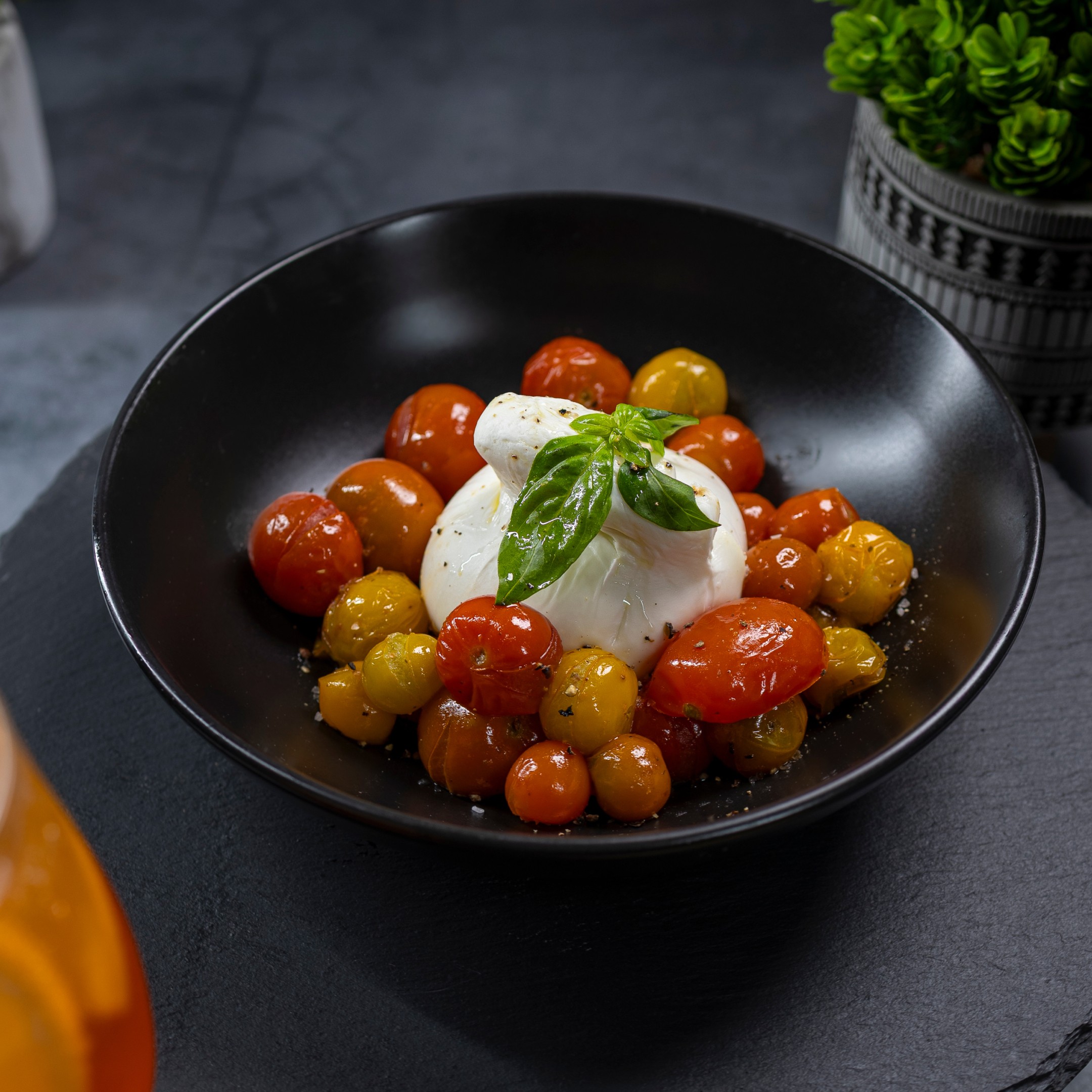
Well-executed Italian cuisine does not need to saturate the plate. It needs balance. A bright and slightly acidic tomato, a mozzarella with good moisture, olive oil that provides aroma, and a dough that has flavor on its own. When each element is at its peak, there is no need to disguise anything.
This also implies accepting that authenticity is not always the same as what many people expect. An Italian pizza may have less cheese than a commercial version. It can be lighter, more croccante, or have less puffed edges. It can arrive on a square tray, be cut with scissors, and feel completely different from chain pizza. It is not a lack of generosity. It is another tradition, with another logic and a much more defined personality.
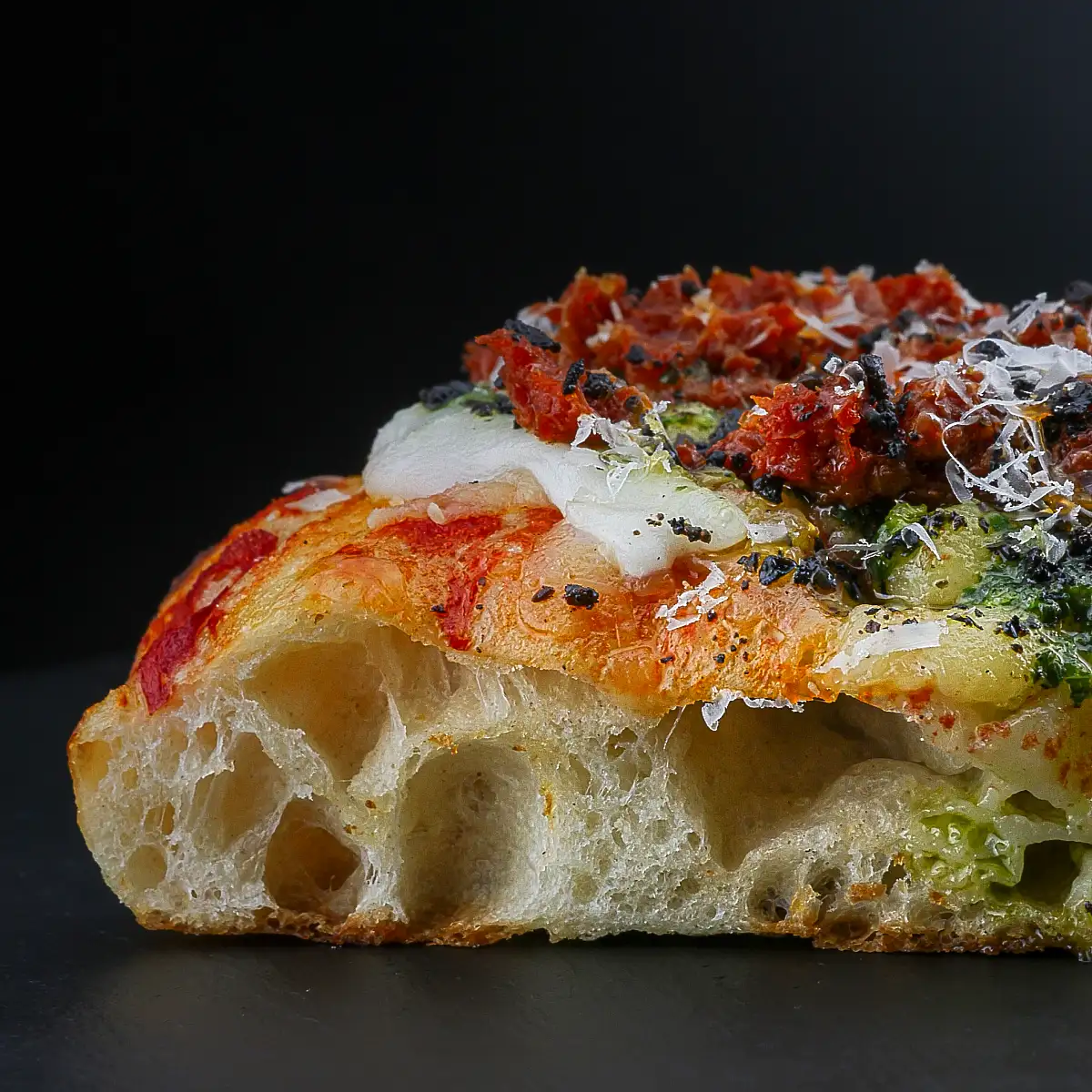
The pizza romana in teglia is a great example. Its base is baked on a tray, achieving a crispy surface and keeping an airy, soft crumb full of small air pockets. The contrast matters: croccante on the outside, light on the inside. It is a pizza designed to hold ingredients without losing that bite that makes it memorable.
The dough: where the real flavor begins
A quick dough can satisfy hunger. A patiently fermented dough builds an experience. Long fermentation transforms the flour, develops deeper aromas, and provides a texture that cannot be achieved with shortcuts. In a good Roman pizza, the dough is not a simple support for the toppings: it is a central part of the flavor.
The 72 hours of fermentation make sense when worked with precision. They are not a number to make a menu look pretty. They require controlling hydration, temperature, resting, and handling. The result can be felt in a lighter dough when eating, with a better structure and that golden finish that crunches without becoming hard.
There is also a detail that separates an average experience from a great pizza: the baking. The base must have color, firmness, and small toasted areas that add flavor. If it comes out pale, soggy, or limp, the most expensive ingredients are not going to save it. If it burns, the bitterness steals the spotlight. The correct point is a matter of craftsmanship.
Not every crispy pizza is croccante
There is a huge difference between crispy and dry. A croccante dough breaks delicately when bitten, but retains a lively crumb. A dry dough feels flat, heavy, and forces you to have a drink to finish it. It seems like a detail, but it changes everything.
That is why it is worth looking for places that talk about processes and demonstrate them on the plate. Authenticity is not decided by an Italian flag on the wall. It is noticeable in the cut of the slice, in how the dough holds a stracciatella without collapsing, and in that slight sound when breaking the base.
Ingredients that tell a story
In Italy, ingredients do not compete with each other. They accompany each other. The tomato sauce must have freshness and natural sweetness, not taste like ketchup or dominate the entire preparation. The mozzarella must melt with balance. The cured meats, vegetables, creams, and aged cheeses have to add layers without erasing the flavor of the dough.
Let's think of a simple combination: tomato, mozzarella, basil, and olive oil. It seems easy. In reality, it exposes every mistake. If the tomato is watery, the base loses crispiness. If the mozzarella releases too much moisture, the center becomes soft. If the oil lacks quality, it does not provide that final perfume that unites the whole. Minimalist recipes are demanding because they have nowhere to hide.
Italian fillings also have a lot to say. The Florentine schiacciata, for example, is a flat, golden, and crispy bread preparation, ideal for carrying fillings with personality. Mortadella, pesto, arugula, soft cheeses, or roasted vegetables can work spectacularly, but they depend on precise proportions. A good filling should not feel like a squashed sandwich. It must maintain contrast, temperature, and texture.
Tradition does not mean rigidity
Eating authentic does not force you to always repeat the same combinations. Italian tradition has evolved over centuries and each region adapts recipes to its products. The important thing is to understand the basis: clear technique, respected ingredients, and a coherent proposal.
In Costa Rica, good Italian cuisine can incorporate local product when it meets the standard of the dish. What it should not do is use the word "Italian" as an excuse to mix flavors without intention. Fusion works when there is judgment. If anything goes, nothing stands out.
How to recognize an Italian experience that is worth it
Before ordering, look at the format and listen to how they talk about the product. A specialized place knows how to explain what it prepares and why it prepares it that way. It does not need to sell you a Roman pizza as if it were Neapolitan, nor promise a traditional recipe while serving a generic dough.
When you try it, pay attention to the first cut. The base should remain firm, even with wet ingredients. Then look at the crumb: look for air, elasticity, and a slightly developed flavor, not an insipid dough. Finally, feel the balance. When you finish a slice and want to keep eating for pleasure, not from an excess of salt or grease, there is work well done.
Temperature also matters. A pizza in teglia fresh from the oven has a special energy: the cheese is at its peak, the aromas rise, and the crust retains its best texture. If you are going to order takeout, it is best to eat it as soon as possible. Some formats travel better than others, and recognizing that detail is part of choosing wisely.
At Bianka® Pizza Romana, this culture takes shape in pizza in teglia, stuffed focaccia, and schiacciata crafted to show that Italian cuisine has much more to offer than the usual option. It is a proposal for those who want a different outing, a table with conversation, and a slice that looks as good as it tastes.
The pleasure is in tasting with curiosity
Next time you crave pizza, don't just stick with what's familiar. Order a slice of fermented dough, choose a filling that combines contrast, and let the texture tell you the rest. You might discover that your favorite Italian flavors were not in the pizza you knew, but in the one you hadn't tried yet.
Eating better doesn't require knowing everything about flours or Italian regions. It only requires curiosity and the desire to choose a proposal that takes the product seriously. Save that craving for a special occasion, share it with good company, and always look for that first bite that sounds croccante.