Aug 13, 2026
Best Italian dishes to share at the table
A well-set Italian table does not start with an individual plate and end in silence. It starts with freshly baked dough, aromas of tomato, melted cheese, and several hands reaching for the next slice. The best Italian dishes for sharing have that quality: they turn a casual outing, a dinner with friends, or a family lunch into a more generous, flavorful, and conversational experience.
The key lies in choosing preparations that keep up with the pace of the table. Not everything Italian is shared equally. There are dishes that look incredible, but arrive in small portions or lose texture while being distributed. Others, on the other hand, are made to cut, taste, and order again. In Costa Rica, where going out to eat is also a plan to discover something different, artisanal doughs, antipasti, and crispy bites have the advantage.
Best Italian dishes for sharing without failing
Order matters. A good table does not need to fill every inch with choices. It needs contrast: something crispy, something creamy, something fresh, and a central dish that is actually enough for everyone. These are the choices that work best when the intention is truly to share.
Roman pizza in teglia: the protagonist of a large table
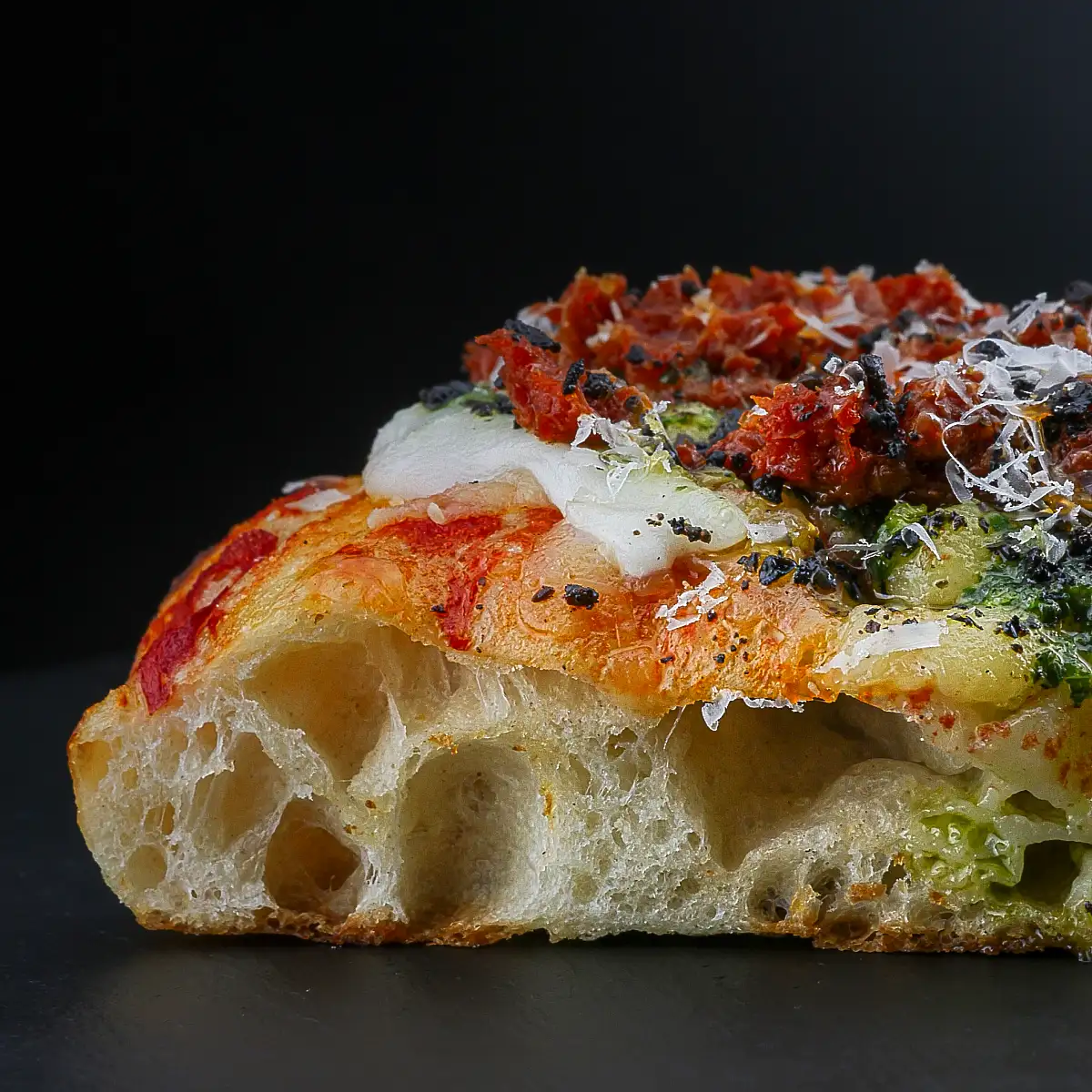
The roman pizza in teglia has a format that invites sharing from the first glance. It is baked in a pan, cut into squares or rectangles, and allows for ordering different flavors without turning the table into a puzzle of boxes and uneven slices.
Its main difference lies in the texture. A well-fermented dough, worked with patience and baked at the right temperature, must have a crispy base, a light interior, and a bite that holds the ingredients without folding. It is not the classic round pizza. It is a Roman expression with its own personality, airier, crispier, and perfect for trying several toppings in a single sitting.
For a group of three or four people, the smartest move is to combine two contrasting flavors. A classic with tomato and mozzarella balances well with a more intense option, with Italian cured meats, roasted vegetables, or character-filled cheeses. If the table includes people with different tastes, pizza in teglia solves a lot: each square can be a discovery, not a negotiation.
Stuffed focaccia: when sharing calls for something more substantial
The stuffed focaccia takes the experience a step further. It has a soft crumb, a golden surface, and that touch of olive oil that perfumes the dough without making it heavy. Being stuffed, it works especially well for a midday meal, an informal dinner, or a gathering where everyone arrived truly hungry.
It is not advisable to choose it as a side dish if there are already too many doughs on the table. But it can indeed be the center of attention if combined with fresh options and some bites. A focaccia cut into generous portions allows each person to taste the filling and, at the same time, leave room to share something else.
The best filling depends on the moment. Milder ingredients like mozzarella, mortadella, or vegetables work when you want a light and elegant meal. More savory or spicy flavors are ideal for a table of friends gathered for something intense, with cold drinks and a desire to prolong the conversation.
Schiacciata: crispy, stuffed, and hard to forget
The Florentine schiacciata has that effect that food lovers look for: it seems simple, but its execution makes all the difference. It is a thin, golden, and crispy dough, designed to wrap quality ingredients and maintain an irresistible texture at the first bite.
For sharing, it has a huge point in its favor: it cuts easily and keeps its character. Each portion offers a contrast between crispy bread, creamy filling, vegetables, charcuterie, or cheese. It is a great choice for those who have already tried pizza many times and want to explore another side of the Italian baking tradition.
On a varied table, schiacciata looks best accompanied by light appetizers. That way, its dough does not compete with everything else. It is also an excellent idea for sharing between two people who want to eat deliciously, try something less common, and avoid the typical sandwich format.
Supplì and fritti: the first bite that wakes up the table
Before serving the main dough, Italian fritti do their job: they whet the appetite and provide a different texture. The Roman supplì, made with rice and a melting cheese center, is one of those bites that disappear quickly. Its exterior must be golden and crispy; inside, the rice must retain flavor and moisture, not feeling compact or dry.
This also includes croquettes, fried olives, or battered vegetables, depending on the restaurant's offering. They are ideal for groups of four or more people because they allow for snacking while the main dish arrives. For two people, a shared portion is enough. Ordering too many fried foods can overwhelm the palate and take away the spotlight from an exceptional pizza or focaccia.
The rule is simple: the fritti should create anticipation, not replace the meal. If the first bite arrives hot, crispy, and well-seasoned, the table starts off on the right foot. Che buono.
Antipasti: the balance that prevents a heavy table
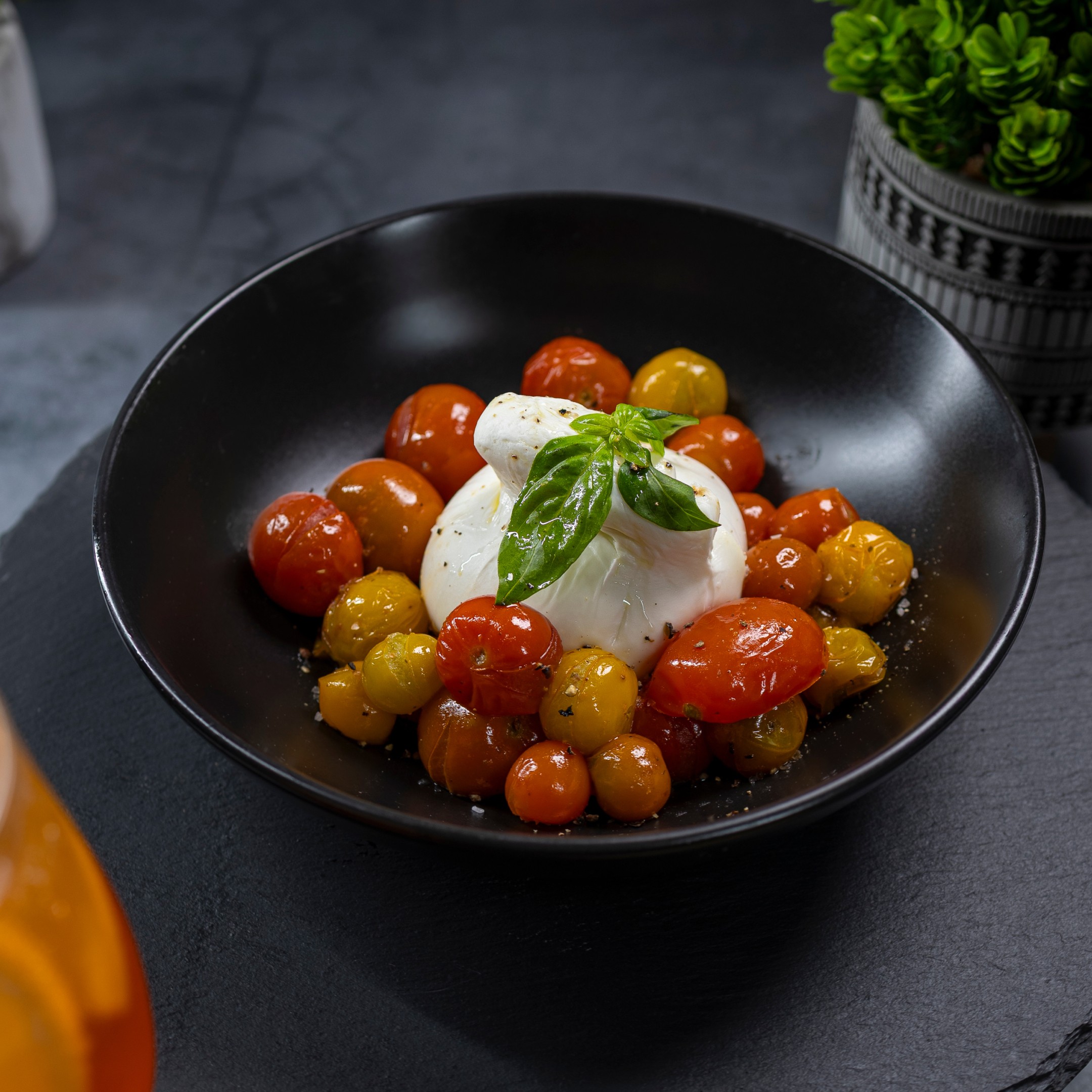
A well-chosen antipasti platter is not decorative filler. It is the breather that a table with doughs, cheese, and cured meats needs. Olives, marinated vegetables, burrata, tomatoes, prosciutto, and Italian cheeses bring acidity, freshness, saltiness, and creaminess.
Here, it is best to think about balance rather than quantity. If the main dish includes cured meats, the antipasto can prioritize vegetables or a fresh preparation. If the chosen pizza is more vegetable-based, a platter with charcuterie can add depth. The goal is for every bite to have a reason to be there.
Sharing antipasti also changes the pace of the meal. It gives time to talk, order another drink, and decide which combination of doughs will be next. It is an especially valuable option for a date, a relaxed business lunch, or an outing where the plan is to stay for a while, not just eat quickly.
How to choose according to the size of the group
For two people, a Roman pizza in teglia with two flavors or a schiacciata accompanied by a small antipasto is usually an excellent formula. There is variety without excess and space to enjoy each texture. If both have a big appetite, a crispy appetizer can complete the experience.
For three or four people, it is best to build a table with a central dough dish, a second option of contrasting flavor, and an appetizer. For example, Roman pizza plus stuffed focaccia and supplì. This combination has volume, different types of bite, and enough variety so that no one is left wanting to try something.
When the group exceeds five people, the strategy changes. Instead of ordering many similar dishes, combine formats: pizza in teglia to cut in the center, antipasti to start, fritti to snack on, and a focaccia or schiacciata to add a different filling. This way the table feels abundant but not repetitive.
You also have to consider dietary restrictions. A well-thought-out table includes at least one real vegetarian option, not a tasteless, improvised alternative. The best Italian plant-based ingredients, from mushrooms and eggplant to tomato, basil, and cheeses, have enough character to shine on their own.
Dough is not a detail: it defines what is shared
In real Italian cuisine, the dough is not just a base. It is a central part of the dish. That is why a long fermentation can completely change the experience: it develops flavor, creates a lighter structure, and allows for achieving that contrast between golden crust and open crumb that is remembered.
A pizza loaded with ingredients may look tempting, but it is not always the best for sharing. If the dough does not support the weight, the slices become awkward and the texture is lost. Less excess and more technique is usually the answer. A good tomato, quality mozzarella, olive oil, and a dough worked for hours have more impact than an endless list of toppings.
At Bianka® Pizza Romana, the 72-hour fermentation and the in teglia style put that technique at the forefront. It is a proposal designed for those who want to try a different pizza in San Pablo de Heredia: square, crispy, and made to be shared in the center of the table.
The next time you organize an outing, do not just think about what looks good on the menu. Think about what will go around from hand to hand, what retains its texture, and what will make someone say: "try this bite." That is where an Italian table worth repeating begins.