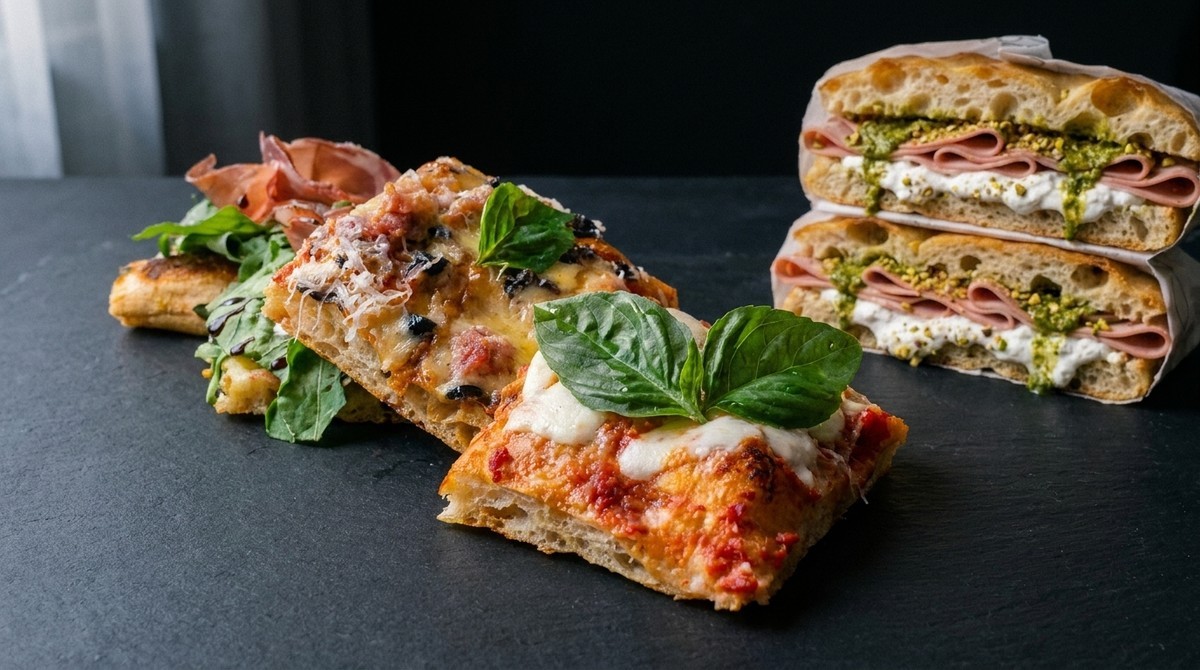
The first bite reveals everything: a base that sounds croccante when you break it, air in the crumb and toppings that don't weigh down the dough. In the Italian dinner vs traditional pizza conversation, the difference goes beyond shape or how many toppings each slice carries. It lies in the technique, the pace of the meal and what you want to feel when you go out to eat.
Traditional round pizza has its place. It's familiar, practical and handles cravings fast. A well-planned Italian dinner offers something broader, though: long-fermented breads, contrasting textures, ingredients chosen with intention and formats you share in a different way. If you're looking for a night out that feels special, that difference matters.
Italian dinner vs traditional pizza: more than a dough comparison
In many cases, what we call traditional pizza is the round pizza with triangular slices: stretched dough, sauce, cheese and a bake designed for fast service. It can be delicious, especially when it's well made. The trouble starts when people assume every Italian pizza has to look, feel and eat the same way.
Italy doesn't have just one pizza. It has regions, bakeries, ovens, fermentation times and ways of understanding dough. Rome, for example, built its own identity around light, crisp, high-hydration bases. Florence has its schiacciata, a flatbread with intense character, ideal for generous fillings. These are recipes with logic, history and technique, far more than decorative variations.
An Italian dinner can include pizza, of course. It just doesn't shrink the experience to a round of cheese and sauce. It swaps the question “what toppings does it have?” for “how was this dough made, what texture does it have and how does it go with the rest of the table?” That shift turns a casual meal into a dining experience with personality.
Fermentation: the detail that changes the bite
A rushed dough can fill you up. A patiently fermented dough can stay in your memory. Long fermentation lets the dough develop aroma, structure and a more open crumb. It also changes how it feels to eat: less heavy, lighter and with a flavor of its own that doesn't depend on burying it under too much cheese or too many toppings.
In a Roman pizza in teglia, 72-hour fermentation is a central part of the result, far more than a fact to dress up a menu. The dough gets time to evolve, and the oven finishes the job with a base that's firm, golden and crisp outside while the inside keeps its air and softness.
That's one of the clearest contrasts with many fast-produced traditional pizzas. Round pizza usually puts elasticity and a pronounced rim first. Romana in teglia goes for a bite that's more like good bread, more structured and surprisingly light. An Italian name doesn't make it better. It comes out ahead when the technique is executed with precision.
One caveat: long fermentation doesn't automatically mean quality. If the hydration is miscalculated, the bake fails or the toppings throw off the balance, the promise falls apart. The real difference lies in the craft. That's why the time the dough spends waiting can't define a handmade pizza on its own; every decision on the way to the table counts.
Round, square or filled: format counts too
Round pizza is individual by nature. Each person picks an order, gets a plate and cuts their own slices. It's comfortable, direct and familiar. For a quick meal or a one-off craving, it works very well.
Square Roman pizza sets up a different dynamic. Its rectangular cuts let you try several flavors in one visit, share with friends and build a livelier table. A piece with mortadella, another with roasted vegetables, another with bolder combinations: the experience moves around, gets talked about and gets photographed before it disappears.
Filled focaccia and schiacciata take that idea even further. The bread stops being a side and becomes the star. With well-balanced fillings, it turns into a hearty option for lunch, dinner or a weekend plan that doesn't fall into the predictable.
No one needs to claim square always beats round. Some nights call for a classic, simple, personal pizza. If you're going out with a partner, friends or family and want to try more than one flavor profile, though, Roman formats have an obvious advantage: they invite sharing without giving up texture or quality.
When toppings respect the base
A heavily loaded traditional pizza can grab your attention from across the room. Lots of cheese, lots of meat, extra sauces and stuffed crusts promise abundance. Sometimes that's exactly what you're craving. Excess has a cost, though: a dough that disappears under the weight and flavors that compete with each other.
In an Italian dinner with a handmade approach, every ingredient needs a reason. The acidity of a tomato, the richness of a cured meat, the freshness of an herb or the salty touch of a cheese should talk with the dough and leave it in view. The best topping isn't the most expensive or the most abundant. It's the one that makes you want another bite.
This way of cooking takes more care. A croccante base needs toppings that keep their texture. A focaccia filling should be generous without getting so wet it ruins the bread. Cheese should melt without turning each slice into a heavy block. It sounds simple until you taste a version that's done right.
That's why choosing a specialized Italian spot makes sense if you value the details. This is no dinner to eat in a rush and forget an hour later. It's an experience where you notice the contrast between the crisp crust, the airy crumb and the toppings that arrive in balance.
Which one suits each plan?
If you need a quick fix, know exactly what you want to order and prefer an individual format, traditional round pizza can be the right choice. Not every outing needs a ritual. Sometimes you just want a family-size pizza and a flavor you know.
When the occasion calls for something different, though, a Roman concept lifts the plan. It's ideal for a date that deserves conversation, a night out with friends who want to share several flavors or a family get-together where the middle of the table is part of the experience. It's also an excellent way in for foodies who won't settle for the same generic pizza anymore.
In San Pablo de Heredia, Bianka® Pizza Romana puts that difference on the table with pizza in teglia, filled focaccia and a proudly specialized take on Italian tradition. It has no interest in imitating the mass-market pizzeria. It wants every cut to have character, texture and a reason to come back.
The next time you see a square pizza, don't judge it as a round one that changed shape. Think of it as what it is: another way of understanding bread, the oven and the pleasure of sharing. Order variety, listen for the crunch when you break it and let dinner have a little more Italy in it. Che buono.