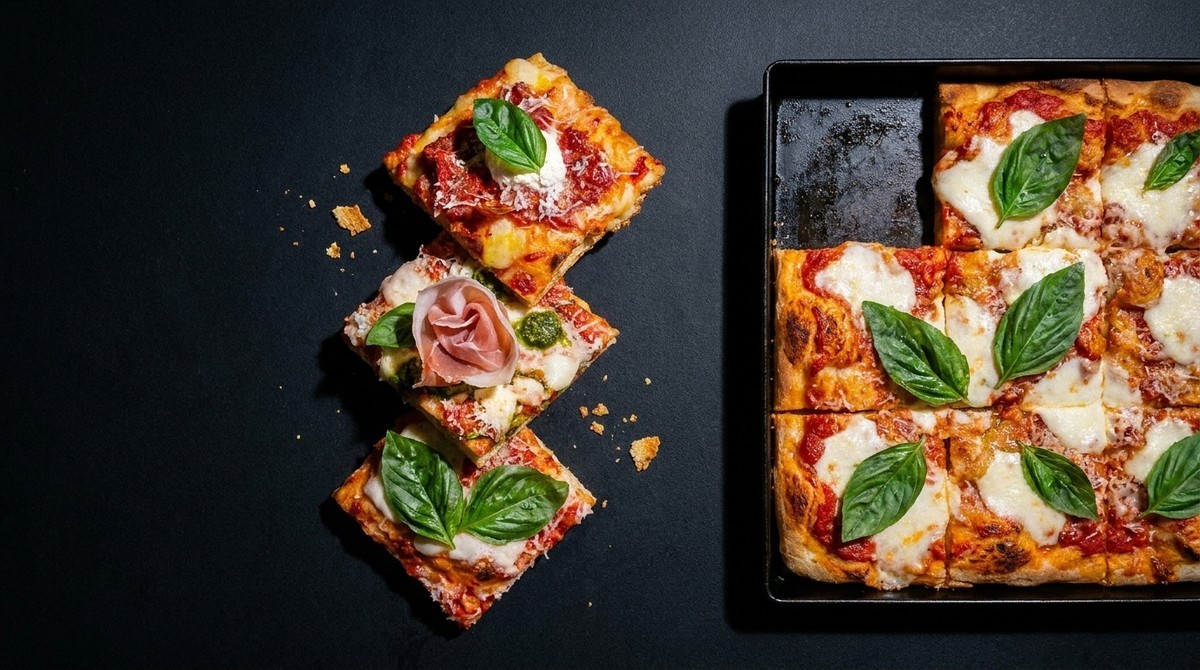
Rome does not cook to impress with excess. It cooks so that a precise ingredient, a well-executed technique, and an unforgettable texture do all the work. That is the strength of Roman cuisine: direct, intense, popular, and deeply artisanal. From a creamy pasta without cream to a rectangular pizza with a croccante base, every preparation has character.
For those looking to eat differently in Costa Rica, the Roman approach goes far beyond ordering a pizza. It is a way of understanding dough, cheese, cured meats, vegetables, and time. Because Rome's great secret is not complicating the dishes: it is respecting what is essential until it becomes extraordinary. Che buono.
Roman cuisine: fewer ingredients, more identity
The cooking of Rome was born, in large part, of necessity and creativity. For centuries, Roman families made use of accessible ingredients, humble cuts, and long-keeping products to create recipes that today are icons of Italy. That is why people speak of a frank cuisine, without disguises, and with a personality you recognize from the first bite.
Pecorino romano brings a salty, deep punch. Guanciale, made from cured pork jowl, delivers fat, flavor, and a crispy texture that cannot be fully replaced. Black pepper does not decorate: it perfumes and wakes up the dish. The pasta should arrive at the right point, not overcooked. Everything has a function.
That apparent simplicity demands precision. When a recipe uses few ingredients, there is nowhere to hide a mistake. A low-quality cheese, overcooking, or a poorly emulsified sauce changes the result completely. Roman cuisine demands product, skill, and judgment.
Four pastas that explain Rome
Carbonara is probably the most famous, but also one of the most misunderstood. The Roman version is built with egg, pecorino romano, guanciale, and black pepper. It does not include cream. Its silky texture comes from emulsifying the egg with the cheese, the fat from the guanciale, and the pasta cooking water, at a controlled temperature so the egg does not turn into scrambled eggs.
Cacio e pepe takes the idea even further: pasta, pecorino romano, black pepper, and cooking water. It looks minimal, but it asks for real technique to form a smooth, intense cream without lumps. It is a trial by fire for any Italian kitchen that takes its craft seriously.
Amatriciana adds tomato and guanciale, while gricia leaves out the tomato and comes close to the logic of carbonara, but without egg. All four share the same root: concrete ingredients, powerful flavors, and no unnecessary filler.
Roman pizza is not trying to be Neapolitan
Here is a difference worth celebrating. Neapolitan pizza is round, with a high rim, soft and flexible in the center. Roman-style pizza in teglia, by contrast, is baked in a pan, presented in a rectangular format, and aims for a light base with a crunch you can hear. They are two great Italian styles, but they are not competing to be the same thing.
Roman pizza in teglia is recognized by its airy dough, its visible alveoli, and a croccante crust that supports the toppings without becoming heavy. It can be sold by the slice, combine flavors on the same tray, and open space for toppings that range from an impeccable margherita to bolder combinations.
Its magic begins long before the oven. A long fermentation allows the dough to develop flavor and a more complex structure. It also requires hydration, folds, rest, and a bake capable of browning the base without drying the interior. It is not a fast pizza or a generic dough. It is Italian baking taken to another level.
At Bianka® Pizza Romana, that vision is expressed in doughs fermented for 72 hours, a distinctively croccante texture, and the in teglia format that has made Rome a worldwide reference for pizza by the slice. It is an experience designed for those who want to try something with identity, not one more copy of the usual round pizza.
Texture leads
In Roman pizza, texture is not a detail. It is part of the flavor. A good slice should feel light to lift, firm at the base, and soft in its crumb. When you bite, the contrast appears: a crispy crust, air in the dough, melted cheese, and toppings that keep their personality.
That is why a well-made Roman pizza works so well for sharing. Each square has a presence of its own and lets you move through different flavors without losing consistency. It is ideal for a dinner with friends, a date, or a family gathering where everyone wants to try more than one option.
Not all long-fermented doughs taste the same, of course. The result depends on the flour, the hydration, the temperature, the handling, and the oven. Fermentation by itself is not a guarantee. But when it is accompanied by technique, you notice it: a tastier, lighter, more memorable dough.
Beyond pasta: the cravings of the Roman street
Rome is also eaten standing up. Its markets, bakeries, and counters have turned fast food into an expression of craft. The most beloved example is the supplì: a tomato-and-cheese rice croquette, breaded and fried until it is golden outside and melting inside. When you break it open, the cheese should stretch. If that effect is missing, the magic is missing.
There are also carciofi alla romana, artichokes cooked slowly with garlic, mint, and olive oil, and carciofi alla giudia, fried until they open like crispy flowers. They are dishes that show Roman cuisine knows how to be vegetable, elegant, and substantial at the same time.
The quinto quarto, or fifth quarter, represents another historical face of the city: the use of offal and less valued cuts. It may not be the entry point for everyone, but it explains a great deal of the Roman spirit. Here the whole product is honored, waste is avoided, and the humble is turned into something desirable.
How to recognize a true Roman experience
Authenticity does not depend on filling a menu with Italian names. It is perceived in concrete decisions. In a pasta where the cheese is integrated and does not fall as a heavy layer. In guanciale that is truly crispy. In a pizza whose base keeps its structure until the last bite. In a focaccia that smells of freshly baked bread, olive oil, and patience.
It is also worth distinguishing tradition from confusion. Schiacciata, for example, belongs to the bakery tradition of Florence, not Rome. That does not take away its value: on the contrary, it widens the journey through Italy when it is presented with honesty, good technique, and well-chosen fillings. Italy has many regional cuisines, and each one deserves to keep its own voice.
When you order Italian food, it is worth asking a simple question: does this dish have a reason to exist, or only a pretty name? A specialized proposal can be modern and creative without losing its roots. The key is that the innovation adds something, rather than covering up the product.
Rome in every slice
Roman cuisine has a quality that is hard to fake: it feels alive. It has the perfume of freshly ground pepper, the sound of a croccante base as it breaks, the intensity of pecorino, and the immediate pleasure of a well-fermented dough. It does not need ornaments to stay in the memory.
The next time you want an Italian experience with more texture, more craft, and much more character, look for a slice that truly crunches. Order it to share, try more than one flavor, and let the dough do its work. Rome fits in a well-baked square.