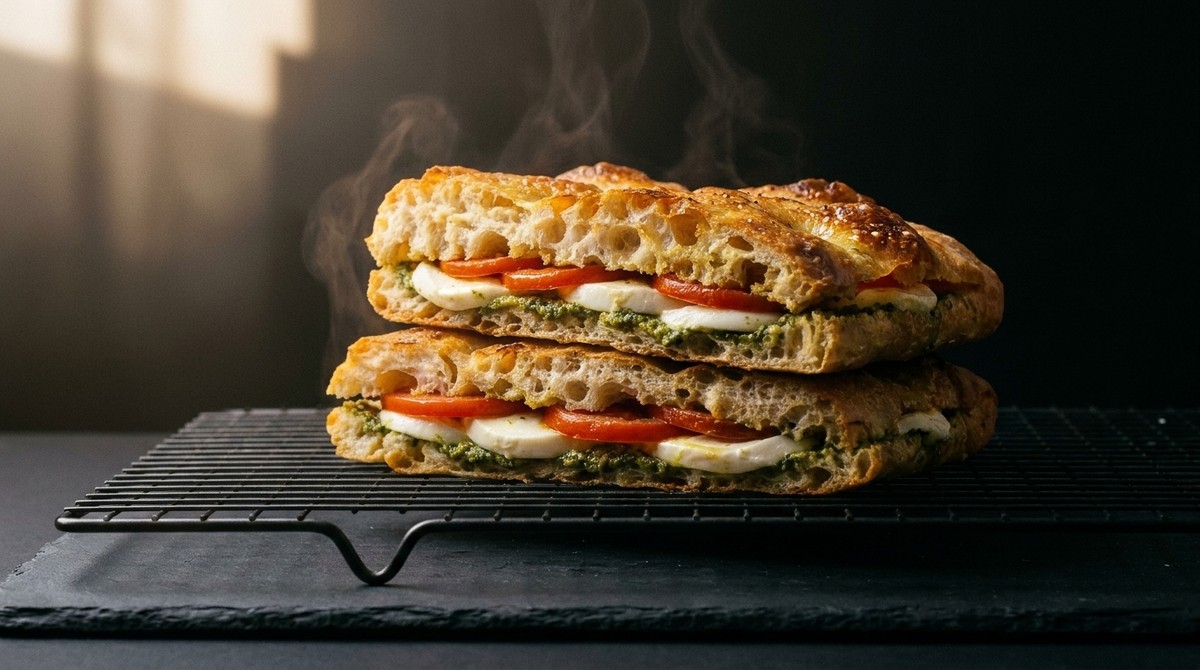
A freshly made filled focaccia has a moment of glory that's hard to repeat: a croccante base, an airy crumb, a hot filling and that contrast that makes you want another bite. If a piece is left over, though, knowing how to store filled focaccia makes the difference between enjoying it tomorrow and finding a soggy, cold dough with no character.
The good news is that it keeps very well. The catch is understanding that you can't treat focaccia like any sandwich. Its handmade dough, its hydration and its fillings need a little strategy. Che buono the next day too.
Step one: let it breathe before you store it
The most common mistake happens right after you eat: sealing the focaccia inside a container or bag while it's still hot. The steam gets trapped, settles on the surface and turns the croccante soft. The focaccia isn't bad after that, but it loses a good part of what makes it special.
Let it rest at room temperature for 20 to 30 minutes, on a rack or an uncovered plate. You're letting the excess steam escape, so don't forget about it for hours. Once it's warm or completely cool, you can pack it up.
If the filling has delicate ingredients like chicken, cured meats, creamy cheeses, beef, tuna or cooked vegetables, don't leave it out of the fridge for more than two hours. On an especially hot day, cut that time to one hour. In Costa Rica, that detail matters.
How to store filled focaccia in the refrigerator
For a piece you'll eat within the next two or three days, the refrigerator is the best option. First, wrap it individually in parchment paper or aluminum foil, without squeezing it too tight. Then put it in an airtight container or a well-sealed bag.
The double wrap does two things: it keeps the focaccia from soaking up smells from other foods and it limits moisture loss in the crumb. The dough needs to keep some moisture inside while staying free of condensation outside. That balance is the secret.
Keep it in the middle of the refrigerator and away from the back wall, where the cold tends to be harsher. If you have several pieces, separate them with parchment paper. That way they don't stick together and you can reheat only what you're actually going to eat.
Refrigeration keeps the filling safe, but it has a cost: the cold temporarily hardens the bread. That's why reheating it well is part of the experience, and you shouldn't treat it as optional.
How long it lasts, depending on the filling
A focaccia with cheese, roasted vegetables or cured meats can keep well for up to three days in the fridge. If it includes fresh greens, very juicy tomato or cold sauces, eat it sooner, ideally the next day. Greens wilt, tomato releases water and the texture changes fast.
If the focaccia has a very wet filling, like eggplant in sauce, sautéed mushrooms with plenty of juice or very fresh mozzarella, expect a less croccante base when you reheat it. The dough hasn't failed; that's simply how those ingredients behave. The oven can bring back a lot, but it can't remove all the moisture that moved into the bread over hours.
The oven is the answer for bringing back the croccante
The microwave heats fast, yes. It also softens the bread. For a filled focaccia that's truly memorable, use it only if you have no other choice.
Preheat the oven to 180 °C. Take the piece out of the fridge while the oven heats, remove any plastic or paper that isn't oven-safe and place it directly on a tray or rack. Heat it for 8 to 12 minutes, depending on its thickness and filling.
If the top is already golden but the center is still cold, cover it loosely with foil for a few minutes. If the base needs more firmness, leave it directly on the rack for the last two or three minutes. You're after even heat: a croccante outside, a hot inside and melted cheese when the filling calls for it.
An air fryer also works very well for single pieces. Use a temperature close to 170 °C and check at five minutes. Because it concentrates heat, it can brown a small focaccia too fast. Better to check early than sacrifice that Italian crust for one extra minute.
Can you freeze filled focaccia?
Yes, and it's an excellent idea if you know you won't eat it soon. The key is to freeze it fresh, before it spends three days in the fridge. The sooner it goes into the freezer, the better it will keep its flavor and structure.
Wait until it has cooled completely. Wrap each piece first in parchment paper and then in foil or a freezer bag, pressing out as much air as you can. Write down the date if you're freezing several pieces. Ideally, eat it within a month to enjoy it at its best.
You don't need to thaw it all the way before heating it. You can put it straight into the oven at 170 °C, covered with foil for the first 12 minutes. Then remove the cover and let it finish browning for another five to eight minutes. The exact time depends on the size, but the goal is the same: heat all the way to the center without drying out the surface.
Don't refreeze a focaccia that has already been thawed. Besides hurting the texture, it raises the risk of mishandling the temperature of the filling ingredients.
What to avoid if you want a spectacular focaccia
Some habits seem practical but work against a good dough. Storing it hot in a sealed bag is the first. The second is stacking pieces without separating them, especially if they have melted cheese or sauce. The third is reheating it over and over: every cold-and-hot cycle dries out the crumb and punishes the filling.
Also avoid adding fresh ingredients before storing it if you know it's for later. Arugula, basil, lettuce and cold sauces work better when you serve. If you can take them out before refrigerating and put them back at the end, you'll gain a lot in texture and freshness.
At Bianka® Pizza Romana, the long-fermented dough and the bake aim for that unmistakable contrast between lightness and croccante. At home, a careful reheat is how you respect that handmade work, even when the focaccia arrived as an order instead of coming straight out of your own oven.
A saved piece can be a great plan too
Filled focaccia doesn't have to be an emergency meal the next day. With a properly hot oven, it can become a quick lunch with a fresh salad, a dinner on the couch or the best companion for a night with friends.
Store it with care, heat it with patience and serve it as soon as it comes out of the oven. That small ritual brings back the aroma, the cheese, the crust and the attitude. A well-stored focaccia doesn't taste like leftovers. It tastes like a second chance to eat something incredible.