Jul 30, 2026
Experiential restaurant trends in Costa Rica
Eating out is no longer just about choosing a dish. The experiential restaurant trends in Costa Rica show that the public wants a reason to break the routine: to try a technique they didn't know, to understand the origin of a product, to share a table with personality, and to take home a story worth telling. Flavor still rules, of course. But now it must be accompanied by texture, atmosphere, detail, and an identity that feels real.
For urban consumers in Heredia and the Greater Metropolitan Area, a memorable restaurant is not defined by having pretty lights or a photo wall. It is defined by a proposal with character. For something that is not found on just any corner. For a first bite that makes you say: che buono.
The experience starts before sitting at the table
Today's diner researches. They watch videos, check photos, ask what makes the place special, and decide if that outing is worth their time and budget. That's why the most powerful gastronomic experiences start long before the plate arrives.
A clear brand generates anticipation. If the concept promises niche Italian cuisine, it must feel truly Italian in the dough, the ingredients, the name of the products, and the way they are served. If it speaks of craftsmanship, the technique must support it. It's not enough to put words like "premium" or "artisanal" on a menu: you must be able to taste them.
This is one of the keys of the moment. The public quickly detects when a proposal is decoration without depth. They can enjoy a spectacular space, but they won't return if the food has no personality. On the other hand, a skilled recipe, a well-worked fermentation, or an unexpected texture turn a casual visit into a genuine recommendation.
Experiential restaurant trends in Costa Rica that actually matter
Not all trends deserve to be followed. Some generate attention for a few weeks and then disappear. The ones that are transforming the way we eat out have something more valuable: they build preference, conversation, and repeat business.
Visible technique, indisputable flavor
Experiential cooking is moving away from tricks that only work on camera. The new luxury is in knowing how to do something specific well. A dough fermented for 72 hours, for example, is not a decorative detail. It can bring lightness, aroma, structure, and a texture that completely changes the experience.
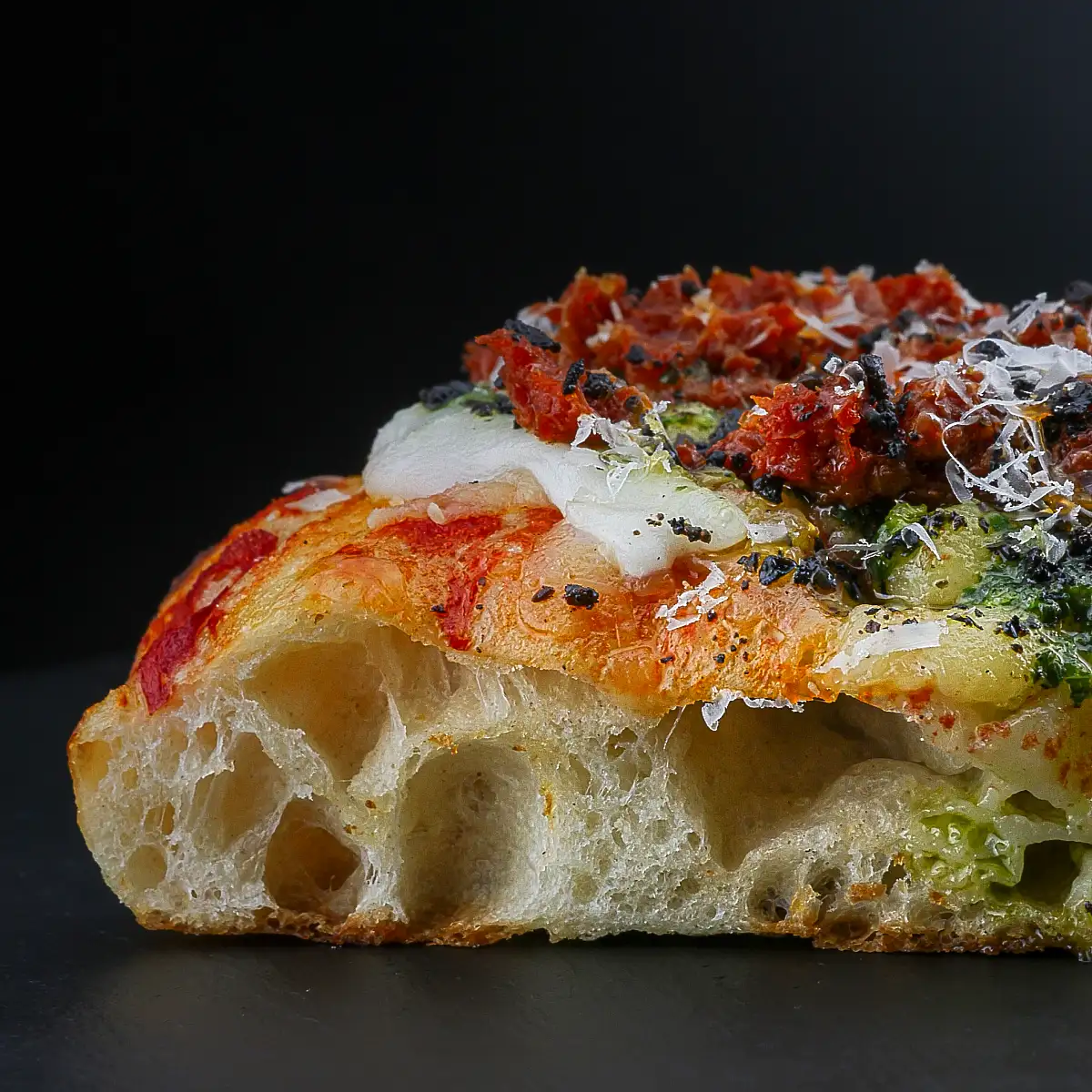
In pizza, the difference is felt immediately. A well-executed Roman pizza in teglia arrives with a crispy base, airy crumb, and edges that hold ingredients without losing balance. It is square, yes, but its value is not in the shape. It lies in a Roman baking tradition that demands time, precision, and respect for the process.
This type of proposal responds to a clear market need: eating something familiar in a new and better-made way. Pizza is familiar. Specialized Roman pizza still surprises. There is where the opportunity lives.
Menus with identity, not excess
For years, many restaurants believed that a large menu offered more value. Today, an overly extensive menu can convey the opposite: a lack of focus. The most attractive experiential concepts usually choose a specialty and take it far.
That doesn't mean limiting the enjoyment. It means curating the experience. A stuffed focaccia, a Florentine schiacciata, or a selection of Roman pizzas can offer variety without losing coherence. Every preparation has a reason. Every combination must reinforce the concept instead of competing with it.
Specialization also helps the customer decide. When they understand what makes the restaurant unique, ordering becomes part of the ritual. They are not buying "just another pizza." They are choosing a texture, an Italian regional style, and a different way of sharing.
What is photogenic must be edible
Yes, presentation matters. A freshly baked square pizza, with bright colors and cuts that reveal a perfect crumb, has presence. But the photo is the invitation, not the final product.
The strongest trend is not creating dishes that are impossible to eat just to generate content. It is designing food that looks as good as it tastes. That makes someone take out their phone without the restaurant having to ask. That upon tasting confirms the visual promise.
To achieve this, detail is decisive: the tray, the cut, the temperature, the contrast between crispy and creamy, the way the product reaches the table. The experience is built in seconds, but remembered for the flavor.
Spaces that accompany, not distract
An experiential restaurant needs atmosphere, but not a stage set that steals the spotlight from the food. The design must help the concept breathe: materials, music, lighting, and service must speak the same language.
In a contemporary Italian proposal, for example, the energy can be vibrant and urban without falling into clichés. The goal is not to copy a postcard of Rome. It is to create a place where tradition feels alive, current, and accessible. A space where a dinner with a partner, a lunch with colleagues, or an outing with friends feels like a special occasion.
There is also a practical factor. The premises must work for talking, sharing, and eating comfortably. If the music prevents talking or if the table doesn't allow for enjoying the product, the design stops adding value. The experience depends on the senses, but also on comfort.
Service is also part of the flavor
Hospitality is regaining prominence. A great product can lose its strength if it arrives without context or if the staff doesn't know how to explain what makes it different. In specialized restaurants, service must guide without becoming solemn.
It is not about giving a long lecture on fermentation to every table. It is about knowing how to answer when someone asks why the dough is so light, what the difference is between a Roman and a Neapolitan pizza, or how to enjoy a schiacciata. A precise recommendation can turn curiosity into a better-chosen order.
Balance matters. There are customers who want to know every detail and others who just want to eat delicious, fast, and simple food. An attentive team knows how to read both moments. That flexibility is an experience in itself.
Sharing is once again a plan
Another strong trend is the return of formats designed to be shared. After years where individual consumption gained ground, many people are once again valuing the table as a meeting point. They want to order several options, try a bit of everything, and comment on each combination.
Roman pizza lends itself naturally to that. Its portions allow you to explore more flavors in the same visit, without turning dinner into an excess. A table can start with focaccia, choose different pizzas in teglia, and close the night with the feeling of having discovered something.
For groups, this format reduces the tension of "what is everyone ordering?" and opens up a more relaxed dynamic. For couples, it creates a more playful experience. For young families, it offers variety without giving up a quality product. It is no coincidence that shareable dishes have so much strength: eating together remains one of the best ways to celebrate.
Experiences with real value, not just a high price
The Costa Rican consumer is willing to invest more when they perceive a clear difference. But a high bill on its own does not build a premium experience. The value must be felt in the raw material, the technical mastery, the portions, the service, and the consistency.
There is an important nuance here: premium does not always mean formal. A restaurant can have a young, accessible, and fast vibe, and still offer a superior level product. The key is not to confuse casual with generic.
A proposal like Bianka® Pizza Romana moves precisely in that space: specialized Italian food, baking technique, uncommon formats, and a personality that turns an outing for pizza into a plan with more intention. The best experience does not force the customer to dress up. It gives them an authentic reason to return.
What's next for experiential gastronomy?
Costa Rica will continue to see more focused, more visual, and more narrative-conscious proposals. There will be themed dinners, collaborations, seasonal menus, and limited edition products. Some will work very well. Others will be passing noise.
What will remain is the demand for authenticity. The public wants to discover, but they also want to trust. They want novelty, but not imitations. They want places where every detail makes sense, from the first impression to the last bite.
The next time you look for where to eat, look for a proposal that has something to say with its hands, its oven, and its dough. If an experience manages to make you leave talking about the texture, the flavor, and the desire to return, there is much more than a dinner there. There is a table worth reserving.