Aug 5, 2026
A guide to textures in real premium pizza
The first bite defines everything. Before identifying the cheese, the sauce, or the topping, the mouth registers a contrast: a base that crunches, a crumb that yields lightly, and a structure that supports every ingredient without giving in. This premium pizza texture guide starts from a simple truth: a great pizza doesn't just taste good. It also sounds, feels, and leaves an immediate impression.
In a Roman pizza in teglia, texture is not a decorative detail. It is the product's signature. The difference between a decent slice and one that makes you want to order another lies in that precise combination of croccante, air, and resistance. Che buono.
What texture means in a premium pizza
To talk about texture is to talk about technique turned into experience. A premium pizza must have character from the base to the crust. It is not enough for it to be toasted on top or to have quality ingredients. The dough needs an internal architecture: a firm and crispy crust, an open-textured and moist crumb in just the right measure, and a surface capable of receiving heat without drying out.
The key is in the contrast. If everything is crunchy, the slice becomes hard and tiring. If everything is soft, it loses identity and can feel heavy. If the base gets too wet, the toppings dominate the dough and the whole thing falls apart. A memorable pizza finds the spot where each layer has something to say.
This matters especially when looking for an alternative to conventional round pizza. Pizza al taglio and in teglia are born from an Italian baking tradition where the dough deserves as much attention as what goes on top. Its square format is not just visually distinct: it allows for a wide surface, a particular bake, and a more defined bite.
Premium pizza texture guide: the signs of quality
A high-level pizza is recognized with the senses before tasting it. Upon seeing it, the base should show an even golden brown, with more toasted areas that speak of the oven and not of being burnt. When lifting a slice, it should keep its shape. It shouldn't fold like a napkin or break into crumbs at the first movement.
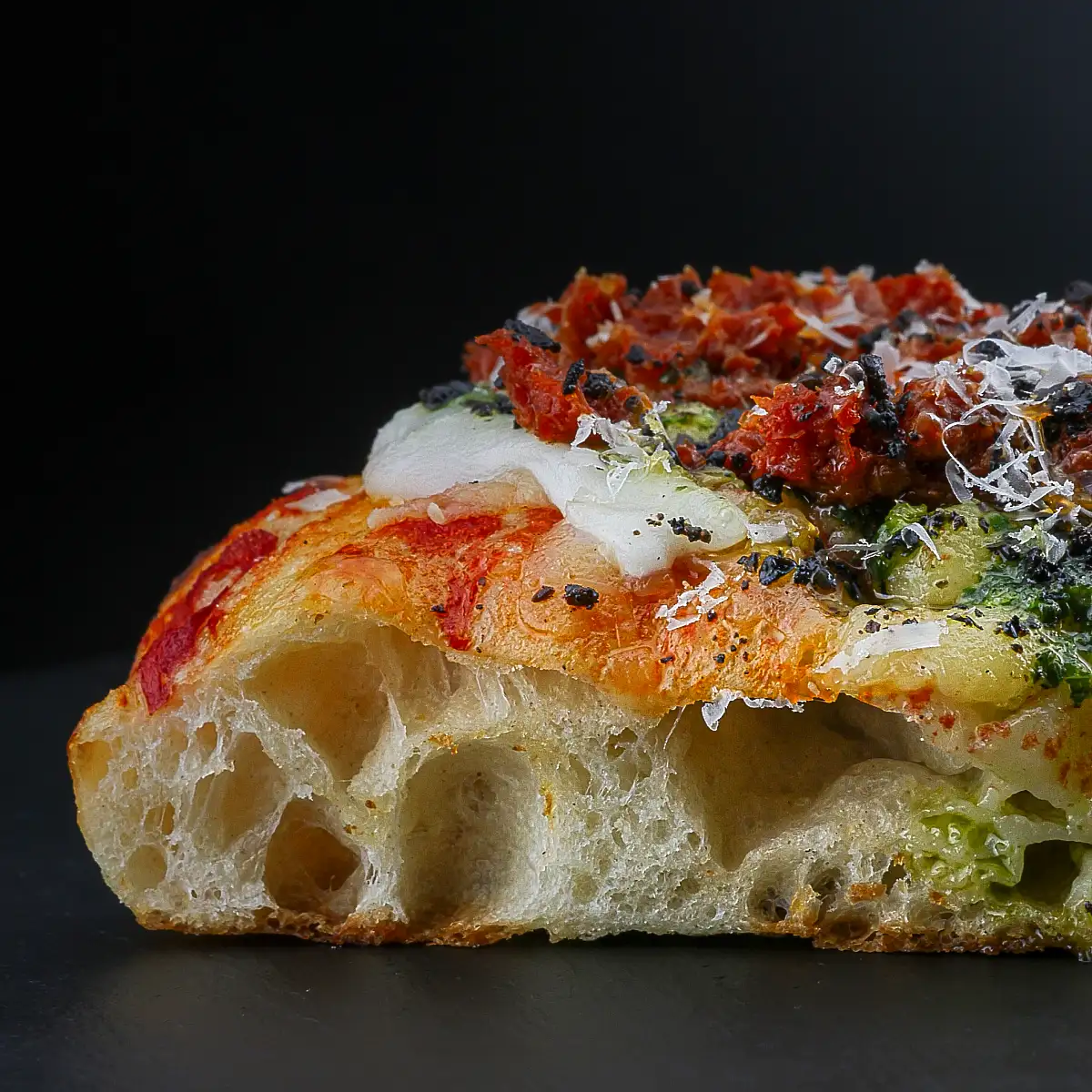
When biting into it, sound matters. That brief crack of the crust announces a well-worked base. Then comes the surprise: beneath the crispy surface is a light crumb, with irregular bubbles and a soft elasticity. It shouldn't feel dense, floury, or chewy.
The bottom part deserves special attention. A good base has toast, firmness, and external dryness, but it should never scrape the palate or taste bitter. The oven has to develop color and structure without turning the dough into a cracker. It is a delicate balance, and that is why not all crispy pizzas are truly croccanti.
Crispy on the outside, airy on the inside
This is the combination that many seek and few manage to execute consistently. The crispiness comes from a hydrated dough, a well-controlled fermentation, careful handling, and powerful baking. It is not achieved simply by adding more flour or leaving the pizza in the oven longer.
The airy crumb, for its part, depends on the gas generated during fermentation being preserved inside the dough. When it is squashed too much or worked without respect for its rising times, the bubbles disappear. The result is a more compact, heavier, and much less interesting pizza.
At Bianka® Pizza Romana, the 72-hour fermentation is part of that quest. Time allows for the development of flavor, extensibility, and a structure that feels light without losing presence. It is not magic or a fad: it is Italian baking applied with intention to every teglia.
Firmness without rigidity
A premium slice must hold its ingredients. This seems obvious until a pizza arrives with cheese, vegetables, or cold cuts and the base sags in the center. Firmness is essential, but it should not be confused with hardness.
A firm base responds to your grip, keeps the cut clean, and allows you to eat with your hand without everything ending up on the plate. At the same time, it has to yield when you bite. That tension between support and softness is one of the clearest indicators of a well-made dough.
The amount of toppings has an influence. A pizza with wet ingredients, like mushrooms, roasted vegetables, or a generous sauce, needs a base with greater resistance capacity. On the other hand, a simpler pizza can showcase an open and delicate crumb. There is no single ideal texture for all recipes. There is the right texture for each combination.
The role of fermentation, oven, and ingredients
A long fermentation brings much more than an attractive label. It gives the dough time to develop subtle aromas, improve its performance, and create a more complex crumb. It also helps the pizza have depth: that slightly milky, toasted, and bread-like flavor that remains even when the topping is the star.
But an excellent fermentation doesn't save a bad bake. The oven must seal the base, expand the air pockets, and brown the surface at the correct time. Too little heat leaves a pale and soft dough. Too much heat or too much time can dry it out. Precision is in knowing when the pizza has reached its peak, not just when it looks ready.
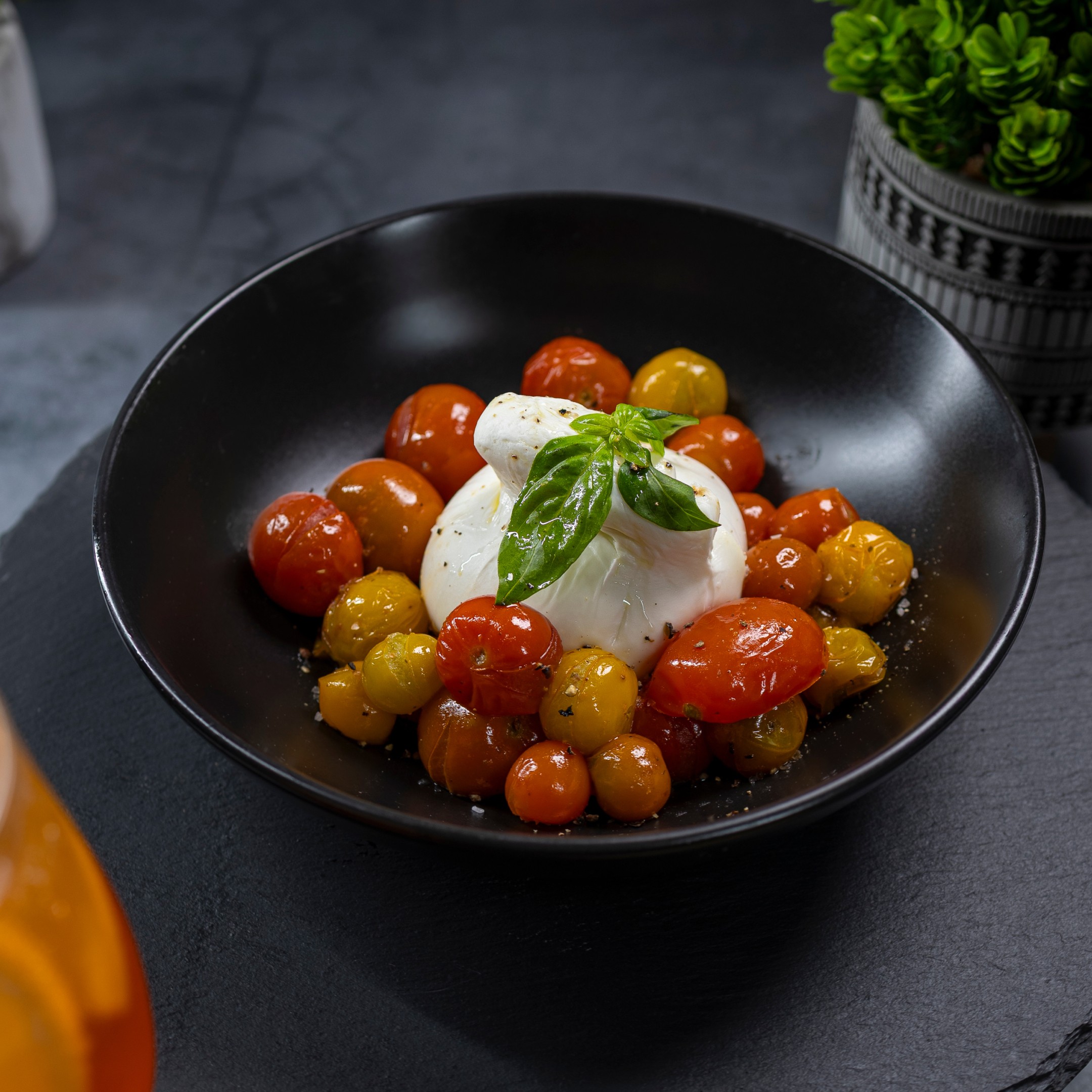
The ingredients also modify the texture. A well-drained mozzarella melts without flooding the base. A balanced sauce adds juiciness without making it watery. Cold cuts can provide crispy edges, while a cream, a soft cheese, or a burrata introduce silky contrast. The goal is not to overload the slice: it is to build layers that respond to one another.
How to eat a Roman pizza to experience it fully
Pizza fresh out of the oven shows its best moment when the temperature allows you to perceive its contrasts. If eaten too quickly, the heat can hide nuances and make the crumb softer. If left to cool too much, the crust loses part of its energy and the cheese changes consistency.
There is no need for a complicated ritual. Just take a slice, look at its base, and bite from an edge. First, the crunch appears. Then the crumb. Finally, the topping. When that order feels clear, the pizza is working as it should.
It is also worth varying. A slice with roasted vegetables can feel juicier and softer. One with pepperoni or toasted ingredients will have more contrast and a more intense crust. A stuffed focaccia or schiacciata takes the experience towards a breadier texture, with a pronounced crust and an interior that embraces the filling.
Choose according to the texture you want to feel
If you are looking for an impactful bite, prioritize slices with golden edges, ingredients that toast, and an exposed base. If you prefer a creamier sensation, choose combinations where cheese and creams take center stage, but verify that there is a crispy base that maintains the balance.
For sharing, the square format pizza has a real advantage: each cut can offer a slightly different experience. The corners are crispier. The middle pieces usually show a softer and airier crumb. It is not an accident; it is part of the charm of eating Roman pizza.
The next time you have a slice in front of you, don't just focus on the topping. Listen to the crack, look at the air pockets, and feel how the base supports each layer. That is where an Italian experience worth celebrating begins, slice after slice.