Jul 6, 2026
Review of Heredia Italian restaurant: what is actually worth it
A good Heredia Italian restaurant review shouldn't just stop at whether “the pizza was delicious” or if “the place looked pretty.” That is of little use when what you really want is to find an Italian experience that has technique, personality, and clear reasons to return. In a city where options promising authenticity abound, the real filter is in the details: the dough, the oven, the fermentation, the product, and, above all, whether the concept has identity or just aesthetics.
Eating well-made Italian is not an accident. It shows from the very first bite. A focaccia with structure, a pizza with a light and croccante base, a sauce that doesn't cover everything with acidity or sugar, a menu that understands tradition without making it a cliché. That is where a useful review begins. The rest is noise.
How to read a Heredia Italian restaurant review
If you usually check reviews before booking, there is a very common mistake: letting yourself get carried away by overly generic opinions. “Good service,” “pretty place,” “large portions.” All of that can be true and yet the restaurant still falls short where it matters most, which is in the kitchen.
A real review has to answer concrete questions. Does the dough have real fermentation or does it feel heavy? Does the menu offer something more than pasta with white sauce and standard round pizza? Is there a gastronomic intention behind the menu or just a commercial adaptation of Italian food? In specialty restaurants, those differences carry a lot of weight.
It is also helpful to read between the lines. When many comments mention texture, balance of ingredients, consistency between visits, or products that are hard to find in more generic options, there is usually a higher level of execution. When the only memorable things are the cocktails, the neons, or the photos of the venue, you already have a clue.
What defines a truly memorable Italian restaurant
Not every Italian restaurant has to look traditional to be good. Nor does it have to offer a hundred dishes to seem complete. In fact, many of the most solid concepts are precisely the most focused.
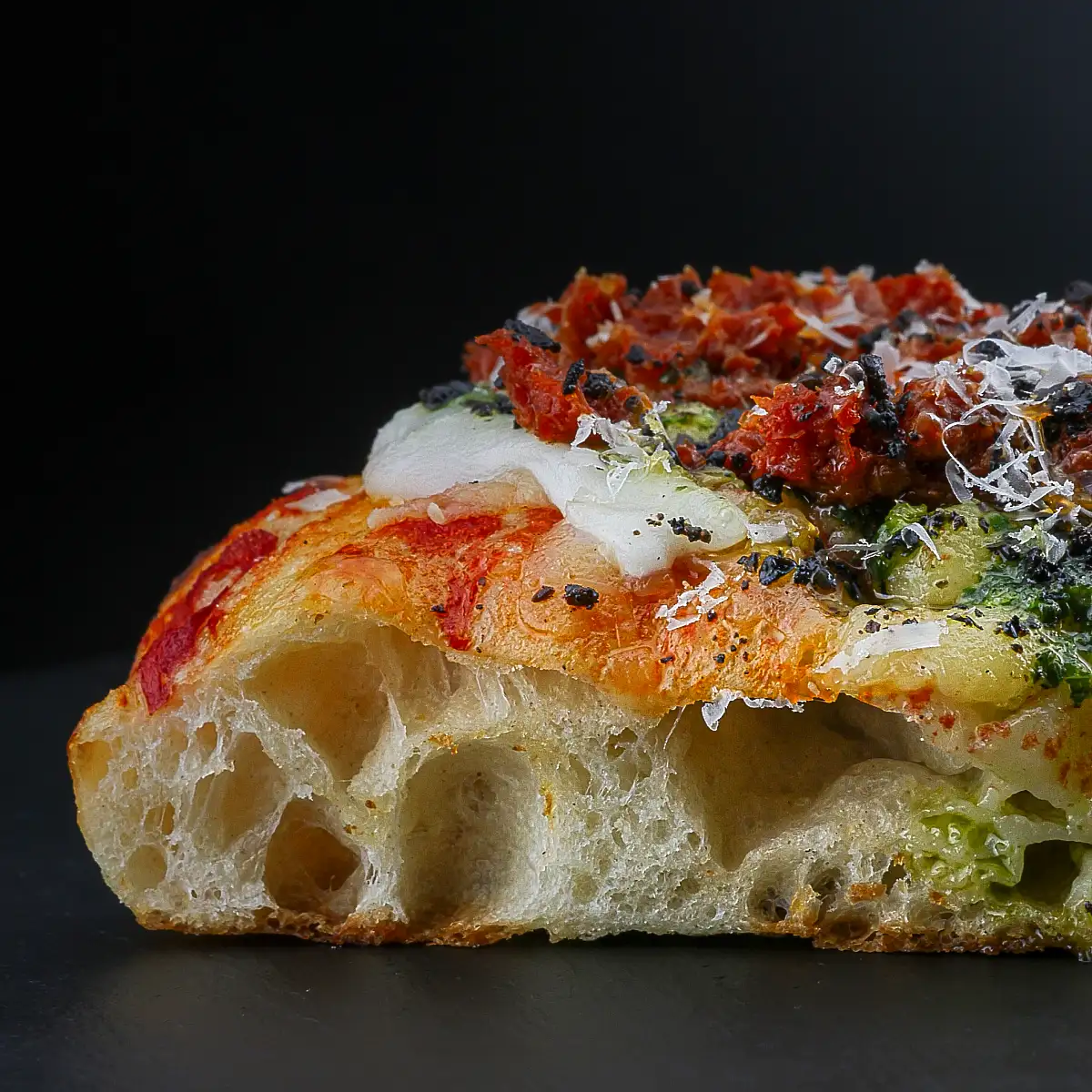
The first sign of quality is in the dough and the bread. In Costa Rica, there are still many people accustomed to decent pizzas, but without character. That is why, when a concept appears with prolonged fermentation, well-crafted air pockets, and a texture that manages to be light and croccante at the same time, the difference is felt immediately. It is not just flavor. It is digestibility, structure, and technique.
The second sign is the selection of the format. An Italian restaurant with identity does not need to copy what everyone else is doing. It can go for pizza romana in teglia, schiacciata, stuffed focaccia, or a line of cuisine inspired by specific regional traditions. That focus says a lot. It speaks of study, criteria, and a desire to offer something more interesting than the most mass-market version on the market.
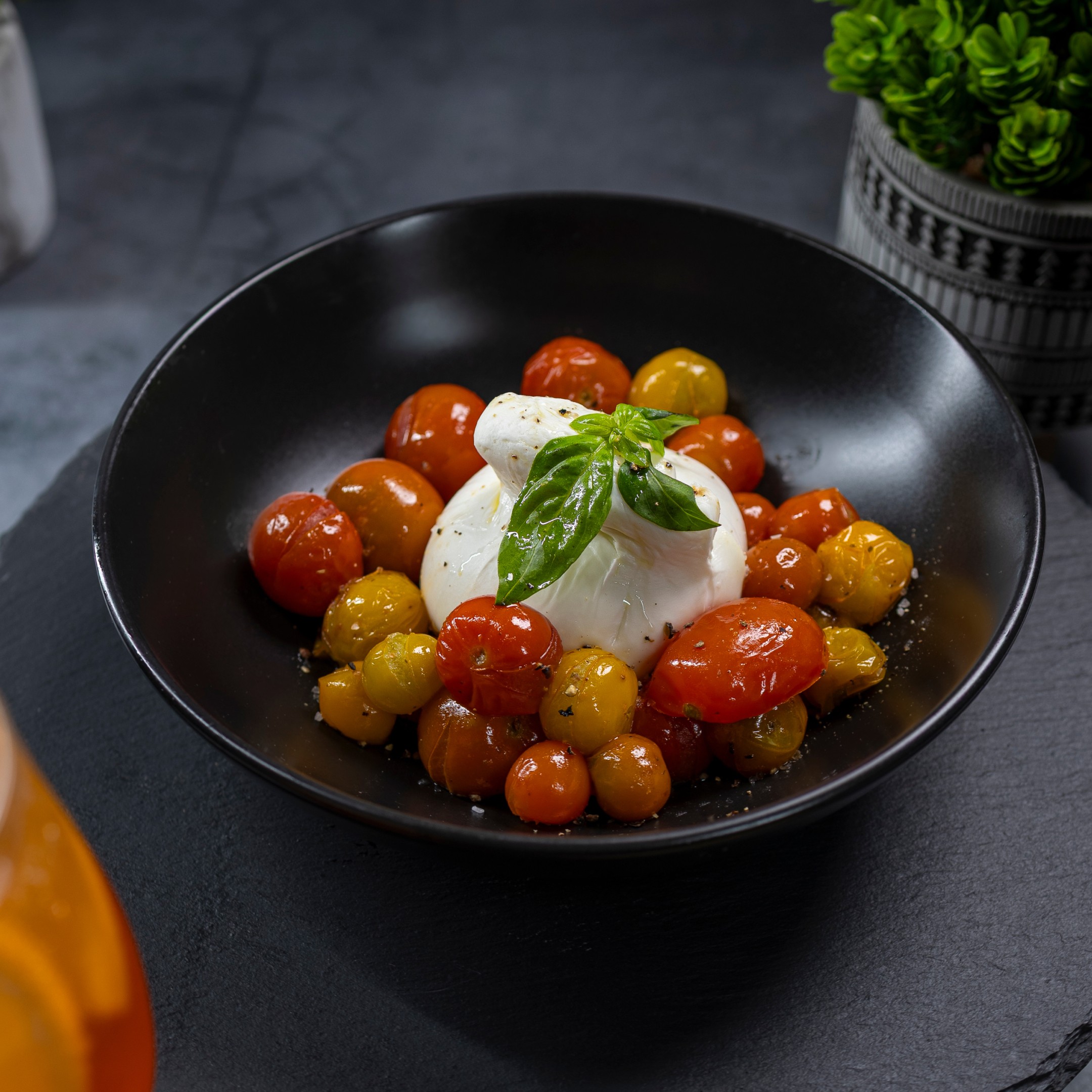
The third is in the balance. A place can have excellent ingredients and still overload every dish to the point of making it heavy. Well-crafted Italian cuisine has another rhythm. Less excess, more intention. When a burrata accompanies without dominating, when the prosciutto contributes without salting everything, when the tomato tastes like tomato and not like an industrial condiment, you can tell there is respect for the product.
Pizza as the ultimate test
If a Heredia Italian restaurant review is going to take a single reference to measure the level, pizza remains one of the most honest. It spares no shortcuts. There you can see who understands fermentation, hydration, baking, and proportion.
The base must have its own character. It is not enough for it to be “crispy.” It can be toasted and yet dry. It can be thin and yet lifeless. Great Italian pizza, especially from the Roman school, has a precise crispiness on the outside and an airy crumb inside. It breaks with elegance, not with rigidity. It features a bite, but it does not punish.
Then come the toppings. Less is better when each element was chosen with intention. A pizza saturated with cheese and protein usually impresses in a photo, but rarely leaves a refined experience. On the other hand, a well-thought-out combination elevates everything. Balanced pomodoro, mozzarella in just the right amount, well-cured cold cuts, vegetables that still retain texture. Che buono.
The aftermath also matters. An excellent pizza does not leave you heavy an hour later. That feeling of lightness, which many people overlook, is usually one of the best signs of well-achieved fermentation.
The atmosphere adds up, but it doesn't save it
There are restaurants that understand the mood very well. Warm lights, attractive design, beautiful tableware, an aesthetic that lends itself to photos and plans with friends. All of that adds up. Of course it adds up. But it shouldn't be what carries the entire experience.
In an honest review, the atmosphere is valuable when it accompanies the product. If the energy of the venue reinforces the culinary concept, perfect. If the space feels as cared for as the kitchen, even better. The problem appears when the setting tries to compensate for a weak menu or inconsistent execution.
In Heredia, where more and more people are looking to go out and eat something that truly feels special, that balance matters a lot. Today's customer doesn't just want an “Instagrammable” place. They want a place that sparks conversation, makes them want to return, and prompts them to recommend it without having to invent attributes.
Is it worth paying more? It depends on this
Not every premium price is justified. But not every more expensive option is “overpriced” either. In niche Italian gastronomy, the real value is usually in processes that are not always visible at first glance.
A 72-hour fermentation, a dough crafted with bakery expertise, selected ingredients, less common formats, and consistent execution require time, knowledge, and discipline. That costs more than producing something standard. The issue is not paying more for an Italian label. The issue is paying more when you can see the craftsmanship.
That is why a good review should look at the relationship between price and differentiation. If the experience tastes, feels, and is remembered as distinct, there is value. If only the packaging changes, then no.
There is an extra point that many appreciate: specialization. When a restaurant decides to do a few things, but do them very well, it usually delivers more than an endless menu. In that field, concepts like Bianka® Pizza Romana stand out because they don't try to please everyone with the same old things. They target an audience that does recognize well-made dough, a truly croccante texture, and a less obvious, more artisanal, and much more memorable Italian experience.
Common mistakes when choosing an Italian restaurant in Heredia
One of the most frequent is assuming that “authenticity” means checkered tablecloths, Italian names on the menu, and giant portions. That is no longer enough. Real authenticity is in the technique, not in the decoration.
Another mistake is looking only for variety. Sometimes a huge menu provides peace of mind, but it can also be a sign of lack of focus. If a restaurant wants to make pizza, pasta, risotto, seafood, meats, brunch, and ten different styles of desserts, you have to ask yourself where its true strength lies.
It also happens that many people rate based on habit. If they have always eaten thick and heavy dough pizza, perhaps a lighter, more specialized concept will seem “small” or “different” at first. And that is not a disadvantage. It is part of the discovery. Not all premium Italian cuisine seeks to fill you up with volume. Often it seeks to impress with texture, balance, and detail.
How to know if an experience is worth recommending
A recommendation that is worthwhile has some precision. It doesn't just say “go.” It says why.
It deserves to be recommended when there is a clear distinctive feature. It could be a pizza romana in teglia that is not easily found in the local market. It could be a stuffed focaccia with its own identity. It could be a concept that combines aesthetics, craftsmanship, and consistency in every visit. The important thing is that the restaurant leaves a recognizable mark.
It also helps to think about the occasion. There are places ideal for a casual, quick-craving outing, and others that work better for a leisurely meal, a date, or a plan among friends who want to try something new. A useful review does not lump everything into the same bag. It understands context.
If you are looking for an Italian restaurant in Heredia, it is worth refining your criteria. Don't just stick to stars or pretty photos. Look for technique. Look for specialty. Look for a concept that doesn't sound exchangeable with ten others. When a place with real dough, a clear concept, and a product that speaks loudly from the first bite appears, there is no need to exaggerate the review. The experience speaks for itself.